
What Is a Cathedral Setting? A Guide to This Elegant Ring Style
- Luke Zucco
- Dec 27, 2025
- 13 min read
A cathedral setting is one of those timeless engagement ring styles for a reason. Its defining feature? Two elegant metal arches that sweep up from the band to flank the center stone, lifting it high above your finger. This design isn’t just beautiful; it’s architectural, inspired by the grand, soaring vaults you’d see in a historic cathedral.
That elevation creates a dramatic profile that does something wonderful for the diamond: it lets more light hit the stone, creating serious sparkle.
The Architectural Elegance of a Cathedral Ring
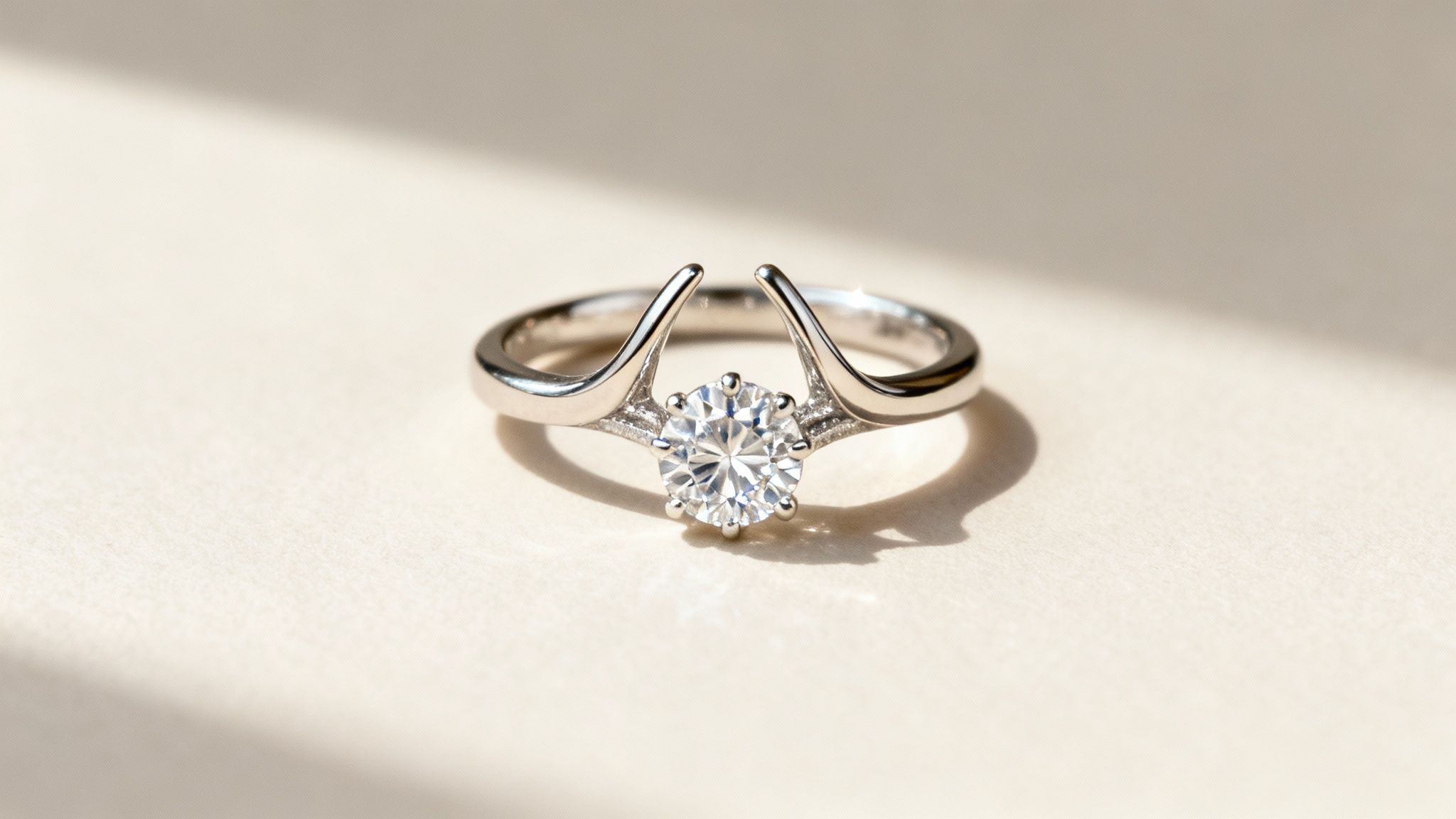
The best way to picture it is to think of the ring as a tiny stage built just for your diamond. The band is the ground floor, while those two graceful metal arches act like buttresses, supporting and elevating the main attraction. It’s this height that truly defines the cathedral setting, serving both a visual and a practical purpose.
This design has deep roots, tracing its inspiration all the way back to the Middle Ages. Around the 12th century, Gothic architecture was changing the game with incredible structures like Notre-Dame. Jewelers took note of those soaring vaults and began crafting rings with metal bands that curved upward to cradle a diamond, giving it maximum brilliance and a look of pure grandeur. You can learn more about how Gothic designs shaped jewelry traditions to see how far back this influence goes.
To get a clearer picture, here's a quick breakdown of what makes this setting so special.
Cathedral Setting At a Glance | |
|---|---|
Characteristic | Description |
Defining Feature | Two metal arches sweep up from the band to elevate the center stone. |
Profile View | Creates a high-profile, architectural look reminiscent of cathedral vaults. |
Main Advantage | Elevates the diamond to maximize light exposure and brilliance. |
Key Appeal | Classic, elegant, and makes the center stone appear larger and more prominent. |
Common Concern | The high setting can sometimes snag on clothing or get bumped. |
This table sums it up nicely—the cathedral setting is all about creating an elegant lift that puts your diamond in the spotlight.
Core Components and Design Philosophy
At its heart, the cathedral setting is designed to add height and make the center stone the undeniable star of the show. While it has things in common with other settings that feature a single stone, its unique arches make it stand out.
The Arches: These are the signature slopes of metal rising from the shank (the ring's band) to meet the head, where the diamond sits.
The Gallery: This is the open space created between the arches, right under the diamond. It’s a crucial feature that allows light to flood the stone from all sides.
The Head: This is the part that actually holds the diamond—usually with prongs or a bezel—and it rests right on top of those graceful arches.
This structure does more than just secure the gemstone; it adds a layer of visual complexity and elegance. The sweeping lines naturally draw your eye upward, making the stone the focal point.
If you're exploring different styles, it's worth seeing how the cathedral stacks up against other popular choices. Our practical guide to engagement ring settings offers a great comparison.
The Real Pros and Cons of a Cathedral Setting
Choosing a ring setting is a delicate dance between breathtaking beauty and everyday practicality. The cathedral setting, with its grand architectural flair, definitely brings a lot to the table. But like any design, it has its trade-offs.
Getting an honest look at both sides is the best way to figure out if this elegant style is the right fit for your life. Let’s break it down, starting with what makes it so popular.
The Alluring Advantages of a Cathedral Mount
The main draw of a cathedral setting is how it makes your diamond the undisputed star of the show.
By lifting the center stone up and away from the band, those sweeping arches create a profile that commands attention. This elevation allows light to flood the diamond from all angles, which translates to serious brilliance and fire.
It also creates a pretty powerful optical illusion. One of the most fascinating stats about the cathedral setting is its ability to boost the diamond's perceived size by 20-25%. That means your 1-carat stone can have the visual presence of a 1.25-carat diamond—a clever trick of the light rooted in the same principles that make cathedral windows feel so grand. This design echoes styles from the Victorian era (1837-1901), where an estimated 70% of British nobility chose arched jewelry that mimicked their palace interiors. You can discover more about these historical jewelry trends on abbysparks.com.
But those graceful arches do more than just look good. They’re also functional.
Enhanced Security: Think of the arches as tiny bodyguards for your gemstone. They add structural support and shield the diamond’s girdle (its widest edge) from accidental knocks and bumps.
Timeless Appeal: The classic, architectural lines give the ring a sophistication that won't feel dated in a few years. It’s a choice that endures through ever-changing trends.
In short, a cathedral setting delivers a brilliant combination of enhanced sparkle, a larger-looking diamond, and some valuable protection for your investment.
Practical Disadvantages to Consider
While the upsides are significant, you also have to think about how the ring will fit into your daily routine. The very feature that makes it so stunning—its height—is also its main drawback.
A cathedral setting is, by nature, a high-profile design. It sits taller on the finger, which means it’s more likely to snag on clothes, gloves, or even your hair. If you have a hands-on job—like a nurse, artist, or athlete—this could become a daily frustration.
Another practical point is cleaning. That open space under the diamond, known as the gallery, is fantastic for letting light in, but it can also be a magnet for dust, lotion, and everyday grime.
Higher Maintenance: To keep your diamond looking its best, a cathedral setting will need more frequent and thorough cleaning than lower-profile rings.
Potential for Gaps: Because of its arched profile, a straight wedding band might not sit flush against it. This isn't a deal-breaker, but you may need a curved or "contour" band to get that perfect, gap-free stack.
Ultimately, the decision comes down to your personal taste and lifestyle. A cathedral setting offers an undeniably grand stage for your diamond, but it asks for a little extra care and awareness in return.
Discovering Popular Cathedral Setting Variations
The cathedral setting is far more than a single design. Think of it as a versatile foundation—a beautiful chassis that jewelers can build upon to create a look that’s classic, modern, or completely glamorous.
Understanding the most popular variations is the key to finding a ring that really speaks to you. Each one takes those classic, sweeping arches and gives them a totally different personality, transforming the entire feel of the ring.
The Classic Solitaire Cathedral
For pure, timeless elegance, nothing beats the solitaire cathedral setting. This is the design in its most essential form: two graceful metal arches rising to present a single, stunning diamond, with no other distractions.
The beauty here is all in the simplicity. It’s a quiet, confident style that uses that architectural lift to make the center stone the one and only focus. It says everything it needs to with clean lines and a brilliant diamond—perfect for someone who loves understated sophistication.
The Pavé Cathedral
If you're all about sparkle, the pavé cathedral setting is a showstopper. This variation takes the classic solitaire and lines the band—and sometimes even the arches—with tiny, closely-set diamonds.
This creates an unbroken river of light that flows right up toward the main stone. The result is a dazzling effect that adds a serious dose of brilliance and luxury to the architectural design. It's an amazing way to dial up the ring's visual impact without overshadowing the center diamond.
The Halo Cathedral
For maximum glamour, the halo cathedral setting is impossible to ignore. This design combines the cathedral’s elevated arches with a halo—a circle of smaller pavé diamonds that frames the center stone.
This powerful duo does two things exceptionally well. First, the halo adds a brilliant frame that makes the center diamond look significantly larger and more sparkly. Second, the cathedral arches lift this entire dazzling display high off the finger for an even more dramatic, eye-catching profile. Together, these two features create a ring with unmatched presence and fire. You can explore a detailed breakdown of what a halo setting is and why it makes diamonds look bigger in our guide.
The Split-Shank Cathedral
For a more modern, artistic take on the design, check out the split-shank cathedral setting. In this style, the band splits into two separate strands before sweeping upward to meet the center stone.
This variation adds a cool element of architectural detail and negative space, giving the ring a lighter, more intricate feel. The split can be subtle or dramatic, creating a unique look that feels both contemporary and timelessly elegant.
Pairing Your Setting with Diamonds and Wedding Bands
A perfect engagement ring is about more than just a beautiful setting; it’s about creating a harmonious final look. Once you've settled on a cathedral setting, two big questions pop up: which diamond shape will shine brightest, and how do you find a wedding band that sits perfectly alongside it?
Making these decisions thoughtfully is key to making sure your bridal set looks and feels like it was made for you. The elegant arches of the cathedral design offer a stunning foundation, but the magic is in the details of what you pair with it.
Finding the Perfect Diamond Shape
The graceful, sweeping lines of a cathedral setting are incredibly versatile, beautifully complementing a huge variety of diamond shapes. Honestly, this is a major reason for its timeless appeal.
From a classic round brilliant to elongated shapes like ovals, pears, and emerald cuts, the elevated design acts like a grand stage for the center stone. It’s no surprise this design works with 95% of all diamond shapes, including the iconic round brilliant which dominates about 60% of the market. Better yet, those arches also shield the stone's girdle, reducing the risk of damage by up to 40% compared to some lower-set solitaires.
The infographic below shows just how adaptable the cathedral setting is, whether you're dreaming of a simple solitaire, a sparkling pavé band, or a dramatic halo.
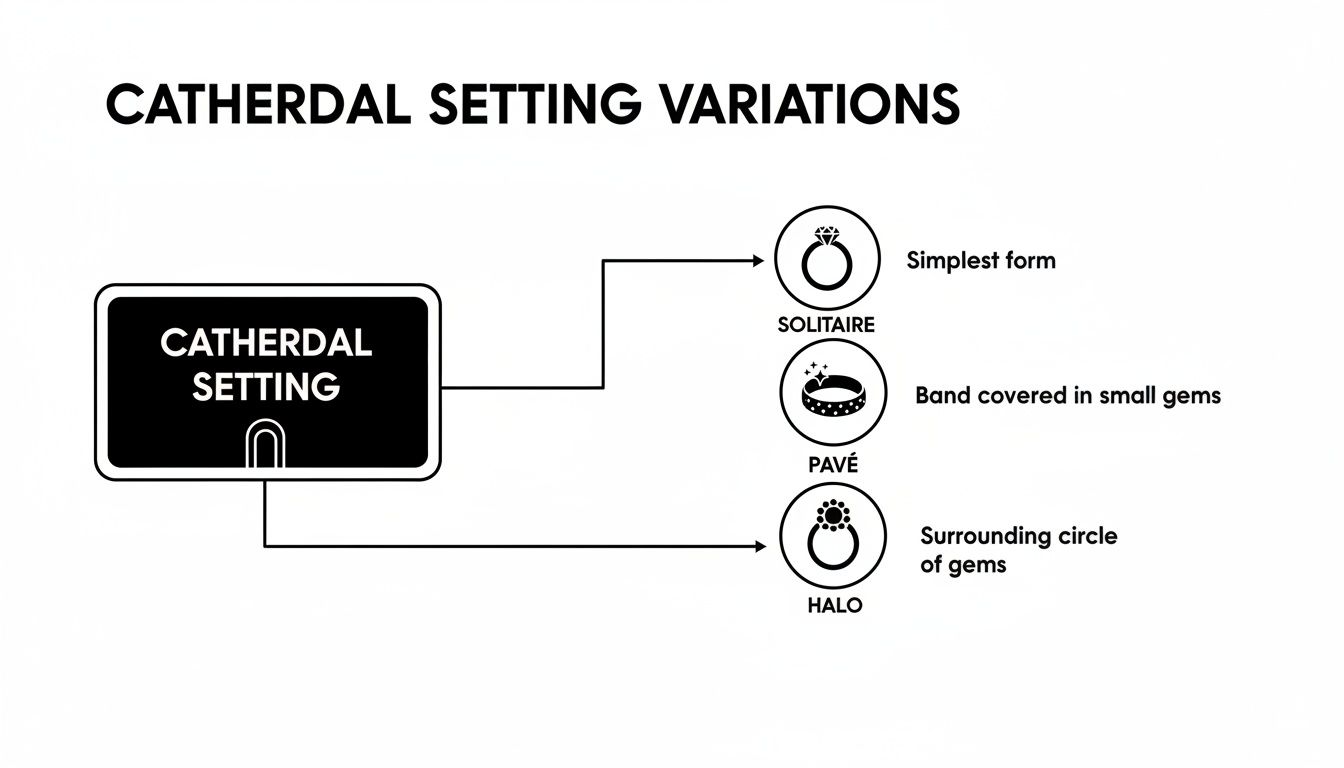
It just goes to show that whether you prefer an unadorned look or one that's dripping in sparkle, the cathedral’s structure can bring your vision to life.
Matching Your Wedding Band
One of the biggest practical things to consider with a cathedral setting is finding a wedding band that sits flush against it. Because the arches lift the center stone, a standard straight wedding band will almost always leave an awkward gap.
That gap doesn’t just look unfinished—it can cause the two rings to rub against each other, leading to wear and tear on the metal over time.
To solve this problem, jewelers have designed specific types of wedding bands that create a seamless, intentional fit.
Contour Bands: These bands have a gentle curve designed to trace the silhouette of your engagement ring, nestling perfectly against it.
Notched Bands: A small section of the band is cut out, or "notched," allowing the engagement ring’s setting to slide neatly into place for a snug fit.
Choosing the right band is a game-changer for a comfortable and visually stunning bridal set. To see how different bands work with engagement rings, check out our guide on choosing engagement ring band types. Thinking about this from the start will save you a headache later and ensure you end up with a perfectly matched pair.
How to Choose and Care for Your Cathedral Ring
Picking out the perfect cathedral ring is one of the most exciting parts of the process, but knowing what to look for makes all the difference. It's about more than just that first impression—focusing on craftsmanship and proportion ensures your ring will be just as stunning and durable decades from now. The same goes for once it's yours; a little mindful care keeps those soaring arches and sparkling diamond in pristine shape.
This is the practical advice that will help you buy with confidence and keep your ring looking incredible for years. Whether you're just starting your search or it's already on your finger, these tips are for you.
What to Look For When Buying
When you’re looking at a cathedral setting, the quality is all in the details. The arches should be smooth, symmetrical, and flow seamlessly into the band. If the craftsmanship is off, you might end up with weak points or a clunky, awkward look. Make sure to inspect the ring from every single angle.
Proportion is also a huge deal. The height and sweep of the arches should complement the center stone—not overpower it or look too fragile to hold it securely. A well-proportioned ring just has that graceful, balanced profile that feels right.
The absolute best way to judge a ring's feel and fit is to try it on. Pay attention to how the height feels on your finger. Is it comfortable enough for your day-to-day life, or does it feel like it might get in the way?
Before you make that final decision, think through these practical points:
Lifestyle Fit: If you work with your hands a lot or often wear gloves, a lower, more gently sloped cathedral profile is probably a smarter choice than a dramatic, high-arching one.
Wedding Band Pairing: Think ahead to your wedding band. Ask the jeweler to show you how both a straight band and a curved or "contour" band sit next to the ring. This simple step can help you avoid that surprise gap later on.
Keeping Your Cathedral Ring Sparkling
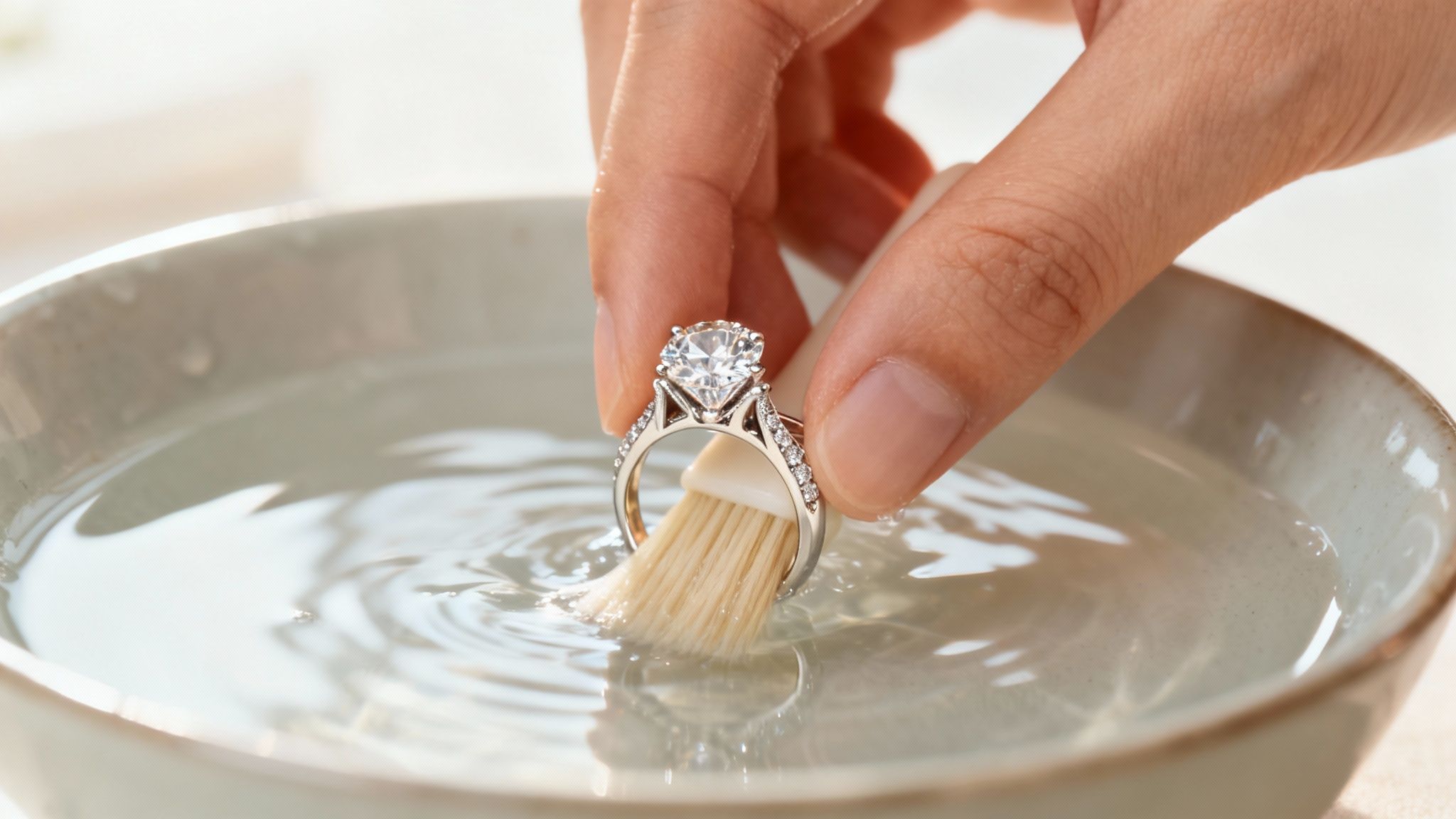
Because of its open gallery and elevated design, a cathedral setting is a magnet for dust, lotion, and soap residue. Keeping it clean is essential if you want the light to hit your diamond for maximum sparkle. The good news? A gentle at-home cleaning is super simple and effective.
Here’s a quick step-by-step to make it look brand new again:
Prepare a Soak: Fill a small bowl with warm water and just a few drops of mild dish soap. Stay away from harsh chemicals or anything abrasive.
Let It Rest: Place your ring in the solution and let it soak for about 20-30 minutes. This gives it time to loosen up all that built-up grime.
Gently Scrub: Grab a very soft-bristled toothbrush (a baby toothbrush is perfect for this) and gently scrub the ring. Really focus on those hard-to-reach spots under the diamond and between the arches.
Rinse and Dry: Rinse the ring thoroughly under warm running water to wash everything away. Then, just pat it dry with a soft, lint-free cloth to prevent water spots and bring back that brilliant shine.
Doing this simple routine every few weeks is all it takes to ensure your beautiful cathedral ring stays as eye-catching as the day you got it.
Is a Cathedral Setting Right for You?
Choosing a ring is always a balance between iconic beauty and the realities of daily life. By now, you know what a cathedral setting brings to the table: architectural grace that makes a diamond pop, great protection for your stone, and a timeless profile that never feels dated.
It’s an undeniably elegant choice that elevates the center stone, both literally and figuratively.
But that high profile does require a little thought. The same arches that create its stunning look can occasionally snag on clothes or sweaters, and the open spaces might need a bit more frequent cleaning to keep everything sparkling. The decision really comes down to your personal priorities and how you live.
A Final Gut Check
To figure out if it’s the one, just ask yourself a few key questions:
Your Style: Are you drawn to classic, grand statement pieces? Do you love a bit of architectural flair?
Your Lifestyle: Are you comfortable wearing a ring that sits higher off the finger, or do you have a very active, hands-on job or hobby?
Your Bridal Set: Does the idea of finding a perfectly matched contour band to complete the look excite you?
Be honest with your answers—they’ll point you in the right direction. If your heart is set on a design that’s both protective and showcases a diamond with dramatic elegance, the timeless cathedral setting is an exceptional choice for your forever ring.
Your Cathedral Setting Questions, Answered
When you're diving into the world of engagement rings, a few designs always bring up questions. The cathedral setting is one of them. Its unique, architectural look has a lot going on, so let's clear up some of the most common things people ask.
Does a Cathedral Setting Make a Diamond Look Bigger?
Yes, it really can. The whole point of those sweeping arches is to lift the diamond up and away from the band, making it the undeniable star of the show. This elevation naturally guides your eye right to the center stone, creating a seriously impressive focal point.
It’s a bit of an optical illusion. By giving the diamond more presence, some jewelers estimate it can appear up to 25% larger than its actual carat weight. All that extra height also means more light can hit the diamond from every angle, which amps up its sparkle and adds to that grand feel.
Are Cathedral Settings Considered High or Low?
Cathedral settings are almost always high-profile rings. Think about it: the design is literally built to elevate the center stone for maximum impact. While some styles have a gentler, more subtle slope, those signature arches inherently add height to the ring's overall silhouette.
This is a big deal if you have an active lifestyle or work with your hands a lot. A higher setting is just more likely to snag on clothes or get bumped during the day, so you’ll want to factor your daily routine into your decision.
In short, the cathedral setting is a high-profile design. While you can find lower-set variations, its identity is tied to that vertical lift and the way it puts the main gemstone on a pedestal.
Can You Resize a Cathedral Engagement Ring?
For the most part, yes. If you have a cathedral ring with a simple, plain metal band, a good jeweler can usually take it up or down one or two sizes without breaking a sweat.
Things get a little trickier, though, when the band has more intricate details.
Pavé Diamonds: When tiny diamonds are set all along the band, resizing can sometimes loosen their settings.
Engraving or Milgrain: If you have detailed metalwork wrapping around the band, it’s tough to resize it without disrupting that beautiful pattern.
Your best bet is always to talk to a professional jeweler. They can take a look at your specific ring and give you the best advice on what’s possible.
What’s the Difference Between a Cathedral and a Tiffany Setting?
The main difference comes down to how the prongs connect to the ring. A classic Tiffany-style setting has prongs that rise straight up from the band to hold the diamond, giving it a cool, "floating" appearance.
A cathedral setting, on the other hand, has two metal arches that sweep up from the band to join the head of the ring. This provides extra support and creates a more integrated, architectural look. Both styles lift the stone, but the cathedral offers a much more structural connection between the band and the diamond.
At Panther De Luxe Shop, we believe in finding the perfect piece that tells your unique story. Explore our curated collection of timeless and elegant jewelry by visiting us at https://www.pantherdeluxe.com.