
A Practical Guide to Engagement Ring Settings
- Luke Zucco
- Dec 10, 2025
- 16 min read

An engagement ring setting is the metal architecture that holds your center stone. It’s responsible for the ring’s entire vibe and its security. Choosing the right one is just as big a deal as picking the diamond itself, because the setting defines the ring’s personality and makes sure your stone is safe for life.
Why Your Ring Setting Is as Important as the Diamond
While the diamond usually gets the spotlight, the setting is the soul of the ring. Think of it like the frame for a masterpiece painting. A simple, modern frame lets the art take center stage, while an ornate, vintage frame becomes part of the art itself. The setting does exactly that for your ring.
First and foremost, its job is practical. The setting is what holds the gemstone securely in place, protecting it from getting chipped, scratched, or—worst-case scenario—falling out. It’s your first line of defense against the bumps and snags of everyday life, which is why your lifestyle is a huge factor here.
The Foundation of Beauty and Style
Beyond keeping the diamond safe, the setting is where your personal style truly shines. It's the design element that turns a beautiful stone into a symbol of your commitment that feels completely you. The choices you make here will dramatically shape how the ring looks and feels on your finger.
It Influences Visual Size: A halo setting, with its circle of tiny diamonds, can make a center stone look much bigger than it actually is. On the flip side, a super thin band with minimal metal makes the diamond the undisputed star of the show.
It Controls Sparkle: Different settings play with light in different ways. A classic prong setting lifts the diamond up high, letting light hit it from every angle for maximum fire. A bezel setting, which wraps a thin metal rim around the stone, creates a sleek, modern look but limits some light from entering the sides.
It Defines the Ring’s Character: The setting tells a story. A simple solitaire whispers timeless elegance. A vintage-inspired design feels romantic and full of history. A modern tension setting is all about minimalist innovation.
Your ring's setting is more than just a holder for the diamond; it's the design blueprint that dictates how your ring will look and feel on your hand every single day.
Ultimately, the right setting doesn’t just hold the diamond—it elevates it. It can make the stone appear brighter and bigger while perfectly reflecting your unique taste. This guide will walk you through the most popular styles, helping you find that sweet spot between beauty, security, and a design that feels like it was made just for you.
The Most popular Engagement Ring Setting Styles
Now that you know every engagement ring setting does two jobs—protecting the gem and defining the style—it’s time to get into the fun part: exploring the designs you’ll actually see. We’re going to cut through the confusing jargon and walk through the most popular styles, explaining how each one works and the unique personality it brings to the table. Think of this as your practical field guide to finding the perfect home for your diamond.
Each setting strikes a different balance between security, sparkle, and overall vibe. The image below breaks down these two primary functions, helping you visualize how different styles lean one way or the other.
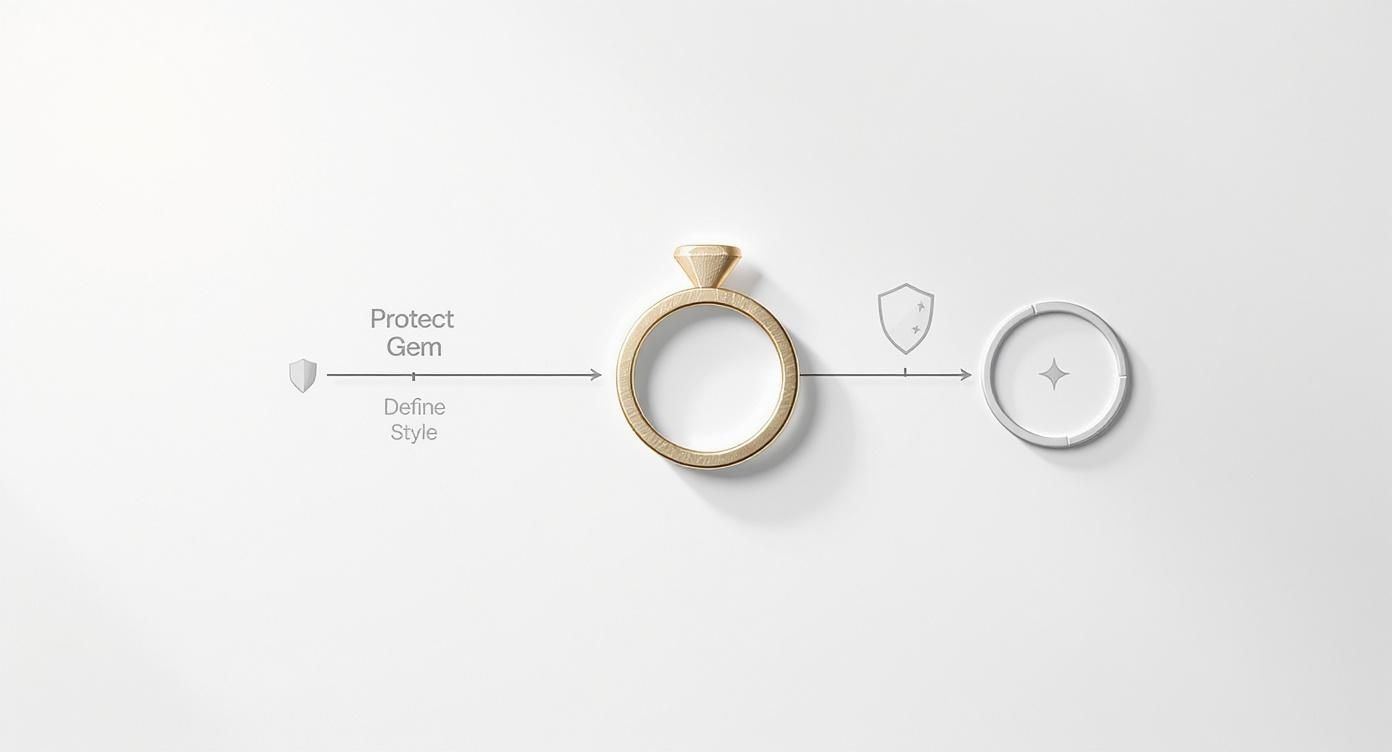
As you can see, every choice is a bit of a trade-off. You're either maximizing the diamond's brilliance or prioritizing its long-term safety. This is key to finding a style that fits both your taste and your lifestyle.
Quick Comparison of Popular Ring Settings
Before we dive deep, here’s a quick overview to help you get your bearings. This table breaks down the most common settings so you can see their main pros, cons, and ideal matches at a glance.
Setting Style | Primary Pro | Primary Con | Best For |
|---|---|---|---|
Solitaire | Timeless look, maximum sparkle | Prongs can snag or need tightening | Classic style, showcasing a single stone |
Halo | Makes center stone look larger | Small pavé stones can get loose | Maximum brilliance and a glamorous feel |
Bezel | Most secure and protects edges | Hides more of the diamond, less light | Active lifestyles, modern aesthetic |
Channel | Sleek look, very secure for stones | Can be difficult to resize | A continuous band of sparkle, no snags |
Cathedral | Elevates the stone, adds elegance | Can snag more easily due to height | A traditional, architectural look |
This is just a starting point, of course. The real magic is in the details, so let’s get into what makes each of these settings unique.
The Solitaire Setting: The Timeless Classic
When you picture a classic engagement ring, you’re almost certainly thinking of a solitaire. This setting is all about a single, stunning gemstone, typically held by prongs, making the diamond the undisputed star of the show. It’s elegant, it’s understated, and it will never, ever go out of style.
The most common version is the prong setting, which uses tiny metal claws to grip the diamond. It's designed to be as minimal as possible, lifting the diamond up and letting light pour in from all sides. This is what maximizes the stone's brilliance and fire, creating that breathtaking sparkle everyone loves.
A solitaire setting is the ultimate expression of minimalism and elegance. It communicates total confidence in the center stone, allowing its natural beauty to shine without any distractions.
First gaining real popularity in the early 20th century, the solitaire has remained the most sought-after style on the planet. According to consumer studies, around 50-60% of all engagement rings sold feature solitaire settings or a variation of one. That’s a testament to its enduring appeal. You can learn more about this iconic style in our guide on what a solitaire engagement ring is.
The Halo Setting: Maximum Brilliance
For anyone who believes there’s no such thing as too much sparkle, the halo setting is a dream come true. This design features a center stone completely encircled by a ring—a "halo"—of smaller accent diamonds.
This ring of pavé-set stones does two incredible things at once. First, it adds a massive layer of brilliance, creating a dazzling, all-over glittering effect. Second, it creates the illusion of a much larger center stone, easily making a one-carat diamond look more like a one-and-a-half-carat diamond at a glance.
Pro: Dramatically enhances the perceived size and sparkle of the center stone.
Pro: Can be customized with different shapes (like a cushion halo around a round diamond) for a unique look.
Con: The tiny pavé stones can sometimes become loose and will need maintenance over time.
Con: It can occasionally overshadow a particularly unique or high-quality center diamond.
The Bezel Setting: Modern and Secure
If your number one priority is security—especially for an active lifestyle—the bezel setting is your best friend. Instead of prongs, a bezel setting wraps the diamond’s entire perimeter with a thin, custom-fit metal rim. Think of it as a protective hug for your gemstone.
This design offers unmatched protection against chipping, snagging, or accidental bumps. Its smooth, low-profile nature makes it incredibly practical for everyday wear, especially for professionals like nurses, teachers, or artists who are always working with their hands. The trade-off? Slightly less light exposure than a prong setting. Still, a well-made bezel provides plenty of brilliance while offering a sleek, contemporary look that really stands out.
The Channel Setting: Sleek and Streamlined
The channel setting is a popular choice for wedding bands, but it also makes a stunning engagement ring. In this style, smaller diamonds are set side-by-side into a groove, or "channel," carved right into the ring's band. There’s no metal separating them, just a clean line of brilliance.
This creates a continuous, uninterrupted flow of sparkle along the shank. Because the stones are set flush within the band—protected by the metal walls of the channel—it’s an exceptionally secure and snag-free option.
Best for: Someone who wants significant sparkle without the delicate nature of pavé or prongs.
Pairs well with: Modern, geometric diamond shapes like princess or emerald cuts.
Key benefit: High durability and a clean, polished look that won't catch on your clothes.
The Cathedral Setting: Elegant and Architectural
A cathedral setting is a graceful and traditional style that uses sweeping metal arches to lift the center stone high above the band. The design is meant to evoke the vaulted ceilings of a cathedral, which is exactly where it gets its name.
This elevation doesn't just make the center stone a dramatic focal point; it can also make it appear larger. The arches add a touch of classic elegance and architectural interest to the ring's profile, creating a truly timeless look. The only thing to keep in mind is that the high-set nature of a cathedral setting means it can be more prone to snagging than lower-profile designs. It’s a perfect choice for someone who loves a traditional, statement-making ring and is mindful of it during their day.
Each of these popular engagement ring settings tells a different story. From the timeless simplicity of a solitaire to the dazzling impact of a halo, understanding their unique personalities is the first step toward finding a ring that perfectly symbolizes your love and fits your life.
How to Pair a Setting with Your Diamond Shape
Think of your diamond and setting as a perfect marriage—literally. The right pairing creates a seamless, harmonious design where each element elevates the other. Some combinations are classics for a reason, while others are masterfully chosen to protect vulnerable points or amplify a stone's best features.
Choosing the right setting is what transforms a beautiful ring into your beautiful ring. It's about creating a look that feels intentional, personal, and stunning from every angle.
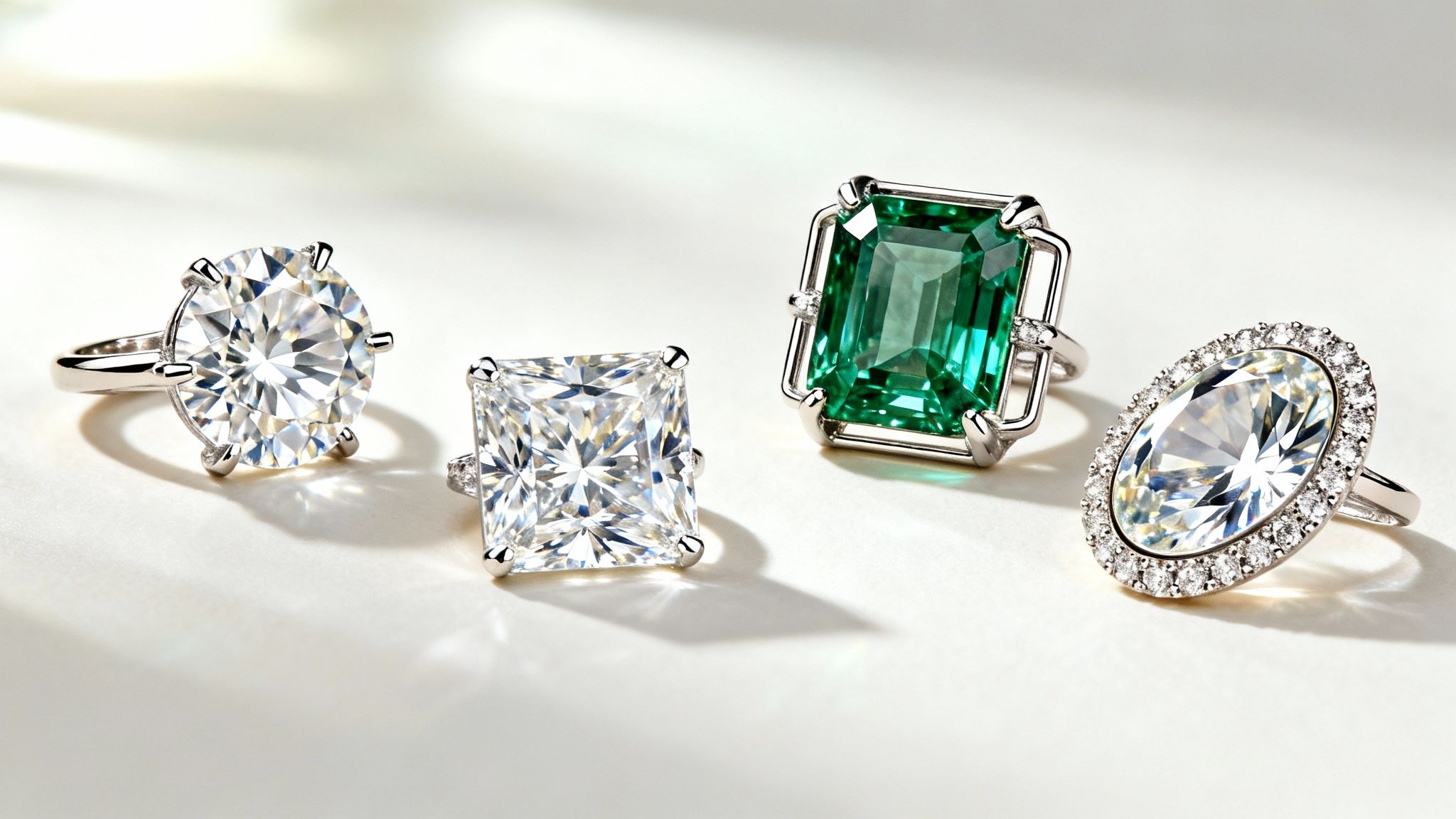
Let's walk through how to create these perfect pairings, making sure your chosen diamond gets the showcase it deserves.
Round Brilliant Diamonds: The Versatile Classic
The round brilliant is the undisputed champion of versatility. It's the most popular diamond shape by a long shot—making up nearly one-third of all engagement ring diamonds—because its symmetrical shape and unmatched sparkle work with practically any setting you can dream up.
Four-Prong Setting: This is a clean, modern choice that lets more of the diamond show, giving the round stone a subtle, squared-off silhouette. It’s all about minimalist elegance.
Six-Prong Setting: A truly timeless look. The six prongs create a beautiful, symmetrical frame that accentuates the diamond's perfect roundness while adding a bit more security.
Halo Setting: Want to maximize the sparkle and visual impact? Nothing does it better than a halo. That circle of smaller diamonds makes the center stone look significantly larger and more brilliant.
Because they have no sharp corners, round diamonds are exceptionally durable and adaptable, making them a safe—and always stunning—bet for nearly any design.
Oval, Cushion, and Pear Shapes: Enhancing the Curves
Elongated shapes like ovals, cushions, and pears have a romantic, graceful feel. The key here is to pick a setting that celebrates and follows their soft, beautiful curves. These shapes are soaring in popularity, with ovals alone accounting for a massive 23% of rings purchased in 2023.
A simple four-prong setting is a fantastic way to secure the stone without hiding its unique outline. Halos are especially effective for these shapes, as they trace the perimeter perfectly and make the stone pop. For a modern, fashion-forward twist, try setting an oval diamond in an east-west (horizontal) orientation.
To dive deeper into stone shapes and what makes each one special, check out our guide to diamond ring shapes.
Expert Tip: For elongated shapes like ovals and pears, prong placement is key. You want balanced protection at the north, south, east, and west points. For a pear shape, a V-prong at the delicate tip is a non-negotiable for keeping it safe.
Princess, Emerald, and Radiant Cuts: Protecting the Corners
Shapes with sharp, defined corners—like princess, emerald, and radiant cuts—need a setting that’s as much about protection as it is about style. Those beautiful corners are the most vulnerable points on the diamond and can easily chip if left exposed.
Protective Engagement Ring Settings:
Bezel Setting: This is your most secure option, period. A bezel wraps a thin metal rim around the entire stone, providing a sleek, modern look while completely shielding the diamond's corners from any impact.
Four-Prong Settings: If you love the look of prongs, just make sure they're placed directly on the four corners. This not only locks the stone in place but also acts as a tiny, dedicated shield for each point.
Basket Setting: A basket features horizontal bands connecting the prongs just below the stone. It creates a supportive "basket" that adds stability and an extra layer of structural protection.
These settings are absolutely crucial for maintaining the integrity of angular diamonds over a lifetime of wear. They beautifully blend sophisticated style with total peace of mind.
Choosing a Setting That Fits Your Daily Life
An engagement ring isn’t just for a big moment; it’s for all the little moments that follow. It's meant to be worn every day, through everything from typing at a desk and washing dishes to chasing after a toddler. That’s why the setting you choose has to be more than just beautiful—it needs to be practical.
Choosing the right setting is less about what’s trending and more about a real, honest look at your life. A ring that’s perfect for one person could be a constant source of worry for another. This is about finding that sweet spot between stunning design and everyday durability, so you can love your ring for how seamlessly it fits into your world.
The most beautiful ring is one you can wear with confidence, knowing it's secure enough for your life's adventures. Your daily routine should be the ultimate guide in deciding between delicate prongs and more protected styles.
Let’s break down a few common lifestyles to see which settings might be the best match for you.
For the Active Professional or Parent
If your hands are always busy—think nurses, artists, teachers, parents, or anyone with a hands-on job—security is everything. A high-set, delicate ring can snag on gloves, catch on equipment, or get bumped during a chaotic day. You need a setting that keeps your diamond safe without getting in the way.
Low-profile settings are your best friend here. These designs sit closer to the finger, which seriously cuts down the risk of snagging and impact.
Top Setting Choices:
Bezel Setting: This is the undisputed champion of security. A solid rim of metal wraps around the entire diamond, protecting its edges from chips and holding it incredibly tight. Its smooth, snag-free surface is as practical as it gets.
Channel Setting: In this style, smaller diamonds are tucked into a groove within the band, shielded by metal walls on both sides. This creates a sleek, secure line of sparkle that won’t catch on anything.
Basket Setting: Love the classic look of prongs but need more stability? A basket setting is the perfect compromise. It adds horizontal bands connecting the prongs just below the diamond, giving it extra support and a lower profile.
For the Glamour Enthusiast
If your daily routine is less about manual labor and more about making a statement, you can go for designs that really turn up the sparkle and drama. These settings are all about catching the light from every possible angle to create that undeniable "wow" factor. Here, the focus is pure brilliance.
These types of settings often sit higher off the finger, lifting the stone into the light to amplify its fire and make it the undeniable star of the show.
Top Setting Choices:
Halo Setting: Want to make your center stone look even bigger? A halo does just that by encircling it with a ring of smaller diamonds. It’s an incredibly popular choice for anyone who wants maximum sparkle and a seriously glamorous feel.
High-Set Solitaire: A classic four or six-prong setting that lifts the diamond high off the band is designed for one thing: light performance. Elevating the stone allows light to flood in from all sides, creating that breathtaking, fiery sparkle.
Pavé Setting: Tiny diamonds set closely together create a surface that looks like it's literally paved with light. This adds an incredible amount of glitter and perfectly complements a show-stopping center stone.
Choosing the Right Metal for Your Setting
The metal you choose for an engagement ring is so much more than a color preference. It's the foundation of the entire piece, setting the stage for everything from the ring's overall vibe to how it feels on your hand. It even influences how your diamond looks and what kind of care the ring will need down the road.
Think of the metal as the canvas and the diamond as the painting. The background can make the stone pop with icy brilliance or give it a warm, vintage-inspired glow. The four most popular choices—platinum, white gold, yellow gold, and rose gold—each bring a totally different personality to the table. Let's break down what makes each one special.
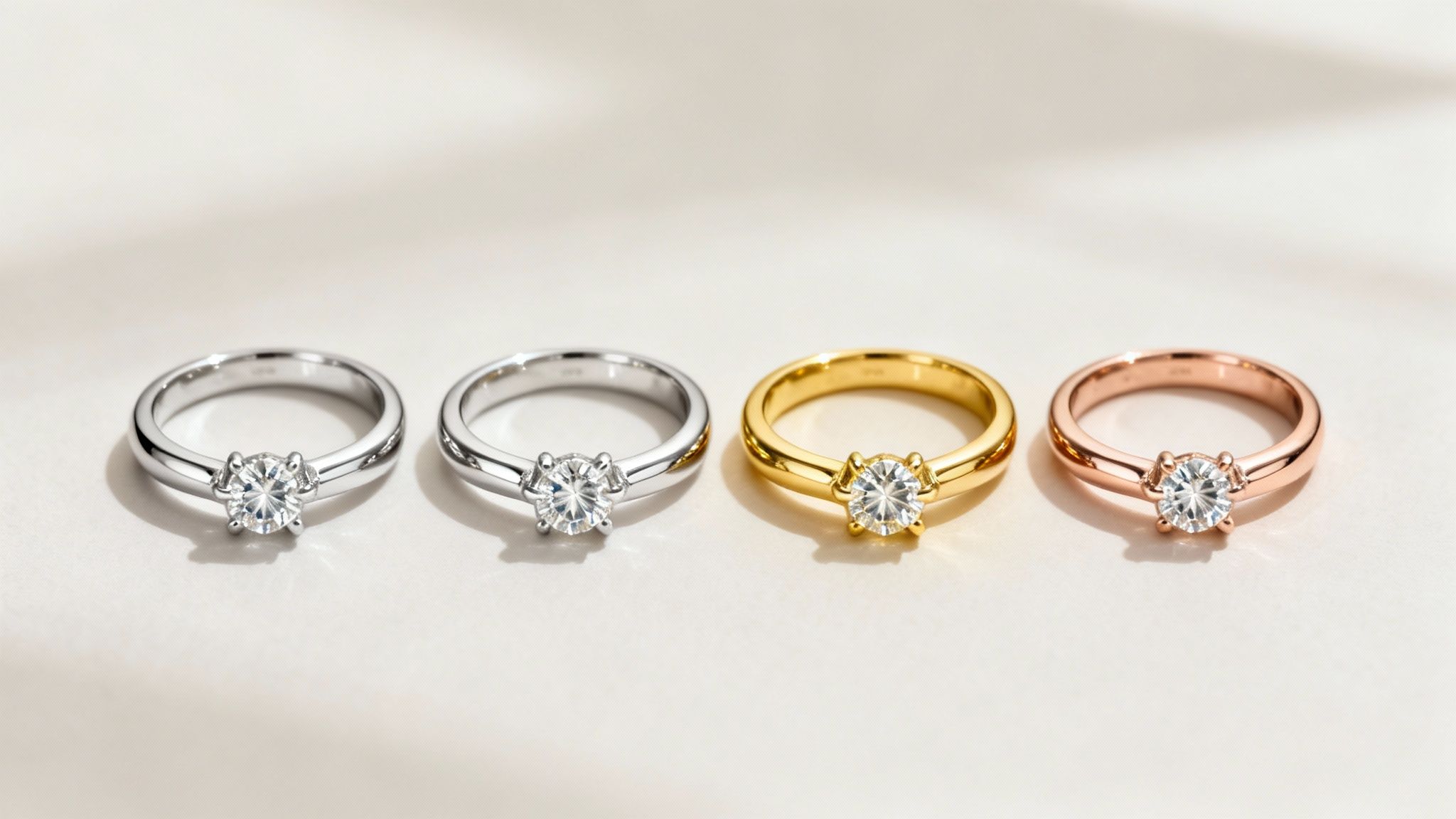
Platinum and White Gold: The Cool Tones
At a quick glance, platinum and white gold look almost identical. They both offer that classic, bright white finish that so many people love for an engagement ring. But underneath the surface, they're fundamentally different materials with their own pros and cons.
Platinum is the top-tier choice. It’s a naturally white metal, so its color will never fade or change over time—what you see is what you get, forever. It’s also incredibly dense and strong, making it exceptionally durable for everyday wear. A huge plus? Platinum is naturally hypoallergenic, making it the safest bet for anyone with sensitive skin. The only real downside is the price; its rarity and weight make it a bigger investment upfront.
White Gold gives you that same bright, silvery look but at a more accessible price point. It’s made by mixing pure yellow gold with white metal alloys and then coating it with a layer of rhodium for that brilliant shine. That rhodium plating is stunning, but it does wear off over time. To keep it looking its best, a white gold ring needs to be taken to a jeweler for replating every few years. It's a bit of ongoing maintenance to keep in mind.
Think of it this way: Platinum is like a luxury sedan—prestigious, built to last, and requires less cosmetic upkeep. White Gold is the high-performance sports car—it looks incredible but needs regular detailing to stay in showroom condition.
Yellow Gold and Rose Gold: The Warm Tones
If you're drawn to a warmer, more romantic aesthetic, yellow and rose gold are stunning options. The color of these metals can completely change the personality of a ring, adding a unique character that feels both timeless and personal.
Yellow Gold is the undisputed classic. Its sunny, warm hue casts a beautiful glow that gives any ring an instant vintage feel. It’s also incredibly flattering for diamonds with a slightly lower color grade (think the G-J range). The metal's warmth perfectly complements any subtle tones in the stone, making everything look intentional and cohesive.
Rose Gold has that romantic, modern-vintage appeal, thanks to its signature pinkish tint. That beautiful color comes from mixing yellow gold with a copper alloy. The result is a warm, coppery tone that looks amazing on just about every skin tone. Just like yellow gold, it pairs beautifully with diamonds that have a hint of warmth, creating a look that’s soft and incredibly romantic.
To dive deeper into all the options, our complete guide covers everything you need to know about the different types of metal for rings. Understanding what makes each metal tick is the key to choosing a ring that’s not just beautiful, but practical for your life.
How Settings Influence Price and Customization
Ever compared two rings with identical center stones and been shocked by the price difference? More often than not, the setting is the reason. The design you choose is one of the biggest factors driving the final cost, right up there with the diamond itself.
A simple solitaire setting, for example, is the most direct and budget-friendly path. It uses the least amount of metal and takes less time to craft. But once you start adding complexity—like a halo of tiny diamonds or an intricate pavé band—the price climbs, and for good reason.
Breaking Down the Cost Factors
So, what exactly are you paying for when you choose a more elaborate setting? The price difference isn't random; it's a direct reflection of the materials and skill needed to bring that design to life.
Here are the three main things that drive the cost of an engagement ring setting:
Precious Metal Weight: It's simple—a delicate, thin band uses less gold or platinum than a thick, substantial one. Designs with more architectural elements, like a wide band or a cathedral mount, will naturally cost more because they use more metal.
Number and Quality of Accent Stones: Every single tiny diamond in a halo or along a pavé band adds to the total cost. While they’re small, their collective price adds up fast. The quality of those accent stones (their cut, color, and clarity) also plays a big role.
Labor and Craftsmanship: This is a huge one. Setting a single solitaire diamond is a fairly straightforward job for a skilled jeweler. On the other hand, meticulously setting dozens of tiny pavé stones by hand is an incredibly time-consuming art form that requires hours of expert labor.
Understanding this helps explain why one setting can cost thousands more than another. You’re not just paying for a look; you’re investing in the raw materials and the artisan skill it takes to create it.
Getting a Custom Look on a Budget
The desire for a unique ring is stronger than ever. In the U.S., the average engagement ring costs around $5,800 to $6,000, and younger buyers are increasingly looking for custom and sustainable options. A remarkable 71% of couples under 35 now say sustainability is a priority, which often leads to more thoughtful, custom designs. You can find more insights on these jewelry market trends on amorefinejewelry.com.
A fully custom, from-the-ground-up ring can get expensive, but you don’t need to start from scratch to get that one-of-a-kind feel. This is where "customization" becomes your best friend.
Many jewelers can modify existing designs to create a semi-custom piece that feels uniquely yours, but without the price tag of a fully bespoke creation. Think of it like personalizing a new car with select upgrades rather than building one from the ground up.
For instance, you could take a classic solitaire setting and ask to add a "hidden halo"—a little circle of diamonds tucked away on the basket beneath the main stone. Or you could swap out standard prongs for sharper, more elegant claw prongs. These small changes can have a massive impact on the final look, helping you find that perfect balance between your dream ring and your budget.
Common Questions About Engagement Ring Settings
It’s completely normal to have a few lingering questions as you get close to picking out the perfect ring. In fact, it's a good sign—it means you're thinking through all the important details. This final section tackles the most common queries we hear, giving you clear, straightforward answers to help you choose with total confidence.
Which Engagement Ring Setting Is the Most Secure?
Without a doubt, bezel settings are the most secure choice you can make. The design features a thin metal rim that completely wraps around the gemstone, acting like a protective bumper against accidental bumps or knocks. It also prevents the stone from snagging on clothes, which is a huge plus.
This makes it the perfect setting for anyone with a hands-on job or a really active lifestyle. While prong settings are still very secure when they're well-maintained, a bezel just offers that extra layer of peace of mind.
How Can I Make My Diamond Look Bigger?
The halo setting is the number one trick for making a center diamond appear larger than it actually is. The design uses a circle of tiny pavé diamonds to frame the main stone, creating a brilliant "halo" that expands the ring's overall sparkle and surface area. It's an optical illusion that really works.
Another great strategy is to pick a setting with a very thin, delicate band and slender prongs. By minimizing the amount of visible metal, you make the diamond the undeniable star of the show, which naturally creates the illusion of a bigger stone.
Beyond the practical aspects of choosing a setting, many couples are also interested in understanding the historical reasons behind wearing wedding rings on the left hand.
What Is the Difference Between White Gold and Platinum?
This is a big one, because while they look almost identical at first, white gold and platinum are two very different metals.
Platinum is a naturally white metal. It’s denser, stronger, and hypoallergenic, making it a great choice for sensitive skin. Its color will never fade or change, so it stays that beautiful silvery-white forever.
White Gold starts as yellow gold, which is then mixed with white alloys and plated with rhodium to get that bright, white finish. This rhodium plating eventually wears off and needs to be reapplied every 1-3 years to keep the ring looking its best.
Platinum usually costs more upfront, but white gold comes with long-term maintenance costs. It’s definitely something to think about when you're weighing the total investment.
At Panther De Luxe Shop, we believe the perfect setting is out there, just waiting to tell your story. Explore our curated collection of engagement ring settings to find the one that will turn your dream ring into a reality. Find your forever ring at https://www.pantherdeluxe.com.
Comments