
A Guide to Earrings Hooks Types and Styles
- Luke Zucco
- Jan 20
- 14 min read

Ever lost a favorite earring because it slipped out without you even noticing? It’s a frustratingly common story, and the culprit is usually one tiny but mighty component: the hook. Picking the right earring hook is about so much more than just looks. It’s a practical choice that determines how securely your earrings stay put, how comfortable they feel all day, and how well they complete the overall design.
Think of the earring hook as the unsung hero of your jewelry box. A flimsy or poorly chosen one can lead to lost treasures and sore earlobes, but the right one? It makes your favorite pair wearable, secure, and effortlessly stylish. The world of earrings hooks types isn't complicated, but knowing the key players can completely change your jewelry experience. The most common styles you'll run into are Fishhooks (or French Hooks), Leverbacks, Kidney Wires, and Shepherd Hooks, and each one brings something different to the table.
Key Factors to Consider
When you're choosing an earring hook, it really boils down to balancing three things. Getting this mix right is the secret to finding the perfect match for both the earring and your lifestyle.
Security: How likely is this earring to make a break for it? This is non-negotiable for valuable pieces or if you're constantly on the move.
Comfort: Does it feel like you're wearing anything at all? A good hook shouldn't pinch, pull, or irritate your ear, even after hours of wear.
Style: Does the hook blend in or stand out? Some hooks are purely functional and nearly invisible, while others are an integral part of the earring's design.
This diagram breaks down how these three elements—security, comfort, and style—are the pillars of a great earring hook.
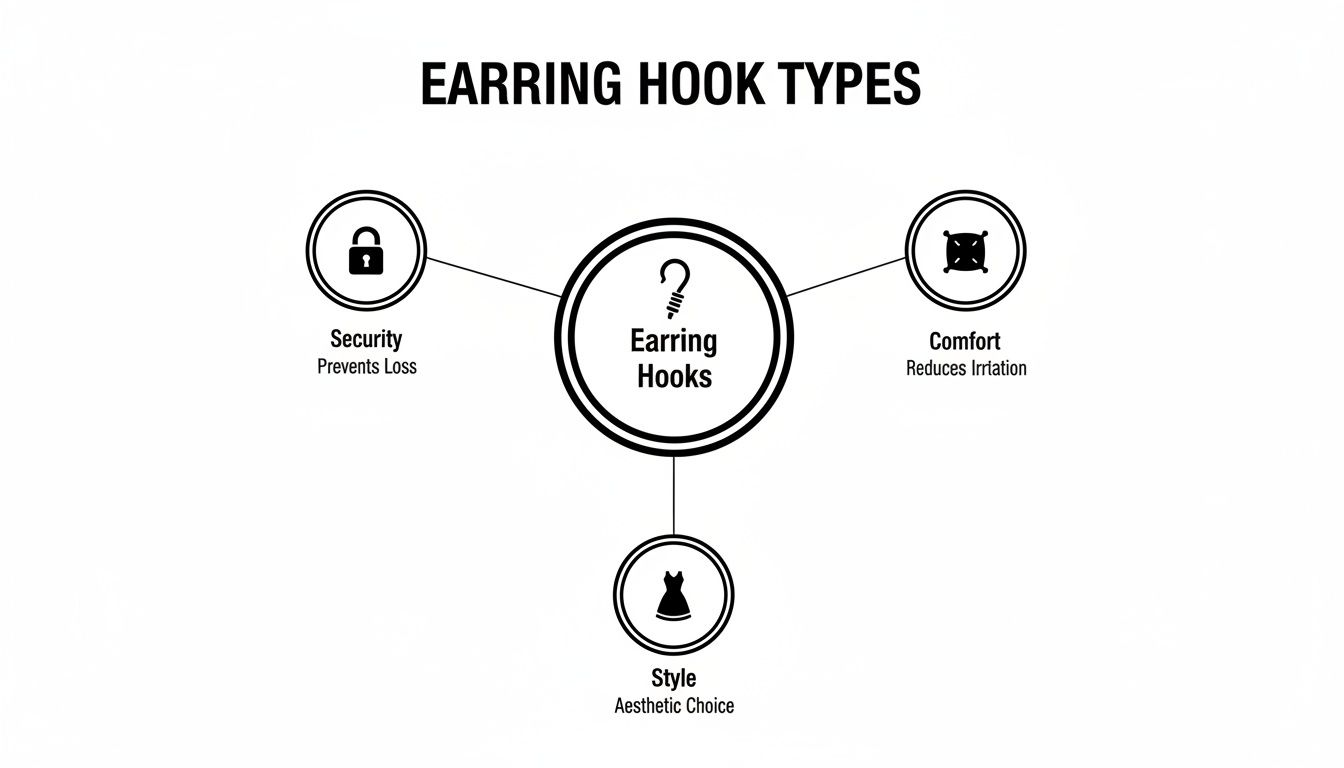
As you can see, the sweet spot is where function meets fashion. A hook that’s secure, comfortable, and stylish is the goal for a piece of jewelry that’s both beautiful and practical.
Quick Comparison of Common Earring Hook Types
To give you a head start, here’s a quick rundown of the most popular earring hook styles you’ll see. Think of this as your cheat sheet for understanding the basics at a glance.
Hook Type | Security Level | Common Style | Best For |
|---|---|---|---|
Fishhook | Low to Medium | Casual, Bohemian | Lightweight, dangling charms |
Leverback | High | Elegant, Formal | Valuable gems, professional wear |
Kidney Wire | Medium to High | Minimalist, Secure | Everyday wear, active individuals |
Shepherd Hook | Low to Medium | Classic, Artisan | Traditional or vintage designs |
Each of these styles has its moment to shine. A simple Fishhook might be perfect for a pair of feather earrings, while a precious gemstone deserves the Fort Knox-level security of a Leverback. Knowing the difference helps you make smarter choices, whether you're buying a new pair or designing your own.
The Timeless Appeal of Fishhooks and French Hooks
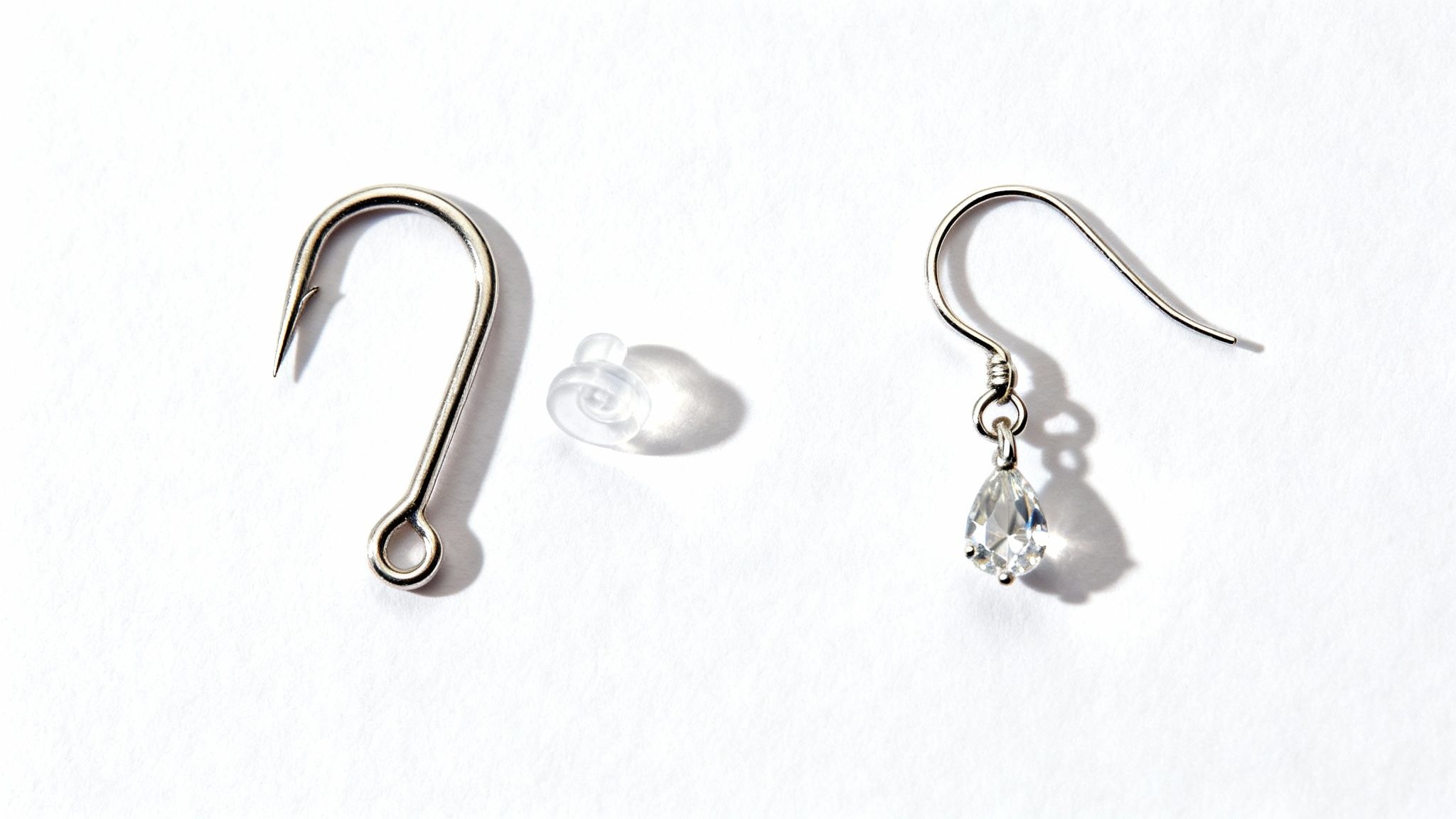
When you picture a classic dangle earring, you're probably thinking of a Fishhook. Also known as a French Hook, this is the quintessential earring finding, loved for its graceful simplicity and effortless style. Think of it as a perfectly curved fishing line, designed to show off a treasured lure—in this case, your beautiful earring—with just the right amount of swing and flair.
The design is brilliantly simple: a single piece of wire curves through your earlobe and hangs down behind it. This open-loop style makes them incredibly easy to slip on and off, which is a big reason why they’re so popular for everyday wear. They let the earring swing freely, catching the light and drawing attention with every turn of your head.
The Allure of Simplicity and Movement
The real magic of fishhook earrings is how they let the main attraction shine. The hook itself is minimalist, acting as a subtle anchor that lets the bead, charm, or gemstone take center stage. This makes them a go-to for jewelry designers creating everything from casual bohemian pieces to delicate, dangly gemstone drops.
Their lightweight nature also makes them incredibly comfortable. When they’re made from quality materials, you can often forget you're even wearing them. It’s this blend of comfort and style that has secured their spot as a staple in jewelry boxes everywhere.
The enduring popularity of Fishhooks comes down to a perfect balance of form and function. They provide just enough structure to be secure for daily activities while giving the earring maximum movement to really show off its design. It’s a classic that just works.
Of course, their biggest drawback is that open loop. Without a back, they can sometimes snag on a scarf, your hair, or a sweater and slip out without you even noticing. This is why you’ll almost always find them sold with a small, clear silicone or rubber stopper (often called an “earring nut”) for a little extra peace of mind.
Historical Roots and Modern Dominance
This elegant hook has a surprisingly rich history. It first appeared in France during the Belle Époque era around 1900, gaining serious traction when iconic jewelers like Cartier began using them. By 1910, they were featured in a remarkable 75% of the maison's earring designs, cementing their status as the gold standard.
Even today, fishhook styles make up about 25% of the earring market, especially in North America and Europe. It just goes to show how their timeless appeal holds up against ever-changing jewelry industry trends.
Best Uses for Fishhook and French Hook Styles
This hook is incredibly versatile, but it really shines with certain designs. Here's where it works best:
Lightweight Dangle Earrings: They're perfect for earrings that aren't too heavy, like single beads, small metal charms, or feather designs.
Bohemian and Artisan Jewelry: The simple, organic curve of a French hook perfectly complements the handcrafted, earthy feel of bohemian styles.
Everyday Casual Wear: For a quick and easy accessory to complete your daily look, the simplicity of a fishhook is totally unmatched.
Ultimately, the Fishhook's legacy is built on its elegant minimalism. While more secure options exist for super valuable or heavy earrings, this classic hook remains the go-to choice for millions. Its graceful curve and ability to create beautiful movement ensure it will continue to be a beloved and essential part of the world of earrings hooks types for a long, long time.
Secure and Sophisticated Leverback Hooks
Let’s talk about those earrings you simply can’t bear to lose. A family heirloom, a gift from someone special, or that stunning pair of gemstone drops you splurged on. When security is the top priority, the Leverback hook is your best friend. Of all the earring hook types out there, leverbacks are the gold standard for keeping your treasures safe.
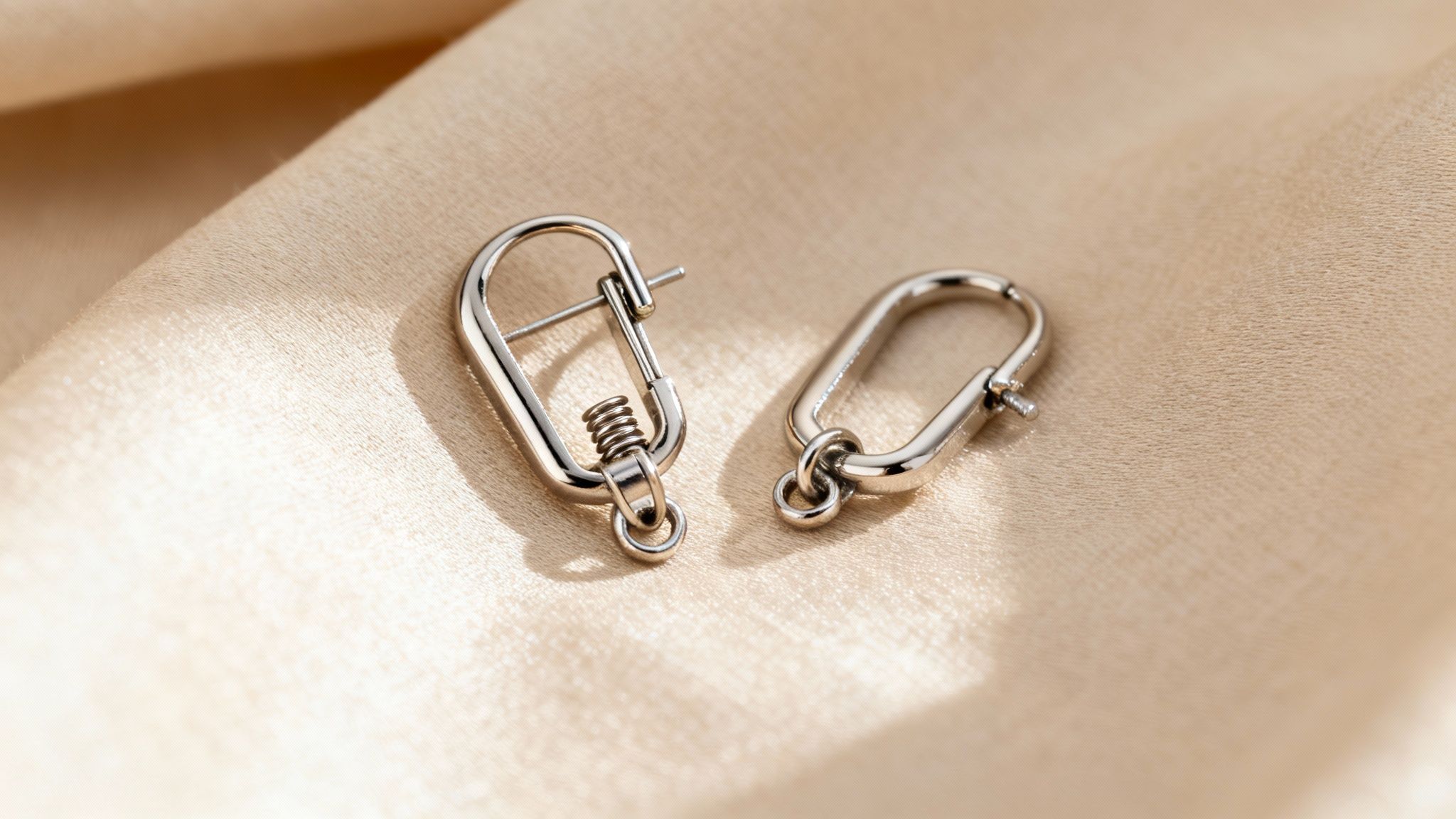
So, how do they work? Imagine a tiny, spring-loaded gate at the back of the earring. That’s the magic of a leverback. The curved wire slips through your ear, and a hinged lever snaps shut behind it, creating a completely closed loop. It’s a simple but brilliant mechanism that makes it almost impossible for an earring to fall out by accident.
Unlike an open-ended fishhook that can catch on a scarf or get tangled in your hair, the leverback’s secure closure means you can go about your day without a single worry. This design makes it the obvious choice for more valuable or sentimental earrings that deserve maximum protection.
The Polished Aesthetic of Leverbacks
Beyond their top-notch security, leverback hooks just look incredibly polished and refined. The closed design creates a clean, continuous line from front to back that feels both intentional and sophisticated. It’s a sleek look that makes them a fantastic match for more formal outfits or professional settings.
With a leverback, the hook itself often feels like a seamless part of the overall design, not just a functional component. This integration provides a stable, elegant anchor that complements a huge range of earring styles, from delicate drops to more substantial, ornate pieces.
This blend of form and function is really what sets leverbacks apart. They provide the support needed for heavier earrings without sacrificing comfort or style, ensuring your earrings hang perfectly without drooping.
The true value of a leverback is the peace of mind it offers. Knowing your most cherished earrings are locked in place lets you wear them with confidence, no matter what the day holds.
When to Choose Leverback Hooks
While they’re wonderfully versatile, leverbacks truly shine in specific situations. Their unique benefits make them the best option for certain styles and occasions where other earring hooks might fall short.
Here’s when you should definitely reach for leverback earrings:
Valuable Gemstone or Diamond Earrings: When you've invested in precious stones, you need a finding that protects that investment. The locking mechanism of a leverback is pretty much non-negotiable for high-value pieces.
Formal Events and Professional Settings: For weddings, big meetings, or elegant dinners, the sophisticated look of a leverback adds a touch of class and ensures your earrings stay put all night long.
Active Lifestyles: If you're always on the move, that secure closure prevents your earrings from getting lost during a busy day. You don't have to choose between wearing your favorite pair and actually living your life.
Heirloom and Sentimental Jewelry: For pieces that carry deep personal meaning, the thought of losing them is just devastating. Leverbacks give you the assurance that those irreplaceable treasures will remain safely with you.
Ultimately, leverbacks are more than just a type of earring hook; they're a smart choice for anyone who values both security and style. Their elegant design and robust locking mechanism provide a reliable foundation for your most treasured earrings, making them a must-have in any serious jewelry collection.
Kidney Wires vs. Shepherd Hooks: What’s the Difference?
At a glance, Kidney Wires and Shepherd Hooks might seem like close cousins. They both have that elegant, swooping curve we love, but when it comes to how they function, they’re worlds apart. One is all about locked-in security, while the other leans into classic, handcrafted charm. Knowing the difference is key to picking the right one for your earrings.
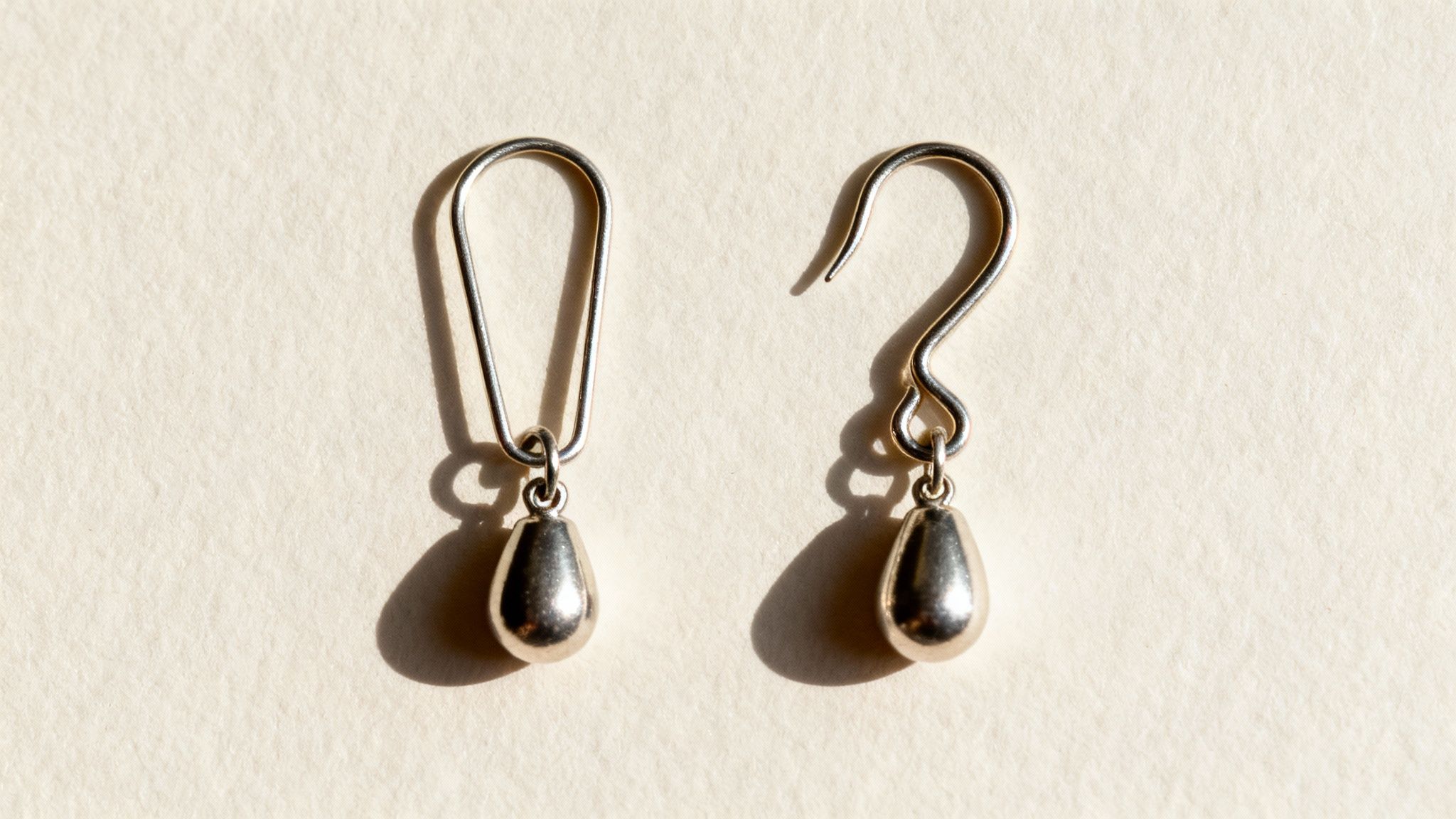
Let’s start with the clever and super-secure Kidney Wire. Think of it as a tiny, self-contained latch. It’s a single piece of wire that loops all the way around and hooks back into itself, creating a completely closed loop.
This ingenious design means you get serious security without ever needing to fuss with a separate earring back. No more lost pieces! It’s a practical, reliable choice that’s perfect for everyday wear.
The Clever Design of Kidney Wires
Kidney wires really nail that sweet spot between security and simplicity. Because the wire itself creates the closure, you get the same peace of mind as a leverback but with a much lighter, more delicate feel. This makes them a go-to for anyone who’s active or just tired of losing one half of a favorite pair.
Their smooth, rounded shape is also incredibly comfortable. It distributes the earring’s weight evenly across your lobe without any pinching or pulling. It's this blend of functional elegance that has kept them popular for decades.
In fact, the kidney hook was a total game-changer after its U.S. patent in 1925. By 1930, it had already captured 50% of the American earring market. Today, they’re still a major player, making up 20-30% of fashion earring sales by appealing to everyone from teenagers to men who want something discrete and easy. You can dive deeper into jewelry industry trends over at Forge Craft Mens Jewelry.
The Classic Form of Shepherd Hooks
Now, let’s talk about the Shepherd Hook. This style has a more traditional, S-shaped curve that you’ll often see in artisan and handcrafted jewelry. Its name comes from the deep, pronounced hook at the back that looks just like a shepherd’s crook.
Unlike the self-closing Kidney Wire, a Shepherd Hook is an open-loop design. It’s similar to a Fishhook but usually longer and a bit more stylized. That extended tail gives it more balance than a standard Fishhook, but it doesn’t lock shut.
This classic form is loved for its old-world charm and the way it lets dangling elements sway so gracefully. It’s a true staple in vintage-inspired and bohemian designs.
Comparing Hook Styles: Fishhook vs. Kidney Wire vs. Shepherd Hook
To really get a feel for the nuances between these popular earrings hooks types, it helps to see them side-by-side. The table below breaks down the key differences between the everyday Fishhook, the secure Kidney Wire, and the classic Shepherd Hook, helping you zero in on what matters most to you.
Feature | Fishhook | Kidney Wire | Shepherd Hook |
|---|---|---|---|
Closure Type | Open Loop | Closed Loop (Self-Latching) | Open Loop |
Security Level | Low | High | Medium |
Requires a Back? | Recommended | No | Recommended |
Common Aesthetic | Casual, Minimalist | Sleek, Modern, Practical | Artisan, Vintage, Ornate |
Best For | Lightweight dangles | Everyday wear, active use | Handcrafted, unique pieces |
Ultimately, choosing between these styles is a balancing act between looks and practicality. If your top priority is making sure your earring stays put no matter what, the closed-loop design of the Kidney Wire is your winner. But if you’re drawn to the timeless, handcrafted feel of artisan jewelry, the elegant curve of a Shepherd Hook is probably calling your name.
Choosing Hypoallergenic and Skin-Friendly Materials
The perfect earring hook isn't just about shape and security. The metal it’s made from is just as critical, especially if you have sensitive skin. A nasty allergic reaction can turn a beautiful pair of earrings into an itchy, uncomfortable nightmare. Getting familiar with the materials used in different earrings hooks types is the real secret to all-day comfort.
So, what’s the main offender behind most skin reactions? It’s almost always nickel. This metal is often mixed into alloys to make jewelry more durable and less expensive. For a lot of people, though, nickel triggers contact dermatitis—a lovely condition that brings on redness, itching, and general misery. This is exactly why the word "hypoallergenic" is so important in the jewelry world.
Navigating Hypoallergenic Materials
To keep your ears happy and irritation-free, it helps to understand what is hypoallergenic jewelry. The term basically means a material is far less likely to cause an allergic reaction. When you’re picking out hooks for sensitive ears, some metals are just hands-down better than others.
Here are the best options you can find:
Titanium: This is the undisputed champion of hypoallergenic metals. It’s completely nickel-free and biocompatible, which is a fancy way of saying the human body doesn’t react to it. It’s the same stuff used in medical implants, and for good reason.
Niobium: A close cousin to titanium, niobium is another pure element that’s incredibly inert and safe for even the most sensitive skin. Bonus points: it can be anodized to create a whole rainbow of brilliant colors, opening up some really cool design possibilities.
Surgical Steel: A really popular and budget-friendly hypoallergenic choice. But you have to be picky. Look for specific grades like 316L or 316LVM, which contain such a tiny amount of nickel that it’s safely trapped within the metal. Our deep dive on what is surgical steel jewelry breaks this down even further.
Choosing any of these gives you serious peace of mind. You can wear your earrings without worrying about a reaction later.
Understanding Precious Metals and Other Options
Gold and silver are timeless, but they have their own quirks when it comes to sensitive skin. It’s important to know that not all gold or silver is created equal.
Gold Hooks:When you're talking about gold, higher karats mean more purity and less nickel. 14k gold is usually the sweet spot, offering a great mix of purity for sensitivity and strength for durability. If you go lower, like 10k gold, you’re getting a higher percentage of other alloys, which bumps up the risk of a reaction.
Sterling Silver Hooks:By definition, sterling silver is an alloy of 92.5% silver and 7.5% other metals—most often copper. It’s usually a safe, nickel-free bet. However, some cheap, low-quality silver from sketchy sources might have traces of nickel snuck in. It’s always best to buy from reputable jewelers to make sure your sterling silver is the real deal.
Picking the right material isn't just a style choice; it’s about your health. Prioritizing truly hypoallergenic metals like titanium or high-grade surgical steel can completely change your relationship with earrings, making them a joy to wear instead of a source of pain.
Matching Earring Hooks to Your Style and Occasion
Choosing the right earring hook is like picking the perfect shoes for an outfit—it’s a small detail that makes a huge impact on your overall look and comfort. Now that you know the different earrings hooks types, you can start matching them to your life with total confidence. The goal here is to make a smart, intentional choice so your earrings aren't just beautiful, but perfectly suited for whatever you're doing.
Think of it this way: you wouldn't wear stilettos on a hike. The same logic applies to your earrings. A simple French hook, with its carefree dangle, is the perfect companion for a bohemian festival outfit or a casual coffee date. Its effortless vibe just works with relaxed, flowy aesthetics.
Real-World Scenarios
Making the right choice is so much easier when you can picture it. Let’s break down a few common situations to see how different hooks really shine.
For a Busy Day: If you’re constantly on the move, running errands, or chasing after kids, a Kidney Wire is your new best friend. Its secure, self-latching design means you won’t have to stress about losing an earring while you’re rushing around.
For an Important Event: Heading to a wedding, a gala, or a big business meeting? Go for the elegance and security of a Leverback. Its polished look and locking mechanism give you the peace of mind you need when wearing valuable or formal pieces.
Thinking this way elevates your jewelry from a simple accessory to a well-considered part of your personal style. For more ideas on leveling up your look, check out this game-changing fashion advice for women.
How Hooks Influence the Overall Look
Beyond just security, the shape and length of a hook completely change how an earring dangles and interacts with your features. A longer hook, like a classic Shepherd hook, can add graceful movement to a handcrafted piece, drawing the eye downward in a really flattering way.
This isn't just a modern trend. Earring hooks have dominated jewelry since the late 19th century, with the Shepherd's hook design first popping up around 1890 in Europe. By 1920, over 60% of earrings in major fashion capitals featured hook backs, proving just how timeless their appeal is.
The way an earring hangs can also dramatically complement your face shape. Some hook types create length, while others add a bit of width, enhancing your natural features. To master this art, take a look at our complete guide on choosing the best earrings for your face shape for personalized tips.
Ultimately, understanding these little details empowers you to become a more savvy jewelry wearer. It’s about recognizing that the right hook doesn’t just hold the earring—it completes it.
Got Questions About Earring Hooks? We've Got Answers
Even after you've seen all the styles, a few practical questions always pop up. It's one thing to know the names, but it's another to know how they'll actually feel and function day-to-day. Here are some straightforward answers to the questions we hear most often, so you can choose, wear, and love your earrings without a second thought.
What Is the Most Secure Type of Earring Hook?
When you’re worried about losing a treasured pair, one style is the clear winner for security: the leverback hook.
Leverbacks are built with a clever hinged mechanism that closes completely, creating a solid loop behind your earlobe. This design essentially locks the earring in place, making it nearly impossible for it to slip out by accident. They’re the go-to for valuable pieces or for anyone who’s constantly on the move. Kidney wires are a close second, since they also latch shut to form a secure loop.
How Do I Choose the Best Material for Sensitive Ears?
For anyone with sensitive ears, the metal is everything. The goal is simple: avoid nickel at all costs. It’s the number one culprit behind the redness, itching, and irritation that can ruin a great pair of earrings.
If you want to dive deeper into why this metal is such a problem, our guide explains everything you need to know about what nickel-free jewelry means and how to protect your ears.
To keep your piercings happy, stick with these tried-and-true materials:
Medical-Grade Titanium and Niobium: These are the absolute best choices for sensitive skin. They’re biocompatible, meaning your body won’t react to them.
High-Quality Surgical Steel: A fantastic and durable option, but make sure it’s a certified nickel-free grade like 316L.
Precious Metals: If you love gold, aim for 14k or higher. Lower karats are often mixed with nickel alloys that can cause a reaction.
The biggest takeaway here is to become a label-reader. Always look for specific callouts like "titanium," "niobium," or "nickel-free surgical steel." It’s the only way to be sure your earrings will be as comfortable as they are beautiful.
Are Fishhook Earrings Safe to Wear Without Backs?
You can wear fishhook earrings without backs, but it's a bit of a gamble. Their beautiful, simple curve is also what makes them vulnerable.
Because they’re an open loop, they can easily snag on a scarf, your hair, or the collar of a sweater and slide right out before you even realize it’s gone. That’s why we always recommend using a small silicone or rubber stopper (sometimes called an "earring nut"). These tiny backings are nearly invisible, cost next to nothing, and provide just enough grip to keep your earrings right where they belong. Think of them as cheap insurance for your favorite dangles.
At Panther De Luxe Shop, we believe the right findings make all the difference. Explore our collection of beautifully crafted earrings, featuring a variety of secure and hypoallergenic hooks designed for style and comfort. Find your perfect pair today at https://www.pantherdeluxe.com.
Comments