
What is a halo setting and why it makes diamonds look bigger
- Luke Zucco
- Dec 17, 2025
- 12 min read

So, what exactly is a halo setting? Picture your main gemstone, and now imagine it's perfectly framed by a ring of smaller, brilliant diamonds. This sparkling border isn't just for show—it's a clever design that creates a stunning optical illusion, making the center stone look bigger and brighter than it is on its own.
The Brilliant Engineering Behind a Halo Setting
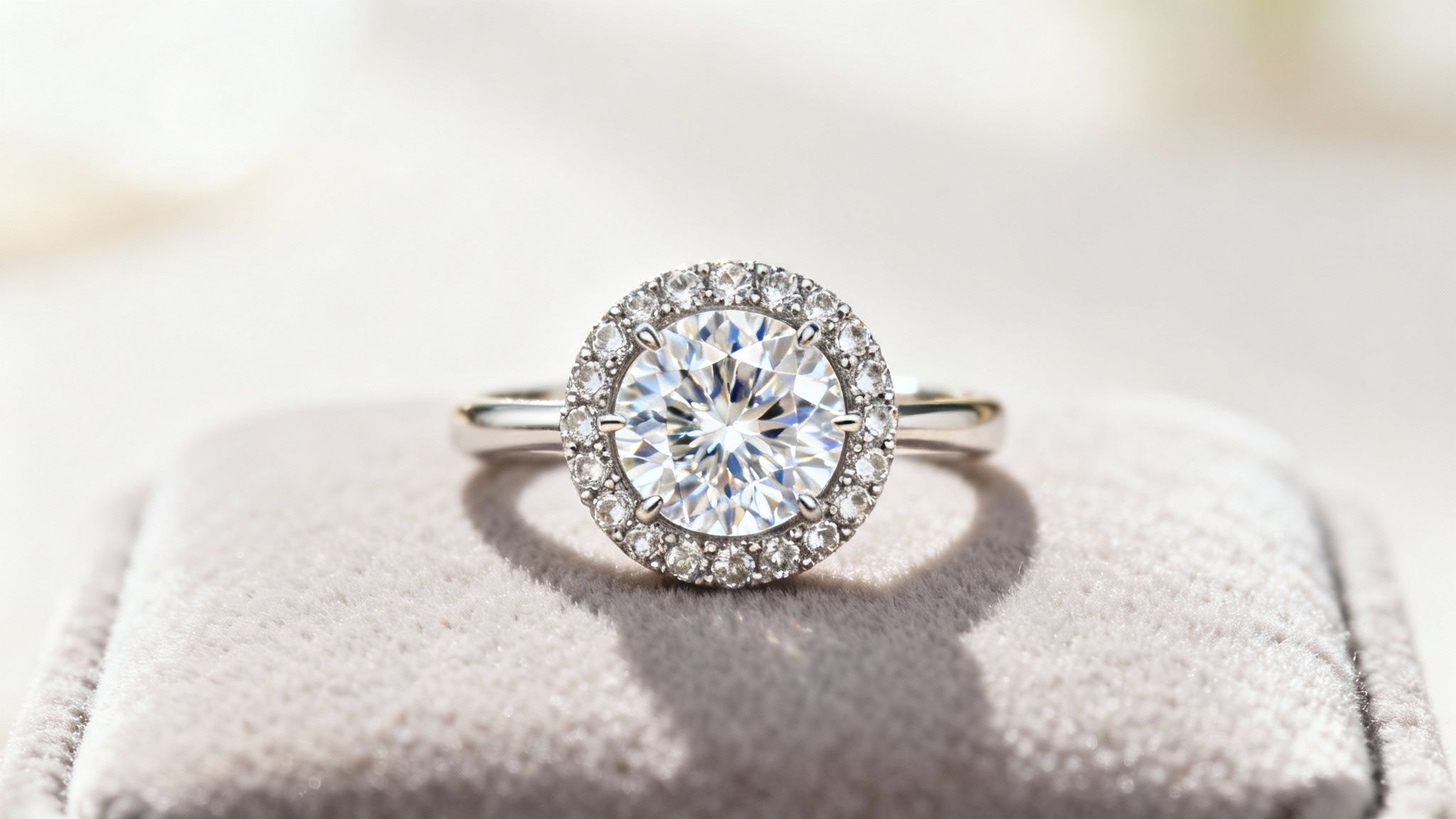
Think of the halo as the ultimate supporting cast, designed to make your star performer—the center stone—absolutely unforgettable. It's more than just a pretty detail; it's a piece of smart engineering that maximizes visual impact.
The tiny pavé or micro-pavé diamonds in the halo act like a circle of tiny mirrors. They catch light from every direction and reflect it right back onto the main gem, creating a continuous, dazzling sparkle that seems to radiate from the entire ring. The effect is so powerful, a halo can make a center stone look up to half a carat larger. It's no wonder it remains one of the most loved choices for couples.
For a quick overview of what makes this setting so special, here’s a look at its key features.
Halo Setting at a Glance
Characteristic | Description |
|---|---|
Main Feature | A central gemstone is encircled by a border of smaller pavé or micro-pavé diamonds. |
Visual Effect | Makes the center stone appear significantly larger (up to 50% bigger). |
Sparkle Factor | High. The surrounding diamonds amplify the overall brilliance and fire. |
Best For | Maximizing visual impact, enhancing sparkle, and achieving a grand, luxurious look. |
Gemstone Shapes | Highly versatile; complements virtually all shapes, including round, oval, and cushion. |
Price Point | Offers a big look for a more accessible price than a single, larger solitaire. |
This table captures the essence of the halo setting, but the real magic is in how it feels and looks on the finger.
Why Do People Love Halo Rings?
The appeal of a halo setting is a perfect blend of practicality, history, and pure elegance. It’s a design that just works, and here’s why it’s so celebrated:
It Creates a Grand Appearance. You get the look of a larger, more lavish ring without the price tag of a bigger single diamond. It’s all about smart impact.
It Enhances Sparkle. Those surrounding diamonds add a whole new layer of brilliance that elevates the entire piece, making it impossible to miss.
It Offers Incredible Versatility. Halos look amazing with nearly every diamond shape, from classic rounds to elegant ovals and modern emerald cuts. Our complete guide to stunning halo engagement rings explores just how adaptable this style can be.
The halo setting actually dates back to the Georgian era (1714–1837), when jewelers first started framing central gems with smaller diamonds. Today, its popularity is undeniable, making up 35-40% of engagement ring sales in major markets and giving the center stone a visual size boost of up to 50%.
To really see how the light plays with this design, it helps to see it captured well. Understanding a few professional product photography techniques can reveal how beautifully a halo manipulates light to create that iconic sparkle.
The Halo's Journey Through Jewelry History
The halo setting might feel like a modern invention, but its story actually begins centuries ago, long before electricity. It wasn't dreamed up overnight; this timeless design evolved through different eras, starting in a time when rooms were lit only by flickering candles.
Its story kicks off in the Georgian era (1714–1837), a period famous for its grand and romantic jewelry. Jewelers were obsessed with one thing: how to make hand-cut diamonds sparkle in dim, low-light settings. Their brilliant solution was to frame a central gem with a tight circle of smaller diamonds. This was the earliest version of the halo, and it was designed to catch every glimmer of candlelight, giving the ring a soft, dreamy glow.
From Romance to Geometry
The style carried right on into the Victorian era (1837–1901), when jewelry became packed with symbolism and sentiment. Halos from this time weren't just about diamonds; they often featured colorful gems like sapphires, rubies, or pearls to express love, passion, or purity. The halo became less about pure sparkle and more of a romantic frame that told a personal story.
Then came the roaring twenties and the Art Deco movement (1920s–1930s), which completely flipped the script. This era was all about bold geometry, sharp lines, and crisp symmetry.
The Art Deco halo was a total reimagining. Jewelers swapped the soft, romantic curves of the past for angular, architectural frames that really emphasized a stone’s shape. This is when we started seeing the iconic look of a round diamond set inside a square or octagonal halo—a style that still feels incredibly chic today.
These moments in history show that the halo isn't just one look, but a versatile concept that has been reinvented over and over again.
Georgian Era: All about maximizing sparkle in candlelight, often with rose-cut diamonds.
Victorian Era: Infused with sentimentality, mixing diamonds with colorful gemstones to tell a story.
Art Deco Era: Redefined with geometric precision, using symmetrical and linear frames for a bold look.
From its practical beginnings in candlelit ballrooms to its status as a symbol of modern luxury, the halo has proven it has serious staying power. Each chapter of its history added another layer to its identity, cementing its place as a true classic.
Finding Your Perfect Style Among Halo Variations
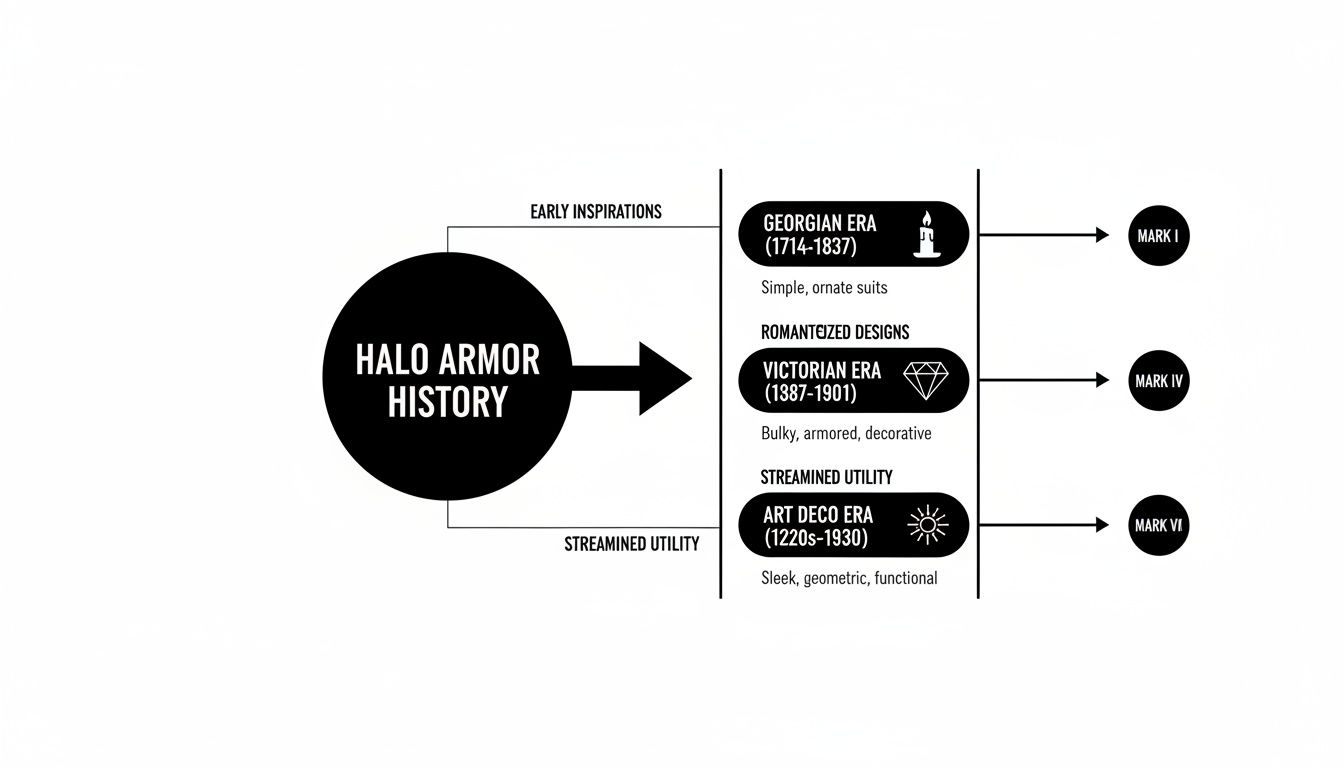
This visual timeline traces the halo setting's evolution, showing its transformation from the candlelit Georgian era through the romantic Victorian period to the geometric Art Deco movement. Each period put its own stamp on the halo, proving just how adaptable this timeless classic really is.
Not all halos are created equal. Think of the basic concept—a central stone framed by smaller diamonds—as just the starting point. From there, jewelers have spun out an incredible range of variations, each with its own distinct feel. Getting to know these styles is the key to finding a ring that truly feels like you.
The world of halos is far bigger than a single look, offering diverse options for just about any preference. To make the right choice, you'll want to explore these variations, since each one can completely change the ring's final character. Our practical guide to engagement ring settings offers a wider view of how different styles stack up, helping you pinpoint the perfect design.
Classic and Bold Statements
For most people, the halo journey starts with two foundational styles that really define the setting's core appeal.
The single halo is the quintessential classic. It features one perfect circle of pavé diamonds framing the center stone, creating a look that’s clean, elegant, and timeless. This style is loved for its ability to boost brilliance and size without feeling over-the-top, making it perfect for anyone who appreciates understated luxury.
Then there’s the double halo, which makes a much bolder statement. By adding a second concentric circle of diamonds, this design dramatically increases the ring’s surface area and sparkle factor. It’s a go-to choice for someone who wants maximum impact and an undeniably glamorous presence.
Double halos can increase a ring's brilliance by another 25% but often only raise the total cost by about 15%. This makes them a smart choice for anyone seeking maximum luxury and visual impact without a proportional price jump.
Subtle Surprises and Unique Designs
Beyond the classics, modern jewelers have introduced creative interpretations that add a unique twist to the traditional halo. These styles offer a more personalized touch, catering to specific tastes and aesthetics.
A hidden halo, also known as an under-halo, offers a secret sparkle. Instead of framing the top of the stone, the halo is set just below it, visible only from the side profile. It’s a subtle detail that adds depth and a private touch of luxury.
Other unique designs bring artistic flair to the forefront:
Floral Halos: These designs arrange the surrounding stones to look like petals, creating a soft, romantic, and nature-inspired look that feels incredibly feminine.
Bezel Halos: This modern hybrid combines the security of a bezel setting with the sparkle of a halo. A thin metal rim protects the center stone, while the surrounding halo adds brilliance, offering a sleek and secure frame.
Comparing Popular Halo Ring Styles
To help you visualize the differences, here’s a quick breakdown of how these popular halo styles compare.
Halo Style | Visual Effect | Best For |
|---|---|---|
Single Halo | Classic, elegant sparkle that enhances the center stone. | The traditionalist who loves timeless, understated luxury. |
Double Halo | Bold, glamorous, and high-impact. Maximum sparkle. | Someone who wants to make a dazzling statement. |
Hidden Halo | A subtle, secret sparkle visible from the side. | The wearer who appreciates private details and modern elegance. |
Floral Halo | Romantic, soft, and nature-inspired. | A feminine, whimsical personality who loves organic designs. |
Bezel Halo | Sleek, modern, and secure with added brilliance. | An active person who needs durability without sacrificing sparkle. |
Each of these variations tells a different story. The single halo whispers elegance, the double halo shouts glamour, and the hidden halo shares a secret. Choosing the right one is all about deciding which story best represents your own.
The Pros and Cons of a Halo Engagement Ring
A halo setting is undeniably stunning, but it’s worth thinking about how it fits into your real, everyday life. Like any ring design, it has its own set of brilliant advantages and a few practical things to keep in mind.
Figuring out that balance is the key to choosing a ring you’ll love for years—not just for how it looks, but for how it wears. On one hand, the halo is famous for delivering a grand, luxurious look. On the other, its intricate design means it needs a bit more care than a simple solitaire.
This honest breakdown will help you weigh the jaw-dropping sparkle against the real-world considerations of wearing it day in and day out.
The Advantages of Choosing a Halo Setting
One of the biggest draws of a halo setting is the incredible visual punch it packs. It's a smart design that creates a massive impact without necessarily requiring a bigger budget for the center stone itself.
Here’s where it really shines:
It Makes Your Center Stone Look Bigger: The sparkling frame of smaller diamonds creates a powerful optical illusion. A halo can make a center stone appear up to 50% larger, giving you a much more impressive look for your investment. It’s all about maximizing that presence on the finger.
The Sparkle is Unmatched: Each tiny diamond in the halo acts like a little mirror, catching light from every possible angle and bouncing it back toward the center stone. This creates an incredible synergy, producing a continuous, fire-filled brilliance that makes the whole ring just radiate.
It Adds a Layer of Protection: The halo provides a built-in buffer around the center stone’s girdle (its widest edge). Think of it as a cushion that helps shield your main diamond from accidental bumps and knocks, offering a little extra peace of mind.
A halo setting is a masterclass in visual engineering. By surrounding the main gem, it not only boosts perceived size and sparkle but also cleverly conceals the prongs holding the center stone, creating a seamless and unified sea of brilliance.
This triple-threat of enhanced size, next-level sparkle, and added security makes the halo a seriously compelling choice for anyone who wants a show-stopping ring that is both beautiful and thoughtfully constructed.
The Potential Drawbacks to Consider
While the benefits are obvious, the detailed nature of a halo ring brings a few practical points to the table. These are important to know before you make a final decision, and they mostly come down to upkeep.
Here are a few potential cons to think about:
It’s Trickier to Clean: All those tiny crevices between the halo stones and their prongs are perfect little traps for dirt, lotion, and soap. A halo simply requires more frequent and detailed cleaning to keep it looking its absolute best compared to a simpler setting.
There's a Small Risk of Losing Accent Stones: Those tiny melee diamonds are held in place by equally tiny prongs. While they're secure in a well-made ring, a hard knock or impact makes them more likely to loosen or fall out than the single stone in a solitaire. Regular check-ins with your jeweler are a must.
Resizing Can Be Complicated: If your ring has pavé diamonds extending down the band, resizing can be a delicate operation. The process of stretching or shrinking the metal can sometimes compromise the settings of the small stones, making it a more complex job for a jeweler.
How to Choose and Care for Your Halo Ring
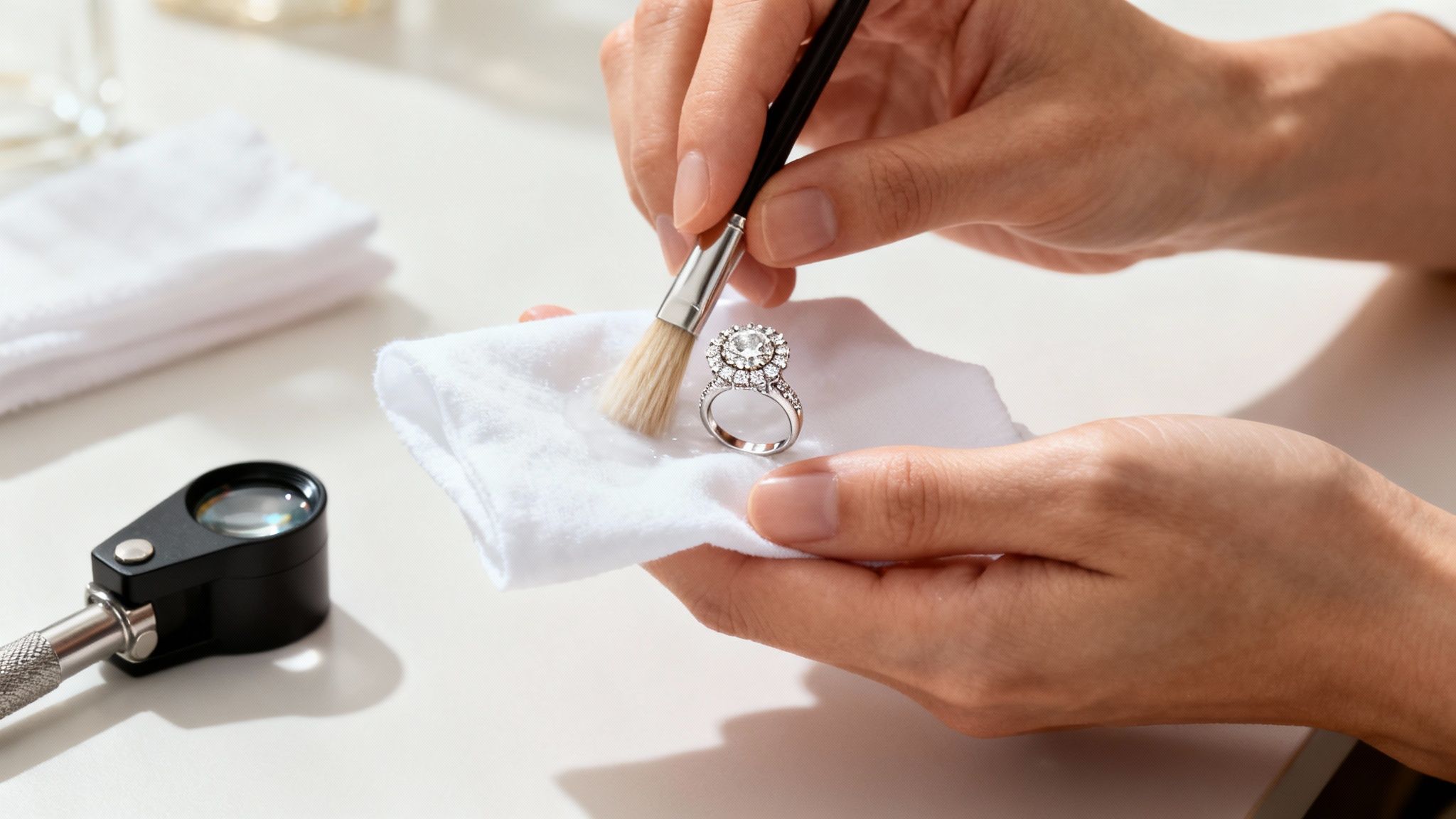
Choosing a halo ring is a thrill, but the details are what turn a beautiful piece into a lifelong treasure. It's about more than just the initial sparkle; a well-made halo setting is a work of precision, and keeping it brilliant requires a little bit of know-how.
When you're shopping, craftsmanship is everything. The tiny diamonds in the halo—often called melee—should be a perfect match for the center stone in both color and clarity. This isn't just a minor detail; it's critical. Mismatched stones can make the main diamond look off-color or create a jarring, uneven appearance. A seamless flow from the center to the halo is the signature of a high-quality ring.
What to Look for When Buying
Before you commit, take a moment to inspect the ring up close. A great halo setting isn’t just stunning—it’s built to withstand the realities of daily wear.
Secure Prongs: Each of those tiny halo diamonds is held in place by its own set of prongs. Gently run your fingertip over them. They should feel smooth, not sharp or snaggy. Loose prongs are the number one reason accent stones go missing.
Wedding Band Compatibility: Think about how the ring will sit with a wedding band. A halo that’s set too low might not sit flush against a straight band, leaving an awkward gap. Look for designs that sit high enough to accommodate another ring, or plan on finding a matching curved or "contour" band for that perfect, seamless fit.
Overall Symmetry: Look at the ring from every single angle. The halo should be perfectly symmetrical, with even spacing between all the stones and the center gem. This kind of precision is what creates that cohesive, dazzling effect.
The goal is a unified sea of sparkle. To achieve this, the melee diamonds in the halo should ideally be within one grade of the center stone's color. This prevents any noticeable contrast and keeps the look consistently brilliant.
Keeping Your Halo Ring Sparkling
The beautiful, intricate design of a halo setting means it has more tiny crevices where dirt, lotion, and oils can build up. Over time, this grime can seriously dull its shine. Regular cleaning and professional check-ups are key to keeping it as radiant as the day you first saw it.
For at-home care, a simple weekly routine does wonders. Just soak your ring in a bowl of warm water with a few drops of mild dish soap for about 20 minutes. Then, use a super-soft baby toothbrush to gently scrub around the halo, under the center stone, and between the prongs. Rinse it well under warm running water and pat it dry with a soft, lint-free cloth.
For a deeper dive into preserving your jewelry’s brilliance, check out our jewelry care tips for keeping your pieces sparkling.
While at-home cleaning handles the surface stuff, nothing beats professional care. We strongly recommend taking your halo ring to a trusted jeweler once or twice a year. They can give it a deep ultrasonic cleaning and, more importantly, inspect every single prong to make sure each tiny stone is secure. Think of it as preventative maintenance—it's the best way to avoid losing accent stones and ensure your beautiful ring lasts a lifetime.
Common Questions About Halo Ring Settings
Even with all the details, you probably still have a few questions floating around. A halo ring is a big decision, and you deserve to feel completely confident before you commit.
Let’s clear up some of the most common queries we hear. Think of this as the final check-in, designed to address those practical, real-world concerns so there are no surprises down the road.
Does a Halo Setting Genuinely Make a Diamond Look Bigger?
Yes, absolutely. It's not just a myth—it's one of the best parts of the design. The frame of smaller diamonds creates a powerful optical illusion that can make the center stone appear up to half a carat larger than it actually is.
This works because the continuous sparkle from the halo blurs the edges of the main gem, tricking your eye into seeing one big, brilliant surface. It’s a smart way to get a much more dramatic look without the price tag of a larger single diamond.
Are Halo Engagement Rings a Timeless or Trendy Choice?
The beauty of the halo is that it’s both. While their huge popularity over the last couple of decades makes them feel very current, their history actually goes all the way back to the 1700s.
The design has gracefully moved through the Georgian, Victorian, and Art Deco periods, proving it has serious staying power. This longevity confirms its status as a timeless classic that can be styled for modern or vintage tastes, ensuring it won’t feel dated in a few years.
Will I Have Trouble Finding a Wedding Band to Match?
It can be a bit of a puzzle. A low-set halo or one with an intricate shape might not sit flush against a straight wedding band, which can create an awkward gap. But don't worry, this is a super common issue, and jewelers have elegant solutions ready.
Many designers offer "contour" or "curved" wedding bands specifically shaped to nestle perfectly against the ring's profile. Another great option is to buy a matching bridal set right from the start, which guarantees a seamless, made-for-each-other fit.
Straight Band: Works best if the halo is set high enough to leave a little clearance underneath.
Contour Band: Curves around the halo for a perfect, gap-free look.
Bridal Set: A pre-matched engagement ring and wedding band for guaranteed harmony.
How Secure Are the Small Diamonds in a Halo?
When you buy from a reputable jeweler, those small halo diamonds are set quite securely. Jewelers use tiny prongs to hold each stone, and a well-crafted ring is more than durable enough for everyday life.
That said, because the prongs are so small, they are naturally more vulnerable to a hard knock or snag than a simple solitaire setting. To keep everything safe and sparkling, we recommend having your ring professionally checked once or twice a year. A quick inspection is all it takes for a jeweler to tighten any loose prongs and give you total peace of mind.
At Panther De Luxe Shop, we believe in craftsmanship that lasts. Explore our collection of masterfully crafted halo engagement rings designed to offer both breathtaking beauty and enduring quality. Find the ring that tells your story at https://www.pantherdeluxe.com.
Comments