
Choosing Engagement Ring Band Types
- Luke Zucco
- Nov 11, 2025
- 15 min read

If the center stone is the main event, the engagement ring band is the stage it sits on. It’s the foundation that sets the entire mood of the ring, defining its personality and telling a story all on its own. A simple shift in the band’s design can take a ring from a sleek, modern statement to a timeless, romantic classic.
Understanding the different engagement ring band types is your first real step toward finding the one.
Your Guide to Finding the Perfect Ring Band
Think of the band as the supporting actor that makes the star shine brighter. It frames the center stone, enhancing its beauty and giving the whole piece a cohesive feel. This guide is your map to navigating all the options out there, from elegant, unadorned solitaires and glittering pavé bands to the metals that bring them to life.
But choosing the perfect ring is about more than just picking a design you like. It's about finding something that feels like an extension of your personality and fits right into your daily life.
You’ll want to think about a few key things:
Style: Are you drawn to a clean, classic look, or does a detailed, vintage-inspired design catch your eye?
Metal: Do you prefer the cool, enduring brilliance of platinum or the warm, traditional glow of gold?
Comfort: How will the ring actually feel when you’re typing, working out, or just going about your day? A comfortable fit is just as crucial as how it looks.
Understanding the Importance of Your Choice
While your choice is deeply personal, it’s also part of a much bigger picture. The diamond engagement ring market in the US and Canada was valued at around USD 32.37 billion in 2024, and it's only expected to grow. This massive figure shows just how much these individual choices—like picking the perfect band—collectively shape an industry built on love, tradition, and evolving style.
Your engagement ring is a daily symbol of your love story. The band is its narrator, quietly telling that story through its shape, metal, and design. Choosing wisely ensures the story is told beautifully for years to come.
Ultimately, the goal is to find a band that feels like it was made for you. Whether that’s a delicate, diamond-dusted band or a bold, minimalist one, the right choice will make your center stone pop. For a complete look at all the elements that go into creating the perfect ring, our ultimate engagement ring guide is the perfect place to start. Once you explore the possibilities, you'll be ready to choose a band you’ll love for a lifetime.
A Deep Dive into Popular Ring Band Styles
The band is the soul of your engagement ring. Think of it like the frame for a masterpiece painting—it can be understated to let the art shine, or it can be an ornate work of art itself. This choice is what sets the entire mood for your center stone, shaping the ring's personality and making it feel uniquely you.
We’ll start with the icons—the timeless, clean designs that have defined romance for decades. Then, we'll get into the more decorative styles that bring texture, a whole lot of sparkle, and a story to the table. Each one has a different way of playing with light and showcasing the diamond it holds.
This visual guide breaks down the most popular bands, helping you see how the ring's foundation, its flair, and the metal all work together.
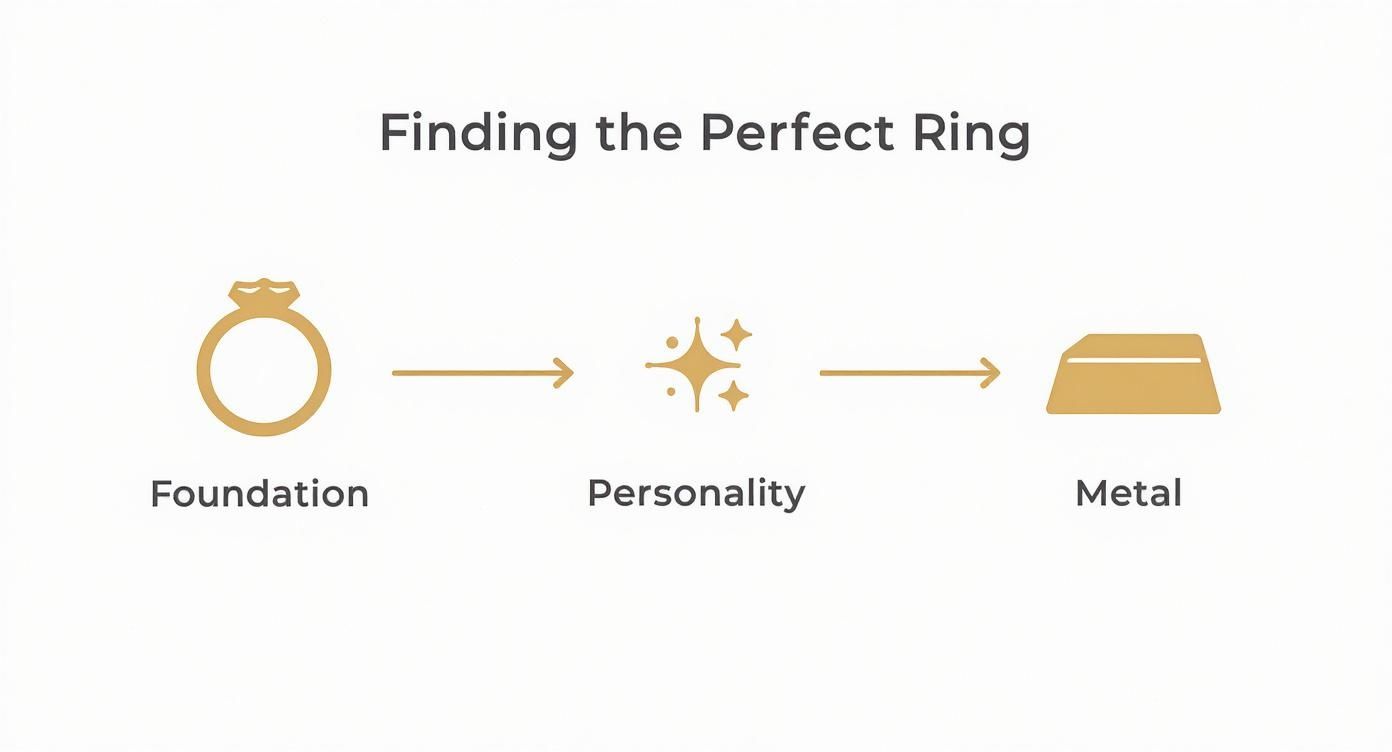
This map shows you the three core pillars of your decision: the foundation of the ring, the sparkle that defines its personality, and the metal that pulls it all together.
The Solitaire Band: An Icon of Simplicity
When you picture an engagement ring, the solitaire is probably what comes to mind. It's the quintessential classic, celebrated for its clean, uncluttered elegance. Its entire job is to make the center diamond the undisputed star of the show, sitting proudly on a simple, polished metal band.
The real power of this style is in its confidence. By keeping the band plain, all eyes go straight to the diamond’s fire and brilliance. It’s a design that works with every single diamond shape, from a classic round brilliant to a sleek emerald cut.
There are a couple of popular ways to set the diamond on a solitaire:
Prong Setting: This is the most common, using four or six delicate claws to lift the diamond high off the band. This allows the maximum amount of light to hit the stone from all sides, creating insane sparkle. The six-prong setting, made famous by Tiffany & Co., adds a little extra security and beautifully frames a round diamond.
Bezel Setting: For a more modern, streamlined look, the bezel setting wraps the diamond in a thin metal rim. This is by far the most secure setting, offering incredible protection for the stone, making it a fantastic choice if you have an active lifestyle.
The Pavé Band: A River of Sparkle
For anyone whose motto is "more is more" when it comes to sparkle, the pavé band is your answer. The name "pavé" (pah-vay) is French for "paved," which is the perfect way to describe a band that looks like it's literally paved with tiny diamonds.
These little accent diamonds are set incredibly close together, held by tiny metal beads that are almost invisible to the naked eye. The effect is a seamless, glittering surface that makes the whole ring look like it's made of pure light. It adds a ton of brilliance and can even make your center stone look bigger and brighter.
A great pavé band isn’t just about adding more diamonds; it’s about creating an uninterrupted flow of light. It’s designed to shimmer from every single angle, so the ring is always alive with sparkle, even in the dimmest light.
The Channel Set Band: Sleek and Secure
The channel setting is another way to add accent diamonds, but with a totally different vibe. Instead of prongs, the diamonds are tucked right next to each other inside a groove, or "channel," that’s cut into the band. Two parallel walls of metal hold them snugly in place.
This creates a smooth, modern line of sparkle with no metal in between the stones. Because the diamonds are protected inside the band, this style is super durable and won't snag on your favorite sweater. It's a seriously practical option for everyday wear.
The main benefits of a channel band are:
Extra Security: The stones are well-protected from accidental bumps.
Snag-Free Design: The smooth surface is perfect for anyone who works with their hands.
Modern Look: It has a sleek, contemporary, and polished aesthetic.
The Cathedral Setting: Architectural Elegance
Just like the soaring arches of a grand cathedral, this setting uses graceful sweeps of metal that rise from the band to support the center stone. This design lifts the diamond high above the finger, giving it a dramatic, elevated profile that really commands attention.
That extra height makes the center stone the undeniable focal point and can even create the illusion that it's larger than it really is. The open space beneath the diamond also lets in more light, which means more sparkle. It’s a timeless and romantic style that adds a touch of architectural grace to an otherwise simple ring.
Twisted and Vintage-Inspired Bands
Beyond the big names, there are tons of bands that play with texture and detail to add a unique, artistic touch.
Twisted Bands: Sometimes called a rope or infinity band, this style weaves together two or more strands of metal. You can have a simple twist of plain metal for a subtle look, or intertwine a diamond-studded strand for extra pop. The design is often chosen to symbolize two lives intertwining as one.
Milgrain Bands: For a little bit of vintage romance, milgrain is the perfect detail. It’s a classic technique where a delicate border of tiny metal beads is added to the edges of the band. This creates a soft, intricate texture that beautifully frames the ring and gives it the feel of a treasured antique heirloom.
Choosing the Right Metal for Your Ring
The metal you choose for an engagement ring does so much more than just set the color. It defines the ring's entire personality—its weight, its feel on your finger, and how it will stand up to a lifetime of wear. Think of the metal as the ring's foundation. Is it strong and timeless like platinum, or warm and classic like yellow gold? This is where the art of jewelry design meets the realities of everyday life.
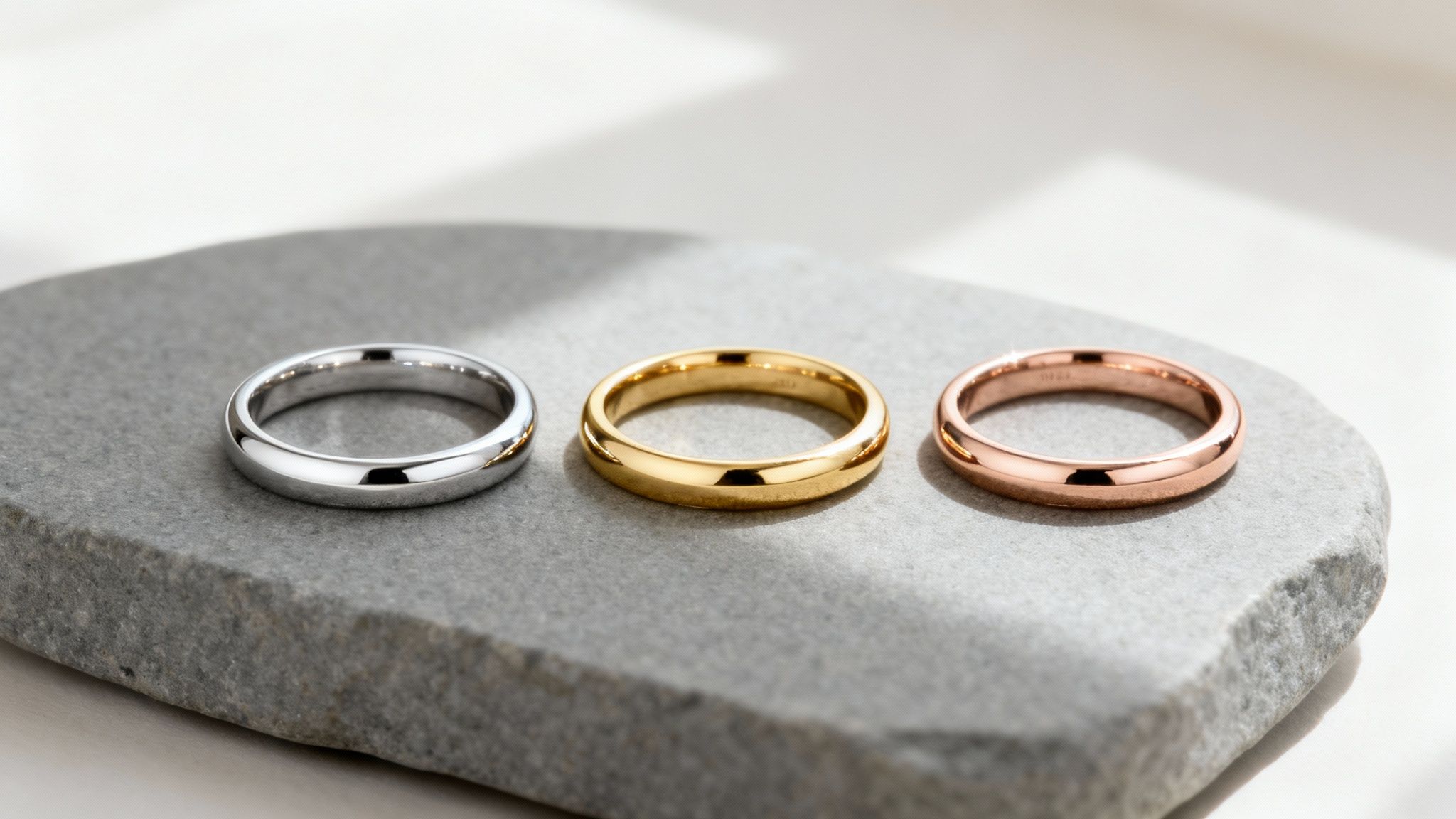
We're going to break down the world of precious metals in a simple, practical way to help you find the perfect match for your style, budget, and lifestyle. From the cool heft of platinum to the familiar glow of gold, each option brings its own story to the table.
Platinum: The Enduring Standard
Platinum is the heavyweight champion of engagement ring metals, both literally and figuratively. It’s one of the densest and rarest precious metals out there, known for its naturally cool, silvery-white sheen. That density gives it a satisfying weight and makes it incredibly durable.
Unlike white gold, platinum’s color is its natural state. It won’t ever fade or change. When platinum gets scratched, the metal is just moved around, not lost, creating a rich, matte finish called a patina. Many people love this lived-in look, but a quick professional polish will bring back its original shine in no time.
What makes it a top choice?
Hypoallergenic: Platinum is 95% pure, making it the perfect choice for anyone with sensitive skin.
Superior Durability: It holds diamonds more securely than any other metal, giving you peace of mind, especially with intricate settings.
Natural Color: Its brilliant white luster won't tarnish or need replating. Ever.
The Versatile Gold Family
Gold is the quintessential jewelry metal, loved for its warmth, workability, and timeless appeal. To make it strong enough for daily wear, it's mixed with other metals, creating alloys. The purity of gold is measured in karats (k), with 24k being pure gold.
18k Gold: Made of 75% pure gold, this alloy has a richer, more vibrant color. It's a bit softer than 14k gold, so it can be slightly more prone to scratching.
14k Gold: Containing 58.3% pure gold, this is the most popular choice in the U.S. for its ideal balance of durability, beautiful color, and affordability.
Let's dive into the three most popular tones.
Yellow Gold: The Timeless Classic
Yellow gold has a warm, traditional glow that’s a perfect match for vintage-inspired designs and warmer skin tones. Its rich color creates a stunning contrast against a brilliant white diamond, making the stone appear even brighter. Even as new metals gain traction, yellow gold’s classic appeal ensures it remains one of the most desired engagement ring band types around the world.
White Gold: Modern and Bright
A contemporary favorite, white gold offers a bright, silvery look that rivals platinum at a more accessible price. It’s made by mixing pure yellow gold with white metals like palladium or nickel.
To get that brilliant, mirror-like finish, white gold is almost always plated with rhodium. This protective layer adds serious shine but wears away over time, usually needing a refresh every 1-3 years. Replating is a simple and inexpensive process that restores its original beauty. For a deeper look, check out our guide on the types of metal for rings to find the perfect fit.
Think of rhodium plating like a fresh coat of paint on a beautiful house. The structure is solid, but a new coat now and then keeps it looking its absolute best and protects it from the elements.
Rose Gold: Romantic and Unique
Rose gold gets its romantic, blush-pink hue from a copper alloy mixed with pure gold. The more copper in the mix, the deeper the reddish tone. This warm, feminine metal has seen a huge surge in popularity because it flatters nearly every skin tone.
Because copper is an incredibly sturdy metal, rose gold is also the most durable of the three gold colors. It doesn't need any plating and develops a beautiful, slightly deeper patina over time, which only adds to its vintage charm. Its unique color makes it a standout choice that feels both modern and timeless.
To make things a little easier, here’s a quick side-by-side look at how these metals stack up.
Precious Metal Comparison for Engagement Ring Bands
Metal Type | Color | Durability (Hardness) | Hypoallergenic | Average Cost | Maintenance |
|---|---|---|---|---|---|
Platinum | Silvery-White | Very High | Yes | $$$$ | Low (polishing) |
18k Yellow Gold | Rich Yellow | Medium | Yes | $$$ | Low (polishing) |
14k Yellow Gold | Soft Yellow | Medium-High | Yes | $$ | Low (polishing) |
14k White Gold | Silvery-White | High | Sometimes (if nickel alloy) | $$ | Medium (replating) |
14k Rose Gold | Pinkish-Red | High | Yes | $$ | Low (polishing) |
Choosing a metal is a personal decision that balances aesthetics with practicality. Whether you go for the enduring strength of platinum or the warm glow of gold, the right metal will not only secure your diamond but also tell a story that’s uniquely yours.
How Band Width, Shape, and Finish Define Your Ring
Beyond the big decisions like metal and setting style, the true personality of an engagement ring lives in the details. Three elements—width, shape, and finish—are the final touches that make a ring feel uniquely yours.
These are the subtle but powerful choices that define how the ring actually looks on your hand and feels to wear every day. Getting them right is what turns a beautiful object into a personal treasure.
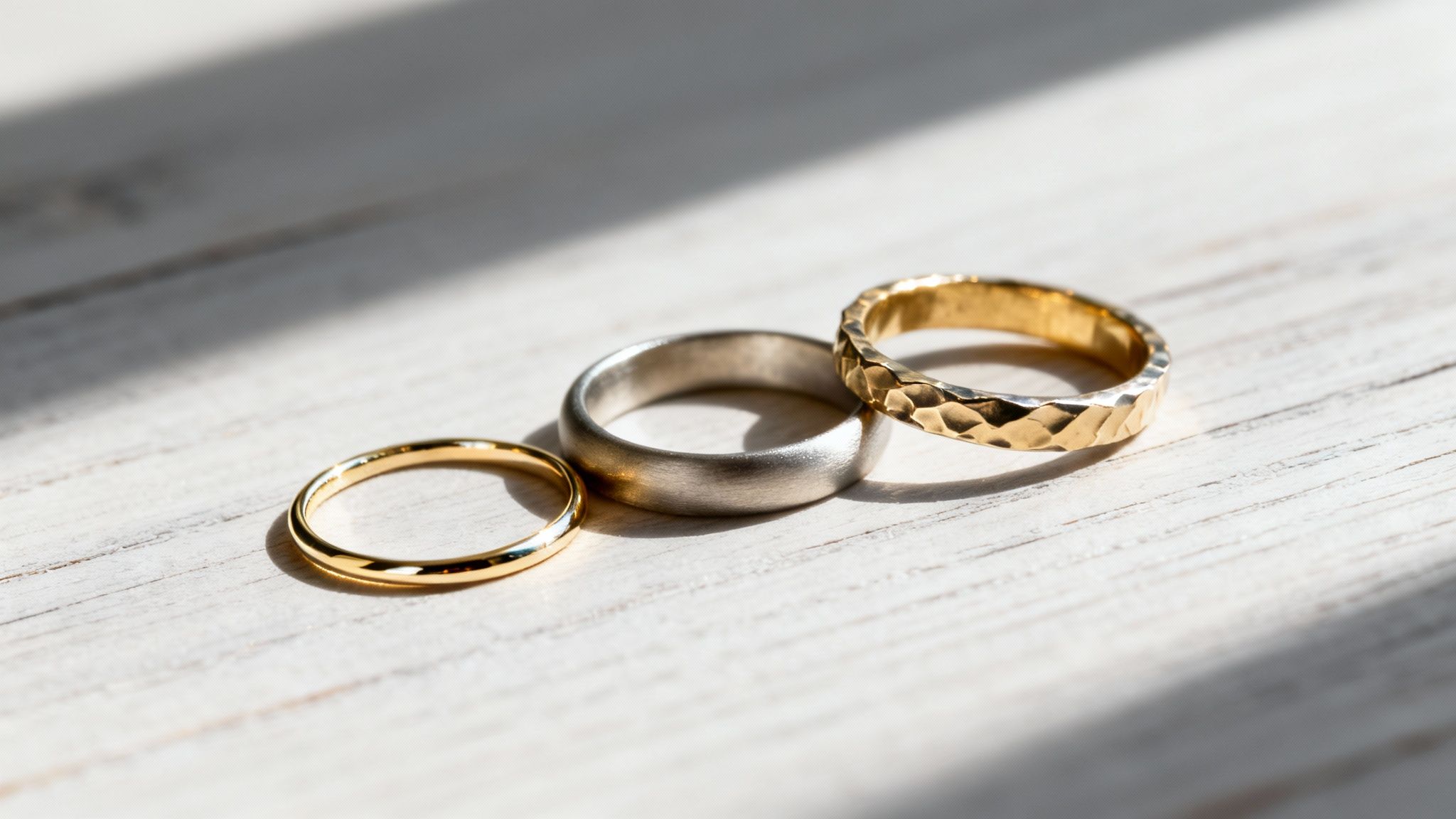
Think of these three characteristics as the final brushstrokes on a painting. They add depth, character, and a tactile quality that elevates the entire piece.
Finding the Perfect Band Width
The width of a band is its voice. A thin band is a delicate whisper, while a wide band is a confident statement. This single measurement, usually in millimeters (mm), has a huge impact on the ring's overall vibe and how it complements both your hand and the center stone.
Thin Bands (1.5mm - 2.0mm): Loved for their minimalist, elegant feel, these delicate bands have a secret power: they make the center diamond appear larger by contrast. The effect is a stunning, diamond-forward focal point.
Medium Bands (2.1mm - 2.9mm): For many, this is the sweet spot. It offers a perfect balance of durability and grace—sturdy enough for detailed settings like pavé but still feels refined and timeless.
Wide Bands (3.0mm and up): A wider band delivers a bold, substantial look. It provides a bigger canvas for intricate engraving or multiple rows of diamonds, making a powerful statement, especially on larger hands.
The key is proportion. Slender fingers are often flattered by thinner bands, while wider fingers can carry a more substantial band beautifully. The best way to know for sure is to try on different widths and see what feels most balanced and comfortable.
Understanding the Band's Profile
If width is the band's voice, its profile is how it feels on your finger. The profile is the cross-sectional shape of the band—imagine slicing through the ring and looking at the cut edge. This detail dictates both comfort and style.
The profile is where ergonomics meets aesthetics. It’s the unnoticed detail you’ll feel every single day, so choosing a shape that fits your lifestyle is just as important as choosing one that fits your look.
Some of the most common profiles include:
Comfort Fit: This is the most popular choice for a reason. The inside of the band is slightly domed, so less metal touches your skin. This makes it incredibly comfortable for all-day wear and helps it slide over the knuckle more easily.
Flat or Standard Fit: With a flat interior and exterior, this profile creates a modern, clean-edged look. It has a contemporary, almost architectural feel and sits flush against the finger.
Knife-Edge: This design features a sharp edge running along the center of the band. It’s a visually striking choice that creates the illusion of a much thinner band while maintaining its structural strength, and it’s brilliant at catching the light.
Choosing a Finish to Complete the Look
Finally, the finish is the texture applied to the metal's surface. This is your chance to control how the ring plays with light and add a final layer of personality, whether you want brilliant shine or subtle sophistication.
The finish of a ring band is crucial in defining its overall aesthetic. Explore options such as elegant 14kt gold textured band rings to see how texture can completely transform a design.
Popular finishes include:
High Polish: The classic, mirror-like finish. It’s highly reflective and delivers a brilliant shine that beautifully highlights the metal's natural luster.
Matte or Brushed: This modern finish uses fine, parallel lines to create a soft, non-reflective glow. It’s an understated choice that has the added benefit of hiding minor scratches well.
Hammered: Created by tapping the metal with a small hammer, this finish results in a unique, dimpled texture. It gives the ring an artisanal, hand-forged character that catches light in really interesting ways.
Matching Your Band to Your Lifestyle and Diamond
A truly perfect engagement ring feels like it was always meant to be on your hand. It’s more than just a beautiful object—it has to fit seamlessly into your day-to-day life. This is the practical side of finding "the one," where you match a ring's design not just to your taste, but to everything your hands do.
The goal is to land on a design that gives you both beauty and total peace of mind. After all, you’ll be wearing this every single day.
Aligning Your Ring with Your Daily Life
First, think about what a typical day looks like for your hands. An active lifestyle doesn’t mean you have to settle for a plain band, but it does call for a smarter approach to design.
If you work with your hands, hit the gym regularly, or have a hands-on job like nursing or teaching, durability should be your top priority.
Secure Settings Are a Must: A delicate pavé band is breathtaking, but all those tiny, exposed diamonds are vulnerable to snags and damage. In contrast, a bezel setting, which wraps a protective metal collar around the diamond, or a channel setting, which secures stones inside a metal groove, offers way more protection.
Lower Profiles Reduce Risk: A dramatic, high-set cathedral ring is a showstopper, but it can also catch on everything from sweaters to doorknobs. A lower-profile setting keeps the diamond tucked closer to your finger, minimizing the chance of accidental bumps.
Think About Metal Hardness: Platinum is legendary for its strength and ability to hold stones securely, but 14k gold offers an amazing balance of hardness and beauty for everyday wear. Softer metals like 18k gold are a bit more prone to scratching and denting with constant activity. If you have sensitive skin, it's also important to consider the material. You might be interested in our guide to the 7 best hypoallergenic metals for jewelry in 2025.
Creating Harmony Between Band and Diamond
Once you’ve sorted out the practical side, the fun, artistic part begins: pairing your band with your center stone. The right band doesn't just hold the diamond—it makes it shine even brighter. It’s all about creating visual balance and a design that feels totally cohesive.
Think of your diamond's shape as its personality. The band should be its perfect partner.
A band’s design can either echo the center stone's geometry or provide a beautiful contrast. The goal is to create a single, harmonious piece where both elements elevate each other, resulting in a ring that is greater than the sum of its parts.
For instance, a sleek, simple solitaire band with sharp, clean lines can beautifully highlight the geometric fire of a princess or emerald-cut diamond. On the other hand, a romantic, twisted band can soften the edges and play up the graceful curves of an oval or pear-shaped stone.
The metal choice plays a huge role in this story, too. Globally, gold still reigns supreme for wedding jewelry. In 2023, gold rings held the largest share of the global wedding ring market, driven by deep cultural traditions, especially in the Asia Pacific region which accounted for about 37% of the market. You can explore more about these global wedding ring market trends on grandviewresearch.com.
Ultimately, balancing the demands of your lifestyle with a design that feels true to you ensures your ring isn't just a stunning piece of jewelry, but a wearable work of art that feels like it was made just for you.
Answering Your Top Questions About Ring Bands
Once you’ve explored all the styles and metals, the practical questions start to surface. That’s a good thing—it means you’re getting serious. We get asked these all the time, so we’ve put together some straightforward answers to help you feel completely confident in your choice.
Let's clear up the common debates: durability, mixing metals, and the real-world differences between settings.
What's the Most Durable Band for an Engagement Ring?
When it comes to pure strength and security, platinum is the hands-down winner. It's incredibly dense, which means it holds gemstones tighter than any other precious metal. While platinum does scratch, the metal simply moves aside rather than wearing away, developing a soft, natural finish over time that many people find beautiful.
If we're talking pure scratch-resistance, metals like tungsten are technically harder. But they're also brittle and can't be resized, making them a poor fit for a lifelong piece like an engagement ring.
Among the golds, 14k gold hits the sweet spot. It has more strengthening alloys than 18k gold, making it tougher against daily bumps and scrapes while still keeping that rich, beautiful color.
How Do I Pick a Band Width That Looks Good on My Hand?
Finding the right band width is all about proportion and what feels right on your finger. There are no hard-and-fast rules, but these guidelines are a great place to start.
For slender or shorter fingers: A thinner band, usually under 2mm, often looks stunning. It creates a delicate, lengthening effect and can make the center stone pop, making it look even larger.
For wider fingers or larger hands: A more substantial band of 2.5mm or wider tends to create a more balanced look. A super-thin band might get lost, while a wider one makes a confident, grounded statement.
Honestly, the best way to know for sure is to try a few on. Seeing how different widths actually sit on your hand is the only way you'll know what you truly love.
Is It Okay to Mix Metals for My Engagement and Wedding Rings?
Absolutely! Mixing metals is no longer a faux pas—it’s a chic and modern way to build a personalized stack. Pairing a cool platinum engagement ring with a warm yellow or romantic rose gold wedding band creates a gorgeous contrast that feels intentional and unique.
The only practical thing to keep in mind is hardness. Platinum is much tougher than gold, and over many, many years, it can cause some wear on a softer gold band sitting right next to it.
Some people love this, seeing it as a sign of their life together literally shaping their rings. If you're concerned, though, there’s an easy fix: just add a super-thin "spacer band" between the two rings to keep them from rubbing directly against each other.
What’s the Real Difference Between Pavé and Channel Settings?
Both pavé and channel settings add a row of sparkle, but they do it in completely different ways that affect both their look and how you live with them.
Think of a pavé setting like a cobblestone street "paved" with diamonds. The stones are set close together with tiny metal beads or prongs holding them in place, creating an uninterrupted surface of glitter. It maximizes the sparkle but leaves the diamonds a bit more exposed.
A channel setting, on the other hand, tucks the diamonds into a metal groove, or "channel," securing them between two walls of metal. This creates a sleek, modern line of sparkle that is incredibly secure and snag-free, making it a fantastic choice if you have an active lifestyle.
At Panther De Luxe Shop, we believe finding the perfect ring should be an exciting journey, not a stressful one. Explore our collections to discover the band that feels like it was made just for you.
Comments