
Halo Engagement Rings: Your Complete Guide to Stunning Styles
- Luke Zucco
- Aug 26, 2025
- 16 min read

So, what exactly is a halo engagement ring? It’s a design where the main, center gemstone is completely wrapped in a circle of smaller diamonds. This brilliant frame creates a stunning effect, making the center stone look much bigger and more sparkly than it would on its own.
What Makes a Halo Engagement Ring So Special?
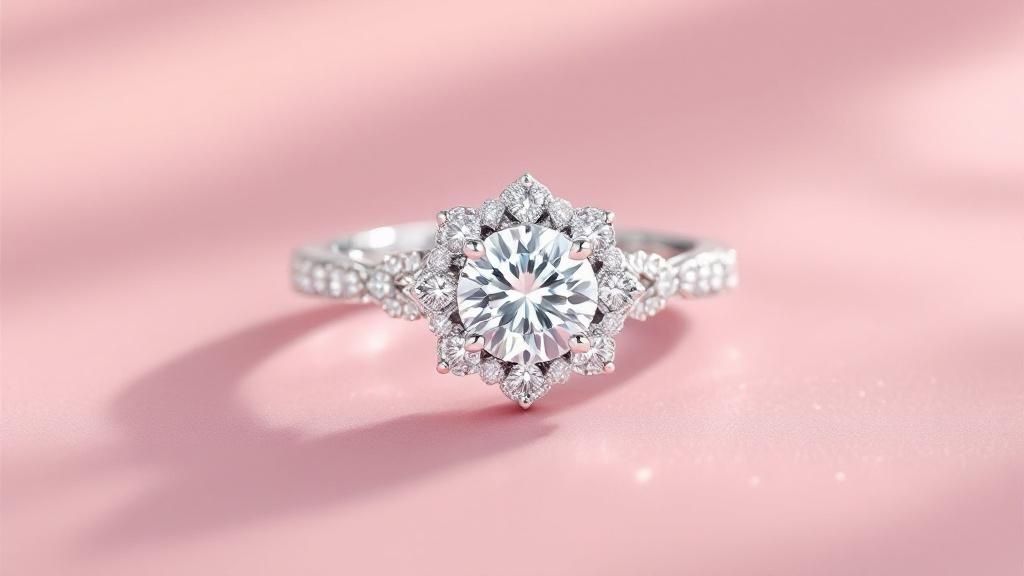
Think of the halo setting as a clever optical illusion, one that’s been masterfully executed with precious metals and brilliant gems. It works a bit like the matting around a photograph inside a frame; it draws your eye straight to the center and makes the main feature—in this case, your diamond—the undeniable star.
The small pavé diamonds in the halo act like a team of tiny, perfectly angled mirrors. They catch light from all directions and reflect it back toward the center stone, creating an explosion of sparkle.
This clever design trick achieves two fantastic things:
It boosts the brilliance. All those extra stones add dozens of new facets, which means the ring's fire and sparkle are dramatically amplified from every angle you look at it.
It makes the stone look bigger. The seamless border of diamonds fools the eye, making the center stone appear up to half a carat larger than it actually is.
This powerful combination of show-stopping glamour and smart value is exactly why the halo style remains so incredibly popular.
Breaking Down the Halo Ring
To really get a feel for this design, it helps to understand its three core parts.
First up is the center stone. This can be any diamond shape you love, though we see a lot of round, cushion, and oval cuts in halo settings. If you're curious about different shapes, you can find a complete overview in our guide to diamond ring shapes.
Next, you have the halo itself. This is that signature ring of smaller accent stones that wraps around the main gem.
Finally, there’s the band (also called the shank). This can be kept simple and elegant with plain metal, or it can be set with its own pavé diamonds for an extra layer of sparkle. All three elements come together to create one breathtaking, cohesive look.
To help you get a quick handle on the key features, here's a simple breakdown:
Halo Engagement Ring Key Features at a Glance
Feature | Description | Primary Benefit |
|---|---|---|
Center Stone | The main diamond or gemstone at the heart of the ring. | The focal point of the entire design. |
Halo | A circle of smaller accent stones framing the center stone. | Makes the center stone appear larger and adds sparkle. |
Accent Stones | The small diamonds or gems used in the halo and potentially on the band. | Enhance the ring's overall brilliance and visual impact. |
Setting Style | Can be prong-set, bezel-set, or a combination for the center stone. | Secures the main gem while influencing the final look. |
Band | The part of the ring that encircles the finger, can be plain or diamond-set. | Provides the foundation and can contribute to the ring's sparkle. |
This table gives you a great starting point for understanding how each component contributes to the final, beautiful piece.
The halo's unique ability to create a bigger visual footprint while intensifying sparkle makes it an incredibly compelling choice for anyone looking for both stunning looks and great value.
A halo setting is the perfect choice for someone who wants to maximize the visual impact of their ring without necessarily maximizing the budget. It’s all about smart, beautiful design.
The style's immense appeal has made a real mark on the jewelry world. In fact, the global wedding ring market, which is full of these popular designs, was valued at USD 84.91 billion in 2024. It's projected to grow to USD 140.20 billion by 2033, which just goes to show the lasting power of designs that deliver that "wow" factor.
The Timeless Journey of the Halo Design
The halo engagement ring feels so modern and fresh, it’s easy to think of it as a recent trend. But the truth is, this stunning design has a rich history that stretches back centuries. Its enduring charm comes from a simple, brilliant concept: celebrate and amplify a central gemstone.
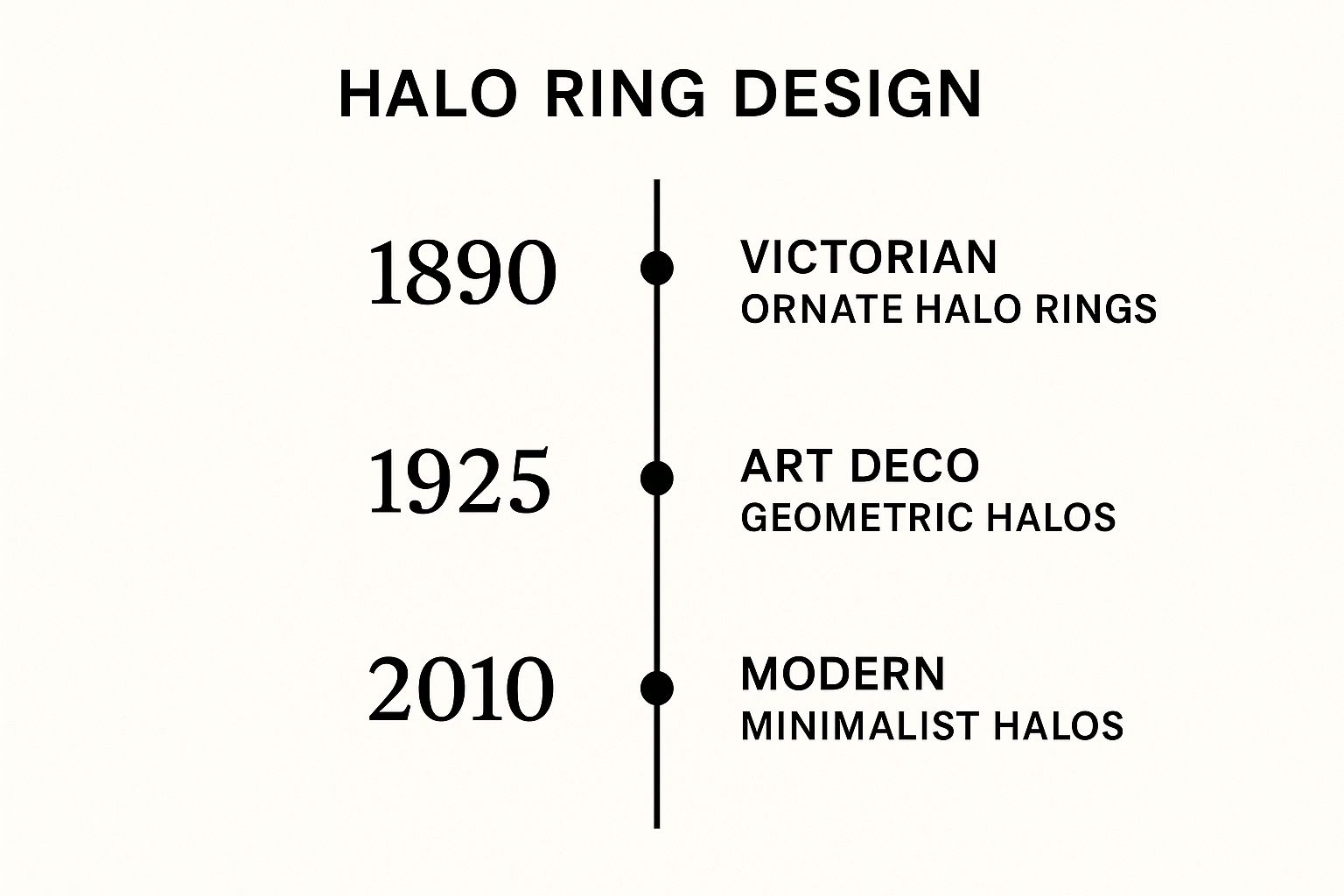
The earliest whispers of the halo style can be found way back in the Georgian era (1714-1837). Jewelers from this time would often frame a larger diamond or a richly colored gem with a circle of smaller stones or even pearls. It wasn't quite the seamless halo we know today, but the idea of creating a dazzling frame was born.
From Romantic Blooms to Art Deco Brilliance
Then came the Victorian era (1837-1901), a period steeped in romance and symbolism. Jewelers here took that framing concept and ran with it, often creating rings that looked like delicate flowers. The center stone would be the bloom, and the surrounding gems were its petals—a beautiful, sentimental take on the design.
But it was in the roaring 1920s that the halo truly came into its own. The Art Deco period was all about bold geometry, clean lines, and pure glamour. This was the perfect environment for the halo to flourish. Jewelers refined the technique, creating that iconic, seamless circle of light that makes the center diamond pop.
The Art Deco movement didn't just use the halo; it perfected it. The style's focus on symmetry and geometry turned the halo into a core design element that could maximize a diamond's sparkle in a way that felt sophisticated and unbelievably glamorous.
After its heyday, the halo design faded into the background for a while, making way for the simpler solitaires that defined the mid-century. But a design this good was never going to stay gone for long.
The Modern Halo Renaissance
Fast forward to the 2000s, and the halo came roaring back. Thanks to a few key celebrity rings and a renewed love for vintage glamour, the style exploded in popularity. This modern revival wasn't just a copy of the past, though. Designers introduced creative new twists like the double halo and the subtle hidden halo, making the classic feel brand new.
Today, the halo is one of the most requested styles, especially in the United States. A huge part of its appeal is the incredible value it offers. The halo makes the center stone look significantly larger, which is a major win when the average engagement ring purchase is around USD 6,000. It's a smart, cost-effective way to get a big, luxurious look. You can find more fascinating engagement ring statistics on Holdsworth Bros. Jewelry.
This long and storied history shows the halo is much more than just a fad. It’s a testament to a timeless design principle that connects centuries of artistry with our modern love for all things that sparkle.
Finding Your Perfect Halo Ring Style
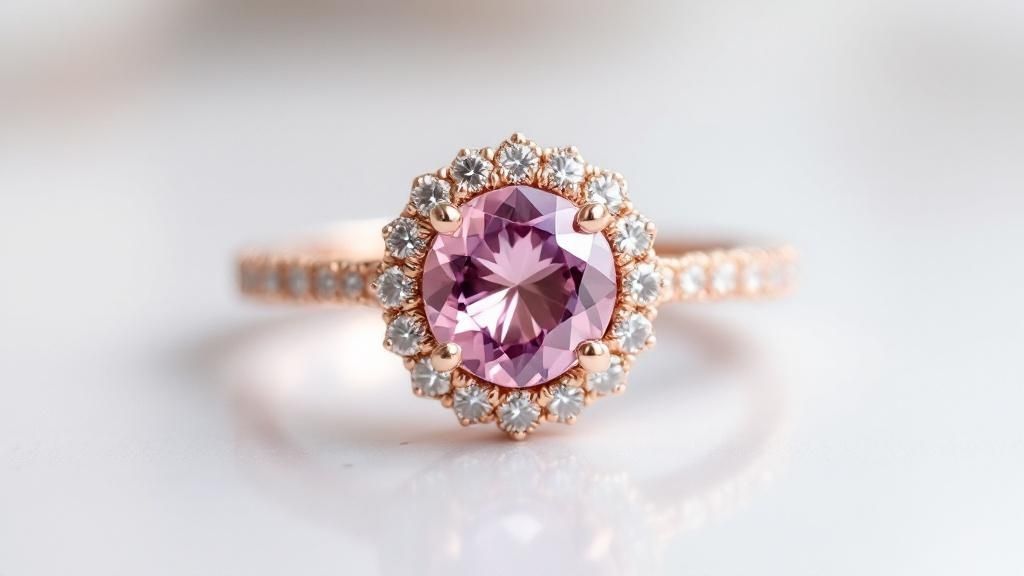
Deciding on a halo setting is really just the first step on an exciting design adventure. The world of halo engagement rings is bursting with incredible variations, each with its own personality and flair. Think of this as your personal guide to navigating all the options and finding the one that truly feels like you.
We’ll kick things off with the most iconic styles—the single, double, and hidden halos—before diving into how this design beautifully adapts to different center stone shapes. Once you get a feel for these variations, you'll be able to zero in on the exact look you’ve been dreaming of.
Classic Halo Styles
The core idea of a halo—that brilliant frame of sparkle—has been interpreted in a few fantastic ways. Each style offers a different vibe, from dramatic and bold to subtle and modern, so there’s truly a match for every taste.
The three most popular styles you’ll come across are:
The Single Halo: The timeless original.
The Double Halo: For maximum, show-stopping glamour.
The Hidden Halo: A modern secret for a subtle, personal sparkle.
Let's break down what makes each of these halo engagement rings so special.
The Timeless Single Halo
When you picture a halo ring, this is probably what comes to mind. The single halo features one perfect loop of smaller pavé diamonds that elegantly frames the center stone. It's the most popular choice for a good reason—it gives you that signature boost in size and sparkle without ever feeling over the top.
A single halo is incredibly versatile and looks stunning with every diamond shape and metal color. It's a sophisticated, timeless option that enhances the main diamond with a seamless, radiant glow, making it a forever favorite for anyone who loves classic elegance with a brilliant twist.
The Glamorous Double Halo
If your style motto is "more is more," then the double halo is calling your name. Just as it sounds, this design features two concentric circles of pavé diamonds wrapping around the center stone. The result? An unapologetically bold and luxurious ring with an incredible presence on the finger.
This style creates a massive visual impact, making the center diamond look significantly larger than in a single halo. It’s a true statement piece designed to turn heads and deliver an extraordinary level of fire from every single angle.
A double halo doesn't just amplify the center stone; it creates a complete spectacle of light. It's the ultimate choice for someone who wants their ring to be the center of attention in any room.
The Modern Hidden Halo
The hidden halo is a wonderfully clever and contemporary take on the classic design. From the top, the ring might look like a simple solitaire. But take a look from the side, and you’ll discover a secret circle of diamonds sparkling underneath the center stone, holding it up like a glittering basket.
This unique placement adds a touch of personal brilliance that’s often just for the wearer to see and enjoy. It provides that extra dimension of sparkle without changing the ring’s classic silhouette, making it perfect for someone who appreciates understated details and modern sophistication.
How Halos Complement Different Stone Shapes
A halo isn't a one-size-fits-all feature; it's meticulously crafted to follow the exact silhouette of the center stone it surrounds. This tailored approach is what ensures the halo enhances the gem's natural beauty instead of overpowering it.
Here’s a look at how a halo works its magic on some of the most popular diamond shapes:
Round Cut: A round halo around a round brilliant diamond creates a classic, symmetrical look that seriously maximizes sparkle. The circular frame amplifies the stone's natural fire for a timeless, dazzling effect.
Oval Cut: An oval halo is incredibly flattering, as it elongates the finger and beautifully follows the graceful curves of an oval-cut diamond. This combination is highly sought-after for its elegant and sophisticated feel.
Pear Cut: A halo perfectly traces the unique teardrop shape of a pear-cut diamond, accentuating its romantic and distinctive silhouette. As a bonus, the halo offers a little extra protection for the stone's delicate pointed tip.
Cushion Cut: With its soft, rounded corners, the cushion cut pairs beautifully with a halo. The frame of diamonds enhances the cushion's vintage charm while adding a major boost of modern brilliance.
Ultimately, the best halo is the one that speaks to your personal style, whether that’s the classic elegance of a single halo, the head-turning glamour of a double, or the secret sparkle of a hidden halo.
Choosing Your Metal and Center Stone
When you start designing a halo engagement ring, you’re faced with two major decisions right out of the gate: the metal for the band and the stone that sits at the center. These aren't just details; they're the soul of the ring. Think of the metal as the stage and the center stone as the star performer—they have to work together perfectly to create that show-stopping final piece.
Let's talk about the metal first. The band does more than just hold everything in place. It sets the entire mood for the ring, influencing everything from the way the diamonds sparkle to how durable it is over a lifetime of wear.
Selecting the Perfect Precious Metal
The metal you choose is the backdrop for your sparkling halo. Cool-toned metals like platinum and white gold have a way of blending seamlessly with diamonds, creating an icy, uninterrupted brilliance. On the other hand, warmer metals like yellow or rose gold create a gorgeous contrast that really makes the diamonds pop.
Here’s a look at the most common choices:
Platinum: A naturally white metal that’s incredibly dense and durable. Platinum is also hypoallergenic, and its cool, silvery luster won't fade or yellow over time. It's a top-tier choice for a true heirloom piece.
White Gold: This is an excellent alternative to platinum, offering a very similar look at a more approachable price. It’s an alloy of yellow gold mixed with white metals and then plated with rhodium for that bright, white finish. Just keep in mind it may need to be re-plated every few years to stay looking its best.
Yellow Gold: You just can't beat yellow gold for a classic, warm glow. It provides a stunning contrast against a halo of white diamonds, giving the ring a timeless, almost vintage-inspired elegance.
Rose Gold: This romantic, pinkish metal gets its unique color from a copper alloy. Rose gold has a warm, antique vibe that looks incredible on a wide range of skin tones.
You'll also need to consider gold purity, like 10K versus 14K, which impacts both durability and color. We break this down even further in our guide comparing 10K vs 14K gold for your jewelry.
To help you decide, here’s a quick comparison of what each metal brings to the table.
Comparison of Popular Metals for Halo Rings
Metal Type | Appearance | Durability | Common Price Point | Best For |
|---|---|---|---|---|
Platinum | Naturally bright, silvery-white that doesn't fade | Extremely durable, dense, and hypoallergenic | Premium | A lifetime investment; someone with sensitive skin. |
White Gold | Bright white shine (rhodium plated) | Strong and durable, but plating may need reapplication every 2-3 years | Mid-Range | The look of platinum without the premium price tag. |
Yellow Gold | Classic, traditional warm yellow hue | Very durable and easy for jewelers to work with | Mid-Range | A timeless, vintage aesthetic that creates beautiful contrast. |
Rose Gold | Warm, romantic pinkish tone | Generally more durable than yellow gold due to its copper content | Mid-Range | A unique, modern-vintage look that complements many skin tones. |
Ultimately, the best metal is the one that fits your personal style, budget, and lifestyle.
Choosing the Star of the Show: Your Center Stone
Once you've settled on the metal, it’s time for the main event—the center stone. While a brilliant diamond is the quintessential choice for a halo ring, more and more people are opting for vibrant colored gemstones to make a personal statement.
This isn't just a niche trend; it's a major shift. The global engagement ring market, valued at USD 10 billion in 2023, is expected to surge to USD 15.3 billion by 2032. A huge driver of this growth is the demand for unique rings that truly reflect individual personality, which is why halo settings with all kinds of center stones are more popular than ever. You can dig into these shifting market trends on Dataintelo for more insights.
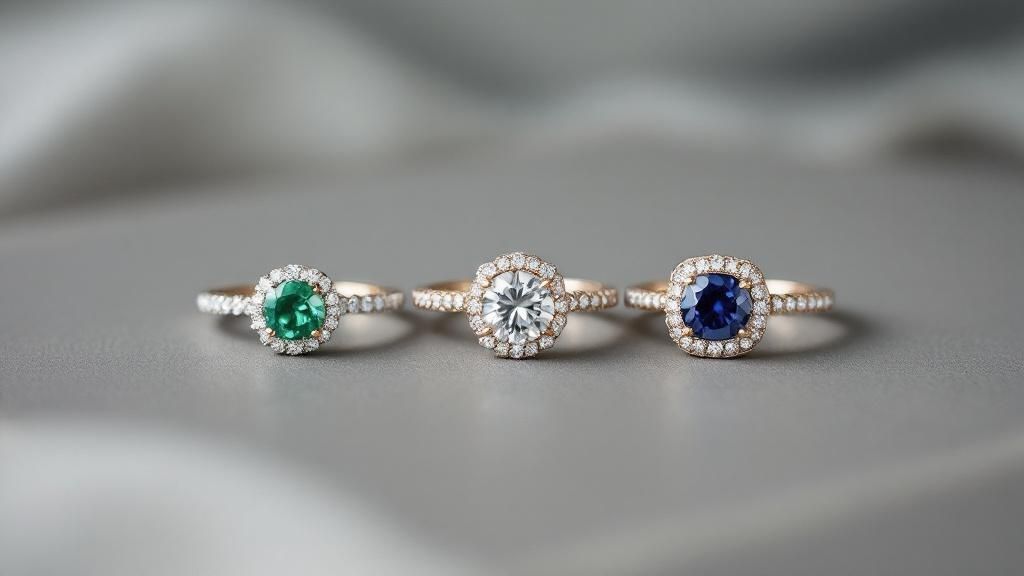
The real magic of a halo setting is its versatility. A halo of diamonds can act as a brilliant, neutral frame that intensifies the color of any gemstone at its center, making it look bigger and even more spectacular.
When you're looking at gemstones, you have to consider two things: how beautiful it is and how well it will hold up to daily life. For that, the Mohs scale of hardness is your best friend. It ranks minerals from 1 (softest) to 10 (hardest). A diamond scores a perfect 10, making it the toughest contender for everyday wear.
But there are other fantastic, durable options out there:
Sapphire (Mohs Hardness: 9): Famous for its deep royal blue, sapphire is an incredibly durable and timeless choice. It creates a breathtaking contrast when surrounded by a diamond halo.
Emerald (Mohs Hardness: 7.5-8): With its rich, vibrant green, an emerald center stone is pure luxury. It's a bit softer than sapphire, so it needs to be worn with a little more care, but the look is unforgettable.
Morganite (Mohs Hardness: 7.5-8): This soft, peachy-pink gem is a modern favorite for its romantic hue. It pairs perfectly with rose gold and a diamond halo for a warm, feminine feel.
Whether you go for a classic diamond or a pop of color with a gemstone, the center stone is what makes your halo engagement ring truly yours. It's the heart of the design, a reflection of your own story.
Weighing the Pros and Cons of a Halo Setting
A halo setting is a stunning choice, but is it the right choice for you? Like any ring style, it comes with its own unique set of brilliant advantages and a few practical things to keep in mind. Getting a clear picture of both sides—the incredible glamour and the day-to-day realities—is the key to choosing a ring you'll love for a lifetime.
Let's dive into what makes this design so popular, starting with its most famous perks.
The Dazzling Advantages of a Halo Ring
The biggest reason people fall in love with the halo is its amazing ability to amplify the center stone. It’s a design literally built for brilliance, and it succeeds in a few major ways.
First, it creates a powerful illusion of size. A well-crafted halo can make your center diamond look up to a half-carat larger than it actually is. Your eye reads the sparkling frame of smaller diamonds as part of the main stone, creating the impression of one large, dazzling surface. This is a fantastic way to get a big, show-stopping look without needing the budget for a massive single diamond.
Then there's the sparkle. A halo setting doesn't just add a little twinkle; it creates a full-on light show. All those tiny diamonds act like a circle of mirrors, catching light from every direction and bouncing it back toward the center stone. The result is an explosion of fire and brilliance that a solitaire simply can't match.
Finally, a halo offers a bit of built-in security. The metal and small stones surrounding the center diamond create a protective bumper around its most vulnerable edge—the girdle. This is especially helpful for shielding softer gemstones or diamonds with fragile points, like a pear or marquise cut, from the occasional bump or knock.
Practical Considerations and Potential Drawbacks
While the beauty of a halo is hard to argue with, living with one does require a little extra attention. These aren't necessarily deal-breakers, but they are important things to know before you commit.
The biggest factor is upkeep. With all those tiny gems and intricate metalwork, there are plenty of little nooks and crannies for hand lotion, soap, and everyday grime to get trapped. A halo ring definitely needs more frequent and thorough cleaning than a simple solitaire to keep it looking its best.
Owning a halo ring means embracing a bit of a cleaning routine. Regular at-home soaks and gentle brushing are key, but an annual professional cleaning and inspection are non-negotiable to maintain its sparkle and structural integrity.
Another thing to consider is the small pavé stones themselves. Although they're set to be secure, tiny stones can loosen or even fall out over many years of wear and tear. That’s why regular check-ins with your jeweler are so important. They can spot a loose stone and tighten its prongs before it becomes a bigger, more expensive problem.
Expert Tips for Buying a Halo Ring
Alright, you've got the basics down on halo styles and settings. Now comes the exciting part: choosing the one. This is where you put on your jeweler's hat and look at the little details that separate a nice ring from a truly breathtaking one. Getting the craftsmanship and design right means you'll end up with a piece that isn't just stunning today, but for a lifetime.
Think of these as the insider secrets for inspecting halo engagement rings. With these tips, you can evaluate a ring with the confidence of an expert and make a choice you’ll always be proud of.
Inspect the Craftsmanship Up Close
The magic of a halo setting is all about precision. Those tiny diamonds encircling the center stone are called melee (pronounced meh-lee), and they have to be set perfectly to create that flawless, sparkling frame. So, lean in and take a closer look.
First, check the color and clarity of those tiny melee diamonds. They should all look consistent and be a very close match to the center stone's grade. If the melee stones are a different shade or quality, it can create a jarring, disjointed look instead of that seamless circle of light you're after.
Next, look at how the halo itself is constructed. A well-made setting will have no visible gaps between the halo and the main gem. It should look like a natural, brilliant extension of the center stone, fitting snugly around it.
Understand Total Carat Weight
As you browse for halo rings, you'll see the term Total Carat Weight (TCW) everywhere. This is simply the combined weight of all the diamonds on the ring—the center stone plus every little accent stone in the halo and on the band.
It's a crucial number to understand. A ring listed as 2.0 TCW might have a 1.5-carat center diamond and 0.5 carats of smaller diamonds. Always ask the jeweler for a breakdown, specifically the carat weight of the center stone, since that’s the main event and the biggest factor in the ring's value.
Remember: TCW is the weight of all the diamonds put together. The center stone's carat weight is the number that really defines the ring.
Knowing this helps you compare apples to apples when looking at different rings. It gives you a clear picture of how your money is being divided between the main diamond and its sparkling supporting cast. For more tips on navigating the buying process, our modern engagement ring buying guide is packed with helpful advice.
Plan for the Perfect Wedding Band Pairing
This is a detail that’s so easy to overlook in the excitement of choosing an engagement ring: how will it pair with a wedding band? Because of its shape, a halo setting can sometimes leave an awkward gap when a straight wedding band is placed next to it. For many people, that gap is either uncomfortable or just doesn't look right.
To make sure you get a perfect stack, keep these things in mind:
Ask for a "Contour" or "Curved" Band: Jewelers make wedding bands specifically designed to hug the curve of a halo setting for a seamless fit.
Check the Ring's Profile: Look for a "cathedral" setting. This style features arches that lift the center stone, often creating enough space for a straight band to sit flush underneath.
Consider a Bridal Set: The easiest way to guarantee a perfect match is to buy a bridal set, where the engagement ring and wedding band were literally made for each other.
Thinking about the wedding band from the start will save you a headache later. It ensures you’ll have a beautiful, comfortable set that perfectly symbolizes your life together.
Your Halo Ring Questions, Answered
Even with all the details covered, a few practical questions always pop up. Let's tackle some of the most common ones so you can feel completely confident in your choice.
Do Halo Engagement Rings Go Out of Style?
Not a chance. While halos had a massive moment in the 2000s, their history goes way back to the Georgian and Art Deco periods, which tells you everything you need to know about their staying power. A classic halo is a timeless design.
Think of it this way: the core idea is to frame a beautiful center stone to make it look even more spectacular. That's a design principle that never gets old. While some modern twists like hidden halos reflect today's trends, the fundamental halo has earned its place as a modern classic.
Is a Halo Ring More Expensive Than a Solitaire?
This is a "yes and no" kind of answer. If you take two rings with the exact same center diamond, the halo version will cost more. That's simply because you're paying for the extra small diamonds and the detailed craftsmanship it takes to set them.
But here's the clever part: a halo's main job is to create a powerful optical illusion, making the center diamond look significantly larger than it is. This means you can opt for a smaller (and less expensive) center stone and still get that big, dazzling look you want. It's a fantastic way to make your budget go further without compromising on impact.
A well-designed halo can make a center stone look up to a half-carat larger, giving you the visual presence of a 1-carat diamond for a fraction of the price.
How Do I Clean and Care for a Halo Engagement Ring?
Because of all those tiny stones and settings, a halo ring has more nooks and crannies for dirt and lotion to build up. Keeping it clean is the key to keeping it brilliant.
For a quick clean at home, a soft-bristled toothbrush, warm water, and a tiny drop of gentle dish soap work wonders. Just give it a light scrub, focusing on the areas underneath the halo and around the prongs, then rinse it well with clean water.
The most important thing? Take it to a professional jeweler at least once a year. They have the right tools for a deep clean and, more importantly, they'll inspect all the tiny pavé stones to make sure the prongs are tight and secure. This little bit of professional care prevents any of those precious accent stones from getting lost.
At Panther De Luxe, we believe your engagement ring should be as brilliant and unique as your love story. Explore our exquisite collection of halo engagement rings and find the perfect piece to begin your forever. Discover your dream ring today at https://www.pantherdeluxe.com.
Comments