
What Does 18k Gold Plated Mean Uncovered
- Luke Zucco
- Dec 26, 2025
- 12 min read

When you hear a piece of jewelry described as 18K gold plated, it's a simple but brilliant concept: a sturdy base metal, like brass or stainless steel, is covered with a delicate layer of real, 18-karat gold.
The "18K" part is all about the purity of that beautiful outer layer—it’s 75% pure gold. The "plated" part refers to the process, usually electroplating, where science meets style to create a piece that looks incredibly luxe without the solid gold price tag.
Decoding 18K Gold Plated Jewelry
Think of 18K gold plated jewelry like a beautifully crafted dessert. The core—the sturdy, reliable part—is a strong, less expensive metal. The gorgeous, glistening finish on the outside? That's a lustrous layer of 18-karat gold. This clever method makes the dazzling look of high-purity gold accessible to everyone.
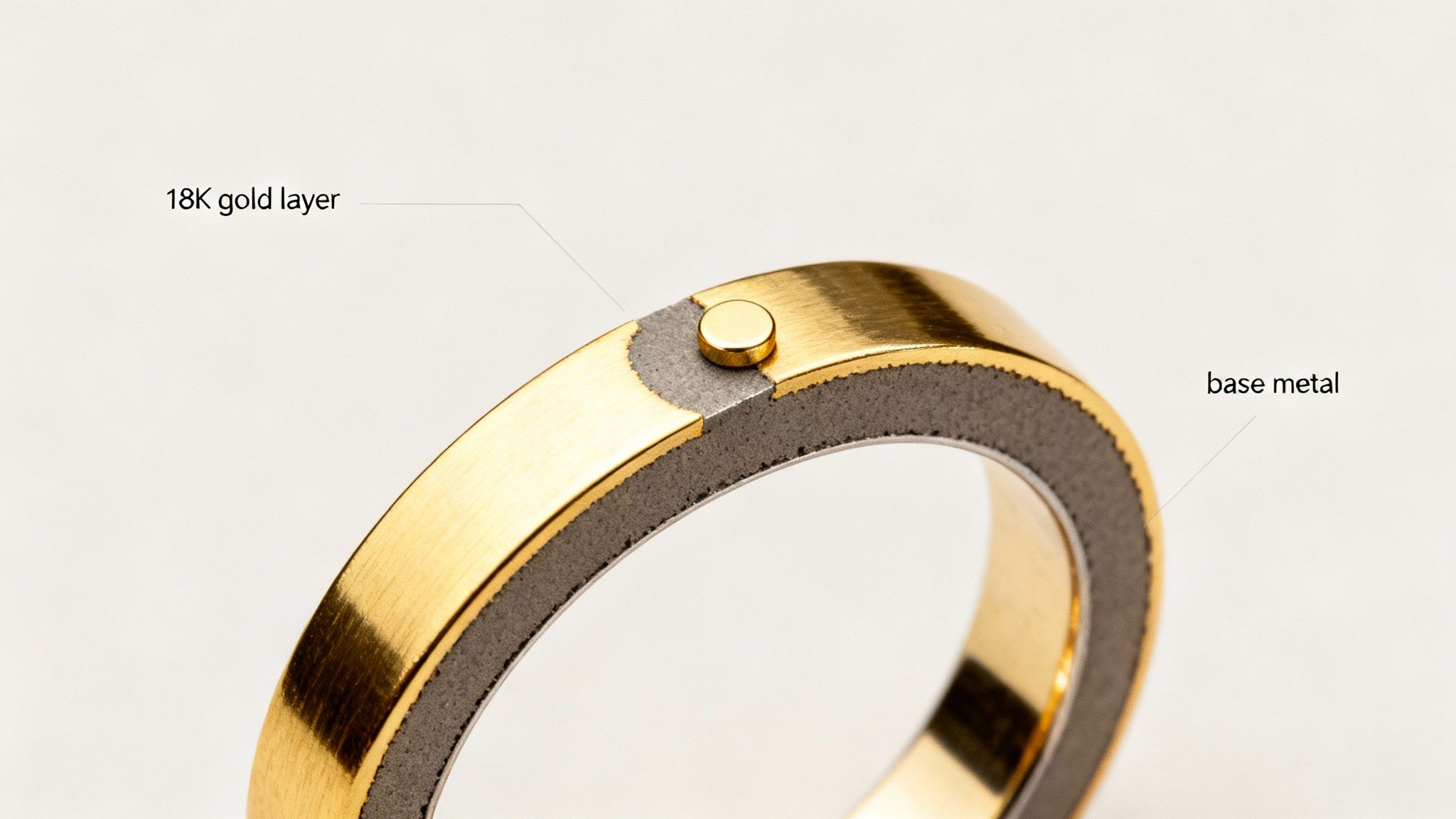
This process really comes down to two key components working in perfect harmony:
The Base Metal: This is the heart of the piece, giving it shape and strength. Jewelers often choose metals like brass, copper, or stainless steel for their durability and affordability.
The Gold Layer: This is where the magic happens. A microscopic layer of 18K gold is chemically bonded onto the base metal using an electric current, resulting in a seamless, radiant finish that looks just like solid gold.
To give you a quick visual, here's a breakdown of what makes up 18K gold plated jewelry.
18K Gold Plated Jewelry at a Glance
Component | Description |
|---|---|
Core Material | A durable, affordable base metal like brass, stainless steel, or copper that forms the jewelry's structure. |
Outer Layer | A very thin layer of real 18-karat gold applied to the surface. |
Gold Purity | The gold layer is 18K, meaning it is 75% pure gold mixed with 25% other alloys for color and durability. |
Process | The gold is bonded to the base metal through an electrochemical process called electroplating. |
This combination allows for that perfect balance of affordability and the unmistakable look of high-quality gold.
Purity and Plating Explained
The "18K" in the name is a stamp of quality for the outer layer only. It confirms that the gold used for plating is 75% pure gold, blended with 25% other alloys like copper or silver. These alloys are essential—they give the gold strength and can influence its final color, since pure 24K gold is far too soft for everyday jewelry.
The real distinction is this: in a solid 18K gold piece, the entire item is 75% gold by weight. With 18K gold plating, only that very thin surface layer has the 75% gold purity.
This thin coating is incredibly delicate, usually measured in microns. Most standard gold plating falls somewhere between 0.5 to 3 microns thick. It’s this microscopic layer that gives the jewelry its value and beauty, offering a practical way to wear the luxurious look of gold every day. You can learn more about the complexities of the global precious metal plating market and how it impacts the jewelry you love.
The Science Behind the Shine
Ever wonder how that perfect, buttery layer of gold gets onto your favorite necklace? It’s not magic, but a fascinating mix of chemistry and artistry called electroplating.
Think of it as a high-tech ‘gold bath.’ A piece of jewelry, usually made from a sturdy base metal like brass or stainless steel, is submerged in a special liquid solution containing real gold particles.
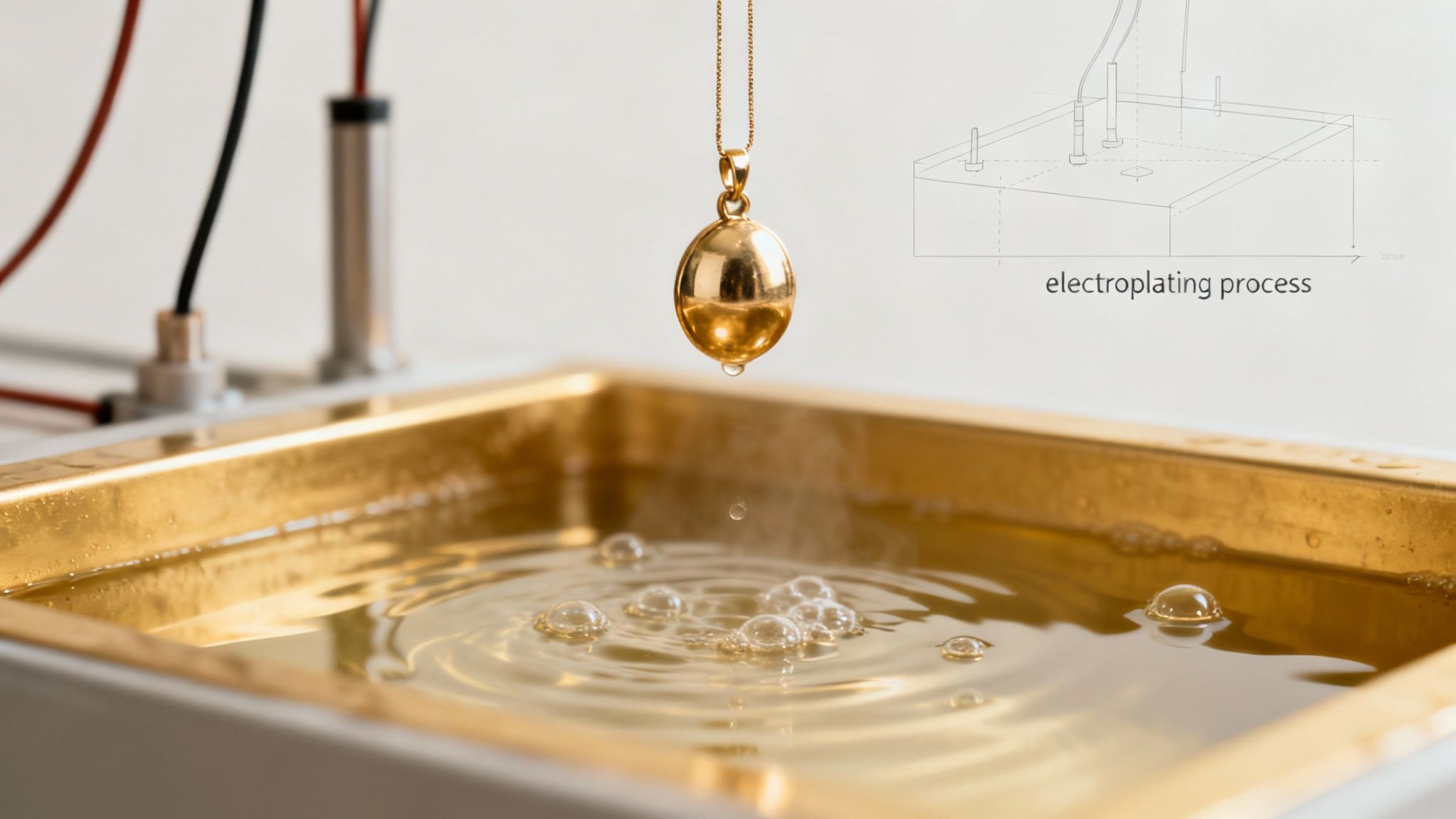
An electric current is then passed through the bath. This current acts like a magnet, coaxing the positively charged gold ions out of the solution and bonding them seamlessly onto the negatively charged surface of the jewelry. The end result is a flawless, gleaming finish that looks and feels just like solid gold.
The Plating Journey From Start to Finish
The process is meticulous, and it starts long before the piece ever sees a drop of gold. Each step is crucial for creating a finish that’s both stunning and durable.
First, the base metal has to be prepped. It's melted, rolled thin, and stamped into the final jewelry shape. Then, it’s tumbled for around 40 minutes in a mix of abrasives to create a perfectly smooth, almost poreless surface. After that, it gets a deep cleaning to strip away any oils or microscopic debris that could stop the gold from sticking.
Next up is a critical, often-overlooked step: adding a barrier layer.
A thin layer of a different metal—often nickel or palladium—is plated onto the base metal first. This "barrier" is the secret weapon for longevity. It stops the base metal from slowly migrating into the gold layer over time, which is what causes that dreaded tarnish from the inside out.
Finally, the piece is ready for its gold bath. It’s submerged in the 18K gold solution, where timing and temperature are everything. For an 18K alloy (which is 75% pure gold), the bath is typically heated to between 35-65°C. The electric current is carefully controlled to ensure the gold deposits evenly, giving a typical piece its 2-4 micron layer in just 5-30 seconds.
Why Every Detail Matters
This intricate dance of science and craftsmanship is what gives “18K gold plated” its meaning. Every single step, from polishing the raw metal to controlling the final dip, is engineered to create a piece that’s both beautiful and resilient.
The method is actually similar to other jewelry plating techniques, like applying a protective coat of rhodium for that bright, silvery-white finish on white gold. If you're curious about other types of plating, you might be interested in our guide on what rhodium plating on jewelry is.
The precision involved ensures the gold layer is uniform and securely bonded, maximizing its lifespan. Understanding the science behind it gives you a whole new appreciation for the skill that goes into creating affordable yet luxurious jewelry. The final result is a stunning piece with the brilliant look of 18K gold, built to last.
Why Plating Thickness Is Everything
When you see a piece labeled "18K gold plated," it's natural to fixate on the "18K gold" part. But the real story—the one that determines how long you'll love wearing that piece—is hidden in the word "plated." Specifically, it's all about the thickness of that gold layer.
This single detail is the difference between a brilliant shine that lasts for years and a piece that starts showing its base metal after just a few wears.
The thickness of the gold layer is measured in microns. One micron is one-millionth of a meter, which is an almost impossibly tiny measurement. For a little perspective, a single strand of human hair is about 70 microns thick. So, when we're talking about plating, we're talking about a microscopic layer that has a massive job to do.
A thicker coat of gold acts as a stronger shield against daily life—think friction from your clothes, accidental bumps, and just general wear and tear.
Simply put, a thicker plating means a longer-lasting piece of jewelry. It’s what separates a ring that fades in a few months from a necklace that stays golden for years.
Understanding this helps you see past the initial sparkle and really gauge the quality and value of what you're buying.
Decoding Micron Ratings
In the world of plated jewelry, that tiny micron number is your best friend. It tells you what to expect and how the piece will hold up over time. Not all plating is created equal, and these ratings generally fall into a few key tiers.
Here’s a simple breakdown of what those numbers actually mean for you:
Flash Plating (Under 0.5 microns): This is an ultra-thin, almost decorative layer. You’ll typically find it on costume jewelry where the goal is a low price point, not longevity. It looks great at first but will wear off very quickly, especially on high-contact items like rings.
Standard Plating (0.5 - 1.5 microns): This is a common middle ground for fashion jewelry. It offers a decent balance of affordability and durability, making it a good choice for pieces you won’t wear every single day, like earrings or a necklace for a special occasion.
Heavy Gold Plating (2.5 microns or more): This is where real quality begins. A piece with 2.5 microns or more is considered high-quality and is often called heavy gold plate. If the base metal is sterling silver, this thickness is what qualifies it as gold vermeil. This is the ideal thickness for things you wear all the time, like your favorite bracelet or go-to ring, as it’s built to withstand daily friction and last for years with the right care.
Plated vs. Filled vs. Vermeil vs. Solid Gold
Walking into the world of gold jewelry can feel a little overwhelming at first. You’ll see terms like 18K gold plated, gold-filled, gold vermeil, and solid gold, and it’s easy to get them mixed up. But once you understand what each one means, choosing the right piece becomes simple.
Each term describes a totally different construction method, which impacts everything from durability and price to how you should wear it. Think of it like this:
18K Gold Plated: This is like a beautiful, thin coat of paint. It gives you the stunning look of gold on the surface but is the most delicate of the bunch.
18K Gold-Filled: This is more like a thick, durable laminate countertop. The layer of gold is mechanically bonded to the base metal, making it far more substantial and long-lasting.
18K Gold Vermeil: This is a premium, specialized type of plating, but with a key difference—the base metal is always sterling silver.
Solid 18K Gold: This is the real deal, like a piece of solid oak furniture. It's gold all the way through.
A Head-to-Head Comparison
To really get a feel for what 18K gold plated offers, it’s best to see it side-by-side with the alternatives. Every type has its place, catering to different budgets, styles, and lifestyles. From the trendy, affordable appeal of plated pieces to the heirloom quality of solid gold, the best choice really comes down to what you’re looking for.
Here’s a simple chart to break down how these four types of jewelry stack up.
Gold Jewelry Comparison Chart
Feature | 18K Gold Plated | 18K Gold-Filled | 18K Gold Vermeil | Solid 18K Gold |
|---|---|---|---|---|
Gold Content | Under 0.05% | At least 5% | Sterling silver base | 75% |
Durability | Low to moderate | High | Moderate | Very High |
Price Point | Most affordable | Mid-range | Mid to high-range | Highest |
Best For | Trendy, occasional wear | Everyday wear, long-lasting | Hypoallergenic, quality look | Heirlooms, lifetime wear |
As you can see, there’s a clear trade-off between price and longevity. Gold-plated jewelry gives you the look for less, making it perfect for trying out a new trend. On the flip side, gold-filled and solid gold pieces are built for the long haul.
If you want to dig a little deeper, we have a whole guide covering the difference between gold-plated and gold-filled jewelry.
Understanding The Value
When you compare the numbers, the value of each type becomes crystal clear. An 18K gold-plated piece has less than 0.05% total gold. In contrast, a gold-filled item must have at least 5%, and solid 18K gold is 75% pure gold.
This huge difference is why plated jewelry is the go-to for fashion-forward buyers who want to experiment without a big investment.
The durability of plated jewelry comes down entirely to the thickness of that outer layer. A standard plating of 0.5 to 3 microns can last anywhere from six months to a few years, depending on wear. A thicker 3-micron layer might give you 2-5 years of shine, while a flash plating under 0.5 microns could fade much faster.
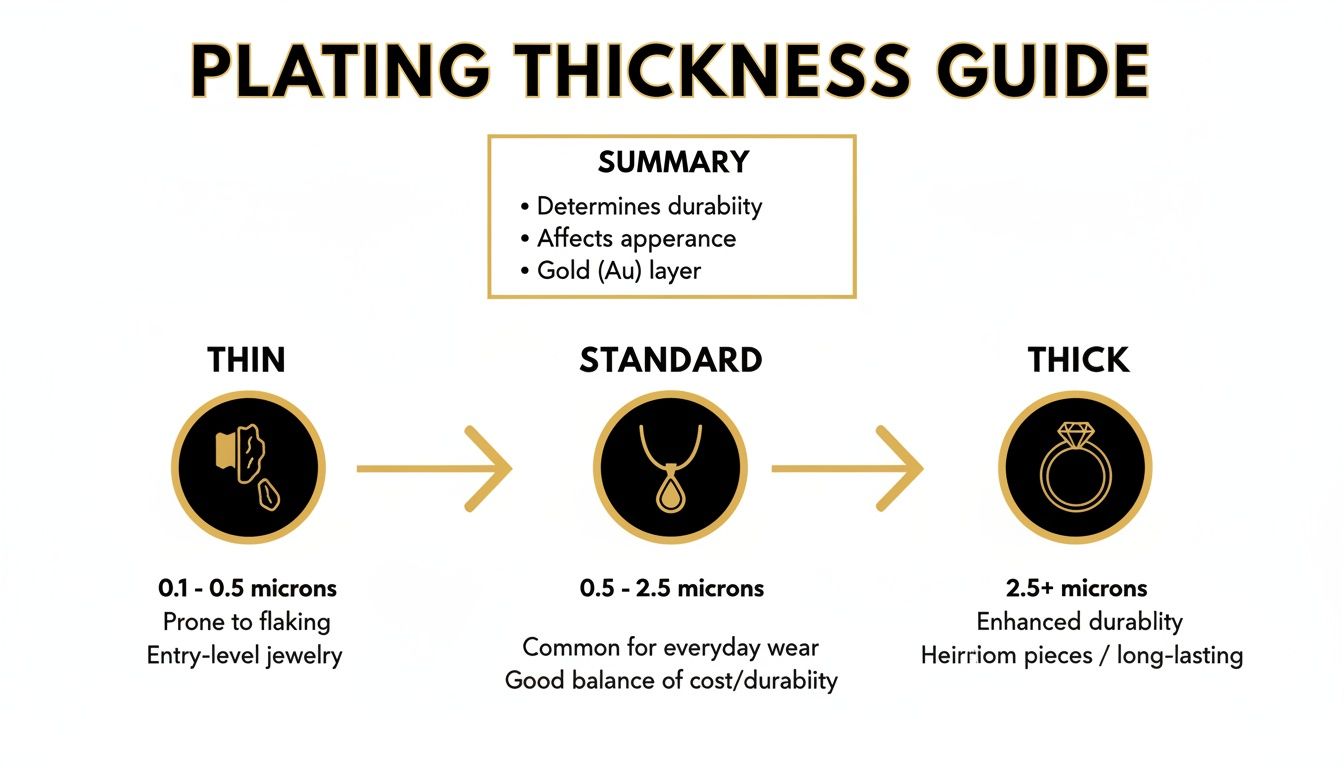
This visual really says it all. The thicker the plating, the better it will hold up—especially on high-contact pieces like rings and bracelets. For earrings or necklaces that see less friction, a thinner plating can still do the job beautifully.
Keeping Your Gold Plated Jewelry Brilliant
Your 18K gold plated jewelry brings that touch of luxury without the solid gold price tag, but keeping it looking brilliant is all about mindful care. Because the gold layer is microscopically thin, treating your pieces gently isn’t just a good idea—it’s the secret to making them last.
A few simple habits can be the difference between a piece that shines for years and one that fades in months. The golden rule? Your jewelry should always be the last thing you put on and the first thing you take off. Think of it as creating a protective barrier between the delicate gold plating and all the chemicals hiding in your daily routine.
Essential Care Dos and Don'ts
To get the most out of your favorite pieces, you have to protect them from the elements. A consistent care routine is your best defense against wear and tear, keeping them looking fresh out of the box.
Here are the non-negotiables:
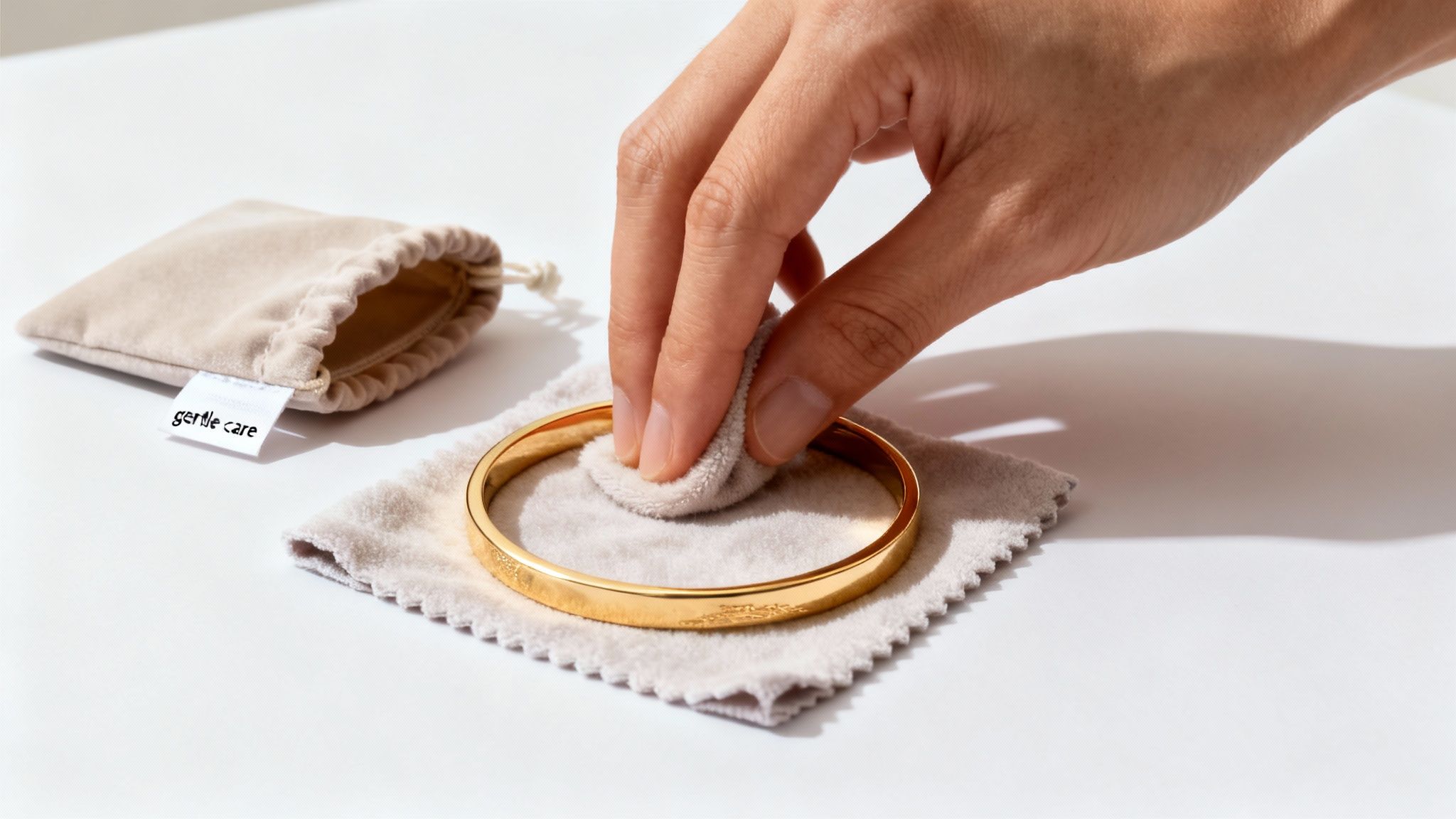
DO give them a gentle wipe-down after wearing. A soft, dry microfiber cloth is perfect for removing skin oils and everyday grime. Steer clear of chemical cleaners or harsh polishing cloths, as they’ll strip that gold layer right off.
DO store each piece on its own. A soft pouch or a lined jewelry box is ideal. This prevents your pieces from scratching each other up—especially tangled chains, which create friction that can wear away the plating.
DON'T wear plated jewelry in water. That means no showering, swimming, or hot-tubbing with your pieces on. Chlorine and other chemicals are public enemy number one for that delicate gold finish.
DON'T let your jewelry meet harsh substances. We’re talking perfumes, lotions, hairspray, and even hand sanitizers. The alcohol and chemicals in these products will degrade the plating and cause it to fade surprisingly fast.
The science is pretty straightforward: harsh chemicals and abrasion break down the electrochemical bond holding the gold atoms to the base metal. Once that bond weakens, the plating can start to flake, tarnish, or wear off, revealing the metal underneath.
If you’ve ever wondered why some plated pieces react differently over time, especially those with a sterling silver core, you can dive deeper into our guide on whether gold plated sterling silver tarnishes.
Ultimately, by steering clear of these common culprits, you’re directly preserving the integrity and shine of your 18K gold plated jewelry, ensuring it remains a standout part of your collection.
How to Shop for Quality Plated Jewelry
Ready to add a new piece to your collection? Navigating the world of 18K gold plated jewelry is simple once you know what to look for. Being a savvy shopper means looking beyond the initial sparkle and asking the right questions to ensure you’re getting a piece that’s made to last.
Start with Plating Thickness
Your first question should always be about the plating thickness. Since this detail directly impacts how well your jewelry wears over time, don't be shy about asking the brand for its micron rating.
For pieces you plan to wear regularly, aim for at least 1.5 to 2.5 microns. This is often called "heavy gold plate" and is designed to withstand daily friction far better than thinner, flash-plated alternatives.
Check the Foundation and Markings
Next, get to know the base metal. The material underneath the gold layer is just as important, especially for durability and potential skin sensitivities. High-quality plated jewelry almost always starts with a strong, often hypoallergenic, foundation.
Look for these excellent base metal options:
Sterling Silver: When 18K gold is plated over sterling silver (at a thickness of at least 2.5 microns), it's officially called gold vermeil—a premium and hypoallergenic choice.
Stainless Steel: Known for its incredible strength and resistance to rust and tarnish, stainless steel is a fantastic, durable base for everyday pieces.
Finally, learn to decode the small stamps or markings on the jewelry itself. These tiny inscriptions are your clues to the item’s construction and what "18k gold plated mean" in that specific context.
A stamp can tell you a lot about a piece before you even buy it. Understanding these markings helps you verify the materials and distinguish between different types of plated jewelry, protecting you from misleading claims.
Common stamps you might see include:
18KGP: This is shorthand for "18K Gold Plated."
18K HGE: This stands for "Hard Gold Electroplate," a slightly more durable plating method.
925: If you spot this, it confirms the base metal is sterling silver, meaning the piece is likely gold vermeil.
By checking for thick plating, a quality base metal, and clear markings, you can confidently choose beautiful, well-crafted 18K gold plated jewelry that offers both style and value.
Got Questions? We've Got Answers.
When you're diving into the world of 18K gold plated jewelry, a few questions always pop up. Getting straight answers is the best way to pick pieces you'll love and know exactly how to care for them. Here’s a rundown of what people ask most.
How Long Does 18K Gold Plating Last?
This one comes down to two things: how thick the plating is and how you wear the piece. A super thin plating, something under 1 micron, might only keep its shine for a few months to a year if it’s on a high-contact item like a ring you wear daily.
On the other hand, a more generous plating of 2-3 microns can look great for several years, especially on jewelry that doesn’t see a lot of friction, like earrings or a pendant necklace. Ultimately, care is king. Keep it away from chemicals and store it properly, and you'll get way more life out of it.
Can You Wear 18K Gold Plated Jewelry in the Shower?
It’s tempting, but we strongly advise against it. The real enemy isn't the water itself, but all the other stuff that comes with it—soaps, shampoos, and even the minerals in hard water. These act like tiny abrasives, slowly wearing down that delicate layer of gold.
Think of it this way: every shower is a tiny bit of wear and tear. Over time, that exposure will speed up the fading process, causing the gold to tarnish, thin out, or even flake off. To keep that brilliant shine, always take it off and keep it dry.
Is 18K Gold Plated Jewelry Good for Sensitive Skin?
This is a great question, and the answer depends entirely on what’s underneath the gold. Pure gold is hypoallergenic, which is fantastic. But most skin reactions are actually triggered by the base metal—often nickel or brass—once the gold plating starts to wear thin.
If you have sensitive skin, the key is to look for 18K gold plated jewelry that uses a hypoallergenic base metal. Your safest bets are:
Sterling Silver: When sterling silver is plated with gold, it’s called gold vermeil, which is an excellent choice for sensitive skin.
Stainless Steel: This metal is famously durable and hypoallergenic, making it a super reliable and irritation-free option.
A good quality barrier layer between the base metal and the gold can also make a huge difference in preventing irritation.
At Panther De Luxe Shop, we believe in creating beautiful, high-quality jewelry that you can wear with confidence. Explore our collection of stunning pieces designed to elevate your style. Visit our shop to find your next favorite accessory.
Comments