
What Is the Difference Between Gold Plated and Gold Filled? A Quick Guide
- Luke Zucco
- Dec 23, 2025
- 14 min read

The real difference between gold plated and gold filled jewelry comes down to two things: how much gold is used and how it’s put on. It’s the kind of detail that separates a piece that lasts a season from one that can last for years.
Gold filled jewelry has a substantial layer of solid gold that’s been permanently bonded to a base metal using intense heat and pressure. By law, it has to contain at least 5% solid gold by weight. Gold plated, on the other hand, has a microscopically thin layer of gold applied using an electric current. We're talking a tiny fraction of gold content, usually less than 0.05% of the item's total weight.
Gold Plated vs Gold Filled: Answering The Core Question
When you're shopping for gold jewelry, it’s easy to get lost in the terminology. "Gold plated" and "gold filled" sound almost identical, but they represent two completely different worlds in quality, durability, and of course, price. Getting a handle on what sets them apart is the first step to buying smarter.
Your choice here affects everything. It dictates how long your new piece will look good, whether it's likely to irritate your skin, and if you're buying a trendy accessory for now or investing in something for the long haul.
Quick Comparison: Gold Plated vs Gold Filled
To really see the difference, it helps to put them side-by-side. This table breaks down the essential distinctions that influence how each type of jewelry performs, looks, and feels.
Characteristic | Gold Plated | Gold Filled |
|---|---|---|
Gold Content | Extremely low (typically <0.05% of total weight) | Significantly higher (at least 5% of total weight) |
Manufacturing | A thin layer is applied with an electric current (electroplating) | A thick layer is bonded with heat and pressure |
Durability | Prone to tarnishing, chipping, and fading quickly | Highly durable, tarnish-resistant, and long-lasting |
Value | Very affordable, considered costume or fashion jewelry | Higher upfront cost but offers better long-term value |
Skin Sensitivity | Can cause irritation as the base metal becomes exposed | Generally hypoallergenic and safe for sensitive skin |
As you can see, the higher gold content and robust manufacturing process of gold filled jewelry give it a clear advantage in durability and longevity.
While we're focused on gold plated vs. gold filled, it’s also helpful to understand the distinction between gold vermeil and gold plated jewelry to get the full picture. Each has its own place, but which one is right for you depends entirely on what you're looking for. If you're exploring fun, on-trend styles, our collection of high-quality gold plated rings is a great place to find affordable designs.
This infographic does a great job of showing just how different the gold layers are.
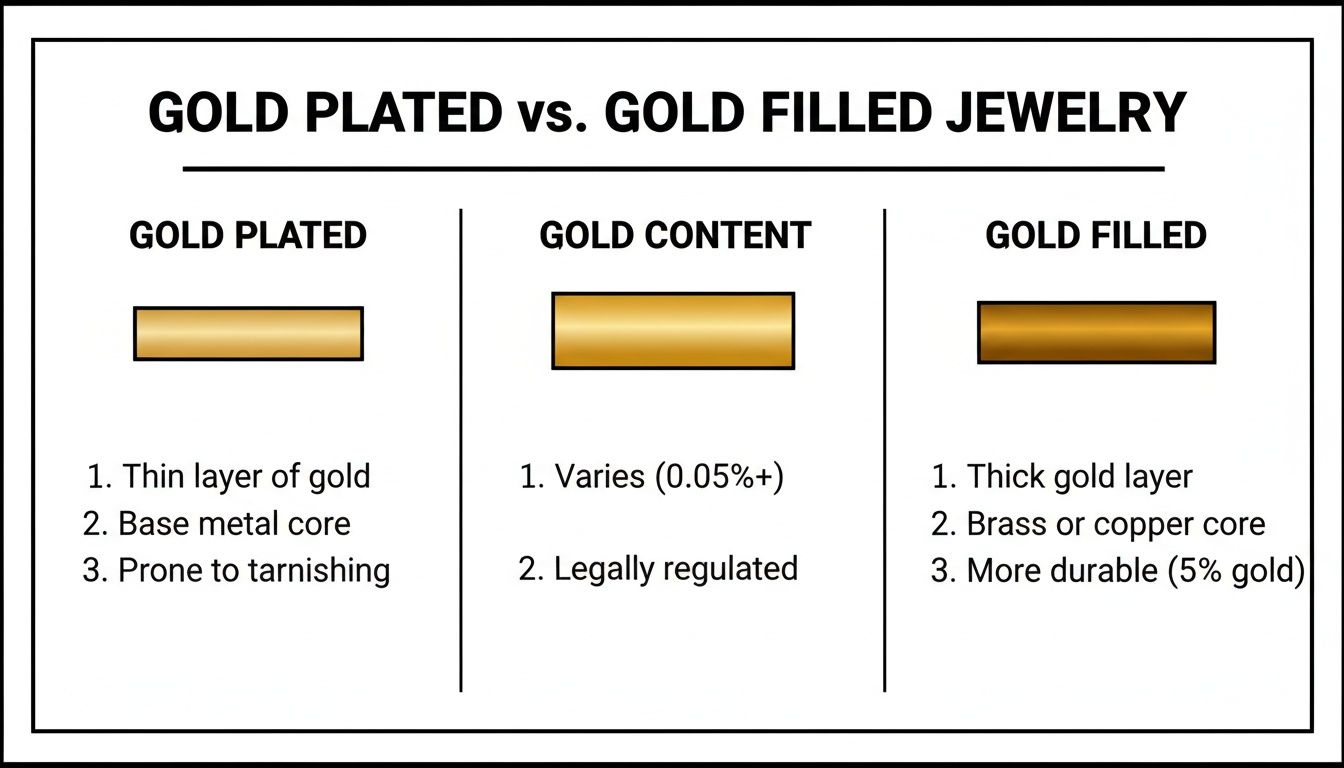
You can literally see that the layer of gold on a filled piece is in another league. That thickness is precisely why it holds up so much better over time.
Understanding How Each Jewelry Type Is Made
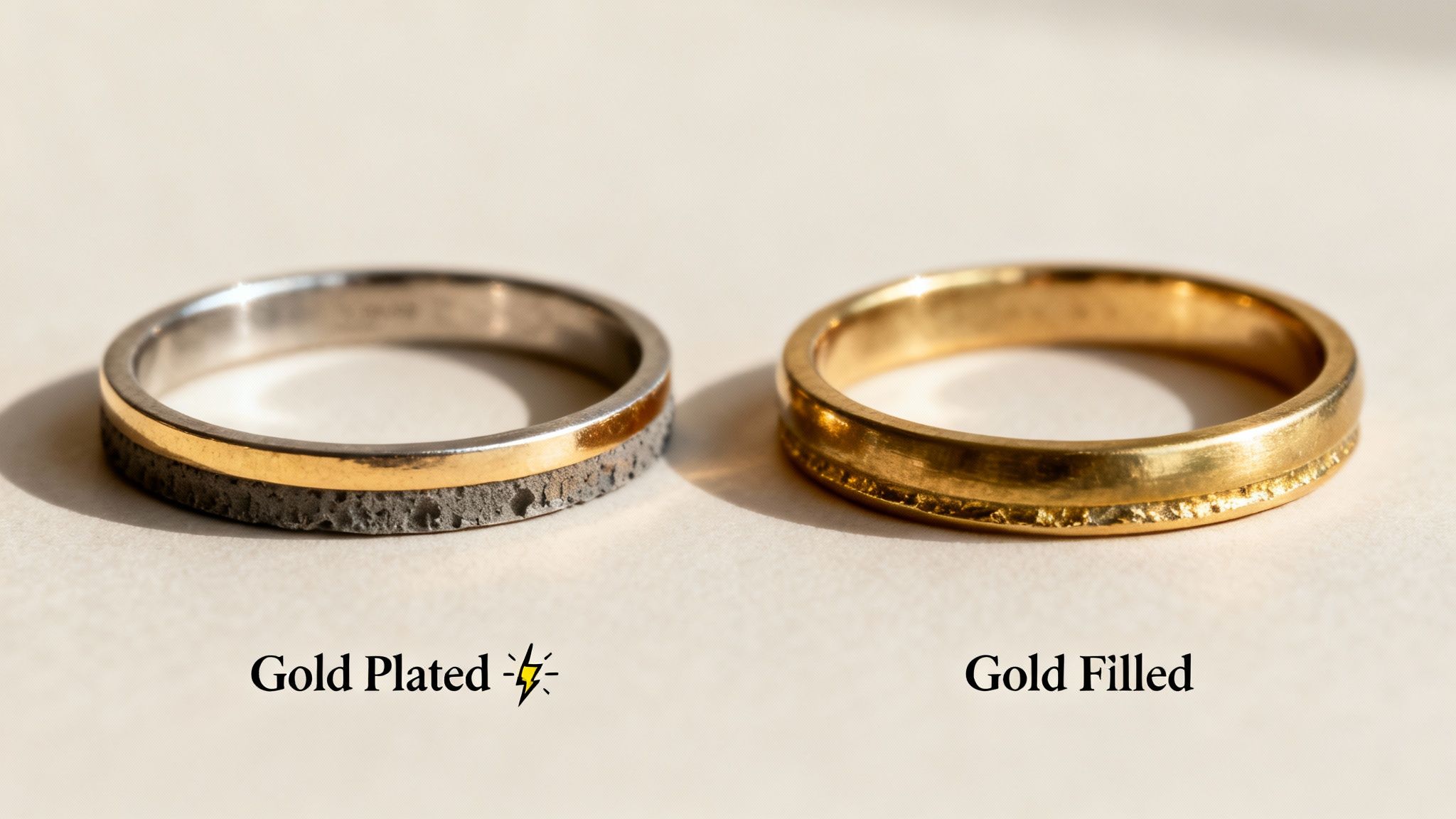
The real story behind gold plated and gold filled jewelry starts with how they’re made. They might look similar sitting in a display case, but the way each piece is constructed is what dictates its durability, value, and whether it can handle daily wear. This isn't just a boring technical detail—it's the core of what makes them two completely different products.
The Flashy but Fragile World of Gold Plating
Gold plated jewelry gets its golden sheen through a process called electroplating. It’s a fast, efficient technique where a piece of base metal—usually brass, copper, or nickel—is dipped into a solution containing gold particles. An electric current is then used to fuse a microscopic layer of gold onto the surface.
This process is incredibly cost-effective, which is why it's the go-to for trendy, affordable fashion jewelry. But here’s the catch: the gold layer is razor-thin. Think of it as a coat of spray paint. It looks great at first, but it’s not built to last. This superficial layer makes up a tiny fraction of the jewelry’s total weight.
Because the gold is just sitting on top of the base metal, it's easily scratched, chipped, and worn away by friction, lotions, and even your own skin's oils. This is precisely why that cute plated ring you bought starts to show a different metal underneath after a few weeks of wear. It was never meant for the long haul.
The Built-to-Last Method of Gold Filled
Gold filled jewelry is a whole different animal. Instead of a quick dip and an electric zap, it’s created using intense heat and pressure to mechanically bond a thick, solid layer of gold over a high-quality jeweler's brass core. There are no chemicals or currents here—just a permanent fusion of metals.
Imagine taking a substantial sheet of 12k or 14k gold and literally fusing it to the brass until they become one new, durable material. From this robust sheet, the jewelry is then crafted. This mechanical bond means the gold isn't going anywhere. It won’t flake, peel, or rub off.
This process explains the huge gap in gold content. To be legally called "gold filled," a piece must have at least 5% of its total weight in real gold. Gold plated jewelry, on the other hand, often contains less than 0.05% gold. That’s a massive difference—gold filled pieces can have 100 times more gold. The U.S. Federal Trade Commission (FTC) is strict about this, requiring stamps like '1/20 12K GF,' which guarantees that at least 1/20th (or 5%) of the item's weight is 12-karat gold. If you want to dive deeper into industry standards, SJ Jewellery's blog has some great insights.
A Side-by-Side Look at the Final Product
So, what do these two very different manufacturing journeys mean for you? The end results are worlds apart in quality.
Gold Plated Jewelry:
A Temporary Bond: The gold is just a surface treatment, not an integral part of the piece.
A Microscopic Gold Layer: It’s so thin it's measured in microns, offering almost no protection for the base metal.
Built to Fade: It’s prone to tarnishing and discoloration as daily life inevitably wears away the thin gold coating.
Gold Filled Jewelry:
A Permanent Bond: The gold is mechanically fused to the core, creating a single, resilient material.
A Thick, Durable Gold Layer: By law, the gold layer is substantial, giving you a long-lasting, real gold exterior.
Resists Wear and Tear: It stands up to daily use and resists tarnishing for years, behaving much like solid gold.
Ultimately, how a piece is made defines its purpose. Gold plating gives you an affordable way to try out a gold look for a special occasion. The heat-and-pressure bonding of gold filled jewelry, however, creates a high-quality, long-lasting alternative to solid gold that you can actually live in.
Comparing Durability and Real-World Wear
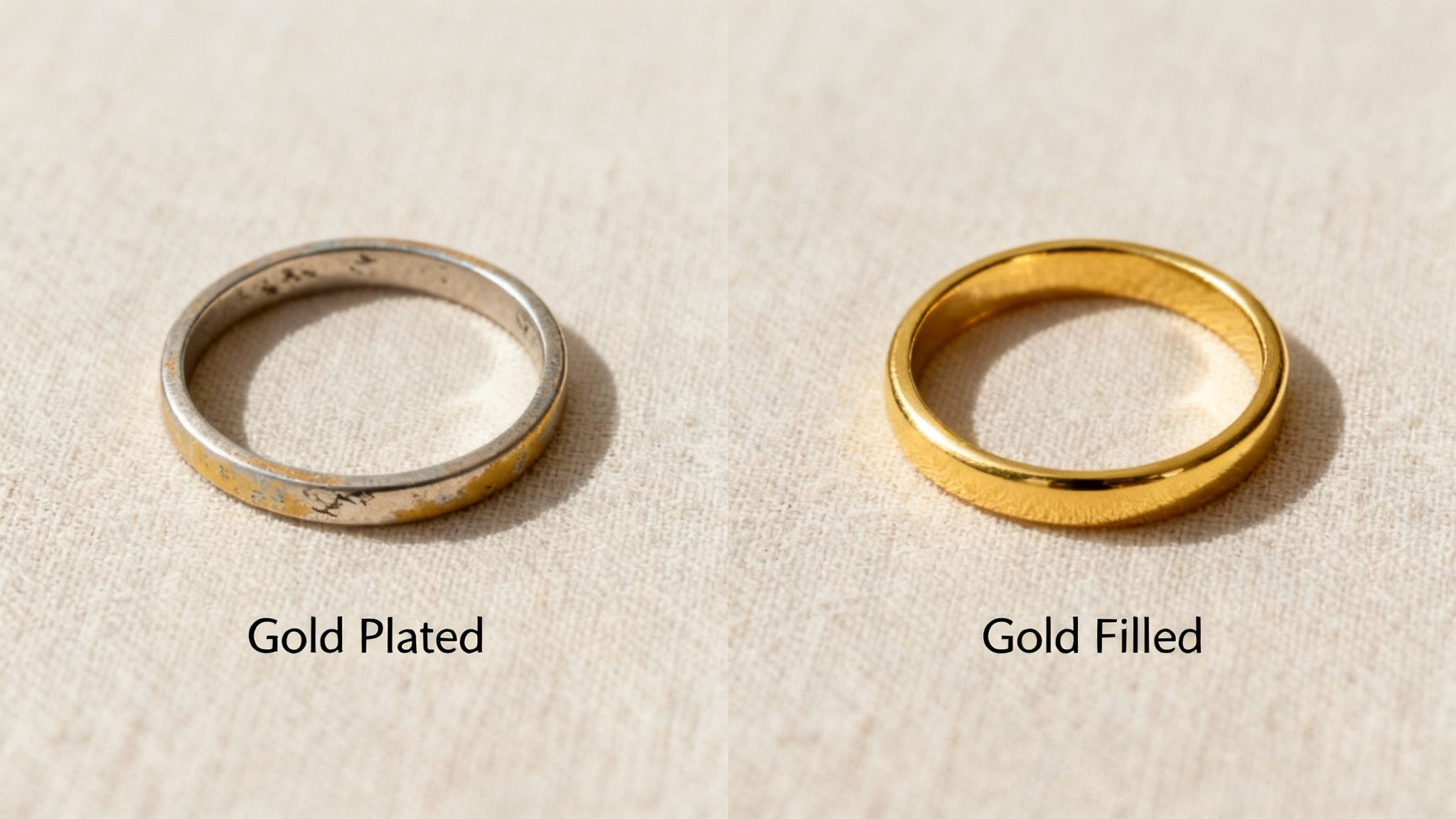
When you’re choosing between gold plated and gold filled jewelry, durability is probably the single most important factor. How a piece stands up to real life—typing at a keyboard, washing your hands, a little sweat—is what determines its true value and how long you'll love wearing it.
Gold plated jewelry, with its whisper-thin electroplated layer, is best for occasional wear. Think of it as a beautiful but delicate finish on a piece you bring out for special events. Constant contact with sweat, lotions, perfumes, and even plain water will start to break down that thin gold coating, eventually revealing the base metal underneath.
Gold filled jewelry, on the other hand, is built for the long haul. That thick, pressure-bonded layer of solid gold acts as a tough shield, making it far more resistant to tarnishing, chipping, and fading. It’s what makes gold filled a practical choice for pieces you want to wear every single day.
Lifespan: What to Really Expect
Let’s be honest: the difference in lifespan between gold plated and gold filled isn't just a matter of months versus years. It’s often a matter of weeks versus decades.
A gold plated piece might keep its shine for a few months if you’re incredibly careful and only wear it once in a while. But for something you wear daily, like a ring or a bracelet, you could see flaking or discoloration in just a few weeks. Its lifespan is directly tied to how much it rubs against your skin and the world around it.
With proper care, gold filled jewelry can last anywhere from 10 to 30 years. Its solid construction means you can wear it every day without constantly worrying about the gold layer rubbing off. This makes it a fantastic investment for the staple pieces in your collection, giving you a longevity that’s right up there next to solid gold.
Key Takeaway: Daily friction is the biggest enemy of gold plated jewelry. A plated ring will wear down much faster than plated earrings because it’s always rubbing against skin, fabric, and other surfaces.
How Everyday Activities Impact Your Jewelry
Your lifestyle plays a huge role in how your jewelry will age. Some activities will destroy a plated piece in no time but will barely make a dent in a gold filled one.
Let’s break down a few real-world scenarios:
At the Gym: Sweat is acidic and corrosive. For gold plated items, a single workout can start to eat away at the thin gold layer. Gold filled jewelry, however, can handle the exposure much better because its gold surface is thicker and non-porous.
Applying Lotions or Perfume: The chemicals in beauty products are seriously harsh on plated jewelry and can cause the gold to tarnish or wear away almost immediately. You should always put plated jewelry on last, long after your products have dried.
Showering or Swimming: Water—especially chlorinated or salt water—is a disaster for gold plated pieces. It causes rapid tarnishing and weakens the bond of the plating. While it’s still best to take off your gold filled jewelry, it can handle occasional exposure without immediate damage.
If you’re looking for pieces that fit a busy, active lifestyle, the durability of gold filled is the clear winner. For those who want an investment piece that combines this kind of resilience with timeless style, exploring options like a 14k solid gold herringbone chain offers an even greater level of permanence and value. At the end of the day, knowing the difference empowers you to choose jewelry that actually fits the way you live.
Aesthetics, Care, and Skin Sensitivity Compared
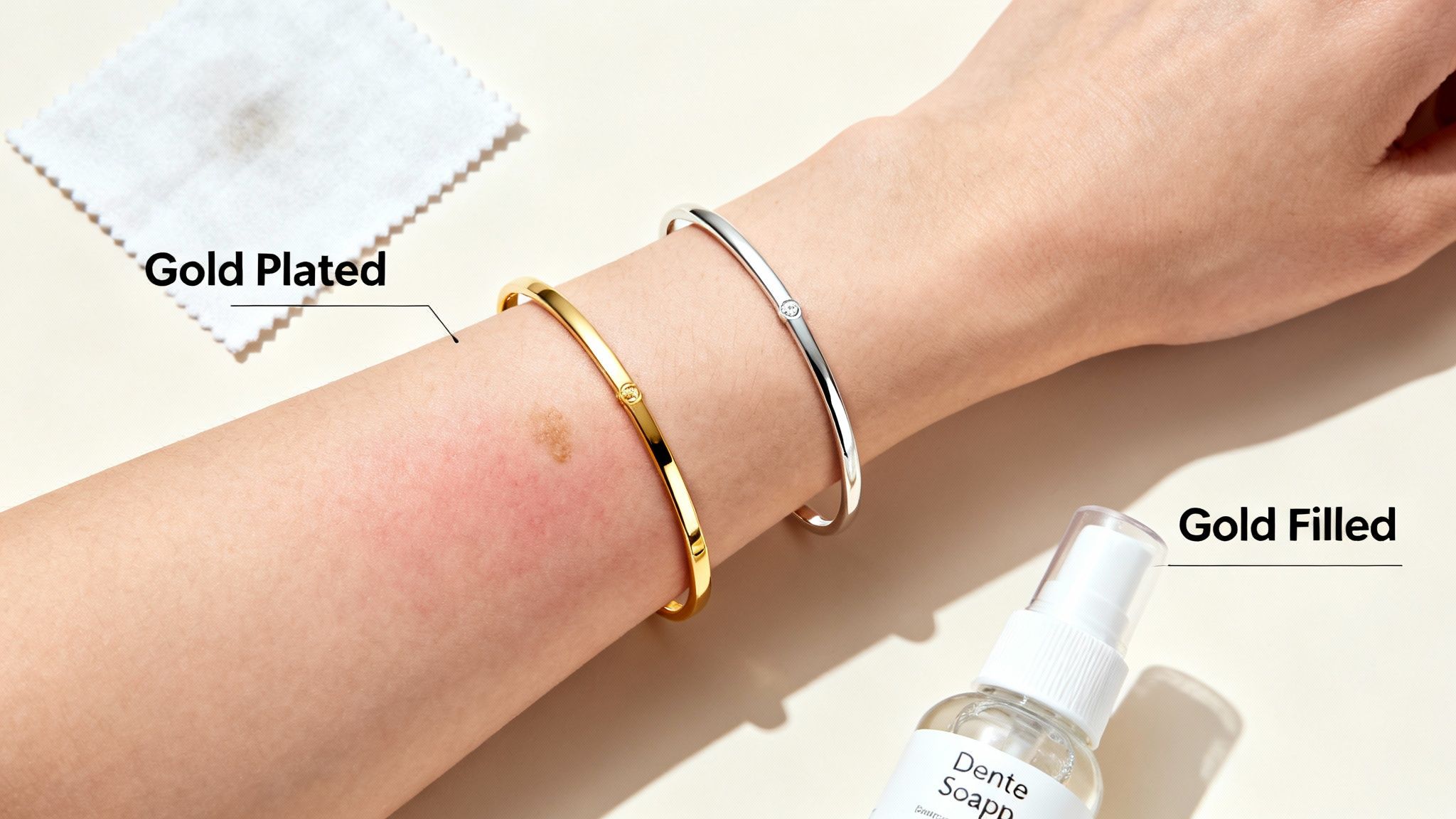
Beyond how long a piece lasts, the day-to-day experience of wearing jewelry comes down to its look, feel, and how your skin reacts to it. Both gold plated and gold filled pieces can offer the rich look of solid gold at first, but their real differences show up in how you care for them and whether they’ll irritate sensitive skin.
Getting this right is the key to choosing jewelry you'll love wearing, not just admiring in the box.
When you hold a brand-new gold plated and gold filled piece side-by-side, they can look identical. Both have that classic golden shine. But this is where the similarities end, because how they were made dictates exactly how they'll age and what you'll need to do to maintain them.
Preserving the Shine and Appearance
The difference in care really boils down to the thickness of that gold layer. Gold filled jewelry, with its substantial, heat-bonded surface, is far more forgiving. You can clean it gently with a soft cloth and some mild soap without worrying about stripping away the gold.
Gold plated jewelry, on the other hand, demands a much lighter touch. Its microscopic gold layer is incredibly fragile. Polishing too aggressively or even rubbing too hard can literally wipe the gold away, exposing the dull base metal underneath.
Expert Insight: Think of gold plating like a delicate coat of paint you can easily scratch off. Gold filled is more like a thick, durable veneer that's part of the material itself—it's made to handle daily life.
To keep your jewelry looking its best, you’ll need two very different routines:
Gold Filled Care: * Gentle Cleaning: A quick soak in warm, soapy water and a rinse with a soft cloth is usually all it takes. * Routine Wipes: Wiping it down with a polishing cloth now and then will keep it shining for years. * Resilience: It can handle getting caught in the rain or accidental contact with lotion, though consistent care is always best.
Gold Plated Care: * Avoid Moisture: Always take it off before you shower, swim, or work out. * Apply Last: Put your jewelry on only after your lotions, perfumes, and hairsprays have completely dried. * Delicate Cleaning: Gently buff the surface with a dry, soft cloth. Avoid chemicals and abrasive materials completely. For anyone who loves accessible luxury, our collection of gold plated bracelets has stunning designs perfect for occasional wear when cared for properly.
Skin Sensitivity and Hypoallergenic Properties
For a lot of us, the most critical difference is how a piece of jewelry feels against our skin. Allergic reactions are rarely caused by the gold itself; it’s usually the base metals mixed in—most often nickel—that cause the problem.
Pure gold is naturally hypoallergenic. It follows that the thicker the layer of real gold between your skin and the core metal, the lower your risk of a reaction. This is where gold filled jewelry truly shines. Its thick, non-porous layer of 12k or 14k gold creates a solid barrier that’s safe for over 99% of people with metal sensitivities.
Gold plated jewelry is a bigger gamble. The electroplating process creates a porous, microscopically thin layer. Over time, sweat and friction can cause base metal ions—like nickel—to seep through these tiny pores and contact your skin, triggering redness, itching, or even discoloration.
Here’s a practical breakdown of how each one interacts with your skin:
Factor | Gold Plated Jewelry | Gold Filled Jewelry |
|---|---|---|
Protective Layer | Extremely thin and porous, offering minimal protection. | Thick and non-porous, creating a strong hypoallergenic barrier. |
Common Base Metals | Often contains nickel, a very common allergen. | Typically uses jeweler's brass, which is safely encased. |
Long-Term Wear | The risk of irritation grows as the thin plating wears away. | Stays safe for sensitive skin for its entire lifespan. |
Ultimately, for anyone with sensitive skin or for pieces you want to wear every day, gold filled is the clear winner. It offers a peace of mind and comfort that gold plated jewelry simply can't guarantee over the long haul.
Cost vs. Long-Term Value: What Are You Really Paying For?
When you’re staring at two similar-looking gold chains, one priced at $20 and the other at $70, it’s easy to think the cheaper one is the smarter buy. But the initial price tag only tells a fraction of the story.
Gold plated jewelry's biggest selling point is its accessibility, typically costing between $10 and $50. This makes it perfect for trying out a new trend without much commitment. In contrast, gold filled pieces usually run from $30 to $100+, reflecting a much higher gold content—at least 5% of the item's total weight—and a more intensive manufacturing process.
You're not just paying for a look; you're paying for durability and material worth.
The Real Math: Cost-Per-Wear
True value isn't what you pay today; it's how much use you get out of something over time. This is where the cost-per-wear concept really highlights the difference.
Let's break it down with an example.
Imagine you buy a $20 gold plated necklace and wear it daily. If it starts to tarnish and becomes unwearable after about two months (60 wears), your cost-per-wear is roughly $0.33. Now you have to buy a new one.
Now, think about a $70 gold filled necklace. With decent care, this piece can easily last a decade. If you wear it daily for just five years (that’s 1,825 days), your cost-per-wear plummets to less than $0.04.
The initial sticker shock fades fast when you realize how much longer your jewelry will last.
Key Financial Insight: Gold plated jewelry is an accessory expense, like fast fashion—fun for a season, but not built to last. Gold filled jewelry is a small investment in your core collection, bridging the gap between temporary trends and the high cost of solid gold.
A Practical Financial Breakdown
To put it all into perspective, here’s a simple comparison of what your money gets you.
Financial Aspect | Gold Plated Jewelry | Gold Filled Jewelry |
|---|---|---|
Upfront Cost | Low ($10 - $50) | Moderate ($30 - $100+) |
High (frequent replacements needed) | Low (lasts for years, even decades) | |
Cost-Per-Wear | High over time due to short lifespan | Extremely low over its extended lifespan |
Resale Value | Negligible to none | Minimal, but retains some material value |
Best For | Trendy, occasional, or short-term use | Daily wear, staple pieces, and gifts |
Why This Matters in the Bigger Picture
The appeal of both these options fuels a massive global market, which is projected to hit $121.78 billion by 2031. Gold filled jewelry, in particular, has found a sweet spot between luxury and affordability.
Its regulated gold content—that "1/20th" rule from the U.S. Federal Trade Commission—builds trust and gives it legitimacy. This is why you see wholesale search interest nearing 2,900 monthly queries; people are actively seeking out this durable, high-value alternative. For a deeper dive into these market dynamics, you can discover more insights about the gold jewelry industry on SincerelySilver.co.
Ultimately, the choice comes down to your priorities. If you want to rock a trendy look for a few months, the low cost of a plated piece makes perfect sense. But if you’re building a collection of beautiful, durable staples you can wear for years, the long-term value of gold filled jewelry is simply unmatched.
How to Choose the Right Gold Jewelry for You
Figuring out which gold jewelry to buy can feel overwhelming, but it gets a lot easier when you match the piece to your life. The right choice isn’t about which type is universally “better.” It’s about which one makes sense for you.
Gold plated jewelry is perfect for the world of fast fashion. It’s the ideal move for those trendy, of-the-moment pieces you plan to wear for a season, not a lifetime. Think of a bold statement necklace for one specific event or earrings that nail a current trend. Its low cost lets you experiment without the financial commitment.
On the other hand, gold filled jewelry is built for the long haul and daily wear. This is your go-to for staples—a classic chain you never take off, everyday hoops, or a bracelet that becomes part of your uniform. Its durability also makes it a thoughtful and lasting gift, especially for anyone with sensitive skin who needs a reliable, hypoallergenic option.
Making a Smart Decision
Shopping with confidence starts with knowing exactly what you’re buying. Let your lifestyle guide your decision, and learn how to spot the difference to ensure you’re getting the value you expect.
Here’s a quick guide for different situations:
For Trendy, Short-Term Accessories: If you’re grabbing a piece to wear just a few times or to test-drive a new style, gold plated is a smart, wallet-friendly choice.
For Your Everyday Staples: For jewelry you’ll wear constantly, like rings and bracelets that see a lot of action, gold filled is the much better investment.
For Gifting with Confidence: When giving jewelry as a gift, gold filled strikes that perfect balance of quality, durability, and value, ensuring they can enjoy it for years.
For Sensitive Skin: If you struggle with metal allergies, gold filled is the safer bet. Its thick layer of real gold creates a strong barrier between your skin and the base metal core.
Buyer's Tip: Always look for the stamp. Authentic gold filled pieces are often marked with indicators like "1/20 12K GF" or "14KGF." This is a legal guarantee that the gold content is at least 5% of the item's total weight.
Knowing Quality and Spotting Red Flags
Knowing what to look for can save you from future disappointment. Gold plated items rarely have quality stamps, and if a price seems too good to be true for something meant to last, it probably is.
Keep an eye out for signs of shoddy plating, like uneven color, flaking, or rough edges. These are tell-tale signs that the thin gold layer will wear off in no time.
Ultimately, understanding the difference between gold plated and gold filled jewelry gives you the power to build a collection that truly works for your budget, your style, and your life.
A Few More Questions About Gold Jewelry
Even after breaking down the technical differences, you probably have a few practical questions. Getting these answers straight is the final step in choosing the right piece and knowing how to care for it.
Does Gold Filled Jewelry Tarnish?
Yes, but it’s incredibly rare and happens very slowly. Because gold filled jewelry has such a substantial layer of solid gold bonded to its core, it’s highly resistant to tarnish.
Tarnish usually only shows up under specific circumstances, like constant exposure to harsh chemicals (think chlorine pools) or, in rare cases, if someone's unique body chemistry reacts with the alloy metals. For most people, though, it will keep its brilliant shine for decades.
Is It Okay to Shower With Gold Filled Jewelry?
You can, but it's really better not to. While gold filled pieces handle occasional water exposure much better than plated ones, it's the other stuff in the shower that causes problems. Soaps, shampoos, and minerals in the water can build up over time, leaving a film that dulls the finish.
To get the longest life out of your jewelry, it’s best to take it off before showering, swimming, or hitting the gym.
Pro Tip: Make your jewelry the last thing you put on and the first thing you take off. This simple habit minimizes contact with lotions, perfumes, hairspray, and water, keeping your pieces looking brand new for years.
How Do I Know if My Jewelry Is Gold Filled?
Authentic gold filled jewelry is almost always stamped with a quality mark that tells you exactly what you’re getting. Look for a tiny inscription like "1/20 12K GF" or "14/20 GF."
This stamp is a certification, guaranteeing that at least 5% (or 1/20th) of the item's total weight is solid 12k or 14k gold. You’ll rarely, if ever, find a quality mark like this on gold plated items.
Which One Makes a Better Gift?
If you want to give a gift that feels special and is built to last, gold filled jewelry is the clear winner. Its durability, long-term value, and hypoallergenic nature make it a thoughtful and impressive present.
It sends a message of quality and care that a short-lived plated piece just can't match, ensuring the person you're gifting it to can love and wear it for years to come.
At Panther De Luxe Shop, we believe in helping you build a jewelry collection that is both beautiful and practical. Explore our curated selections to find the perfect piece that fits your life and style. Discover your next favorite piece today.
Comments