
Does Gold Plated Sterling Silver Tarnish? An Expert Guide
- Luke Zucco
- Nov 12, 2025
- 13 min read

Yes, gold-plated sterling silver absolutely tarnishes over time. It's not a flaw in the piece but just the nature of how it's made. That beautiful gold layer is incredibly thin, and eventually, it wears down, letting the sterling silver underneath meet the air. That's when the magic—or, in this case, the chemistry—happens.
The Short Answer and What It Means for Your Jewelry
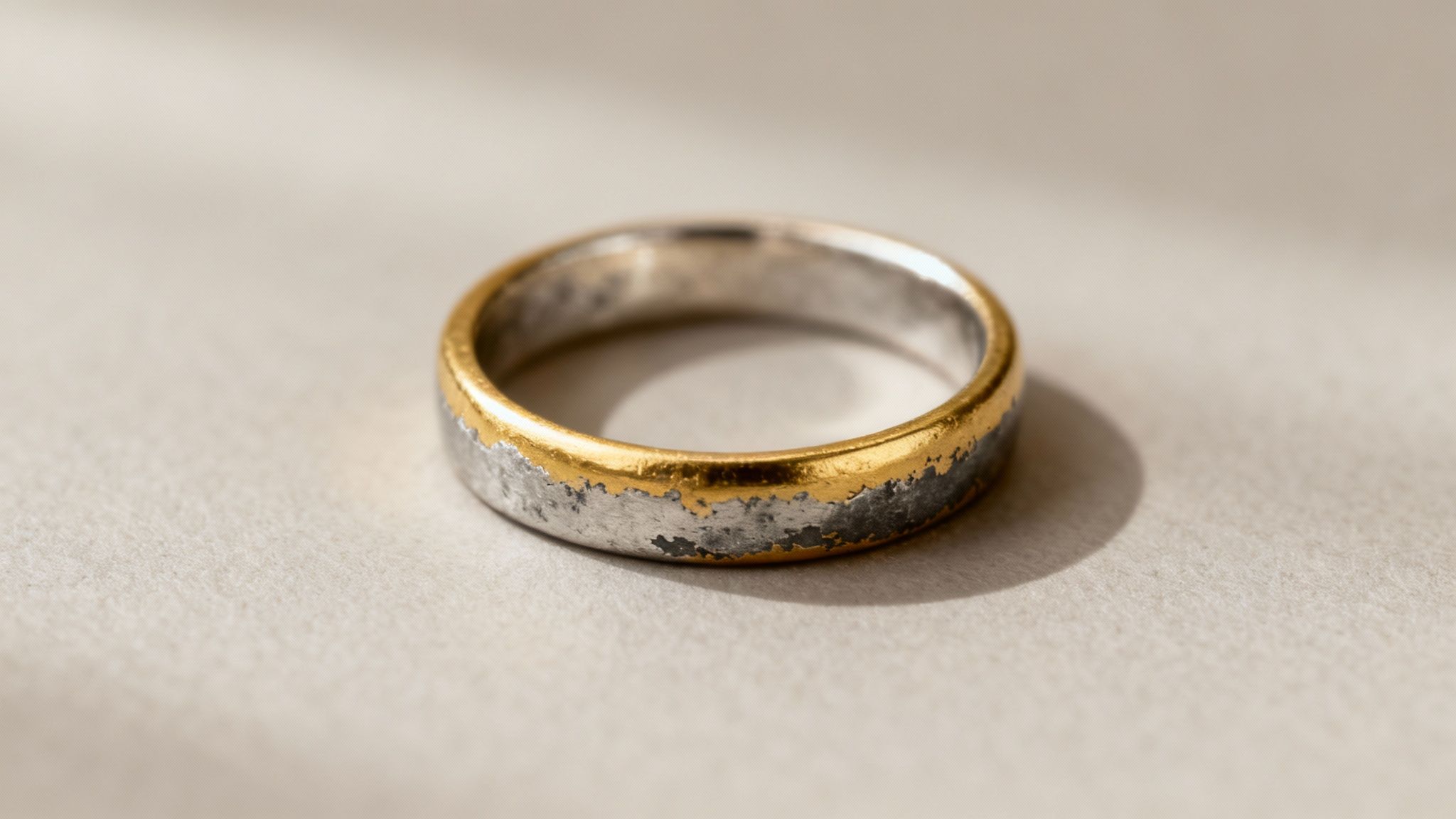
Think of the gold plating as a delicate, beautiful shield protecting the sterling silver core. Pure gold itself is a noble metal; it doesn't rust or tarnish. But the super-thin layer used in plating just can't stand up to constant friction forever. Everyday life—rubbing against your skin, clothes, and other surfaces—gradually wears it away.
Once that protective gold is gone, the sterling silver is exposed. And sterling silver, which is an alloy of silver and copper, has a natural enemy: sulfur. It reacts with sulfur compounds floating around in the atmosphere, forming a dark layer of silver sulfide. That’s the tarnish you see.
So, when you ask, "does gold-plated sterling silver tarnish?" the real answer is that the silver underneath the gold eventually will. It's a two-step process: the gold wears off, then the silver reacts.
Key Factors That Speed Up Tarnishing
How fast this happens is a whole other story, and it really comes down to a few key things—many of which you can control. Getting a handle on these variables is the best way to keep your jewelry looking brilliant for as long as possible.
The biggest culprits are:
Plating Thickness: This is a big one. A thicker coat of gold is a stronger shield, plain and simple. It will take much longer to wear through, delaying the inevitable tarnish party.
Your Daily Habits: How you live in your jewelry matters. Constant contact with sweat, lotions, perfumes, and even household cleaners can eat away at the gold layer much faster.
Environmental Conditions: Where you live and store your pieces plays a role, too. High humidity and air pollution mean more moisture and sulfur in the air, which is like hitting the fast-forward button on tarnishing once the silver is exposed.
The bottom line is that the stunning gold finish on plated jewelry is temporary. Its lifespan is a direct result of the plating's quality, the world it lives in, and how thoughtfully you wear and store it.
To help you visualize what helps and what hurts, here’s a quick breakdown of the factors that impact how quickly your jewelry might tarnish.
Factors That Speed Up Tarnishing
This table summarizes the main things that either accelerate the tarnishing process or help prolong the life of your gold-plated sterling silver pieces.
Factor | High Impact (Tarnishes Faster) | Low Impact (Lasts Longer) |
|---|---|---|
Wear & Tear | Wearing jewelry 24/7, during exercise, or to bed. | Removing jewelry before sleeping, swimming, or showering. |
Chemicals | Regular exposure to lotions, perfumes, soaps, and chlorine. | Applying products first, letting them dry, then wearing jewelry. |
Storage | Leaving pieces out in the open air, especially in humid areas. | Storing in an airtight bag or a lined jewelry box. |
Plating Quality | Plating is 0.5 microns or less thick. | Plating is 1.0 to 2.5 microns thick (vermeil standard). |
Cleaning | Using harsh chemical cleaners or abrasive cloths. | Gently wiping with a soft, dry, lint-free cloth after wear. |
Understanding these points is the first step toward making informed choices, both when you’re buying new pieces and caring for the ones you already love.
Ultimately, the journey to tarnish isn't a matter of if, but when. Across major markets like the United States and Europe, customer experiences show that the average lifespan of well-maintained gold-plated sterling silver jewelry falls somewhere between three to five years. Of course, that's assuming it isn't subjected to a ton of harsh conditions. You can find more great advice on jewelry care and longevity over at HarlemBling.com.
Understanding the Science Behind Why Tarnish Happens
To really get why gold-plated sterling silver eventually loses its luster, it helps to think of your jewelry like a beautifully painted car. The shiny gold layer is a thin coat of paint, and the car's body is the sterling silver underneath. That paint looks fantastic, but it's not invincible.
The "paint"—your gold plating—is a micro-thin layer of real gold applied over the base metal. Pure gold itself is incredibly resilient; it doesn't really react with the elements, which is why it doesn't tarnish. So, the problem isn't the gold. It's what lies beneath and just how thin that protective layer is.
The "car body" here is sterling silver, an alloy made of 92.5% pure silver and 7.5% other metals, usually copper. To fully appreciate why gold-plated sterling silver tarnishes, it's worth knowing a bit more about the base metal itself, including the symbolism and history of 925 silver jewelry. This silver-copper blend is strong, but it has a chemical weak spot.
The Two-Step Tarnish Process
Tarnishing isn't the gold changing color. It's a two-part chemical reaction that unfolds over time—a classic tale of a shield weakening and the vulnerable core getting exposed to the elements.
First, the gold shield has to wear down. This happens through simple, everyday friction. Your skin, your clothes, even the air itself creates constant, tiny abrasions that slowly erode the gold layer. Think of it like walking on a painted floor; over time, the high-traffic areas will show wear first.
Once the plating gets thin enough, the sterling silver core is exposed. This is where step two, oxidation, kicks in. The silver and copper in the alloy react with sulfur compounds floating around in the atmosphere. This chemical reaction creates a new compound on the surface: silver sulfide, which we see as that dark, discolored layer.
Key Takeaway: Tarnish on gold-plated sterling silver isn't the gold going bad. It's the underlying sterling silver reacting with air after the thin gold layer has worn away from friction and chemical exposure.
This process is why tarnish often looks patchy at first, popping up on high-contact points like the edges of a pendant or the back of a ring band.
Plating Thickness: The Deciding Factor
How fast this all happens comes down to one thing: the thickness of the gold plating. A thicker shield simply takes longer to wear through, giving the reactive silver underneath more protection.
The industry has standards for a reason. Generally, high-quality gold-plated jewelry should have a gold layer of at least 1 micron thick. Anything less than that is a recipe for quick discoloration.
Ultimately, the science is pretty straightforward. The gold layer is a temporary barrier. When it inevitably thins, the sterling silver will do what it naturally does—react with its environment and tarnish.
Gold Plated vs Vermeil vs Gold Filled Explained
When you’re shopping for gold jewelry, you’ll quickly see that not all pieces are created equal. The price tags and promises of longevity can vary wildly, and terms like "gold plated," "vermeil," and "gold filled" get thrown around a lot. While they sound similar, they represent completely different ways of making jewelry, which impacts quality and durability.
Getting a handle on these differences is the key to picking a piece that fits your lifestyle and expectations—and avoiding the disappointment of your new favorite ring tarnishing way too soon.
The most common and budget-friendly option you'll find is gold plated jewelry. Think of it as a super-thin layer of gold applied to a base metal like copper, brass, or in our case, sterling silver. This layer is often incredibly thin—sometimes less than 0.5 microns—which makes it the most vulnerable to wearing off from daily friction, sweat, and chemicals in lotions or perfumes.
This infographic gives you a simple visual of how the metals are layered in a typical gold-plated sterling silver piece.
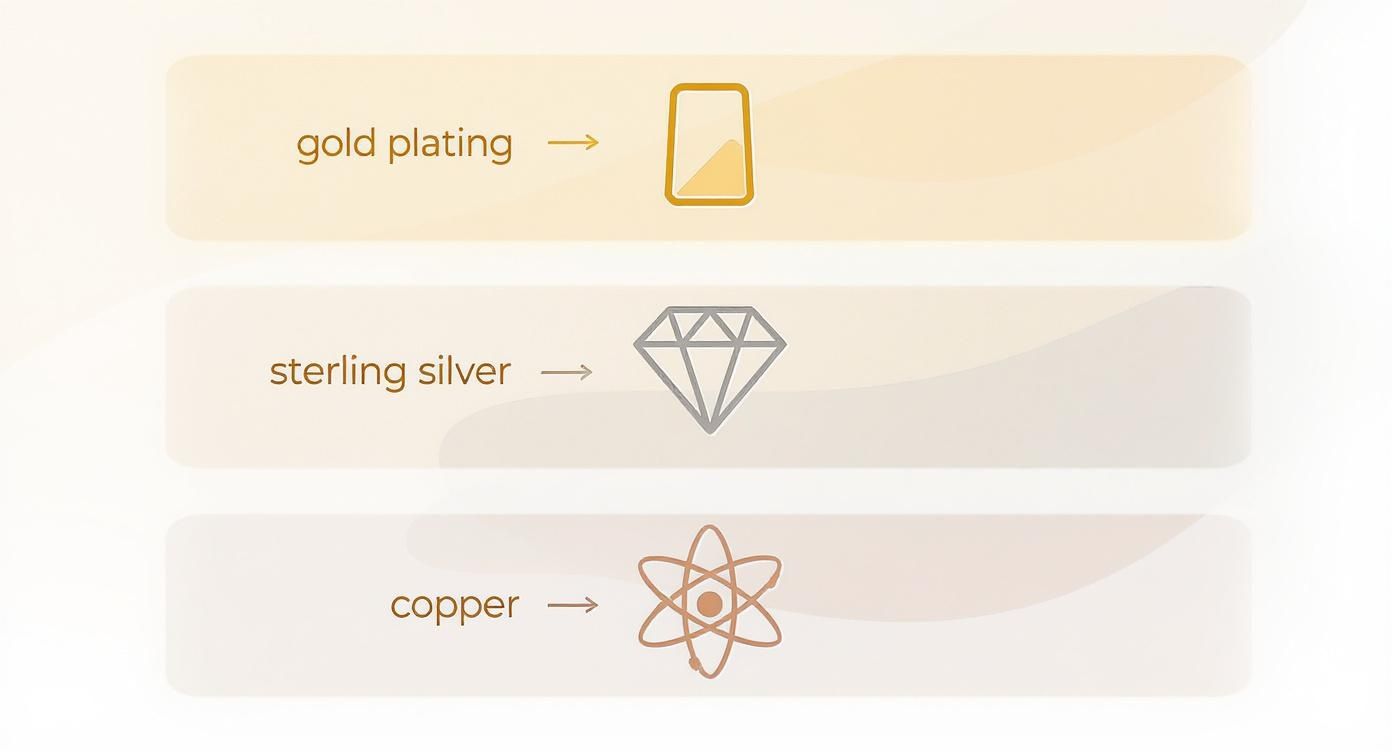
As you can see, that outer gold layer is the only thing standing between the sterling silver core and the elements that make it tarnish. Once it's gone, the silver underneath is exposed and will start to react.
Gold Vermeil: A Regulated Standard
A major step up in both quality and durability is Gold Vermeil (pronounced ver-may). This isn’t just a fancy marketing term; it's a regulated standard that guarantees a certain level of quality. For a piece to legally be called "vermeil" in the U.S., it has to meet two strict rules:
The base metal must be 925 sterling silver.
The gold plating has to be at least 2.5 microns thick.
That extra thickness makes all the difference. It creates a much tougher shield against wear and tear, meaning it will take way longer for the sterling silver to become exposed and start tarnishing. If you're curious to learn more about this higher-quality option, our guide on what is vermeil jewelry and its unique value is a great place to start.
Pieces with plating below that 2.5-micron threshold are just far more prone to problems. In fact, some studies show that up to 68% of standard gold-plated pieces show significant wear within just six months of regular use, especially when they're constantly exposed to moisture and friction.
Gold Filled: The Most Durable Option
Finally, there’s gold filled jewelry, which is really in a league of its own. Unlike plating, which is an electrochemical process, creating gold-filled jewelry involves mechanically bonding a thick sheet of gold to a base metal (usually jeweler's brass) using intense heat and pressure.
This method doesn't just coat the surface; it fuses the gold layer directly to the base metal, creating a far more resilient and long-lasting bond. By law, gold-filled jewelry must contain at least 5% gold by weight.
This substantial gold layer is hundreds of times thicker than standard plating, making it highly resistant to tarnishing and wear. It offers the closest experience to solid gold in terms of durability without the hefty price tag, making it a fantastic choice for everyday pieces like rings and bracelets that see a lot of action.
To make it easier to see the differences at a glance, here’s a quick comparison of the three types.
Comparing Gold Jewelry Types
Feature | Gold Plated | Gold Vermeil | Gold Filled |
|---|---|---|---|
Gold Thickness | Very thin (< 0.5 microns) | Thicker (2.5+ microns) | Very thick (5% by weight) |
Base Metal | Copper, brass, etc. | Sterling Silver only | Usually jeweler's brass |
Durability | Low; wears off easily | Good; more durable | High; very durable |
Tarnish Risk | High, once plating wears | Low, but possible over time | Very low |
Cost | Most affordable | Mid-range | Higher than plated/vermeil |
Best For | Trendy, occasional wear | Everyday wear, high quality | Heavy-duty everyday wear |
Ultimately, understanding these terms helps you shop smarter. You know what you're paying for and can choose the right type of jewelry for how you plan to wear it.
How to Spot the First Signs of Tarnish
Catching tarnish early is the secret to keeping your gold-plated sterling silver looking incredible. The first signs are almost always subtle, showing up long before you see any obvious dark spots. Think of it less like a sudden change and more like a slow fade.
Initially, you won’t see black patches. The real first giveaway is a loss of brilliance. The piece might just look a little dull or cloudy, losing that warm, reflective shine it had when you first got it. This happens as the super-thin top layer of gold starts to wear down, creating a less even surface that doesn’t bounce light back as well.
Looking Closer for Early Clues
As that gold layer continues to thin, you might notice a faint coppery or pinkish undertone. This is most common on high-contact areas that get the most friction, so check these spots carefully:
The clasp of a necklace or bracelet, since you’re always handling it.
The bottom of a ring band, which rubs against skin and surfaces all day.
The edges of a pendant that constantly brush against your clothing.
That subtle color shift is the copper in the sterling silver alloy peeking through the worn gold layer. It's a clear heads-up that oxidation is right around the corner.
Tarnish isn't an overnight disaster; it’s a gradual process. The earliest stage is just a loss of shine, followed by a slight color change in high-friction zones. Spotting this means you can adjust your care routine before any real discoloration sets in.
When Tarnish Becomes Obvious
If you miss those early warnings, the signs will become much harder to ignore. You'll start seeing small, distinct dark specks or greyish patches. This is the classic sign that the sterling silver underneath is now fully exposed and reacting with sulfur in the air to create silver sulfide.
In some cases, you might even see a greenish tint. That’s not the silver—it's the copper inside the sterling silver alloy reacting with things like moisture, sweat, or lotions.
Gold-plated sterling silver is a beautiful way to get a luxe look without the solid gold price tag. But how long it lasts really comes down to the thickness of that plating. To learn more about what to expect, check out these insights on gold plated jewelry at Harlembling.com. By learning to spot these signs, you can act fast to clean and protect your pieces, keeping them beautiful for longer.
Your Guide to Cleaning and Everyday Care
When it comes to gold-plated sterling silver, an ounce of prevention is truly worth a pound of cure. It’s far easier to protect that delicate gold layer from the start than to try and reverse tarnish later.
The good news? It’s not complicated. You can dramatically extend the life and shine of your favorite pieces just by building a few simple, mindful habits into your daily routine.
The most important rule to live by is the “last on, first off” principle. Think of it this way: your jewelry should be the final touch after you’ve applied all your lotions and perfumes, and the very first thing you remove when you get home. This one habit alone minimizes contact with a whole host of potentially damaging chemicals.
Everyday Habits to Prevent Tarnish
Think of the thin gold layer on your jewelry as a fragile shield. Your main mission is to protect it from its two biggest enemies: moisture and chemicals.
Avoid Chemical Exposure: Lotions, perfumes, soaps, and hairspray are notorious for breaking down gold plating. Always apply these products first, give them a moment to dry completely, and then put on your jewelry.
Remove Before Water Activities: Make it a habit to take off your pieces before you shower, swim, or even wash the dishes. Chlorine from pools and minerals in tap water can be especially harsh.
Keep it Dry: Sweat is another key culprit in causing tarnish. Before you work out or do anything that makes you perspire, take off your jewelry.
Storage is just as important as how you wear your pieces. Tossing them on a dresser leaves them exposed to open air and humidity, which is exactly what you want to avoid.
The whole point of proper storage is to limit air exposure. Tarnish is basically a chemical reaction with sulfur in the air, so creating an airtight seal is your best line of defense. Store each piece by itself in a small zip-top bag or a lined, anti-tarnish jewelry box.
A Gentle Cleaning Routine
Even with the best care, your jewelry will eventually need a light cleaning to get rid of skin oils and everyday grime. Aggressive scrubbing or harsh chemicals are a no-go—they’ll strip the gold right off. A soft touch is everything.
We have a more detailed guide on how to clean your jewelry at home for a sparkling shine that you might find helpful.
Here’s a safe, step-by-step method you can use:
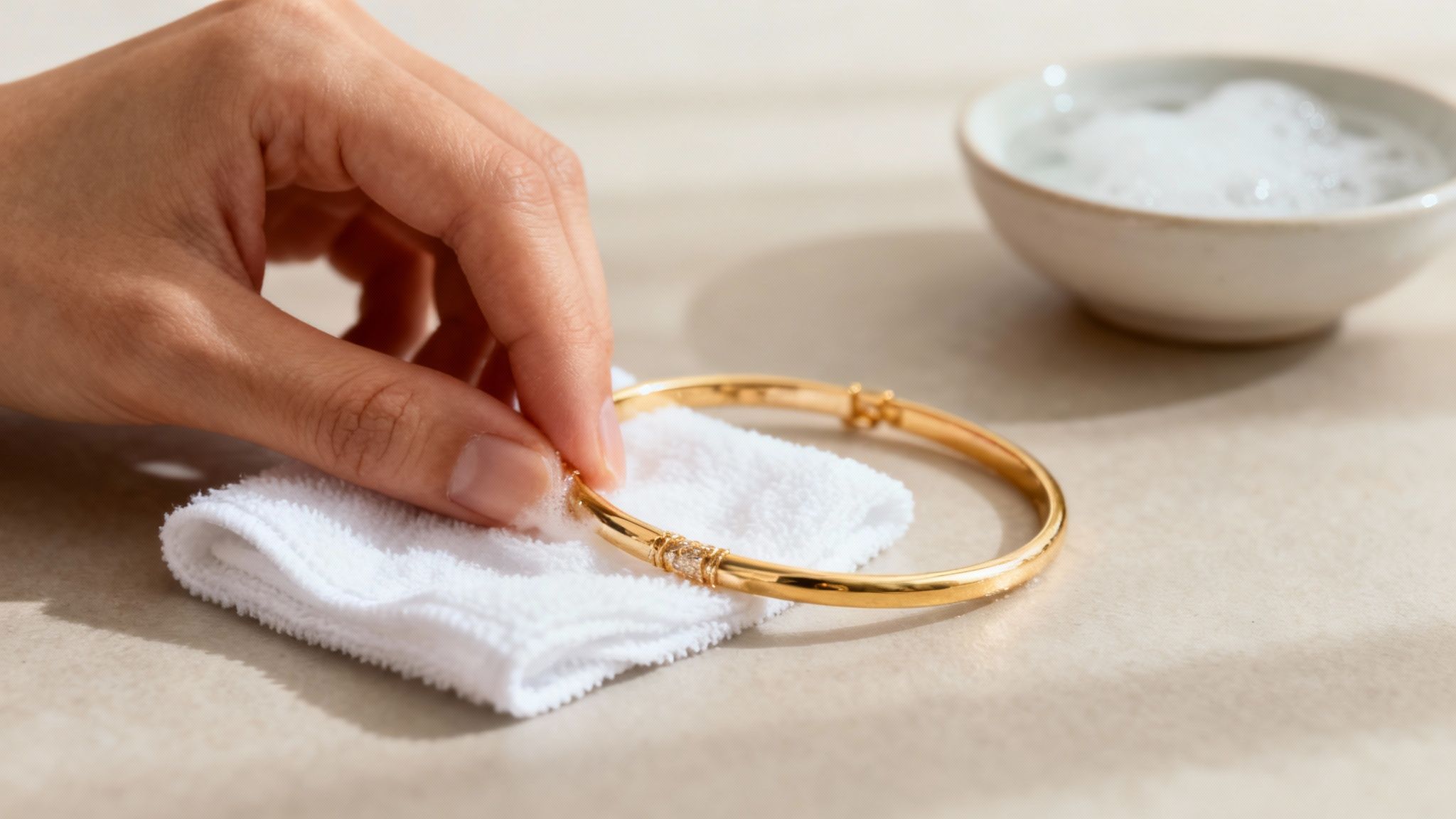
Prepare a Mild Solution: Grab a small bowl of lukewarm water and mix in just a few drops of a gentle, phosphate-free dish soap.
Soak Briefly: Let your jewelry sit in the solution for only a few minutes. This is just to loosen any buildup.
Gently Wipe: Use a soft, lint-free microfiber cloth to carefully wipe the surface. Never use a toothbrush or anything abrasive.
Rinse and Dry: Quickly rinse the piece under clean water and immediately pat it completely dry with another soft cloth. Make sure not a single drop of moisture is left before you put it away.
If some tarnish has already snuck through because the silver underneath is exposed, there are effective methods for removing tarnish from silver jewelry, but you need to be extremely careful with plated items. By making these simple habits part of your routine, you’re actively preserving the beauty of your collection for years to come.
How to Shop Smarter for Jewelry That Lasts
The best way to avoid the disappointment of a tarnished piece is to become a savvy shopper from the very start. Knowing what to look for—and what questions to ask—can be the difference between a necklace that lasts a few months and one you’ll love for years.
Arm yourself with a little knowledge before you even step into a store or browse online. Don’t be shy about asking specific questions that reveal the true quality of a piece. It’s a small step that saves a lot of frustration down the road.
Key Questions for Your Jeweler
When you're looking at a gold-plated sterling silver piece, get clear on these details:
What is the plating thickness in microns? A reputable seller should know this number. Anything under 1.0 micron is likely to wear away quickly, while 2.5 microns or more (the standard for Gold Vermeil) offers much better durability.
Can you confirm the base metal is 925 sterling silver? This ensures you're getting a quality, precious metal base instead of a cheaper alloy like brass or copper that can cause reactions.
Is there a warranty or return policy that covers premature wear? A seller who stands by their product's quality will often have a fair policy in place. This shows they believe in their craftsmanship.
Beyond asking questions, just use your eyes. A quality piece should have a consistent, even color and a smooth finish. If you see imperfections or darker spots, it often points to lower-quality manufacturing.
Your environment plays a huge role in how jewelry wears, too. In places with high humidity or pollution, tarnishing can happen much faster because of sulfur in the air. Some pieces might even show wear in just a few months. Learn more about how location affects jewelry tarnish on HarlemBling.com.
Ultimately, choosing a higher-quality option like Gold Vermeil is often a smarter investment in the long run, especially for something you plan to wear every day. Being proactive is your best strategy here. To build on this, you might want to check out our expert tips on how to prevent jewelry from tarnishing before it even begins. By investing in quality and caring for it properly, you can make sure your collection stays beautiful.
A Few Common Questions, Answered
Even when you know the science, you probably still have a few questions about how gold-plated sterling silver holds up in the real world. Let's tackle some of the most common ones.
Can I Wear Gold Plated Jewelry in the Shower?
It’s best if you don’t. While a single shower probably won’t ruin your favorite piece, doing it repeatedly is a fast track to tarnish. Water, soap, and shampoo all work together to break down that thin gold layer, exposing the sterling silver underneath.
Moisture is the number one enemy of sterling silver, so keeping your plated pieces dry is the single most important habit for making them last.
Why Is My Gold Plated Jewelry Turning My Skin Green?
Ah, the dreaded green finger. This happens when the gold plating wears away, and the copper in the sterling silver base metal reacts with your skin's oils, sweat, or lotions.
This chemical reaction creates a harmless green tint. It's not a sign of a cheap or low-quality piece—in fact, it's proof that the base metal is genuine sterling silver.
Good to Know: That green tint is a natural reaction with the 7.5% copper that’s legally required in all 925 sterling silver. It’s actually a sign of authenticity!
How Long Does Gold Plated Jewelry Usually Last?
This one really depends. The lifespan of a gold-plated piece comes down to three things: plating thickness, how you wear it, and how you care for it.
A flash-plated piece from a fast-fashion brand might start showing wear in under a year. On the other hand, a well-made piece with thicker plating (1.0 micron or more) that you take care of can easily last for two to five years—sometimes even longer before it needs any attention.
Can I Get My Jewelry Replated Once It Tarnishes?
Absolutely! If a piece you love has lost its luster, a professional jeweler can bring it back to life. They can strip off the old, worn plating, polish up the sterling silver underneath, and apply a fresh, new layer of gold.
Replating is a fantastic way to restore sentimental pieces, making them look brand new all over again.
At Panther De Luxe Shop, we believe in creating beautiful jewelry designed to last. Explore our collection of high-quality gold vermeil and sterling silver pieces, crafted with the care and attention your style deserves. Discover your next favorite piece today at https://www.pantherdeluxe.com.
Comments