
Reset Diamond Ring Cost: How to Budget Your Ring Reset Like a Pro
- Luke Zucco
- Jan 7
- 13 min read

So, you're thinking about resetting your diamond ring. The big question on everyone's mind is always: "What's this going to cost me?"
The honest answer is that it varies—a lot. You could spend anywhere from $250 to over $5,000, but most people find their projects land comfortably in the $500 to $2,500 range. Think of it less as a fixed price and more as a starting point for a creative project where you're in the driver's seat.
Your Quick Guide to Ring Resetting Costs
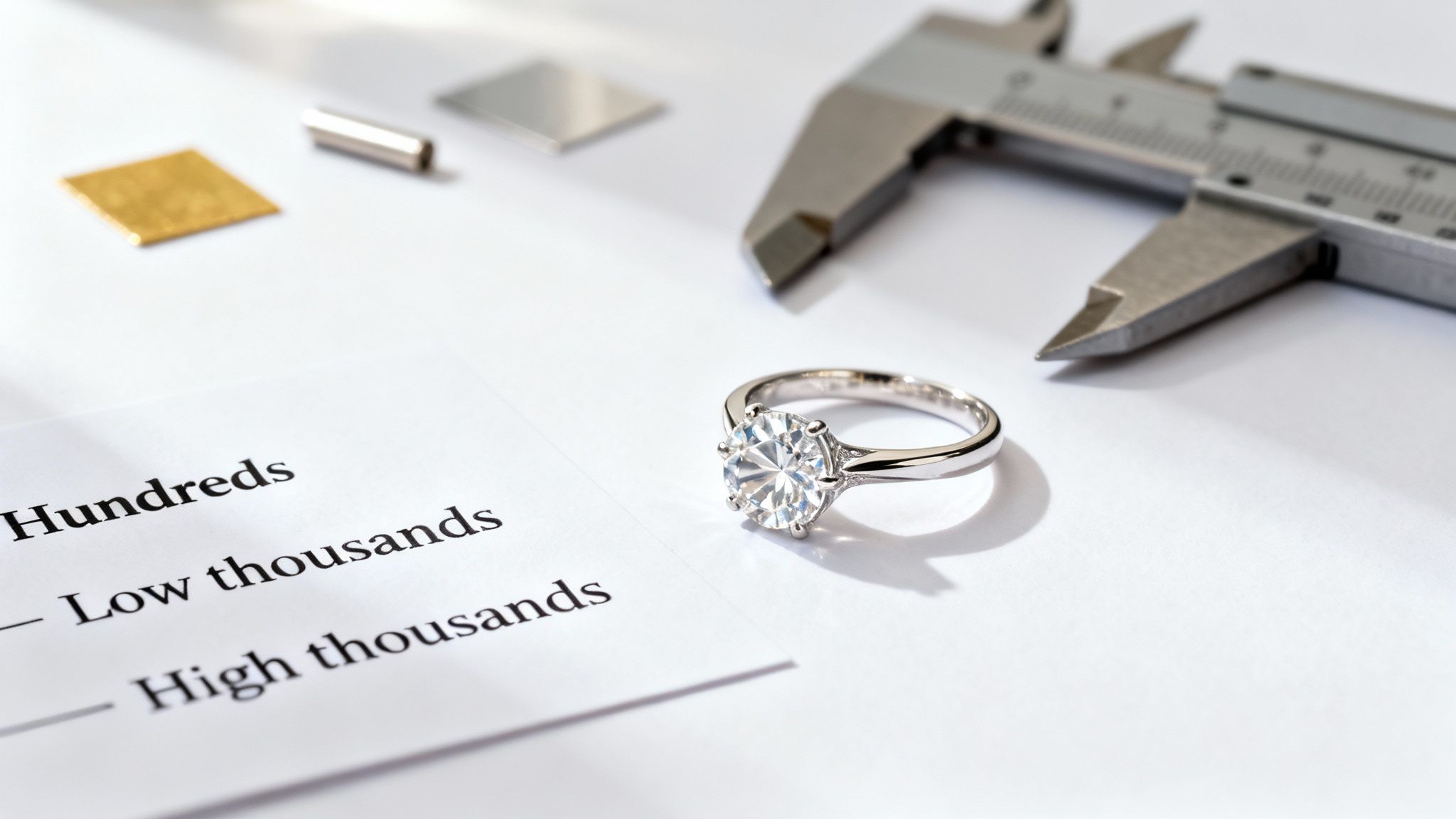
Before you can budget, you need to know what you're actually paying for. The final bill isn't just one number; it’s a combination of the choices you make along the way. From the gleam of the metal to the intricacy of the design, every decision has an impact.
To give you a clearer picture, we've put together a simple table that breaks down the major moving parts. Use this to get a feel for where your dream ring might fall on the price spectrum.
Estimated Cost Breakdown for Resetting a Diamond Ring
This table gives you a snapshot of the main factors that shape the final cost of resetting a diamond ring, along with typical price ranges for each part of the process.
Cost Factor | Typical Price Range (USD) | Impact on Overall Cost |
|---|---|---|
New Setting (Metal Only) | $250 - $2,000+ | High. Platinum will always be the priciest option, followed by 18k and 14k gold. |
Jeweler's Labor | $200 - $1,000+ | Medium-High. This covers the delicate work of removing the stone, setting it, and finishing the piece. Custom work adds to this. |
Additional Diamonds/Gems | $100 - $3,000+ | Variable. Adding side stones for a halo or pavé band can significantly increase the price. |
Custom Design (CAD) | $200 - $750 | Medium. If you're going for a totally unique, bespoke design, this covers the digital modeling to bring it to life. |
Appraisal for Insurance | $75 - $150 | Low. This is an optional but smart move to protect the value of your newly redesigned ring. |
Consider this your quick-start guide to budgeting. If you want to get into the nitty-gritty of financial planning, check out our guide to making an engagement ring budget. For now, let's dive deeper into each of these factors so you can make every choice with confidence.
What Does It Mean to Reset a Diamond Ring?
Before we dive into the costs, let's get clear on what "resetting" a diamond ring actually is. Think of it like a home renovation for your most precious piece of jewelry. You keep the parts with the most history—the beautiful diamond itself—but you update the framework around it for a fresh, new feel.
That’s a ring reset in a nutshell. Your treasured diamond is carefully lifted from its original band and given a brand-new home in a different one. It’s all about preserving the stone you love while completely changing its style.
Resetting vs. Remounting vs. Resizing
You'll hear these terms thrown around, and while they sound similar, they mean very different things. Knowing the difference is key to getting what you want and understanding the price tag that comes with it.
Resetting: This is the big one. It’s a total transformation where your diamond is moved into an entirely new setting or band.
Remounting: This is just another word for resetting. Jewelers often use them interchangeably to describe the exact same process.
Resizing: This is a much simpler, more common adjustment. A jeweler just makes a small cut in the existing band to either add or remove a tiny piece of metal, making it fit your finger perfectly. The stones never move.
A ring reset lets you hold onto the sentimental value of your original diamond while giving its style a complete do-over. It’s a beautiful way to honor the past while embracing a new chapter.
Why Do People Reset Their Rings?
The reasons for resetting a ring are as personal as the stories behind them. It’s rarely just a simple repair; it’s about marking a moment in your life.
People often choose a reset to:
Modernize an Heirloom: That ring you inherited from your grandmother has immense sentimental value, but the style might feel a bit dated. A reset keeps the diamond’s legacy alive while bringing its look into the present.
Celebrate a Milestone: An anniversary or a big promotion is the perfect excuse to upgrade a simple solitaire to something more elaborate, like a halo or a three-stone design.
Evolve with Your Style: Tastes change. What you loved ten years ago might not feel like you anymore. A reset can turn a ring that’s been sitting in a jewelry box into your new favorite daily piece.
Repair Serious Damage: If the original band is bent, worn thin, or has prongs that are no longer secure, resetting the diamond in a new, sturdy band is often the safest and smartest solution.
Ultimately, understanding this process is the first step toward making a choice you'll love. If you're looking for inspiration on what's possible, our practical guide to engagement ring settings is a great place to start exploring different styles.
Breaking Down the Key Cost Factors
Trying to figure out the final cost of resetting a diamond ring is a bit like building a custom car. The engine (your diamond) is the starting point, but every choice you make from there—the chassis, the paint job, the interior—adds to the final sticker price. Each decision you make in your ring's redesign shapes the total investment.
This chart shows where a 'reset' fits in with other common ring services.
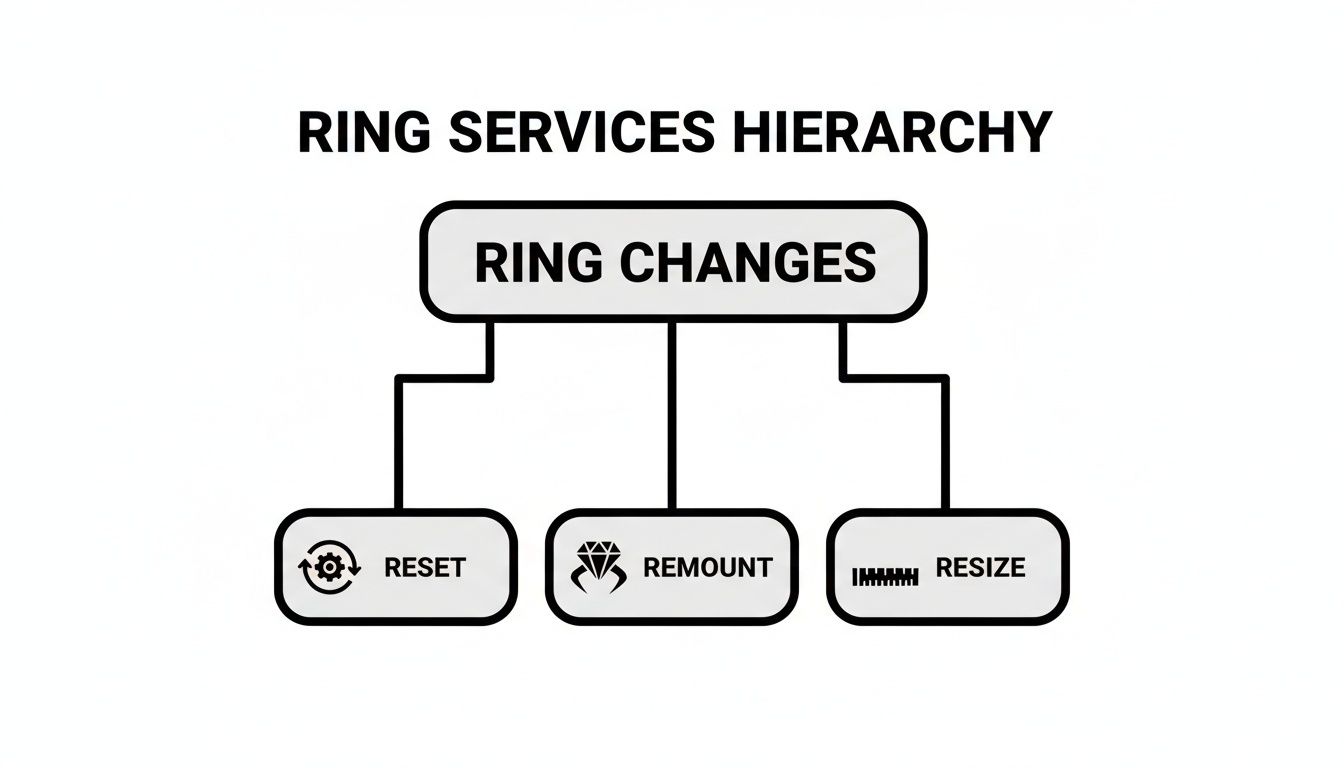
As you can see, a full reset is much more involved than a simple resize, which is why it sits higher on the cost spectrum. Let's get into the specific elements that drive that price up.
Your Choice of Metal: The Foundation of Your Budget
The metal you pick for the new setting is one of the biggest factors in the final cost. Think of it as the foundation of a house; it sets the tone for the look, feel, and a huge chunk of the budget.
Platinum: This is the premium choice, known for its bright, silvery-white sheen and incredible durability. It's naturally hypoallergenic, but its density and rarity give it the highest price tag.
Gold (18k, 14k, 10k): The classic, versatile option. Gold comes in a range of colors (yellow, white, and rose) and price points to match. 18k gold is purer with a richer color, but it's also softer. 14k gold hits that sweet spot of great color and durability for a more moderate price.
Palladium: A cousin to platinum, palladium is lighter and was once a more budget-friendly alternative. However, market prices can be volatile, sometimes making it just as expensive as gold.
Choosing the right metal is a balance of aesthetics, lifestyle, and budget. To help you decide, here’s a quick comparison of the most popular options.
Comparing Metal Choices for Your New Ring Setting
This table breaks down the cost, durability, and maintenance of common metals to help you find the best fit for your new ring.
Metal Type | Average Cost per Gram (USD) | Pros | Cons |
|---|---|---|---|
Platinum | $30 - $45 | Extremely durable, hypoallergenic, maintains its white color | Most expensive, heavy, can get scratched (though metal is displaced, not lost) |
18k Gold | $45 - $60 | Rich color, high purity | Softer and more prone to scratching, white gold needs occasional re-plating |
14k Gold | $35 - $50 | Great balance of durability and color, more affordable than 18k | Less pure than 18k, white gold needs occasional re-plating |
Palladium | $50 - $80 | Lightweight, hypoallergenic, similar look to platinum | Price can be volatile and sometimes higher than gold, can be harder for jewelers to work with |
Ultimately, the best metal is the one that aligns with how you'll wear the ring and what you're comfortable spending. Don't hesitate to ask your jeweler to see and feel samples of each one.
The Complexity of the Setting
Next up is the design's intricacy. A simple, elegant solitaire setting is like a minimalist painting—beautiful in its simplicity and relatively straightforward to produce. The cost here is mostly for the metal and the basic labor to set the stone.
But if you’re dreaming of something more elaborate, the price will climb.
An intricate setting, like a halo or pavé band, isn't just about the extra metal. It's about the dozens of hours of skilled labor needed to perfectly set every tiny stone, which significantly bumps up the cost.
Some of the most popular complex settings include:
Halo Settings: A circle of smaller accent diamonds frames the main stone, making it look larger and adding a ton of sparkle. This involves sourcing perfectly matched small diamonds and the painstaking labor to set them.
Pavé Bands: The band is literally "paved" with tiny diamonds set close together, creating a continuous surface of shimmer. This is an incredibly labor-intensive process that has a major impact on the price.
Three-Stone Settings: Placing two stones on either side of your center diamond adds layers of symbolic meaning—and cost, depending on the size and quality of the side stones.
Custom Creation vs. Stock Setting
Another key decision is whether you go for a pre-made (stock) setting or a fully custom design. A stock setting is like buying a suit off the rack—it's made to fit a standard range of diamond sizes and is produced efficiently, which keeps the costs down. You can often find great options for under $1,000.
A custom design, however, is a bespoke suit tailored just for you. The process involves creating a unique design from scratch, often using CAD (Computer-Aided Design) software, which can add a design fee of $200 to $750 before any work on the ring even begins. It offers limitless personalization but is definitely the more expensive path.
The jewelry market is also shifting right now. Diamond ring costs are being influenced globally by the rise of lab-grown stones and changes in the natural diamond supply. For you, this trend could mean that resetting a ring is more affordable today than it was a few years ago, especially in markets across the US, Europe, and Australia.
Of course, the quality of any new diamonds you add will also affect the price. To get a handle on the basics, be sure to check out our smart shopper's guide to the 4 Cs of diamonds.
Real-World Examples of Ring Reset Costs
Theory and price ranges are useful, but seeing the numbers in action makes it all click. To really understand how the final comes together, let's walk through three different scenarios. Each has its own backstory, goals, and budget, showing how your choices in metal, complexity, and craftsmanship lead to very different price tags.
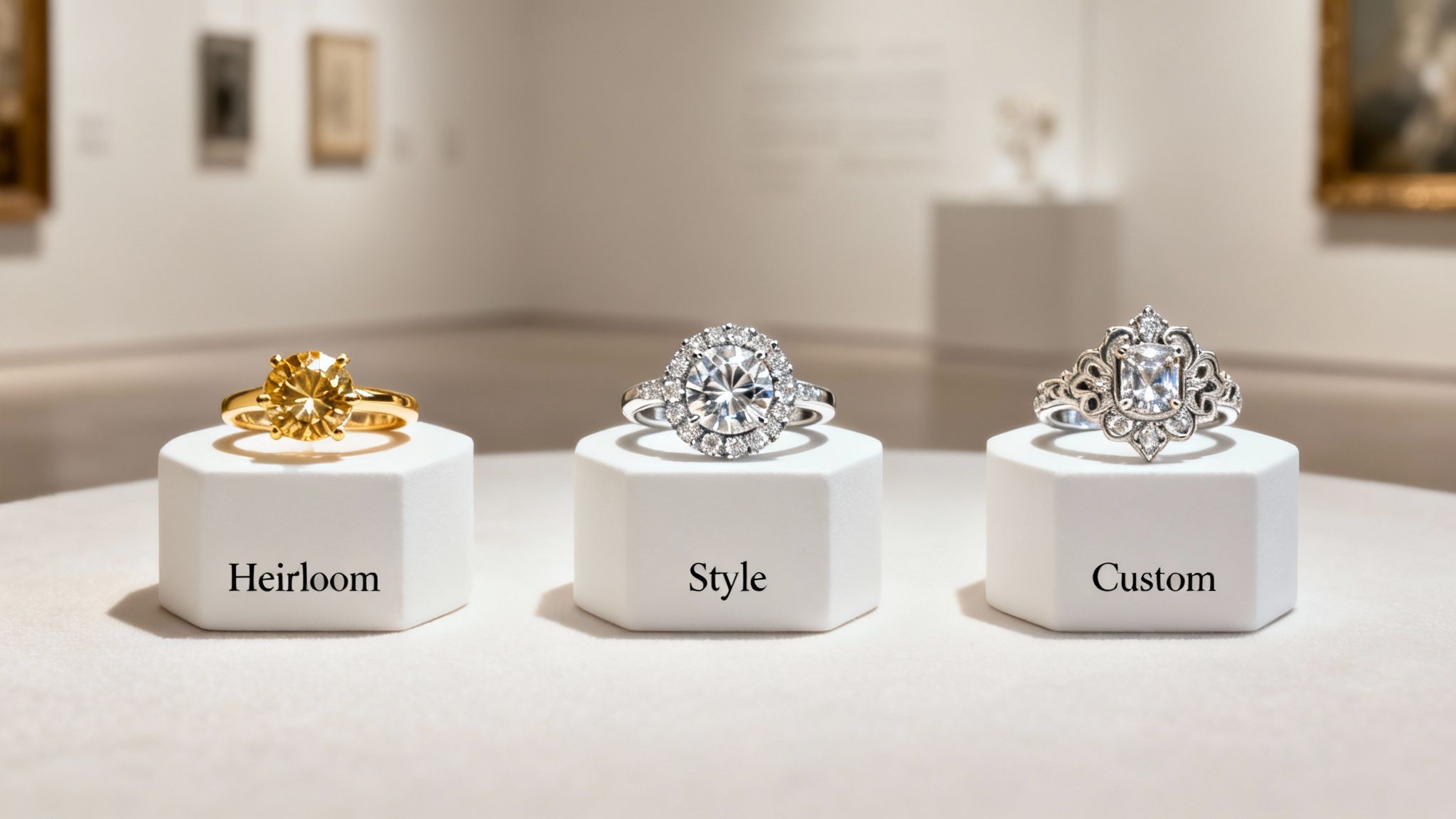
Scenario One: The Heirloom Update
Sarah inherited her grandmother's beautiful 0.75-carat round diamond, set in a classic but tired yellow gold band. She adored the diamond's history but wanted a look that felt more like her—sleek, modern, and understated. Her goal was a simple, elegant upgrade that honored the original stone without breaking the bank.
The Plan: Move the 0.75-carat diamond into a clean, four-prong solitaire setting.
Metal Choice: 14k white gold for a cool, contemporary feel that’s also budget-friendly.
Design Complexity: Low. A standard, high-quality stock setting was all she needed.
Here’s the cost breakdown:
14k White Gold Setting: $450
Jeweler's Labor (Stone Removal & Setting): $250
Final Polish and Finish: $50
Total Project Cost: $750This scenario is a perfect example of how a major style change can be surprisingly affordable. By sticking with a classic setting and a smart metal choice, Sarah got a whole new ring for well under $1,000.
Scenario Two: The Style Evolution
After ten years of marriage, Mark wanted to surprise his wife, Emily, for their anniversary by upgrading her original engagement ring. Her 1-carat princess-cut diamond sat in a simple solitaire band, and she’d always dreamed of a more brilliant, eye-catching design with a lot more sparkle.
This kind of upgrade is more popular than ever. While the global engagement rings market is growing, the average spend per ring has actually dipped by about 5%. This is largely because couples are embracing lab-grown stones, which dramatically lower the cost. A natural diamond ring that once felt out of reach at $10,000 can now be found for under $8,000, and a lab-grown equivalent is often under $2,000, making luxury more accessible. You can see more about these market trends in engagement ring pricing here.
The Plan: Transform the solitaire into a dazzling halo ring.
Metal Choice: Platinum, for its incredible durability and bright white luster that makes diamonds pop.
Design Complexity: High. This involved sourcing 16 small, perfectly matched accent diamonds and the intricate labor required to set them all.
Here's how the costs added up:
Platinum Halo Setting: $1,300
Accent Diamonds (0.25 total carat weight): $600
Labor (Complex Setting & Finishing): $700
Total Project Cost: $2,600Mark’s project shows how adding more diamonds and choosing a premium metal like platinum significantly raises the final price, pushing it squarely into the mid-tier range.
Scenario Three: The Custom Dream
Finally, let’s look at David. He had a loose 1.5-carat oval diamond and a very specific vision: a one-of-a-kind, vintage-inspired ring with intricate milgrain detailing and delicate engraving along the band. This was something that simply couldn't be pulled from a catalog.
The Plan: Create a completely bespoke, antique-style ring from the ground up.
Metal Choice: 18k yellow gold to achieve that warm, authentic vintage character.
Design Complexity: Very high. The project required a custom CAD design, a wax model for his approval, and master-level craftsmanship for all the detailed handiwork.
Let's look at the breakdown:
CAD Design & Wax Model Fee: $500
18k Yellow Gold Setting (Custom Mold): $1,800
Master Jeweler Labor (Engraving & Milgrain): $1,200
Total Project Cost: $3,500David's ring represents the higher end of the reset cost spectrum. The price here reflects the true artistry, time, and personalization that go into creating a piece that’s completely unique.
Smart Ways to Save on Your Ring Reset Project
Embarking on a ring redesign is one of the most exciting projects you can take on, but it’s easy to feel like the final is a runaway train. The good news? You’re in the driver’s seat. With a few smart decisions, you can create a stunning new piece without blowing your budget.
One of the most powerful moves you can make is to reuse your existing metal. Ask your jeweler if the gold or platinum from your original band can be melted down and folded into the new design. It isn't always possible, depending on the metal's condition and the new setting's complexity, but when it is, it can save you hundreds of dollars right off the bat.
Choose Your Materials Wisely
The materials you select are the biggest players in your budget, but there are plenty of gorgeous, wallet-friendly options that don't compromise on quality or style. This is where thoughtful choices make all the difference.
Opt for 14k Gold: While platinum is famously durable, 14k gold hits the sweet spot between strength, beauty, and affordability. It delivers that classic look in yellow, white, or rose gold for a fraction of platinum’s price.
Embrace Lab-Grown Diamonds: If your new design calls for extra stones—say, for a halo or a pavé band—choose lab-grown diamonds. They are chemically and visually identical to their natural counterparts but cost significantly less, giving you incredible sparkle for your spend.
This isn’t just a niche tip; it’s part of a huge shift happening across the jewelry world. The entire diamond industry is in the middle of a pricing reset, largely driven by the rise of lab-grown diamonds and changing tastes. Natural diamond production has dropped from a peak of 175 million carats in 2005-2006 to just 121 million in 2023. This supply crunch, paired with the affordability of lab-grown alternatives, means rings that once felt out of reach are now 20-30% more accessible for shoppers at places like Panther De Luxe Shop. You can read more about these key diamond industry trends and see how the market is changing.
Select a Smart Setting Design
Your vision for the ring’s style also plays a massive role in the final bill. While a fully bespoke creation is a beautiful dream, you can get a show-stopping look for much less.
Consider choosing a stock setting over a fully custom design. Jewelers offer a huge library of beautiful, pre-designed settings that can be customized to fit your stone perfectly. This simple choice saves you the added expense of CAD design fees and custom mold creation without sacrificing style.
Finally, never settle for the first opinion. Shop around and get quotes from at least three different jewelers. Prices for labor and settings can vary dramatically from one shop to the next, so doing your homework ensures you get a fair price for high-quality craftsmanship. It's the best way to move forward with your project confidently.
Common Questions About Resetting a Diamond Ring
Once you’ve decided to move forward with a reset, a whole new set of questions usually pops up. That’s completely normal. You’re probably wondering about the timeline, how to know your diamond is safe, and what’s even possible.
Getting clear, straightforward answers is key to feeling confident about the process. Think of it like dropping your car off with a trusted mechanic—you know the work needs doing, but you still want to understand the timeline, the safety measures, and what they can actually accomplish under the hood.
How Long Will the Resetting Process Take?
This is one of the first things everyone asks, and the honest answer is: it depends on how complex the project is. A simple reset into a pre-made, or "stock," setting is always going to be the fastest option.
For a straightforward swap like that, you can generally expect a turnaround time of one to three weeks. This gives the jeweler enough time to carefully remove your diamond, set it securely in the new ring, and do a final polish and inspection to make sure everything is perfect.
On the other hand, if you're dreaming up a fully custom design, you're looking at a much more involved journey. That process includes initial consultations, creating and tweaking CAD designs, making a wax model for you to approve, and then the final handcrafting of the ring. Because of all those extra steps, a bespoke project usually takes anywhere from four to eight weeks—and sometimes a bit longer depending on the jeweler's workload and how intricate your design is.
How Can I Be Sure My Diamond Is Safe?
Handing over something with so much sentimental and financial value can feel pretty nerve-wracking. We get it. But any reputable jeweler has strict procedures in place to protect your diamond every step of the way. Your peace of mind should be their absolute priority.
Here’s what you should expect from a professional:
A Detailed Intake Process: The jeweler should inspect your diamond with you under a microscope, pointing out its unique characteristics—things like tiny inclusions or any laser inscriptions. These details get recorded on your receipt, basically creating a "fingerprint" of your specific stone.
Gemological Certification Check: If your diamond is certified, it likely has a unique serial number laser-inscribed on its girdle (the thin edge). This is the ultimate proof that you’re getting the exact same stone back.
Proper Insurance Coverage: Professional jewelers always carry comprehensive insurance that covers any jewelry left in their care against loss, theft, or damage. You should always confirm this before leaving your ring.
Trust is built on transparency. A good jeweler will encourage you to look at your diamond under magnification when you drop it off and when you pick it up. That way, you feel completely secure from start to finish.
Are There Any Limitations on Diamond Resets?
While most diamonds can be reset without a problem, there are a few things to keep in mind. The main concerns are always the diamond's current condition and its shape. Jewelers are extra cautious with stones that have significant inclusions near the edges, since these create weak spots that could make the diamond vulnerable to chipping during the setting process.
Fragile cuts with sharp, delicate points—like a marquise or a pear shape—also require a very skilled hand. An experienced jeweler will assess any risks and recommend the best setting styles to protect those vulnerable points, like V-prongs or a full bezel setting. At the end of the day, their main goal is to preserve the integrity of your stone for years to come.
Ready to explore the possibilities for your own ring? The team at Panther De Luxe Shop specializes in bringing your vision to life with expert craftsmanship and care. Start your design journey with us today!
Comments