
How to Choose an Engagement Ring Style That Lasts a Lifetime
- Luke Zucco
- Jan 3
- 16 min read

Choosing the right engagement ring isn't just about picking something beautiful. It’s about finding a piece that feels like it was made just for them. The secret? It boils down to three things: their personal style, their daily lifestyle, and, of course, your budget.
Getting these three elements right from the start makes the whole process smoother and ensures the ring you choose is a practical, meaningful symbol of your life together.
Starting Your Search for the Perfect Ring
Beginning the hunt for an engagement ring feels like a huge moment—and it is! But it's also an incredible chance to find a piece of jewelry that truly captures who your partner is. The goal here isn't just to buy a ring; it's to select a thoughtful symbol of your relationship that they'll love wearing every single day.
To make it less overwhelming, let's break down the foundational ideas that will guide every other decision you make.
Core Principles of Ring Selection
Before you even think about diamonds and settings, let’s ground your search. Think of this as your roadmap to choosing an engagement ring style that just works.
Reflect Their Personal Style: The ring should feel like a natural extension of their taste. Take a look at the jewelry they already wear. Is it mostly yellow gold or are they more of a platinum or silver person? Do they lean toward clean, modern designs, or are they drawn to intricate, vintage-inspired pieces?
Consider Their Daily Lifestyle: A ring needs to fit seamlessly into their life, not get in the way. If they're super active—a nurse, an artist, or a fitness instructor, for example—a durable, low-profile setting like a bezel is a smart choice to prevent snagging. Someone with a desk job, on the other hand, might comfortably wear a more elaborate, high-set design.
Establish a Realistic Budget: This might be the most important first step. Deciding on a budget upfront removes a ton of stress and lets you focus on finding the absolute best ring you can within your means. A well-planned budget ensures the ring represents your love, not financial strain. For a deeper dive, check out our comprehensive guide to making an engagement ring budget.
The best ring choices come from paying attention, not just from a big price tag. The clues are in the little details of their everyday life—that’s what will lead you to the perfect style.
The Key Components to Understand
With those principles locked in, you can start exploring the three main physical parts of any engagement ring. Getting familiar with these terms will empower you to make an informed choice as we get into the specifics later in this guide.
The Setting: This is the metal framework that holds the center stone. It’s what truly defines the ring's overall vibe. Popular styles range from the timeless solitaire to the brilliant halo or the deeply symbolic three-stone design.
The Stone: While diamonds are the classic go-to, don't overlook stunning alternatives like sapphires, emeralds, or even lab-grown diamonds. When it comes to diamonds, the 4 Cs—cut, color, clarity, and carat—will be your best friends.
The Metal: The band itself comes in a variety of materials, each with its own unique look, feel, and durability. Platinum, white gold, yellow gold, and rose gold are the most common options you'll see.
Figure Out What They Actually Want
The best engagement ring is the one that feels like it was made just for them. Choosing it isn't about guesswork; it's about becoming a bit of a style detective. The clues are all there in their daily life, you just have to know where to look.
Pay close attention, and you can piece together their perfect ring style without ever spoiling the surprise.
Start with Their Jewelry Box
Your partner’s current jewelry is your single best source of information. Seriously, it's a goldmine of clues.
First, look at the metal color they wear most. Do they always reach for the warm, sunny tones of yellow gold? Or do they prefer the cool, bright look of platinum or white gold? Maybe they're into the modern, blush tones of rose gold. This one detail will narrow down your options immediately.
Next, consider the scale of their pieces. Are their favorite necklaces delicate and barely-there, or do they love a bold, statement-making design? Someone who gravitates toward chunky, artistic jewelry might appreciate a ring with a more substantial presence. If they prefer refined, minimalist chains, they’ll probably love a more delicate style.
Read the Cues in Their Wardrobe
Beyond jewelry, their closet tells a story. Someone whose wardrobe is filled with classic, tailored pieces—think clean lines, neutral colors, and timeless silhouettes—will likely feel most comfortable with an equally classic ring. The solitaire, for example, is the undisputed champion of timeless elegance for a reason.
It's funny, the solitaire’s dominance is actually a pretty modern thing. It didn't become the standard until a 1947 De Beers campaign coined the iconic "A Diamond is Forever" slogan. Before that, in the 1930s, diamond engagement rings were only 10% of the market. By the 1950s, that number jumped to nearly 80%. Today, solitaires still make up 60-70% of sales in major markets, proving that classic style never really fades. You can dig into the full data on the global engagement ring market if you're curious.
On the other hand, if your partner’s style is more eclectic, bohemian, or vintage-inspired, they’ll probably want a ring with more personality and detail.
Loves floral prints and lace? A vintage-style ring with milgrain edges or intricate filigree could be perfect.
Prefers bold, geometric patterns? Look into Art Deco designs with their sharp angles and symmetry.
Drawn to organic, earthy textures? A rustic or nature-inspired design with a unique, textured band might be the one.
Don't Forget Their Lifestyle and Hobbies
An engagement ring is for life, which means it has to fit into their life. A stunning ring that constantly gets in the way or feels too precious to wear is more stressful than joyful. This is where practicality is non-negotiable.
Think about what they do all day. Someone who works with their hands—a nurse, artist, chef, or potter—needs a ring that won't snag or get damaged easily.
Pro Tip: For anyone with an active job or hobby, a low-profile setting like a bezel or a tension setting is a game-changer. These styles wrap the stone in metal, protecting it from bumps and scratches way better than a traditional high-set prong setting.
Even their hobbies make a difference. If they’re an avid gardener, rock climber, or weightlifter, a durable metal and a secure setting are a must. Platinum is an amazing choice here because it’s incredibly dense and tough. When it gets scratched, the metal just displaces, creating a patina instead of being worn away.
Use Their Social Media (Wisely)
You have a secret weapon: their social media. So many people create a virtual wishlist without even realizing it, and it can point you directly to their dream ring.
A secret (or not-so-secret) Pinterest board is the ultimate treasure map. Look for boards with titles like "For Later," "Dream Day," or anything wedding-related. Pay close attention to the common themes in the rings they’ve pinned.
Stone Shape: Is there a clear pattern of ovals, emerald cuts, or classic rounds?
Setting Style: Do they seem to love halos, three-stone designs, or simple solitaires?
Overall Vibe: Do the pins feel modern and sleek, totally classic, or distinctly vintage?
No Pinterest? No problem. Instagram is another great place to look. Check out the accounts they follow. Are there specific jewelers or ring designers on their feed? This is a direct line to the styles that have already caught their eye. By pulling all these little observations together, you can build a really solid idea of their taste and choose a ring that feels like it was made just for them.
Finding the Right Ring Setting and Design
Think of the setting as the soul of an engagement ring. It’s what holds the center stone, sure, but it also dictates the ring's entire personality. While the diamond gets the attention, the setting tells the story.
Choosing the right design is all about matching the ring's character to your partner's. From timeless classics to intricate vintage-inspired pieces, each setting has a completely different feel. Getting familiar with these styles is your next big step.
This visual guide breaks down how to translate your partner's jewelry, fashion choices, and general lifestyle into a clear style profile. It's a surprisingly effective way to get on the right track.
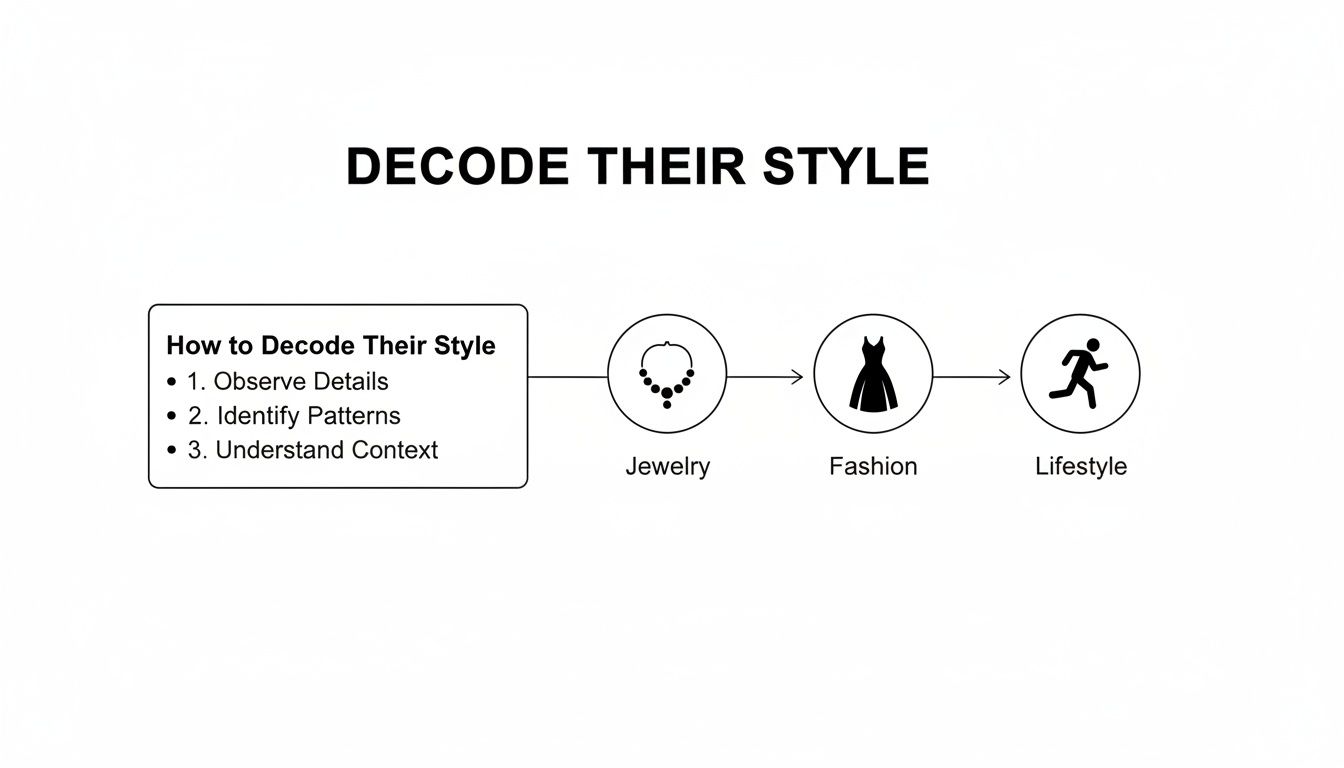
Once you’ve done a little detective work in these three areas, you’ll be able to confidently narrow down whether a classic, modern, or vintage design is the right fit.
Timeless and Classic Ring Settings
Some designs just never go out of style, and for good reason. They’re elegant, versatile, and carry an air of sophistication that feels just as right today as it did 50 years ago.
The Solitaire: This is the quintessential engagement ring. A single, stunning stone on a simple band. Its power is in its simplicity, putting all the focus right where it belongs—on the center gem. It's the perfect choice for someone with a classic, refined taste who appreciates understated elegance.
The Three-Stone Ring: Deeply symbolic, this setting features a center stone flanked by two smaller ones. It’s often said to represent a couple's past, present, and future together. It offers more sparkle than a solitaire and comes with a beautiful built-in narrative.
The Pavé Setting: For a touch of continuous sparkle, a pavé setting is an exquisite option. The band is literally "paved" with tiny diamonds, creating an unbroken line of brilliance that makes the center stone pop. It adds a layer of glamour without being over the top.
Modern Sparkle: The Halo Setting
If your partner loves high-impact glamour, the halo setting is a phenomenal choice. This popular design features a ring of smaller diamonds encircling the center stone, creating a dazzling "halo" of light.
The biggest draw of a halo? It makes the center stone look significantly larger—sometimes by up to half a carat. This visual boost is a budget-savvy way to get a bold, brilliant look without splurging on a massive center stone.
Its popularity has surged, making it a modern classic. One study projects that in 2025, halo settings will account for about 25% of all engagement ring sales in the U.S. That's a huge jump, largely driven by younger buyers looking for affordable luxury.
A Note on Durability: While stunning, the tiny stones in a halo or pavé setting can be more susceptible to getting knocked loose, especially with an active lifestyle. Regular maintenance and professional cleanings are key to keeping them secure and sparkling for years to come.
Vintage-Inspired and Unique Designs
For anyone drawn to the romance and intricate detail of bygone eras, a vintage-inspired ring is a perfect match. These styles often feature unique elements you just don't see in more contemporary designs.
Art Deco Styles: Characterized by bold geometric shapes, sharp lines, and symmetrical patterns. Think emerald or Asscher cut stones, often accented with sapphires or other colored gems for a dramatic contrast.
Victorian Styles: These rings are romantic and ornate, often set in yellow or rose gold. You'll see motifs like flowers, hearts, and bows, with a huge focus on detailed craftsmanship.
Edwardian Styles: Known for their delicate and airy feel, Edwardian-era rings often feature intricate filigree (delicate metalwork) and milgrain (tiny metal beads along the edges). These details create a light, lace-like effect that feels incredibly elegant.
To help you visualize these differences, here's a quick comparison of the most popular setting styles.
Popular Engagement Ring Setting Styles at a Glance
This table breaks down the key features and practical considerations for each major style, making it easier to see which one aligns with your partner's personality and lifestyle.
Setting Style | Key Feature | Best For | Considerations |
|---|---|---|---|
Solitaire | A single center stone on a plain band. | The minimalist who loves timeless elegance. | The center stone is the main event; quality matters. |
Halo | A ring of small diamonds around the center stone. | The glamour-lover who wants maximum sparkle. | Makes the center stone look larger, but tiny pavé stones need care. |
Three-Stone | A center stone flanked by two smaller stones. | The sentimentalist; symbolizes past, present, future. | Offers more finger coverage and sparkle than a solitaire. |
Pavé | The band is "paved" with tiny diamonds. | Someone who wants extra brilliance and a delicate look. | Like the halo, these small stones can be vulnerable to damage. |
Vintage-Inspired | Ornate details like filigree, milgrain, or unique shapes. | The romantic with a unique, artistic style. | Details can be intricate and may require more cleaning. |
Each setting has its own distinct personality. The best choice is the one that not only secures the stone but also captures the essence of your partner's style.
To dive deeper into the nuances of each design, check out our practical guide to engagement ring settings. Whether it's the pure elegance of a solitaire or the detailed romance of a vintage piece, the right design will feel like it was always meant to be theirs.
Choosing Your Center Stone and Metal
The setting might give a ring its personality, but the center stone and metal? That’s its heart and soul. While diamonds are the classic go-to, there's a whole world of incredible options out there. This is where you get to balance the look you want with practical considerations like durability and personal values.
From the timeless fire of a diamond to the deep, moody blue of a sapphire, every combination tells a completely different story. Let’s break down the choices.
Decoding Diamonds and Their Alternatives
For most people, the journey starts with a diamond. Every diamond’s quality comes down to the 4 Cs: Cut, Color, Clarity, and Carat. While they all matter, the Cut is easily the most important—it’s what unleashes that jaw-dropping sparkle. A well-cut diamond will look more brilliant and even bigger than a poorly cut one of the exact same weight.
Key Takeaway: If there's one thing you shouldn't compromise on, it's the Cut. Always aim for an "Excellent" or "Very Good" cut grade. That’s what ensures the stone plays with light in that captivating way.
But diamonds aren't the only game in town. Gemstone engagement rings are having a serious moment, offering a chance to add color and a ton of personality.
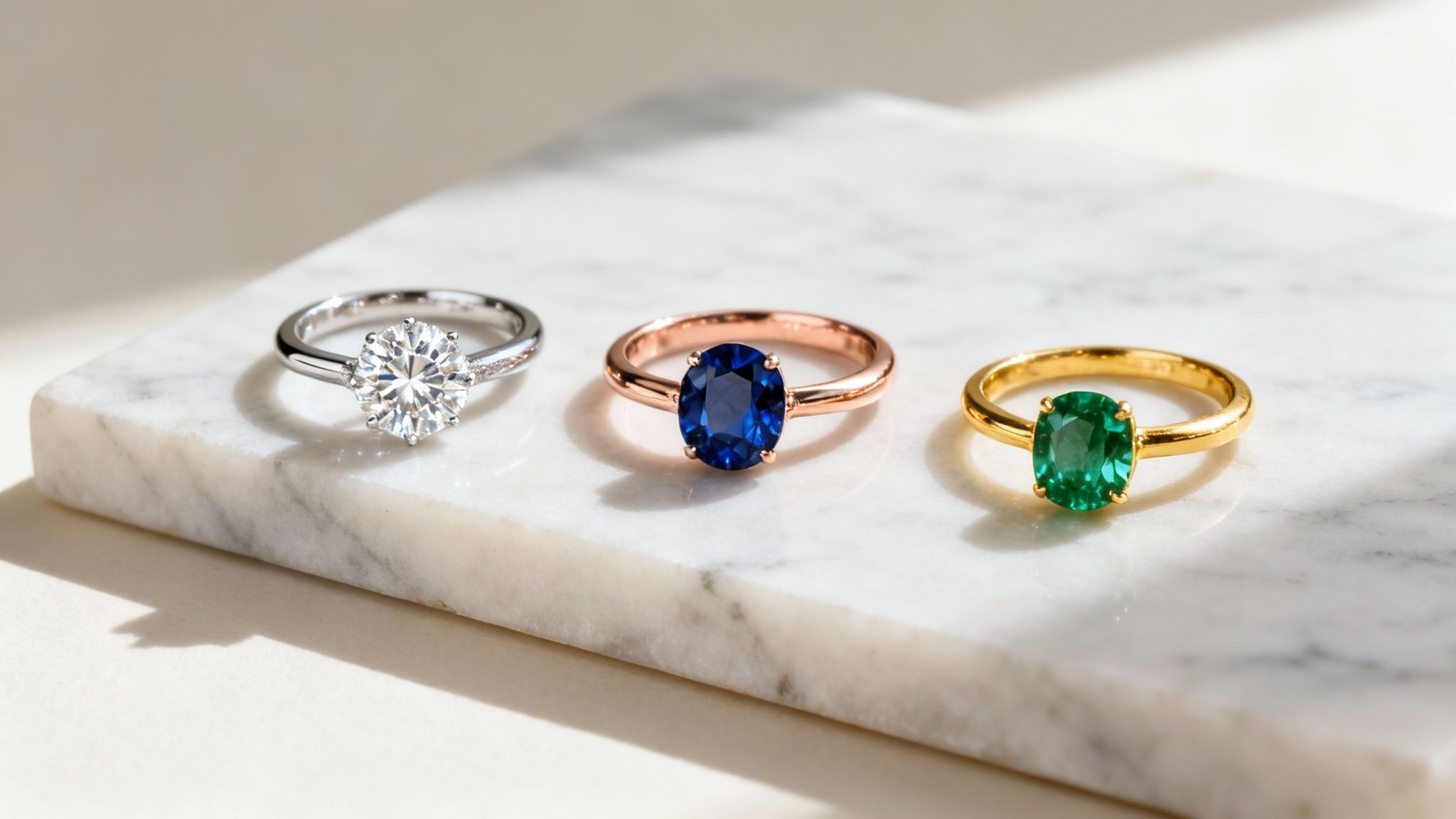
Sapphires: Famous for their rich blue, sapphires actually come in a whole rainbow of colors. They’re also incredibly tough, ranking a 9 on the Mohs scale of hardness, making them perfect for a ring you’ll wear every single day.
Emeralds: Nothing beats the lush, vibrant green of an emerald. They have a truly luxurious vibe but are a bit softer than sapphires (7.5-8 on the Mohs scale), so they do best in a more protective setting that guards against chips.
Moissanite: This stone is a brilliant and budget-friendly alternative to a diamond. It’s almost as hard and actually has more fire, which means it throws off some seriously spectacular rainbow flashes.
Natural vs. Lab-Grown: A Conscious Choice
The conversation around engagement rings has shifted, and today, ethical and environmental considerations are a huge part of the decision. This shift has put lab-grown diamonds squarely in the spotlight. In fact, 36% of engagement rings purchased in 2022 featured a lab-created center stone, a massive leap from just 10% in 2019.
Lab-grown diamonds are physically and chemically identical to natural ones—the only thing that’s different is where they came from. They often let you get a larger, higher-quality stone for your budget, which is a huge win for modern couples who want both beauty and sustainability. To really get into the weeds on this, our guide to diamond cut, clarity, and color is a must-read.
Selecting the Perfect Metal
The metal you choose for the band does more than just hold the stone; it sets the entire mood for the ring. Your choice here will affect the overall look, how durable it is, and what kind of upkeep it’ll need down the road.
PlatinumA naturally white metal, platinum is loved for its durability and hypoallergenic qualities. It's denser than gold, so it feels a bit more substantial on your finger. While it can get scratched, the metal just gets displaced instead of wearing away, developing a soft, beautiful finish—or patina—over time.
White GoldWhite gold gives you that same crisp, modern look as platinum but at a more accessible price. It’s a gold alloy mixed with white metals and then plated with rhodium for a super-bright finish. That rhodium plating does wear off eventually, so you'll need to have it re-plated every few years to keep it looking its best.
Yellow GoldThis is the classic choice for a reason. Yellow gold has a warm, rich glow that makes diamonds pop and creates a stunning contrast with colored stones like emeralds or sapphires. It’s a timeless option that feels right at home in both vintage-inspired and modern designs.
Rose GoldKnown for its romantic, coppery-pink hue, rose gold is made by alloying gold with copper. This not only gives it that signature color but also makes it pretty durable. It has a warm, almost vintage feel and looks amazing on just about every skin tone.
Adding Personal Touches with Customization
For a ring that’s truly one-of-a-kind, nothing beats customization. Moving beyond off-the-shelf options lets you create an heirloom that tells your story, embedding personal details that only you and your partner will ever know. The process can be as simple as a tiny tweak or as involved as a completely bespoke design.
Whether it’s a small, meaningful touch or a full ground-up creation, customizing your engagement ring ensures it's as unique as your relationship. It’s an opportunity to get creative and design something with deep personal significance.
Different Levels of Customization
Going custom doesn't have to mean designing every last detail from scratch. There are plenty of ways to add personal flair that fit different budgets and timelines. Understanding your options is the first step.
Simple Engravings: This is easily the most popular and affordable way to personalize a ring. You can add a special date, a short quote, or initials to the inside of the band for a private, sentimental message.
Hidden Details: Adding a "hidden halo" or tucking a tiny birthstone into the inner part of the setting is a subtle yet beautiful touch. It’s a secret detail just for the wearer, adding another layer of intimacy to the design.
Mixing and Matching: You can create a semi-custom ring just by combining elements you love. Maybe you adore the setting from one design but prefer the band style or metal from another—a good jeweler can make that happen.
Creating a Fully Bespoke Ring
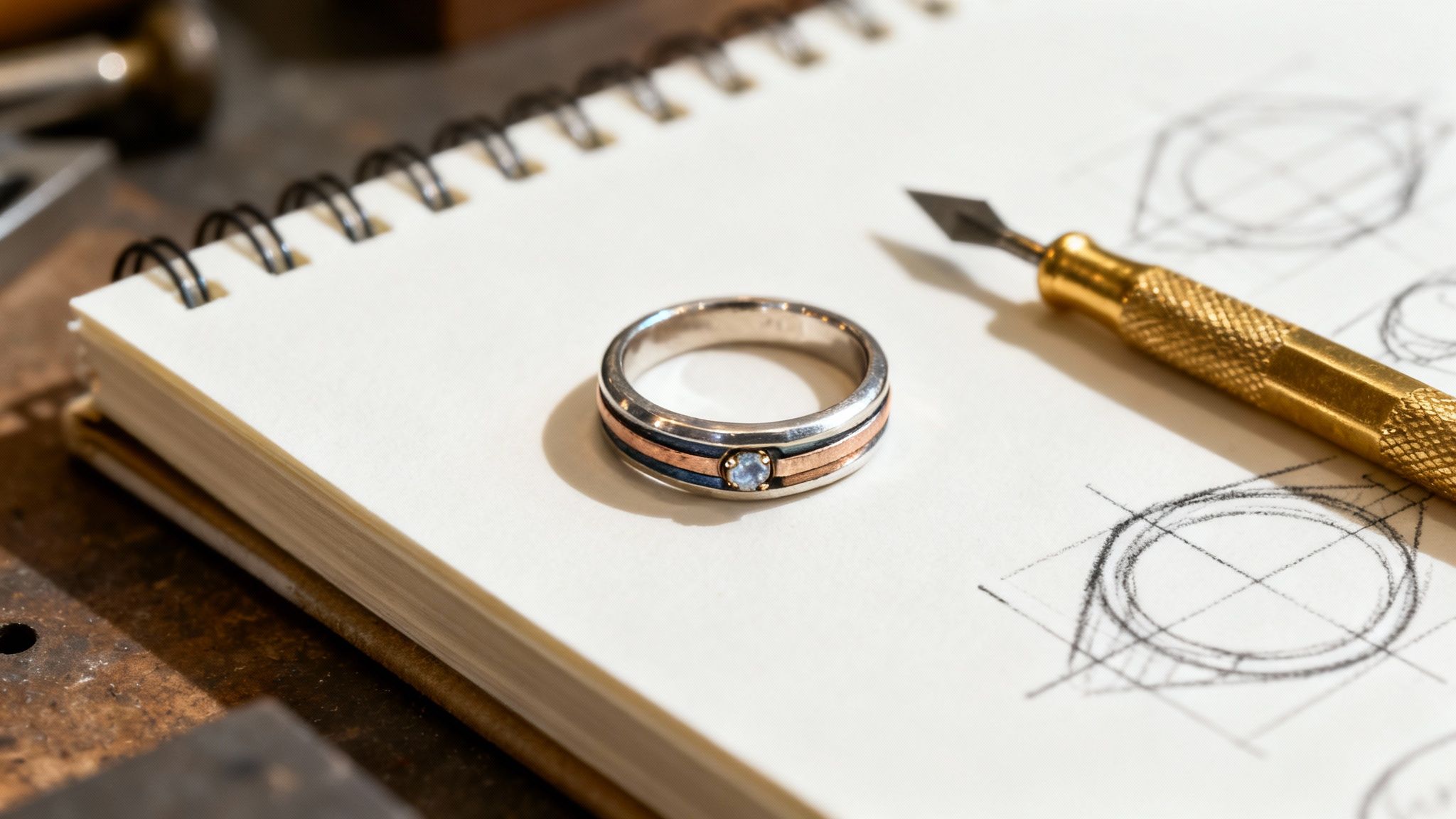
If you have a very specific vision in mind, designing a ring from the ground up is an incredible experience. This is where you work directly with a jeweler, like our experts at Panther De Luxe Shop, to bring your ideas to life—first with sketches and digital renderings, and then in precious metal and stone.
The trend toward personalization has surged as more couples look to sidestep cookie-cutter designs. In fact, by 2025, an estimated 65% of couples worldwide will opt for custom elements in their rings. This drive for uniqueness isn't new; it mirrors historical trends like the bespoke crest rings commissioned by European nobility during the Renaissance. Today, a booming e-commerce market lets couples collaborate with designers from anywhere, fueling the growth of this deeply personal approach. You can learn more about the global trends in the 2025 jewelry industry to see how things are shifting.
This approach gives you total creative freedom. You can combine different metal colors, like a platinum setting with a rose gold band, or design an asymmetrical cluster of stones that reflects your partner's eclectic style. It’s the ultimate way to ensure no one else in the world has the same ring.
A custom ring is a collaboration between your story and a jeweler's craftsmanship. The process should feel exciting and personal, resulting in a piece that is a true reflection of your partnership.
Working with a Jeweler on Your Vision
The key to a successful custom design is clear communication. Before you ever meet with a jeweler, it helps to gather some inspiration. Create a mood board with images of rings you love, and get specific about what you like—is it the shape of the prongs, the texture of the band, or the arrangement of the stones?
When you have your consultation, be ready to discuss:
Your Inspiration: Share your images and explain what details you’re drawn to in each one.
Your Lifestyle: Talk about your partner's daily activities. This helps the jeweler design a ring that’s not just beautiful but also practical and durable.
Your Budget: Be upfront about what you want to spend. This allows the jeweler to suggest materials and designs that fit your financial comfort zone.
A good jeweler will listen to your ideas, offer expert guidance on what's structurally sound, and provide sketches or 3D models so you can visualize the ring before it’s made. This collaboration ensures the final product is not only stunning but also perfectly suited to your vision, creating a true family heirloom.
Common Engagement Ring Questions Answered
Even after you’ve narrowed down the style, a few practical questions almost always pop up. Getting these final details right is what gives you the confidence to make the final call. Let's tackle some of the most common things people ask right before they buy.
How Do I Figure Out My Partner’s Ring Size Secretly?
This is the classic final puzzle. By far, the most accurate way is to discreetly borrow a ring they already wear on the correct finger. Take it to a jeweler for a precise measurement—just make sure it’s a ring they won’t miss for a day or two.
If that’s too risky, you’ve got other clever options:
Trace the Inside: Place their ring on a piece of paper and use a sharp pencil to carefully trace the inside circle. A good jeweler can get a surprisingly close estimate from this.
Make an Impression: Gently press the ring into a bar of soap or a soft piece of wax. This creates a perfect mold of the inner diameter that a professional can easily measure.
Enlist an Ally: A trusted friend can be your secret weapon here. They could suggest a “just for fun” jewelry shopping trip or find a casual way to bring up ring sizes in conversation.
When in doubt, it’s always safer to guess slightly larger. Sizing a ring down is a much simpler and less invasive process for a jeweler than sizing it up.
What Is the Difference Between White Gold and Platinum?
At first glance, they look almost identical, but white gold and platinum are two very different metals, each with its own pros and cons.
White gold is actually pure gold mixed with white metal alloys, which is then coated with a thin layer of rhodium. That rhodium plating is what gives it that brilliant, mirror-like white shine. The catch? The plating wears off over time and needs to be reapplied every couple of years to keep it looking bright.
Platinum, on the other hand, is a naturally white metal, so its color will never fade. It's also much denser, heavier, and more durable than gold. As a bonus, it’s hypoallergenic, making it the perfect choice for anyone with sensitive skin. While platinum costs more upfront, its durability means it requires less maintenance down the road. The choice really comes down to balancing your initial budget with long-term care.
Should I Involve My Partner in Choosing the Ring?
Honestly, there’s no right or wrong answer here. It’s all about what feels right for your relationship. The traditional surprise proposal is incredibly romantic, but more and more couples are choosing to shop for the ring together.
Involving your partner can turn the process from a stressful secret mission into a shared, memorable experience. Plus, it guarantees they get a ring they will adore for a lifetime.
If you still want to keep an element of surprise, you could try a hybrid approach. Maybe you browse styles online together to get a solid idea of their taste, but you make the final selection on your own. Another great option is to propose with a placeholder ring, then have fun designing the forever ring together afterward. Just think about your partner's personality—do they live for surprises, or would they cherish being part of such a huge decision?
How Much Should I Really Spend on an Engagement Ring?
Let's clear this up once and for all: the old "three months' salary" rule is nothing more than an outdated marketing slogan. The right amount to spend is what you can comfortably afford without putting yourself under financial stress.
The most important thing you can do is set a realistic budget before you even start looking. A ring's true value is in the love and commitment it symbolizes, not its price tag. A thoughtful choice that fits your financial reality is always more meaningful than a ring that comes with a side of debt. At Panther De Luxe Shop, we can help you find a stunning, high-quality ring that honors both your budget and your love story.
Once the ring is chosen, the real fun begins. Finding the perfect place to celebrate is the next big step. For some beautiful inspiration, check out these unforgettable wedding venues.
Ready to find the ring that tells your unique story? Explore the exquisite collection at Panther De Luxe Shop and let our experts guide you in creating a symbol of your love that will last a lifetime. Visit us at https://www.pantherdeluxe.com.
Comments