
Gemstone Engagement Rings: Guide to gemstone engagement rings and unique stones
- Luke Zucco
- Jan 16
- 16 min read

Forget diamonds for a moment. More and more couples are choosing gemstone engagement rings to tell a story that feels entirely their own. This isn't just a trend—it's a real shift toward rings bursting with personality, vibrant color, and often, more mindful and accessible price points. A gemstone ring turns an engagement into something deeply personal.
Why Choose a Gemstone Engagement Ring?
Opting for a gemstone is a choice to tell a story. While diamonds have long been the default, a colored stone can symbolize something specific to your relationship, echo a favorite color, or connect to a special memory. It opens up a world of possibilities far beyond the conventional.
A Symbol of Individuality
Choosing a gemstone is like picking out a piece of art that just gets you. It’s your chance to select a color, cut, and meaning that feels distinctly yours. A fiery ruby might capture a passionate romance, while a calm, deep sapphire could represent unwavering loyalty. This level of personalization is exactly why they're becoming so popular.
When you choose a gemstone, you're not just buying jewelry. You're creating a personal emblem of your love story—a future heirloom that’s infused with a character that a more traditional ring might not offer.
A Spectrum of Color and Meaning
The real magic of gemstone rings is in their incredible variety. Each stone has its own history and symbolism, letting you pick a ring with layers of meaning. Think of it as a language where color does all the talking.
Here’s what a few popular stones can say about your unique bond:
Sapphires: Long connected to royalty and faithfulness, these deep blue gems are a timeless symbol of trust and loyalty.
Emeralds: Known for their lush green hue, emeralds represent new beginnings, peace, and a love that feels eternal.
Rubies: With their vibrant red glow, rubies are the ultimate emblem of passion, courage, and pure devotion.
Morganite: This soft, peachy-pink stone embodies romance, compassion, and tenderness—perfect for a heartfelt and gentle commitment.
A Practical and Accessible Choice
Beyond their beauty, gemstone engagement rings often come with a more approachable price tag than diamonds of a similar size. This means you can often get a larger, more eye-catching stone without stretching your budget.
Plus, the rise of lab-grown gemstones offers an ethical and sustainable alternative to mined stones that are chemically identical. This means you can find a stunning, high-quality gemstone that aligns with your values and your financial plans, making that dream ring a reality.
Exploring Popular Gemstone Choices
Stepping into the world of colored gemstones is like walking through a gallery of nature’s finest art. Each stone has its own personality, its own story. While diamonds have their undeniable sparkle, colored gems offer a whole spectrum of hues, meanings, and moods. This is about finding a stone that doesn’t just catch the light, but feels like it was made just for you.
The move towards gemstone engagement rings isn't just a fleeting trend. It’s a real shift in how couples want to tell their love stories, with stones like sapphires and emeralds now breaking records at auction. Industry reports even show that colored stone jewelry sales have jumped by over 4%, and the average spend per piece has climbed by nearly 12%. People are investing in gems that are expressive, valuable, and deeply personal.
As you start your search, it really comes down to three key things: individuality, color, and value.
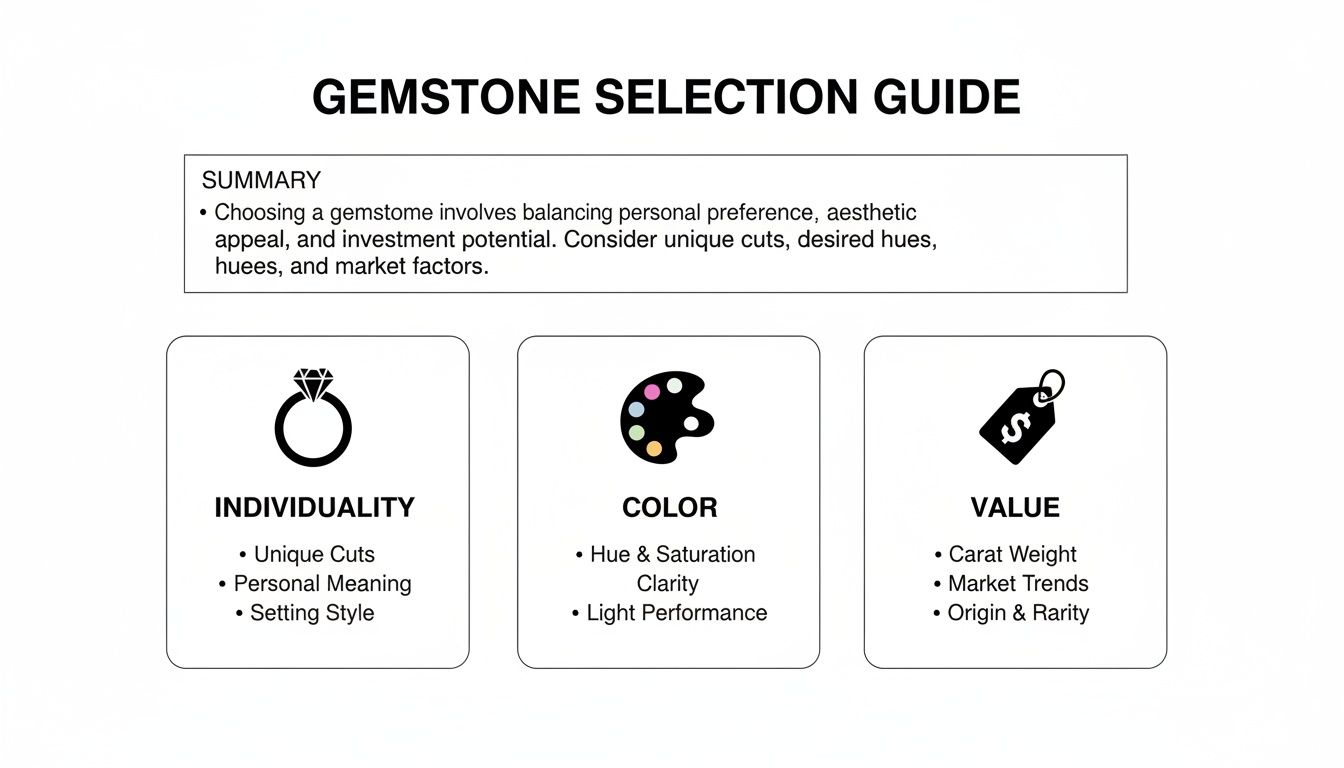
These three pillars will guide you to a ring that’s not just stunning to look at, but also feels like a true reflection of your story and fits comfortably within your budget.
The Timeless Big Three: Sapphires, Rubies, and Emeralds
For centuries, three colored gemstones have reigned supreme. Known for their breathtaking beauty, rarity, and deep historical roots, sapphires, rubies, and emeralds are the undisputed titans of the jewelry world. Each one has a powerful identity all its own.
Popular Gemstones at a Glance
This table offers a quick snapshot of the top gemstone contenders, breaking down their colors, meanings, and durability. It’s the perfect way to compare your favorites side-by-side.
Gemstone | Primary Colors | Symbolic Meaning | Mohs Hardness (Durability) |
|---|---|---|---|
Sapphire | Blue, pink, yellow, green | Loyalty, wisdom, nobility | 9 |
Ruby | Red, pinkish-red | Passion, love, courage | 9 |
Emerald | Green | Hope, new beginnings, love | 7.5 - 8 |
Morganite | Pink, peach | Divine love, compassion | 7.5 - 8 |
Spinel | Red, blue, black, gray | Hope, revitalization | 8 |
Choosing any of these means you’re picking a stone with a rich story and proven resilience, ready to be part of your next chapter.
Sapphires: A Symbol of Loyalty and Wisdom
Picture a sapphire, and you probably imagine a deep, velvety blue—the kind of color you see in a twilight sky. It’s a stone forever linked with royalty, most famously Princess Diana’s iconic ring, now worn by Catherine, Duchess of Cambridge. It’s the ultimate symbol of fidelity and trust.
But sapphires are full of surprises. As a variety of the mineral corundum, they come in a whole rainbow of colors: pink, yellow, green, and the incredibly rare fiery orange-pink known as Padparadscha. With a hardness of 9 on the Mohs scale, they are exceptionally durable and perfect for a ring you’ll wear every day for a lifetime.
Rubies: The Stone of Passion and Courage
The ruby, the red variety of corundum, is the sister stone to the sapphire. It’s the undisputed symbol of passion, fierce love, and courage. Its fiery glow has mesmerized people for thousands of years, and a high-quality ruby with a deep, vibrant red—often called "pigeon's blood"—is one of the most valuable gemstones on the planet.
A ruby isn’t a quiet choice. It’s a bold declaration of a love that is powerful, vibrant, and alive, making it a spectacular centerpiece for an engagement ring.
Emeralds: A Token of New Beginnings
Known for their lush, breathtaking green, emeralds have always been tied to renewal, hope, and fresh starts. Their verdant color brings to mind images of spring, making them a beautifully poetic choice for a couple beginning a new life together.
Emeralds belong to the beryl mineral family and are famous for their natural inclusions, often called the jardin (French for garden). These tiny internal characteristics aren't flaws; they're part of the stone's unique fingerprint. However, they do make emeralds a bit more delicate than sapphires or rubies, so they need to be worn with a little more mindfulness and care.
Rising Stars in the Gemstone World
Beyond the classics, a new wave of gemstones is capturing the attention of modern couples. These stones offer unique colors, fantastic value, and the chance to create a ring that’s truly one-of-a-kind.
Morganite: The Essence of Modern Romance
With its soft blush-pink and peachy tones, morganite has become a huge favorite for anyone seeking a romantic, feminine look. It’s also a member of the beryl family (like emeralds), giving it good durability for daily wear. Its gentle color is a perfect match for rose gold, creating a warm, harmonious style that feels both trendy and timeless.
Morganite is said to symbolize compassion and divine love, making its understated elegance a perfect fit for someone who appreciates delicate beauty and heartfelt meaning.
Spinel: The Underrated Powerhouse
Often mistaken for ruby or sapphire throughout history, spinel is a magnificent gem in its own right. It comes in a stunning range of colors, from vibrant reds and deep blues to modern grays and blacks. With excellent hardness (8 on the Mohs scale) and brilliant sparkle, spinel is a durable and often more affordable alternative to its more famous cousins.
The growing appreciation for spinel means you can find a truly exceptional and unique stone. It’s a choice for the connoisseur—someone who values incredible beauty and quality, not just the name. To see what other amazing options are out there, you might want to explore our definitive A-Z list of gemstones for jewelry, which covers a huge range of beautiful stones.
How to Judge Gemstone Durability for Everyday Wear
An engagement ring isn’t just another piece of jewelry. It’s a constant companion, there for every moment, big and small. Because it’s meant to be worn every day, understanding a gemstone’s durability is one of the most important parts of picking the right one. A beautiful stone should stay beautiful for decades, not just the first few months.
Thinking about durability might sound technical, but the core ideas are surprisingly simple. We're really just looking at three key traits: hardness, toughness, and cleavage. Get a handle on these, and you’ll be able to choose a gemstone engagement ring that’s both stunning and strong enough for your real life.
Understanding Hardness with the Mohs Scale
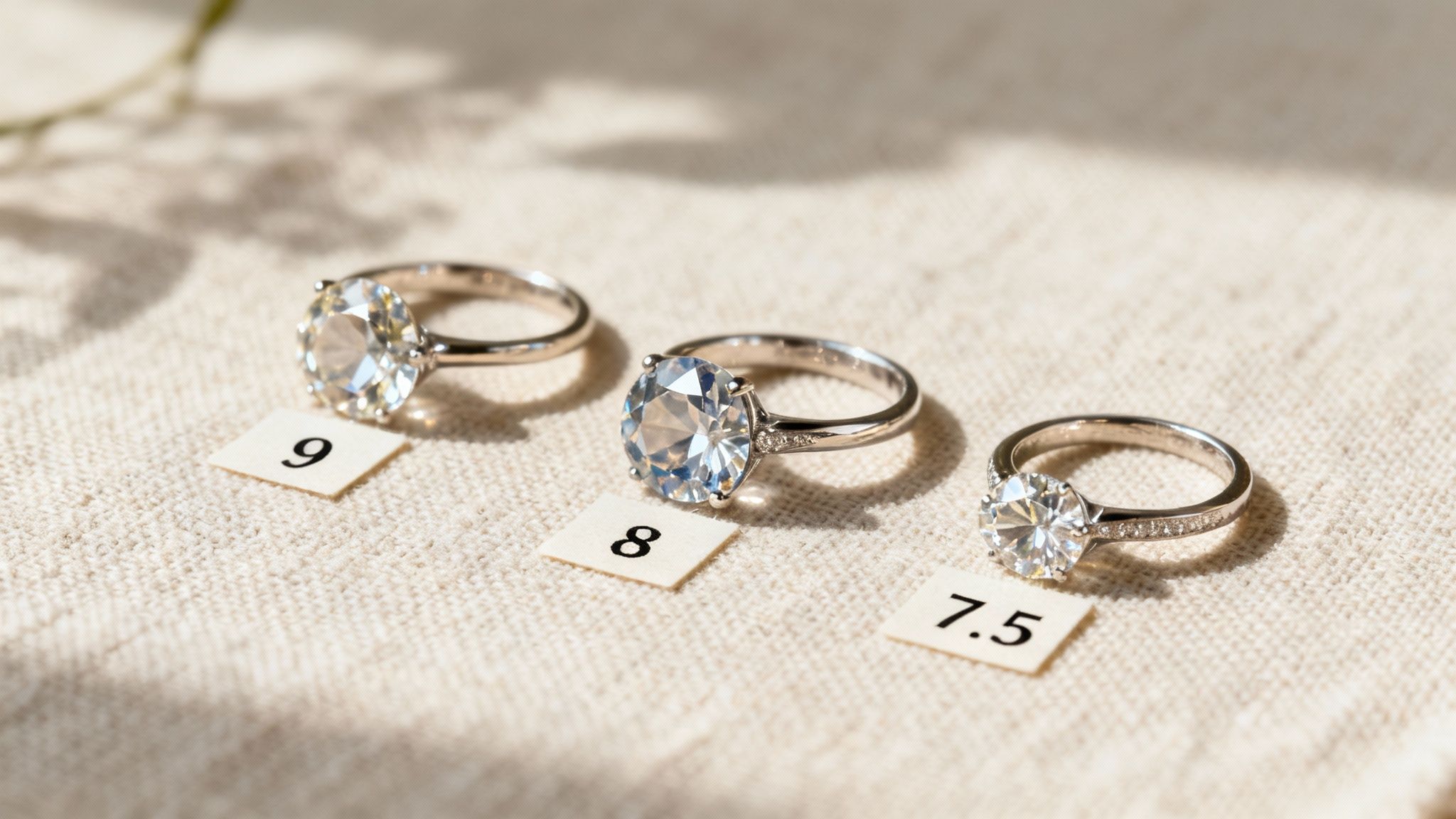
The first thing most people think of is hardness, which is just a gem's resistance to scratching. Think of it as a defense shield against all the tiny abrasions of daily life—bumping against a countertop, reaching into a purse, or an accidental scrape. Hardness is measured on the Mohs scale, which ranks minerals from 1 (softest) to 10 (hardest).
A diamond, scoring a perfect 10, is the gold standard for engagement rings for a reason: it’s incredibly difficult to scratch. For gemstone engagement rings, you'll want a stone that scores high enough to handle those daily hazards without showing wear.
As a rule of thumb, stick with gemstones that are a 7 or higher on the Mohs scale. Here’s what those numbers mean in the real world:
9-10 (Excellent for Daily Wear): This is the top tier, including diamonds, sapphires, and rubies. These stones are exceptionally resilient and perfect for active people who don't want to constantly worry about their ring.
7.5-8 (Good for Daily Wear with Care): Gems like morganite, aquamarine, spinel, and emeralds fall in this range. They’re certainly durable enough for everyday wear, but they appreciate a little more mindfulness. A protective setting is a great idea here.
Below 7 (Requires Careful Wear): Softer stones like amethyst (7), opal (5.5-6.5), or pearl (2.5-4.5) are much more susceptible to scratches. They’re better suited for jewelry you wear on occasion, not an engagement ring meant to last a lifetime.
Beyond Hardness: Toughness and Cleavage
While hardness stops scratches, toughness is what prevents a gem from chipping, breaking, or cracking from an impact. Think about dropping a pane of glass versus a rubber ball. The glass is hard but not tough, while the rubber ball is tough but not hard.
Then there's cleavage, which is a crystal's natural tendency to split along certain flat planes within its structure. A gem with "perfect" cleavage can split cleanly if it gets hit at just the right angle.
Key Takeaway: A durable engagement ring gemstone needs a good balance of all three. A high Mohs rating is a great start, but good toughness and a lack of significant cleavage are what truly make a stone resilient enough for the long haul.
For example, a diamond is a 10 in hardness, but it can still chip if it has poor toughness or gets struck right on a cleavage plane. This is why the cut and setting are so critical—they’re designed to protect the stone’s more vulnerable points.
Practical Advice for Choosing Your Stone
Okay, now that you’ve got the science down, let's turn it into real-world advice. The best gemstone for you depends entirely on your lifestyle and how you see yourself wearing your ring.
Ask yourself these questions when you’re deciding:
What’s Your Activity Level? If you have a very active lifestyle, work with your hands, or are just a little clumsy (no judgment!), you should prioritize stones in the 9-10 range like sapphires and rubies. Their superior hardness makes them practical, worry-free choices.
How Careful Are You Willing to Be? If you’re pretty mindful of your jewelry and have a desk job, stones in the 7.5-8 range like morganite or spinel can be fantastic options. Just get in the habit of taking your ring off for high-impact activities like going to the gym or gardening.
How Important is the Setting? The right setting can dramatically boost a gem’s durability. A bezel or halo setting wraps the stone in a protective metal collar, shielding its edges from bumps and snags. This is especially important for softer stones or any gem with sharp corners, like a princess cut.
Ultimately, choosing a gemstone engagement ring is a balance between what your heart wants and what your head knows is practical. By understanding durability, you can pick a stone you absolutely love with the confidence that its beauty will last a lifetime.
How Gemstone Rings Are Priced
Figuring out the price of a gemstone engagement ring can feel a little like stepping into a whole new world, especially if you're used to the diamond market. Diamonds have their famous Four Cs—Cut, Color, Clarity, and Carat—that create a neat, predictable system. But colored gemstones? They play by a different set of rules.
While several factors come together to determine a gem's value, one of them stands head and shoulders above the rest.
Unlike diamonds, where all four Cs share the spotlight, with colored gemstones, Color is king. It’s the single biggest factor driving the price tag. We’re not just talking about "blue" or "green"—it's the exact shade, the richness of its saturation, and its overall tone that matter.
A sapphire's value, for example, absolutely soars when it hits that perfect, velvety "cornflower blue." Likewise, an emerald with a deep, vivid green hue will command a much higher price than one that’s pale or has a murky, washed-out look. These top-tier colors are incredibly rare, making them the main reason one stone costs more than another.
Breaking Down the Key Value Factors
While color gets all the glory, other characteristics play crucial supporting roles in determining a gemstone's final price. Think of it as a team effort, where each player adds to the stone’s overall beauty and value.
Here's what else to look for after you've fallen in love with the color:
Clarity: This is all about the natural inclusions—or internal features—inside a stone. A completely flawless gemstone is almost unheard of and incredibly valuable. But some stones, like emeralds, are actually expected to have inclusions (often romantically called a jardin, or garden). The real question is how visible they are and whether they affect the gem’s sparkle or strength.
Cut: A great cut is what breathes life into a gemstone, unlocking its brilliance and fire. A master cutter shapes the stone to show off its best color while hiding any distracting inclusions. A bad cut can make even the most beautiful rough gem look dull and flat.
Carat Weight: Just like diamonds, carat refers to the stone’s weight. Bigger gemstones are much rarer, so their price climbs accordingly, especially when they also have fantastic color and clarity. The price-per-carat often jumps significantly once you hit certain size milestones.
Origin and Treatment: Where a gem comes from can add to its story and its price. Certain locations, like Kashmir for sapphires or Colombia for emeralds, have a legendary reputation that carries a premium. It's also important to know that most gemstones are treated to enhance their color or clarity—this is a standard and accepted practice. An untreated gem with amazing natural color is the rarest of the rare and will be priced to match.
The Rise of Lab-Grown Gemstones
One of the biggest shifts in the world of gemstone engagement rings is the explosion in popularity of lab-grown options. Let's be clear: these are not fakes. They are real gemstones, with the exact same chemical, physical, and visual properties as their mined counterparts. The only thing that's different is their origin story—one grew deep in the earth over millions of years, and the other grew in a controlled lab.
A lab-grown gemstone is like ice from a high-tech freezer versus ice from a glacier. Both are frozen water with the exact same properties; they just have different creation stories. This choice offers incredible beauty and value without compromise.
This innovation has completely shaken up the market, making breathtaking rings more accessible than ever. Recent data shows the average spend on an engagement ring dropped 19% from $8,831 to $7,168, a change largely credited to the rise of lab-grown stones. This trend is letting couples get the big, beautiful stones they dream of—often in the popular 2-3 carat range—without blowing their budget.
Choosing a lab-created sapphire, ruby, or emerald often means you can get a larger, higher-clarity stone for the same price as a smaller, natural one. It empowers you to find a ring that fits both your style and your financial goals. For more help on that front, check out our guide to making an engagement ring budget that actually works for you.
Ultimately, whether you go for a mined or lab-grown gem, understanding what drives its price is the key to finding a ring with exceptional beauty and lasting value.
Choosing the Perfect Ring Style and Setting
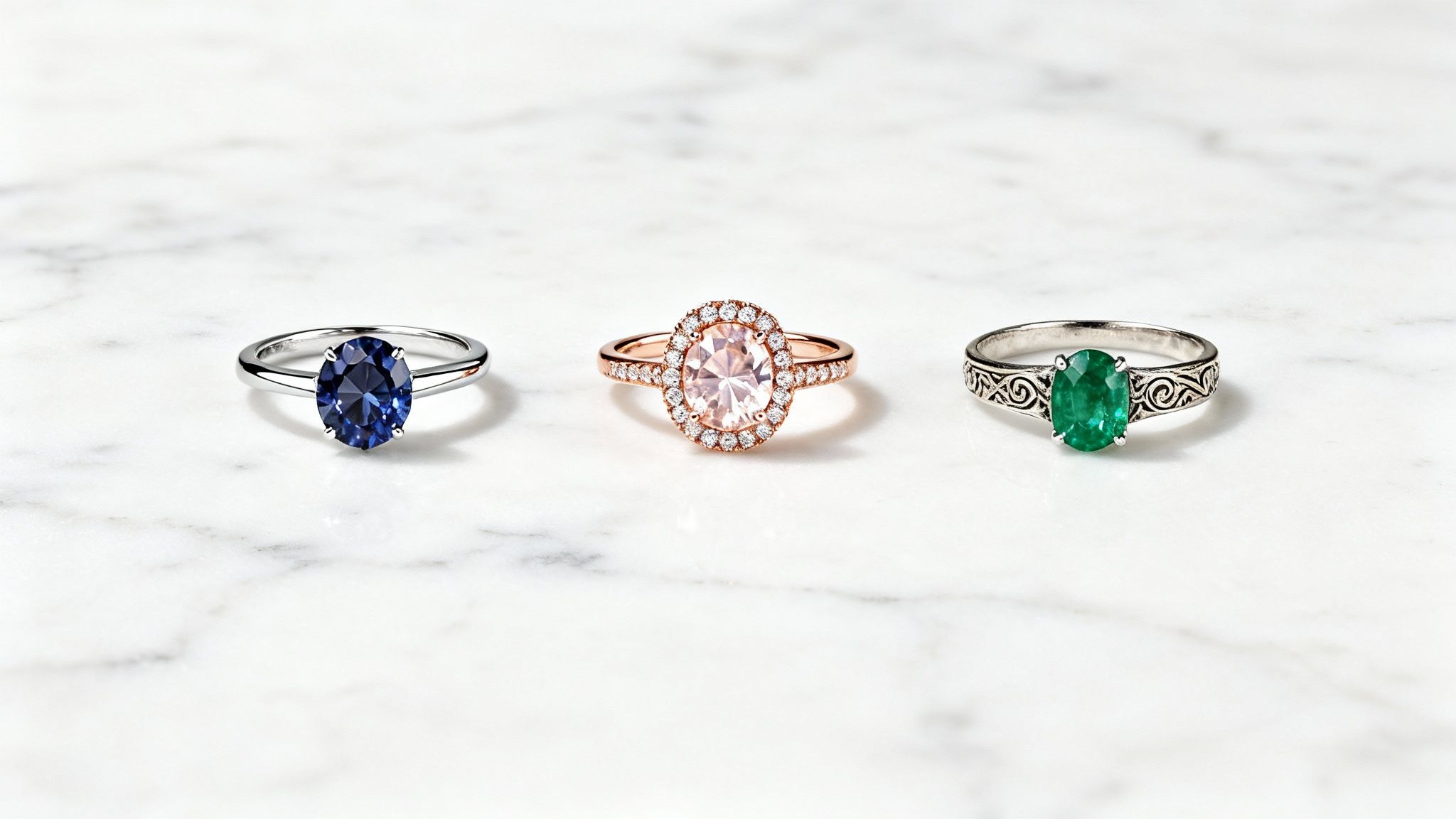
Once you've found the perfect gemstone, the next step is finding its home. The ring's style and setting are so much more than just a holder for the stone; they're the stage that shows off its beauty, the frame that defines its character, and the armor that protects it for a lifetime.
Think of the setting as the gemstone’s supporting actor. A great one can make the center stone look bigger, brighter, and even more colorful. This is where your personal taste really comes to life, creating a ring that feels balanced, complete, and totally you.
Finding a Style That Speaks to You
The world of gemstone engagement rings offers a style for every story. From timeless classics loved for generations to bold, modern designs, the right one will feel like an extension of who you are. It’s about finding a look you’ll love seeing on your hand, day in and day out.
Here are a few of the most popular styles to get you started:
Solitaire: The ultimate classic. A solitaire setting puts a single, stunning gemstone front and center, letting its color and brilliance do all the talking. It's elegant, understated, and will never go out of style.
Halo: For a touch of glamour, a halo setting surrounds the main stone with a circle of smaller diamonds or gems. This clever trick not only adds extra sparkle but makes the center gemstone appear significantly larger.
Three-Stone: Rich with symbolism, this style features one main gemstone flanked by two smaller ones. It’s often said to represent a couple's past, present, and future—a deeply romantic and meaningful choice.
Vintage-Inspired: Love old-world charm? These settings often feature intricate details like filigree (delicate metalwork), milgrain (tiny metal beads), and unique, nature-inspired shapes. They have an heirloom quality that feels both personal and timeless.
The Role of the Metal Color
The metal you choose for the band and setting has a massive impact on the ring's overall mood. It's like choosing the right lighting for a photograph; different metals can either enhance or subtly alter your gemstone’s natural color.
Here’s how different metals can play with your stone:
Yellow Gold: This warm, classic metal beautifully complements gemstones with warmer tones, like fiery rubies, rich emeralds, and sunny yellow sapphires. It creates a traditional, slightly vintage feel.
White Gold or Platinum: These cool, silvery metals provide a crisp, modern backdrop that makes colored gemstones pop. They are especially stunning with cool-toned gems like blue sapphires, aquamarines, and amethysts, enhancing their vibrancy.
Rose Gold: With its soft, pinkish hue, rose gold is the perfect partner for romantic, warm-toned stones like morganite. The metal's blush color harmonizes with the gem, creating a seamless and incredibly romantic look.
Your choice of metal is a powerful tool. It can create a stunning contrast that makes your gemstone stand out or a harmonious blend that creates a cohesive, unified aesthetic.
Balancing Beauty with Protection
For a gemstone engagement ring, the setting has to do two jobs perfectly: showcase the stone and keep it safe. This is especially critical for gems that are a bit softer than a diamond. The right setting adds an extra layer of defense against the bumps and scrapes of daily life.
Bezel settings, for example, are one of the most secure options out there. Instead of prongs, a thin metal rim fully encircles the gemstone’s edge, holding it snugly in place and protecting it from all sides. This modern, sleek style is a fantastic choice for anyone with an active lifestyle or for softer stones like emeralds or opals.
A halo setting also adds a protective buffer of smaller stones around the main gem, shielding its edges from direct impact. Understanding these practical details is key, and you can dive deeper in our practical guide to engagement ring settings to find that perfect balance. The best ring is one where stunning design and smart protection work together in perfect harmony.
Common Questions About Gemstone Engagement Rings
Choosing a gemstone engagement ring is a big deal, and it's totally normal to have a few last-minute questions. Think of this as the final chat you'd have with a trusted jeweler—the one where you get all the practical, honest answers you need to feel amazing about your decision.
We'll cover everything from daily care to the real scoop on lab-grown gems so you can move forward with total confidence and excitement.
How Should I Care for My Gemstone Engagement Ring?
Keeping your ring looking as brilliant as the day you got it is simple, but the right method depends on the stone. Think of it like laundry—you wouldn't wash a silk shirt the same way you wash denim.
For the toughest gems out there, like sapphires and rubies (both a solid 9 on the Mohs scale), a little soap and water is all you need. Just grab a soft toothbrush, some warm water, and a drop of mild dish soap to gently scrub away any buildup. That's usually enough to bring back their fire.
Softer stones, though, need a gentler touch.
For Emeralds (7.5-8): These beauties are often treated with oils to enhance their look. Harsh chemicals or ultrasonic cleaners can strip those oils away, leaving the stone looking dull. The best approach? Just wipe it clean with a soft, damp cloth.
For All Stones: It’s always a good idea to take your ring off before you hit the gym, do some deep cleaning with chemicals, hop in a chlorinated pool, or do any heavy lifting. This protects both the gemstone and the metal setting from scratches or warping.
When you're not wearing it, tuck your ring away in a soft pouch or its own compartment in your jewelry box. This one simple habit prevents harder stones from accidentally scratching softer ones.
Are Lab-Grown Gemstones Considered Real?
Yes, 100%. Lab-grown gemstones are the real deal—chemically, physically, and visually identical to gems pulled from the earth. The only difference is their origin story.
Think of it this way: a lab-grown gem is like a flawless orchid cultivated in a state-of-the-art greenhouse, while a mined gem is like an orchid discovered in a remote rainforest. Both are genuine, beautiful orchids; they just grew up in different environments.
Opting for a lab-grown gemstone is a smart, modern choice. It often means you can get a larger or higher-quality stone for your budget because the supply chain is so much more direct. They are not fakes or imitations; they're created through incredible technology that mimics the same heat and pressure that forms gemstones deep underground.
What Is the Most Durable Gemstone Besides a Diamond?
When it comes to standing up to everyday life, sapphires and rubies are the undisputed champions right after diamonds. Both of these classic beauties are part of the corundum mineral family, which is where they get their incredible toughness.
Scoring a 9 out of 10 on the Mohs scale of hardness, they are seriously resistant to the scuffs and scratches that come with daily wear. This mix of beauty and brawn is why they're such a practical choice for a ring you plan to wear for a lifetime. It’s also why sapphires were the go-to for engagement rings for centuries, long before diamonds took over the spotlight.
How Can I Ensure My Gemstone Is Ethically Sourced?
For many couples today, knowing your stone has a clean history is non-negotiable. The most straightforward way to guarantee a conflict-free gem is to choose a lab-grown stone. Since they're created in a controlled setting, they completely sidestep the environmental and social issues tied to traditional mining.
If your heart is set on a natural, mined gemstone, transparency is everything.
Ask Where It’s From: A good jeweler should be able to tell you the stone’s country of origin. This helps you trace its path and ensure it comes from a region with responsible practices.
Look for Certification: Ask if the seller works with suppliers who follow strict ethical protocols. A jeweler who’s proud of their sourcing will be happy to share the details.
Trust Your Jeweler: Work with sellers who are open and honest about their supply chain. If they are passionate about ethical sourcing, they'll want to tell you all about it.
By asking these simple questions, you can find a ring that not only looks beautiful but also feels right.
At Panther De Luxe Shop, we believe finding the perfect ring should be an exciting and confident experience. Whether you're drawn to a natural or lab-grown gemstone, we're here to help you find a ring that tells your unique story.
Comments