
Your Complete Guide on How to Adjust Ring Size
- Luke Zucco
- Jan 13
- 12 min read

A beautiful ring should feel like a part of you. But when it doesn't fit right, that cherished piece can quickly become a constant source of annoyance—either spinning around your finger or, worse, pinching your skin. Needing to adjust ring size is a super common issue, and thankfully, it's completely fixable.
Why a Perfect Ring Fit Is So Important
A ring that's too big or too small isn't just a minor inconvenience. It poses real risks to both you and your jewelry.
A loose ring can slip off without you ever noticing, leading to that heartbreaking moment you realize a sentimental or valuable piece is gone. On the other hand, a ring that’s too tight can cut off circulation, irritate your skin, or get stuck. Sometimes, that means a stressful, emergency trip to a jeweler (or even the fire department) to have it cut off.
The ideal fit is a delicate balance: snug enough to stay put, but loose enough that you can slide it over your knuckle without a major struggle.
Common Reasons for a Poor Fit
Getting that perfect fit is tricky because our bodies are always in flux. If your ring suddenly feels off, it’s probably due to one of these completely normal life factors.
Seasonal Changes: Ever notice your rings feel tight in the summer and loose in the winter? You’re not imagining it. Fingers tend to swell in hot, humid weather and shrink when it's cold.
Life Events: Major life changes like pregnancy or weight fluctuations have a direct impact on your finger size. A ring that was perfect last year might be unwearable today.
Receiving a Gift: Let's be honest, guessing a ring size is notoriously difficult. Inherited heirlooms and gifted rings almost always need a little tweaking to get the fit just right. If you want to get ahead of the game, this comprehensive guide on how to determine your ring size for the perfect fit is a lifesaver.
The goal is simple: your ring should bring you joy, not anxiety. A proper fit ensures you can wear it comfortably, prevents loss, and protects the integrity of your jewelry for years.
This guide will walk you through everything, from quick temporary fixes for minor fit issues to the lasting security you get from a professional resizing.
How to Accurately Measure Your Finger at Home
Before you even think about adjusting a ring, you need a solid starting point. Getting an accurate finger measurement is easily the most critical step, and the good news is you can nail it right at home. This simple act takes all the guesswork out of the equation and sets you up for success, whether you’re attempting a quick DIY fix or taking it to a professional.
There are two classic, reliable ways to do this: the string-and-ruler method or a printable ring sizer. If you're going with the string, grab a non-stretchy piece of string (dental floss works wonders) and wrap it snugly around the base of your finger. Mark where the end meets the loop, then lay it flat against a ruler. Jot down the length in millimeters—that’s your magic number.
Pro Tips for an Accurate Measurement
Here's something jewelers know that many people don't: timing and technique are everything. Your fingers aren't static; they actually swell and shrink throughout the day based on temperature, what you've been eating, and your activity level.
Measure at the End of the Day: This is when your fingers are at their largest. Measuring then helps you avoid picking a size that feels perfect in the morning but uncomfortably tight by evening.
Don't Forget the Knuckle: A ring has to get over the finish line. If your knuckle is noticeably larger than the base of your finger, measure both. The ideal size is often somewhere between those two measurements, ensuring it can slide on without a struggle but won't spin once it's in place.
Check It Twice (or Three Times): Seriously. Measure a few times to make sure your numbers are consistent. A tiny mistake can easily put you a half-size off, which is a big deal for comfort.
This whole process is about identifying the problem to find the right solution. Just like this flow chart shows, factors like temperature can cause fit issues, but a proper adjustment solves it.
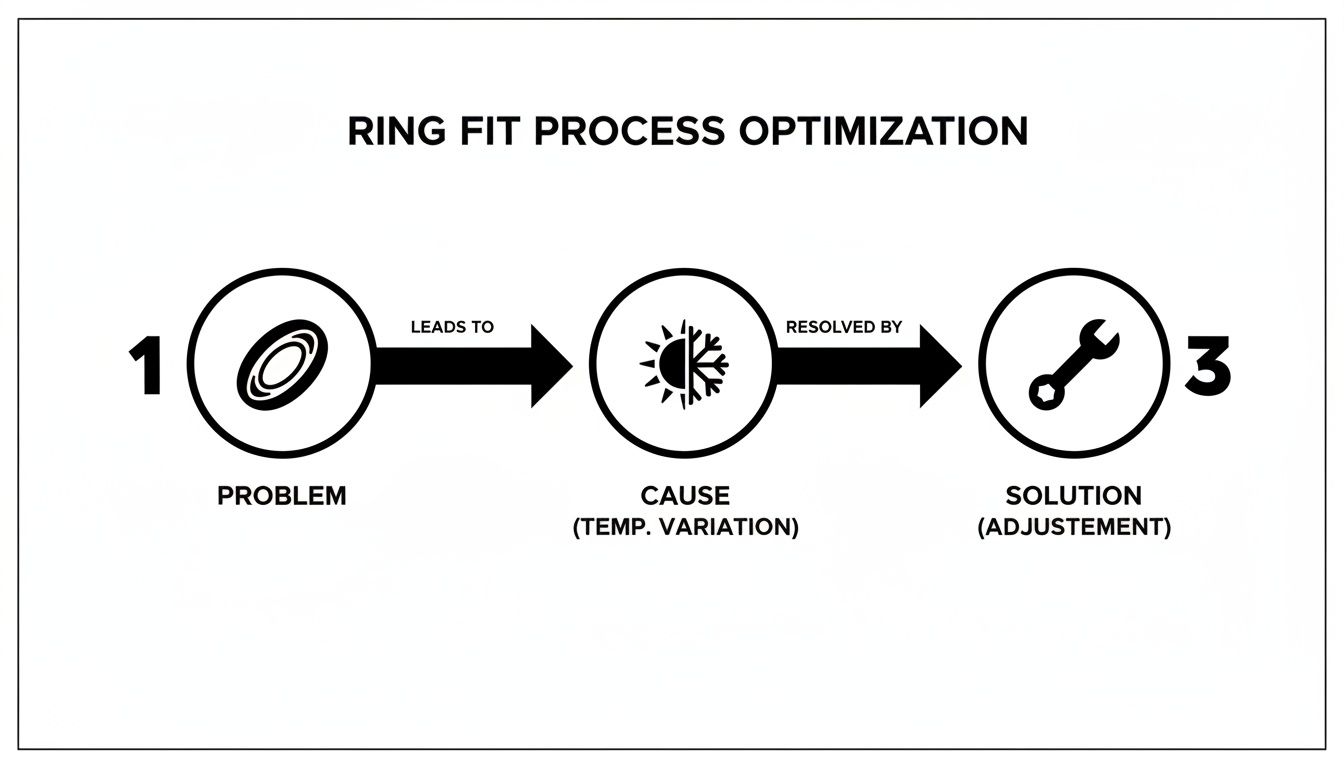
As you can see, understanding why your ring feels tight—like from heat-related swelling—is the key to getting the adjustment right.
Common Measurement Mistakes to Avoid
A few simple slip-ups can completely throw off your measurement. The biggest offender? Using a stretchy piece of string or a warped, old measuring tape. These materials can trick you into thinking your finger is smaller than it is, leading to a ring that's painfully tight. Also, never measure when your hands are cold. Your fingers will be at their smallest, and you'll end up with a size that's too snug most of the time.
A correct measurement is the foundation for any successful ring size adjustment. Taking the time to get this right saves you from the frustration and cost of having to resize your ring a second time.
Getting the fit right isn't just about personal comfort—it's a massive part of the global jewelry market. Ring resizing is one of the most requested services out there, and it's no wonder why. The rings market is projected to grow by an astounding USD 45.2 billion between 2023 and 2028. Here in the US, where the average woman's ring size is a US 6 and the average man's is a US 10, jewelers are constantly making small adjustments to account for life's changes.
For a deeper dive, our guide on how to figure out ring size accurately at home has even more helpful methods. You can also check out this fantastic article on how to measure your ring size at home for a comprehensive look at all the options.
Quick DIY Solutions for a Ring That's Too Big
Not every loose ring needs a trip to the jeweler for a permanent resizing. Sometimes, all you need is a quick, temporary fix for a snugger fit. This is especially true if your finger size tends to fluctuate with the weather or if it's a ring you only wear once in a while.
These kinds of non-invasive solutions are fantastic. They’re affordable, completely reversible, and won't do any damage to your jewelry.
One of the most popular go-to options is a simple plastic ring guard. These are usually small, transparent plastic coils that you wrap around the bottom part of the band. They’re practically invisible when you're wearing the ring and can easily make it feel one or two sizes smaller.
Here’s a look at a common coil-style adjuster being fitted onto a ring.
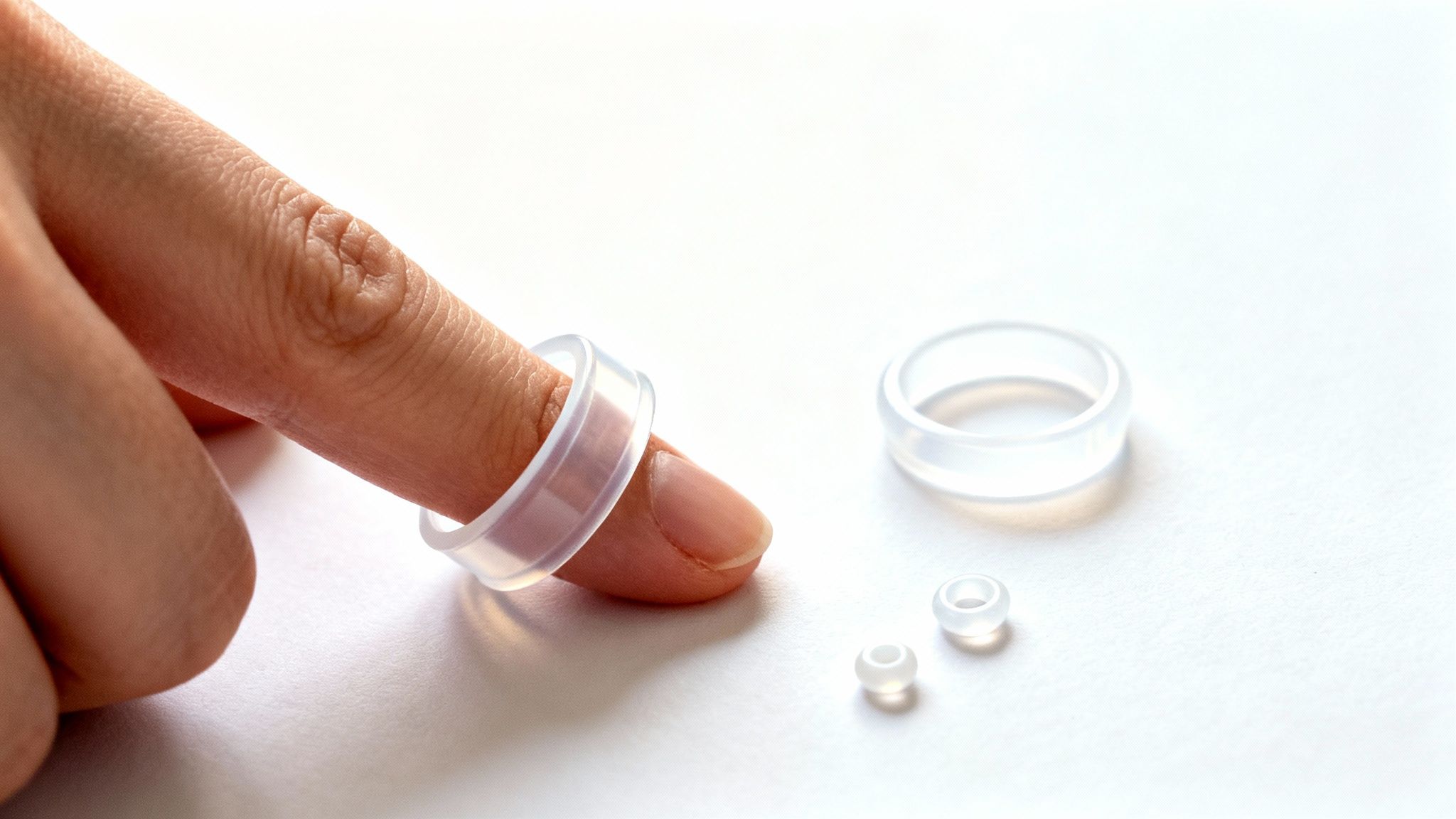
As you can see, the adjuster adds just enough subtle bulk to the inside of the band. It closes that tiny gap between the metal and your finger, giving you a much more secure and confident fit.
Finding Your Perfect Temporary Fix
The best temporary solution really depends on your specific ring and your lifestyle. A thicker guard might be perfect for a chunky fashion ring but could feel clunky and awkward on a delicate, thin band.
Here are the most common options you'll find:
Plastic Ring Guards: These are your best bet for quick, cheap adjustments, especially for rings you don't wear every single day. They’re great for costume jewelry or if you've recently lost a bit of weight and just need an immediate fix.
Food-Grade Silicone Applicators: This is a much more discreet route. It's a liquid silicone that you apply to the inside of the ring, letting it dry to form a clear, soft layer. It's an ideal choice for very thin bands or for anyone with sensitive skin, since the material is hypoallergenic.
Ring Sizing Beads: You might hear jewelers call these "speed bumps." They're tiny metal beads that a professional can quickly solder onto the inside of the ring's band. While it does require a quick visit to a jeweler, the process is fast and totally reversible. They are a game-changer for top-heavy rings that always seem to spin around on your finger, as the beads help anchor the ring right where it belongs.
A temporary sizer is your best friend when dealing with minor size fluctuations. It lets you adjust ring size on the fly without committing to a permanent change that might not be right for you in a few months.
Comparing DIY Ring Sizing Methods
Choosing the right method really comes down to what you need. Are you prioritizing comfort? Invisibility? Or how much of a size change you need to make? Each option has its own clear pros and cons.
This table breaks down the most popular temporary solutions to help you pick the perfect one for your ring.
Method | Best For | Pros | Cons |
|---|---|---|---|
Plastic Guards | Costume jewelry, quick fixes, significant size reduction | Very inexpensive, easy to apply and remove, widely available. | Can feel bulky, may trap moisture, not ideal for delicate rings. |
Silicone Applicators | Thin bands, sensitive skin, minor size reduction | Invisible, comfortable, hypoallergenic, custom fit. | Takes time to dry, not suitable for large size adjustments. |
Sizing Beads | Top-heavy rings, preventing spinning, long-term temporary fit | Very secure, allows for air circulation, durable. | Requires a jeweler, can feel odd at first, slight cost involved. |
Let's put this into a real-world context. Say you have a cool fashion ring you absolutely love, but it’s a full size too big. A plastic coil guard is the perfect solution—it’s cheap, takes literally seconds to put on, and you can pop it off whenever you feel like it.
On the other hand, if your engagement ring has started spinning ever since the weather got colder, investing in sizing beads is a much smarter move. They’ll keep your diamond front-and-center without actually changing the ring's original size.
Ultimately, these simple and clever solutions give you the flexibility to wear your favorite pieces with confidence, no matter what.
When You Need a Professional Jeweler
While DIY tricks can be a lifesaver for minor fit issues, some rings just demand an expert's touch. Trying to adjust ring size on certain pieces at home can go wrong fast, turning a simple problem into a heartbreaking mistake. Knowing when to put down the pliers and head to a professional is the key to protecting your investment—and your memories.
Some materials and designs simply aren't built for at-home adjustments. Take platinum, for example. It has an incredibly high melting point and requires specialized tools you won’t find in a home workshop. The same goes for rings with delicate pavé or channel-set diamonds. Bending that band, even a tiny bit, can loosen those small stones and cause them to fall out.
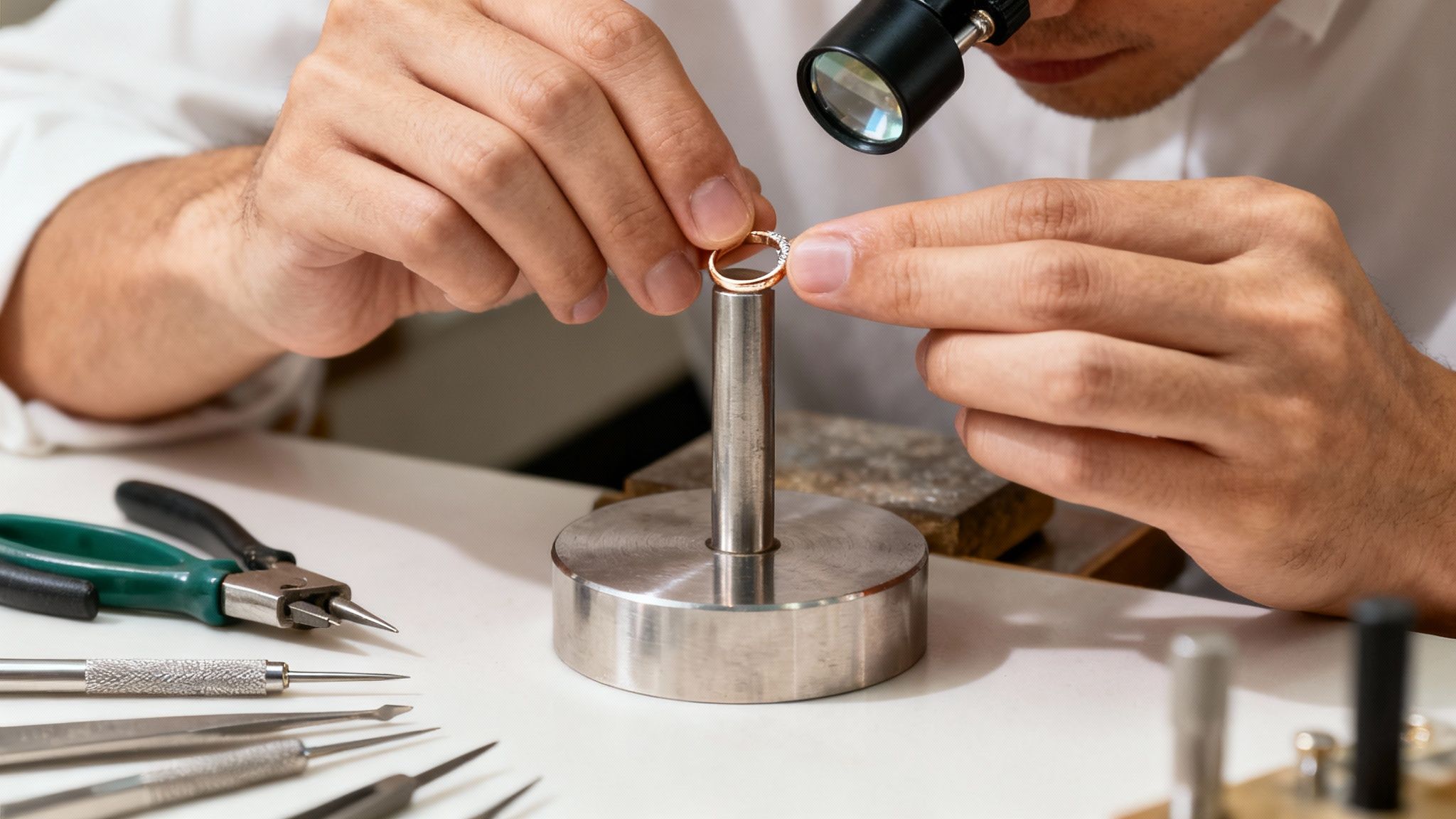
Understanding the Jeweler's Craft
So, what actually happens when you hand your ring over to a pro? It's not magic, but a careful blend of precision and artistry. How a jeweler resizes your ring really depends on whether it needs to be smaller or larger.
To Make a Ring Smaller: The jeweler precisely cuts a tiny piece from the bottom of the band. Then, they skillfully bring the two ends together and solder them with matching metal, polishing the join until it's completely invisible.
To Make a Ring Larger: For a small increase (think half a size), the ring might be gently stretched on a tool called a mandrel. If it needs more room, the jeweler will cut the band and add a new piece of perfectly matched metal, soldering it seamlessly into place.
This level of skill ensures the ring's structure and strength remain intact. A professional resizing is virtually undetectable and keeps the piece looking just as beautiful as the day you got it. For a deeper dive into the process, our article on how to get a ring resized breaks it all down.
When Professional Help Is Non-Negotiable
Beyond the materials, sentiment and complexity are huge factors. You just don't experiment on an irreplaceable family heirloom or your engagement ring. The risk of causing damage is far too great to justify saving a few bucks with a DIY fix.
Entrusting a valuable or sentimental ring to a professional isn't just about getting the right fit; it's about safeguarding its future. A proper resizing protects its value, structure, and the story it represents for generations to come.
The need for these professional tweaks is on the rise. It follows the explosive growth of the jewelry customization market, which is projected to hit a staggering $29,240.8 million by 2033. Data shows that 25-35% of customized rings need a professional adjustment after being purchased, especially those with more intricate designs.
When you think about it, opting for a professional resizing—which typically costs between $50 and $150—is a much more sustainable and cost-effective choice than having to replace a beloved ring down the line. You can explore more data on the jewelry customization market trends to see the full picture.
Understanding Resizing Costs and Timelines
Handing over a cherished ring for an adjustment can feel a little nerve-wracking. How much will it cost? How long will it be gone? Getting a clear picture of what to expect helps you make a confident, informed decision when you need to adjust ring size.
The price and timeline aren't random; they depend on a few key factors, and the single biggest variable is the metal itself. Gold is relatively easy for a skilled jeweler to work with, making it one of the more affordable options. Platinum, on the other hand, has a much higher melting point and requires specialized tools and greater skill—which definitely drives up the cost. Sterling silver is usually the most budget-friendly, but not all jewelers work on it.
What Influences the Final Price
Beyond the metal, the ring's design and the scope of the work play a huge role. A simple, plain band is straightforward, but a ring with intricate engravings or a row of gemstones presents a real challenge.
Here’s what really moves the needle on the price:
Going Up vs. Going Down: Making a ring larger is almost always more expensive than making it smaller. Sizing down just involves removing a tiny piece of metal. Sizing up requires adding new, perfectly matched material, which costs more in both labor and materials.
Degree of Adjustment: A simple half-size change will cost significantly less than a jump of two or three full sizes. That’s a much bigger job.
Gemstone Settings: If your ring has stones—especially delicate pavé or channel settings—the jeweler has to be incredibly careful not to loosen them during the process. This extra care and risk are factored into the price.
This kind of service is a pillar of the modern jewelry industry. As the global jewelry market continues its steady climb—expected to grow from $232.94 billion to $343.90 billion by 2032—offering reliable fixes is more important than ever. For most jewelers, this means providing adjustments that typically range from $40 to $100, preserving the ring's value and integrity.
Even with all the online tools available, about 60% of people still visit a professional for the guarantee of a perfect fit.
Don't be afraid to ask for a detailed quote upfront. A reputable jeweler will always inspect your ring and explain the costs involved before starting any work. This transparency is the mark of a true professional.
Typical Timelines and What to Ask
So, how long will you be without your ring? The turnaround time can vary widely. A simple resizing on a gold band might be done in a few hours or a day, especially if the jeweler has an on-site workshop.
However, more complex jobs or situations where the ring needs to be sent to a specialized repair center could take anywhere from one to two weeks. Our guide on how long it takes to resize a ring breaks down the timeline in more detail.
Before you commit, make sure to ask a few key questions:
Is the work done in-house? This often means a faster turnaround and less risk of the ring getting lost in transit.
What is your guarantee on the work? A professional jeweler should always stand by their craftsmanship.
Will the resizing be visible? For most rings, the answer should be a firm "no." A skilled resizing is seamless.
Common Ring Sizing Questions Answered
Even with all the tools and tricks, you probably still have a few questions floating around. It's completely normal to wonder about the cost, the durability of the fix, or if your specific ring can even be touched.
Let's walk through some of the most common questions people have when they need to adjust ring size. Getting clear answers helps you move forward with confidence, knowing you’re making the right call for a piece you love.
Can Every Type of Ring Be Resized?
The short answer? Unfortunately, no. Some designs and materials just don’t play well with traditional resizing methods. While you should always get a professional jeweler’s opinion, there are a few usual suspects that are notoriously difficult—or impossible—to alter.
Eternity Bands: These rings feature a continuous circle of gemstones, leaving no plain metal for a jeweler to work with. Cutting into the band would completely disrupt the setting and risk losing stones.
Tension-Set Rings: This modern style holds a gem in place using the band's pressure. Changing that band’s circumference compromises the very thing keeping your stone secure. It's a no-go.
Alternative Metals: If your ring is made of tungsten, titanium, or ceramic, resizing is off the table. These materials are incredibly hard and brittle, meaning they can't be cut and soldered like gold or platinum.
How Many Times Can a Ring Be Resized?
This really depends on the ring itself—how it was made and what it’s made of. A simple, solid gold or platinum band can usually handle being resized a few times over its life without any issues.
But every time a ring is cut, it puts a little stress on the metal. For more complex designs with delicate engravings or pavé settings, it’s best to keep resizing to a minimum—maybe once or twice, max. This helps protect its structure and prevent any long-term damage.
A professional resizing, when done right, should be completely invisible and won’t devalue your ring. A bad job, on the other hand, can leave visible seams, weak spots, or loose stones, which definitely hurts its value. This is exactly why finding a jeweler you trust is so critical.
What if My Finger Size Fluctuates?
It happens to everyone. Our fingers swell a bit in the heat and shrink when it's cold. If you’re just dealing with a minor change—about half a size—a simple, temporary fix like a plastic ring guard works perfectly for those colder months when your ring feels a bit loose.
For more noticeable or year-round fluctuations, a lot of people swear by sizing beads. A jeweler solders two tiny metal balls to the inside of the band. They help grip your finger just enough to stop the ring from spinning, but still leave enough room for your finger to swell without feeling too tight. It's a clever and very effective solution.
At Panther De Luxe Shop, we believe your jewelry should always fit perfectly. Explore our stunning collections and find a piece that feels like it was made just for you. Visit us today at https://www.pantherdeluxe.com.
Comments