
What is pave setting in rings: A Guide to Brilliant Sparkle
- Luke Zucco
- Jan 1
- 13 min read

A pavé setting isn't just a design; it’s a technique where dozens of tiny diamonds are set so closely together that they create an unbroken, shimmering surface. The name comes from the French word for “pavement,” which perfectly captures the look—imagine a street literally paved with diamonds.
Each little gem is held in place by minuscule metal beads, a clever trick that makes the metal almost disappear and lets the diamonds take center stage, maximizing every bit of light.
Your Quick Guide to the Pavé Ring Setting
The real magic of a pavé setting lies in the illusion it creates. It’s an art form, really. Jewelers use a sea of small diamonds (called melee) to craft a band that looks like it’s made entirely of light. This is why it’s so loved—it delivers that high-impact, all-over sparkle without needing a single, massive (and massively expensive) center stone.
This technique isn’t new, either. It has deep roots in 18th and early 19th-century European jewelry, where French artisans first perfected the art of setting tiny diamonds to look like a glittering cobblestone street. It’s got a romance and history that adds to its appeal. You can dive deeper into its elegant origins in this guide to the timeless sparkle of pavé settings.
To give you a quick snapshot, here are the core features of a pavé setting.
Pavé Setting at a Glance
Characteristic | Description |
|---|---|
Appearance | A continuous, sparkling surface of diamonds, like a paved road of light. |
Construction | Small diamonds (melee) are set side-by-side and held by tiny metal beads. |
Metal Visibility | Minimal. The focus is entirely on the diamonds, not the setting. |
Main Benefit | Maximizes the ring's overall brilliance and can make the center stone look bigger. |
Feel | A high-quality setting should feel smooth to the touch, not scratchy. |
This table gives you the basics, but let’s break down what really makes this setting stand out.
Core Characteristics of Pavé
So, what are the defining features that give pavé its signature look? It really comes down to a few key elements working together. Getting a handle on these is the first step to truly appreciating its beauty and craftsmanship.
Key features include:
Maximized Sparkle: The entire goal is to cover the metal band in diamonds. This creates an uninterrupted, shimmering surface that catches light from every possible angle. It’s sparkle, dialed way up.
Minimal Metal Visibility: The tiny beads or prongs holding each stone are often carved right from the band itself. This makes the metal nearly invisible, putting all the attention on the diamonds where it belongs.
Enhanced Center Stone: A pavé band is the ultimate supporting act. It naturally draws your eye inward to the main diamond, making it pop and often appear larger and more brilliant than it would on a plain band.
A well-executed pavé setting feels smooth to the touch, with no rough edges to snag on clothing. This seamless finish is a hallmark of high-quality craftsmanship and is essential for both comfort and durability.
Ultimately, the pavé setting is a popular choice because it hits that sweet spot of luxury, brilliance, and sophisticated detail. But before you decide if it’s the one for you, it helps to see how it stacks up against other styles. For a broader look, check out our practical guide to engagement ring settings to compare all your options.
The Craftsmanship Behind a Pavé Diamond Band
Creating a pavé diamond band is an act of pure artistry, far more intricate than just sticking stones onto a ring. It’s a delicate dance where a master jeweler transforms a simple metal band into what looks like a seamless river of light. The process starts with the jeweler drilling a series of tiny holes, or seats, right into the ring's surface.
Each tiny diamond, called melee in the trade, is then painstakingly set into one of these seats. This step demands incredible precision—the diamonds have to sit perfectly level with each other to create that signature smooth, unbroken surface. If even a few are out of alignment, the whole effect is ruined, and you lose that liquid-like shimmer that makes pavé so special.
With the diamonds in place, the real magic happens. Using a specialized tool, the jeweler lifts minuscule beads of metal from the band itself, carefully pushing them over the edge of each diamond. These tiny beads become miniature prongs, locking every stone securely in place.
Distinguishing Pavé Styles
Not all pavé is created equal. Subtle differences in technique give rise to distinct styles, each with its own personality. Knowing these variations helps you appreciate the skill involved and pick the look that’s right for you.
Micro-Pavé: This style uses exceptionally small diamonds, often under one millimeter wide. The goal is to make the metal underneath practically invisible, creating a delicate, shimmering surface that looks like it’s made of pure sparkle.
Petite Pavé: Think of this as traditional pavé with a modern, refined touch. It features smaller, less obvious prongs or beads. This simple tweak exposes more of each diamond, cranking up the brilliance and making every stone pop.
French Pavé: A highly artistic style where the jeweler carves tiny V-shaped grooves into the metal where the diamonds sit. This clever cut lets more light hit the sides of the stones, creating a unique honeycomb pattern and an absolutely incredible amount of fire.
This visual breaks down the concept, from its French roots to the final, brilliant result.
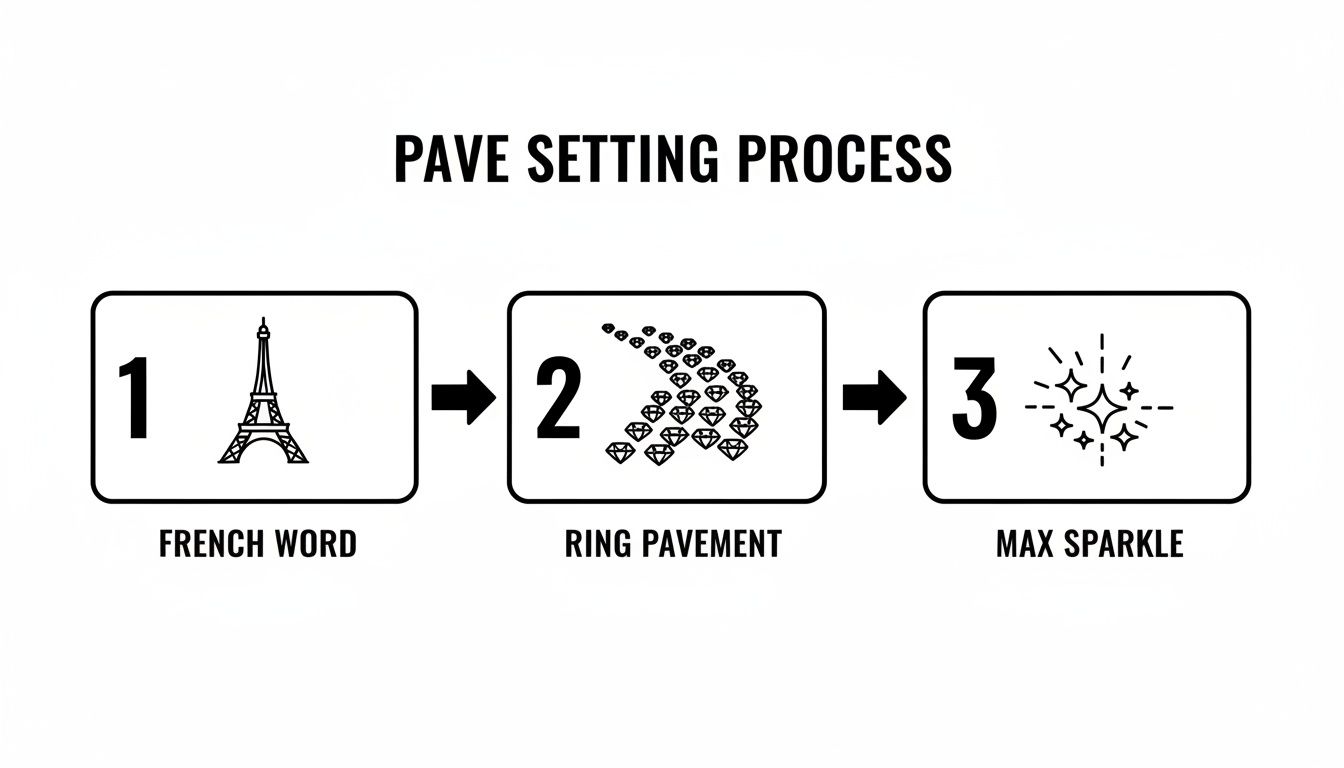
It really shows how the core idea of "paving" a surface with gems is engineered for maximum sparkle.
Identifying Quality Craftsmanship
The mark of a great pavé setting is all in the details—specifically, the uniformity and precision of the jeweler’s work. When you're looking at a ring, check for consistency in the size and shape of the metal beads holding the stones. The surface should also feel smooth to the touch, with no roughness that could snag on your favorite sweater.
A superior pavé setting is a testament to the artisan's skill. The diamonds will appear to float on the surface, with the metal serving as a nearly invisible framework that enhances, rather than distracts from, their collective brilliance.
Ultimately, this demanding technique is what gives pavé rings their luxurious, captivating look. Every tiny detail, from the perfectly drilled seats to the uniform beads, works together to create a piece that is both durable and breathtakingly beautiful.
Is a Pavé Ring Right for You? Let's Talk Pros and Cons
There's no denying the appeal of a pavé setting—that breathtaking, uninterrupted surface of sparkle is hard to resist. But its intricate design isn't for everyone. Before you fall completely in love, it’s important to understand both the dazzling benefits and the practical realities of owning one.
The biggest draw, of course, is the sheer brilliance. Covering the band with dozens of tiny diamonds creates a continuous, glittering surface that catches light from literally every angle. It’s a high-impact look that feels incredibly luxurious and makes a serious statement.
A pavé band also acts as the ultimate hype man for a center stone. The river of light naturally draws your eye inward, making the main diamond look bigger and even more radiant than it would on a plain band. It adds a layer of glamour that elevates the entire ring.
The Upsides of Choosing Pavé
Beyond the raw sparkle, pavé settings offer a unique blend of benefits that work for both modern and vintage tastes.
Unmatched Brilliance: This is the main event. You get an all-over shimmer created by dozens of small diamonds working together.
Enhanced Center Stone: A pavé band is like a glittering frame, making the main diamond pop and look more impressive.
Luxurious Look and Feel: This style delivers a high-end, glamorous vibe that turns even a simple design into something special.
Seriously Versatile: Pavé details can be added to almost any style, from sleek, modern bands to ornate, vintage-inspired rings.
The Downsides and Practical Stuff to Consider
While absolutely stunning, the delicate nature of a pavé setting comes with a few practical challenges. Knowing about these ahead of time will help you make a smart choice and care for your ring properly. The most common concern? The security of those tiny stones.
Because each diamond is held in place by minuscule metal beads, a hard knock can sometimes dislodge one. While it’s rare in a well-made ring, the risk is definitely higher than with a solid metal band.
Heads up: resizing a pavé ring—especially an eternity band with diamonds all the way around—is tricky and sometimes impossible. Changing the ring's circumference puts stress on those tiny settings, which can loosen the stones. Always, always get your finger sized accurately before you buy.
Finally, keeping that incredible sparkle takes a little work. The tiny crevices between the stones are magnets for dirt, lotions, and oils, which can dull the diamonds over time. Regular, gentle cleaning is a must if you want to maintain that dazzling look.
To make it even clearer, here’s a quick side-by-side to help you weigh your options.
Comparing the Advantages and Disadvantages of Pavé Settings
This table gives you a straightforward look at the benefits and potential drawbacks of owning a pavé ring, helping you decide if it fits your lifestyle.
Advantages of Pavé | Potential Disadvantages of Pavé |
|---|---|
Creates a seamless, all-over sparkle | Tiny stones can potentially loosen or fall out with impact |
Makes the center stone appear larger | Resizing is difficult and sometimes not possible |
Offers a luxurious and high-end aesthetic | Requires more frequent and careful cleaning to maintain sparkle |
Complements a wide range of ring styles | Can feel slightly rougher than a plain band if not well-crafted |
So, what's the bottom line? A pavé setting is a fantastic choice for anyone who adores maximum sparkle and is prepared for the mindful ownership it requires. The trade-off for its stunning beauty is simply a need for slightly more gentle wear and a good cleaning routine.
How Pavé Settings Influence Price and Durability
That incredible sparkle you see in a pavé ring is directly tied to two very practical questions: how much does it cost, and will it hold up over time? The answers aren't always straightforward, as they depend on the tiny details—from the diamonds themselves to the metal cradling them. Getting familiar with these factors is the key to knowing a ring's true value and trusting its quality.
One of the smartest things about pavé is how it plays with cost and brilliance. The setting uses lots of tiny diamonds, often called melee, which are much more affordable per carat than one large diamond. This lets jewelers create a seamless, glittering surface that looks incredibly luxe without the price tag of a big center stone.
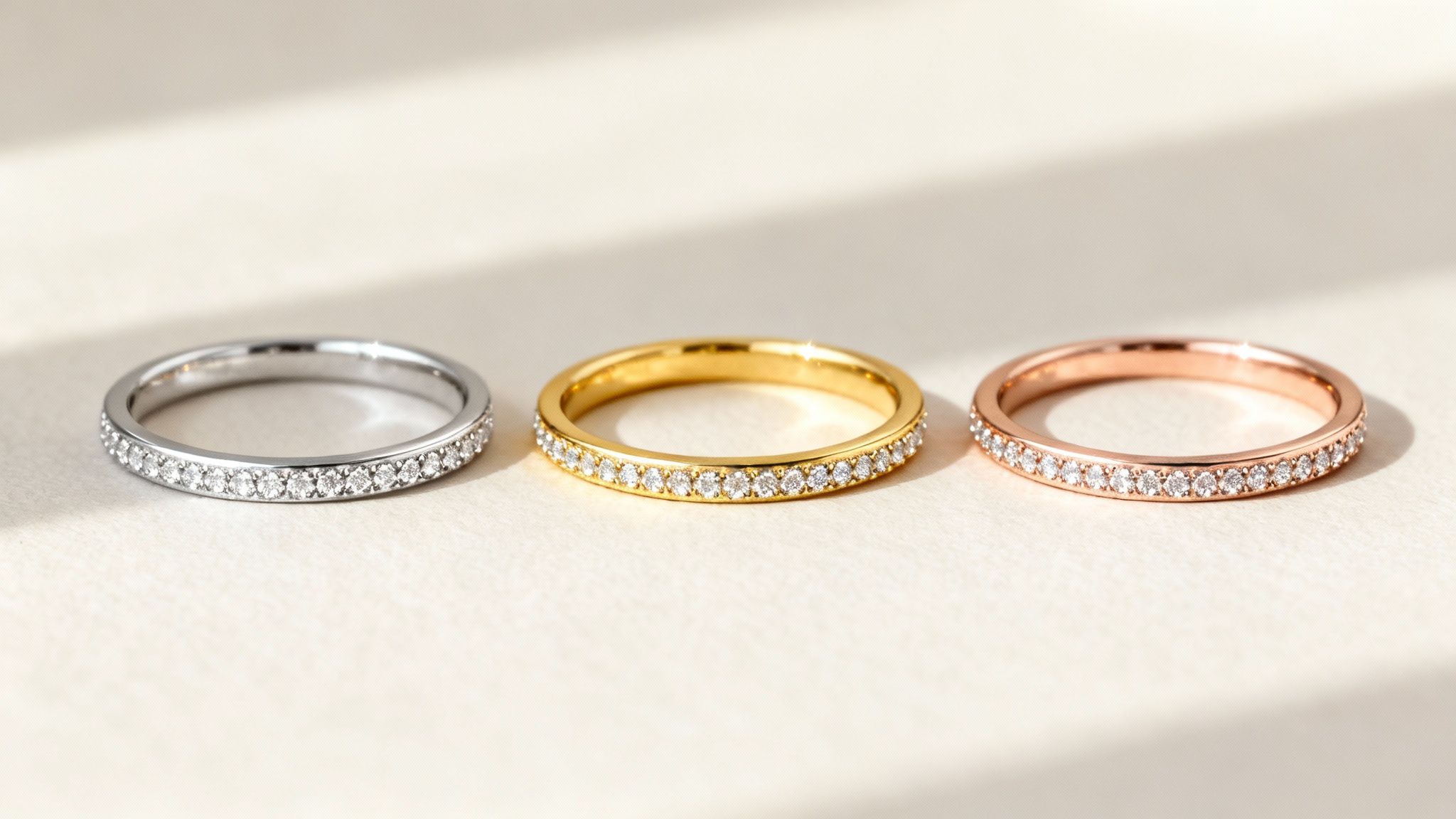
The Financial Side of Pavé
One of the biggest draws to a pavé setting is its cost-effectiveness. By using accent diamonds that are typically under 0.1 carats each, jewelers can bring the price down by 40-60% compared to a ring with larger stones.
And what about durability? The numbers are pretty reassuring. Industry analysis shows that only about 2-5% of pavé stones come loose over five years, assuming the ring is cared for properly. If you want to dive deeper, Diamond Nexus has a great article comparing different types of pavé diamonds.
Of course, the metal you choose plays a huge role in both the final price and how well the ring will stand up to daily life.
Platinum: This is the premium choice, known for its incredible strength and bright white shine. Because it's so dense, it holds those tiny pavé stones extra securely, though you'll pay more for that peace of mind.
Gold (White, Yellow, Rose): A timeless classic, gold strikes a nice balance between beauty and affordability. White gold mimics the look of platinum, while yellow and rose gold give off a warmer, more vintage vibe.
The metal you choose is more than just a color—it's the foundation of your ring's durability. A stronger metal like platinum offers greater long-term security for the delicate pavé diamonds, making it a worthwhile investment for an everyday piece.
Durability and Signs of Quality
While a well-made pavé ring is built for daily wear, its complex design means that quality craftsmanship is non-negotiable. The tiny metal beads or prongs holding each diamond in place are everything. If they're uneven, too small, or poorly shaped, you run a much higher risk of losing a stone.
When you're looking at a pavé ring, look for a smooth, consistent surface. All the diamonds should be set at the exact same height, creating what looks like an uninterrupted sheet of sparkle.
Run your finger gently over the top. Does it feel rough or snag on your skin? If so, move on. A high-quality, secure pavé setting should feel almost silky smooth. For a closer look at how different metals impact a ring’s strength, check out our guide on the types of metal for rings to find the perfect fit.
The Timeless History of Pavé in Jewelry Design
While it feels completely modern, the pavé setting actually has a rich history that goes all the way back to 18th-century Europe. Jewelers of the time were always searching for new ways to make a diamond’s fire even more brilliant, and covering a surface in tiny gems was a stroke of genius. The technique allowed them to craft dazzling, light-filled pieces that screamed opulence.
The style really hit its stride during the Edwardian era (1901-1910), a period known for its delicate, almost lace-like jewelry. Platinum had just become the metal of choice, and its strength meant designers could create incredibly fine, intricate settings. Pavé was the perfect match for the era’s signature filigree and milgrain details, creating an airy, romantic look that’s still loved today.
From Edwardian Lace to Art Deco Lines
As tastes changed, so did the way pavé was used. The Art Deco movement of the 1920s and 1930s swapped soft, nature-inspired curves for bold, geometric patterns. Pavé was cleverly adapted to create the sharp, glittering lines and striking halo shapes that defined the era’s iconic style. It’s this adaptability that proves just how timeless the setting really is. To see its legacy in action, you can look at various examples of antique jewelry where these intricate settings have been a feature for centuries.
The evolution of pavé across different design periods—from the flowing, nature-inspired curves of the Edwardian era to the crisp, architectural forms of Art Deco—showcases its remarkable versatility and enduring place in jewelry history.
Historical trends show its popularity was no accident. By the Edwardian period, pavé with filigree was found on 30% of ornate engagement rings. This set the stage for Art Deco, where platinum pavé halos made up a whopping 45% of sales in Europe. Later on, the famous "A Diamond is Forever" campaign supercharged the demand for rings in the U.S., with pavé becoming a key style for its stunning, yet affordable, sparkle. You can read more about the dazzling history of diamond engagement rings.
Caring for Your Pavé Ring to Ensure Lasting Sparkle
A pavé setting’s stunning sparkle comes from its intricate web of tiny diamonds, but that same design is what makes it a magnet for daily grime. The small crevices between the stones can easily trap lotions, oils, and dirt, which will quickly dull your ring’s fire. The secret to keeping it brilliant isn't complicated, but it does require a little mindful care.
Regular at-home cleaning is your first line of defense against buildup. You just have to be gentle—harsh methods can easily loosen the delicate settings over time.

Gentle At-Home Cleaning Guide
Follow these simple steps every few weeks to safely restore your ring’s shine. This process is designed to remove everyday grime without putting any stress on the pavé setting.
Prepare a Gentle Soak: Grab a small bowl, fill it with warm water, and add a few drops of mild dish soap. Steer clear of harsh chemicals like bleach or acetone, as they can damage the metal.
Soak Your Ring: Let your ring rest in the solution for about 15-20 minutes. This gives the soapy water enough time to loosen all the dirt and oils hiding between the stones.
Brush Softly: Use a very soft-bristled toothbrush (a baby toothbrush is perfect for this) to gently scrub around the pavé stones and underneath the setting. Be thorough, but not aggressive.
Rinse and Dry: Rinse the ring in a separate bowl of clean, warm water. To finish, pat it dry with a soft, lint-free cloth to prevent any water spots from forming.
Professional Check-ups and Lifestyle Habits
While cleaning at home keeps your ring sparkling day-to-day, professional maintenance is what ensures its structural integrity for the long haul. Make it a habit to visit your jeweler at least once a year for a deep cleaning and inspection. They have specialized tools to check that every tiny prong is secure, which dramatically reduces the risk of losing a stone.
A professional jeweler can spot a loose prong long before you can, preventing a small issue from becoming a costly repair. Think of it as essential preventative care for a treasured investment.
Finally, a few smart habits can go a long way. Always take your pavé ring off before doing any high-impact activities like working out, gardening, or cleaning with harsh chemicals. For more ideas, our detailed guide has great jewelry care tips to keep your pieces sparkling. These small adjustments are all it takes to protect your beautiful pavé setting for a lifetime.
Common Questions About Pavé Ring Settings
So, you're getting closer to picking out the perfect ring, and now the practical questions are starting to pop up. It’s smart to dig into the details of a pavé setting—it helps make sure the ring you love will also fit your life. Let's clear up some of the most common things people wonder about these intricate, diamond-dusted rings.
One of the biggest concerns is always resizing. Can you actually resize a pavé ring? The honest answer: it's tricky. Sizing a pavé band down is usually doable, but making it larger is a different story. It can stretch the metal and put stress on those tiny beads holding the diamonds, causing them to loosen. And if it's a full eternity band? Resizing is almost always off the table.
The best thing you can do is get your finger sized by a professional before you buy. Seriously. That one simple step can save you a world of trouble and potential heartache, ensuring your ring fits perfectly from the moment you put it on.
Is a Pavé Setting Secure for Everyday Wear?
Absolutely, as long as it’s a well-made ring. A high-quality pavé setting is designed to handle the normal bumps and scrapes of daily life. The two most important factors are craftsmanship and just being a little mindful when you wear it. You’ll want to avoid any hard knocks, so it's a good idea to take it off before hitting the gym, playing sports, or doing any heavy lifting.
To keep your ring secure and sparkling for years, here are a few things to keep in mind:
Feel for Quality: A great setting will feel smooth to the touch, never scratchy. The diamonds should all be set at a consistent height, and the tiny prongs holding them will look uniform.
Pick a Strong Metal: Going with a durable metal like platinum adds a nice layer of security. It's denser and holds those tiny stones in place more securely than softer metals.
Get an Annual Check-Up: Take your ring to a jeweler once a year for a quick inspection. They can spot and tighten any loose prongs before a stone has a chance to fall out, keeping your ring in flawless shape.
Follow these simple guidelines, and you can confidently wear your stunning pavé ring every single day. Its delicate beauty is tougher than it looks.
At Panther De Luxe Shop, we believe an informed choice is a confident one. Explore our exquisite collection of expertly crafted pavé rings and find the perfect symbol of your story at https://www.pantherdeluxe.com.
Comments