
What Does 925 Mean on Jewelry A Guide to Sterling Silver
- Luke Zucco
- Dec 20, 2025
- 12 min read

If you've ever glanced at a piece of silver jewelry, you might have noticed a tiny number stamped on it: 925. It’s easy to overlook, but that small mark is a huge deal. It’s not a model number or a random code; it’s a stamp of quality that tells you the piece is genuine sterling silver.
Specifically, "925" means the metal is 92.5% pure silver, with the remaining 7.5% made up of other metals, usually copper, to give it strength.
What That Little 925 Stamp Really Means
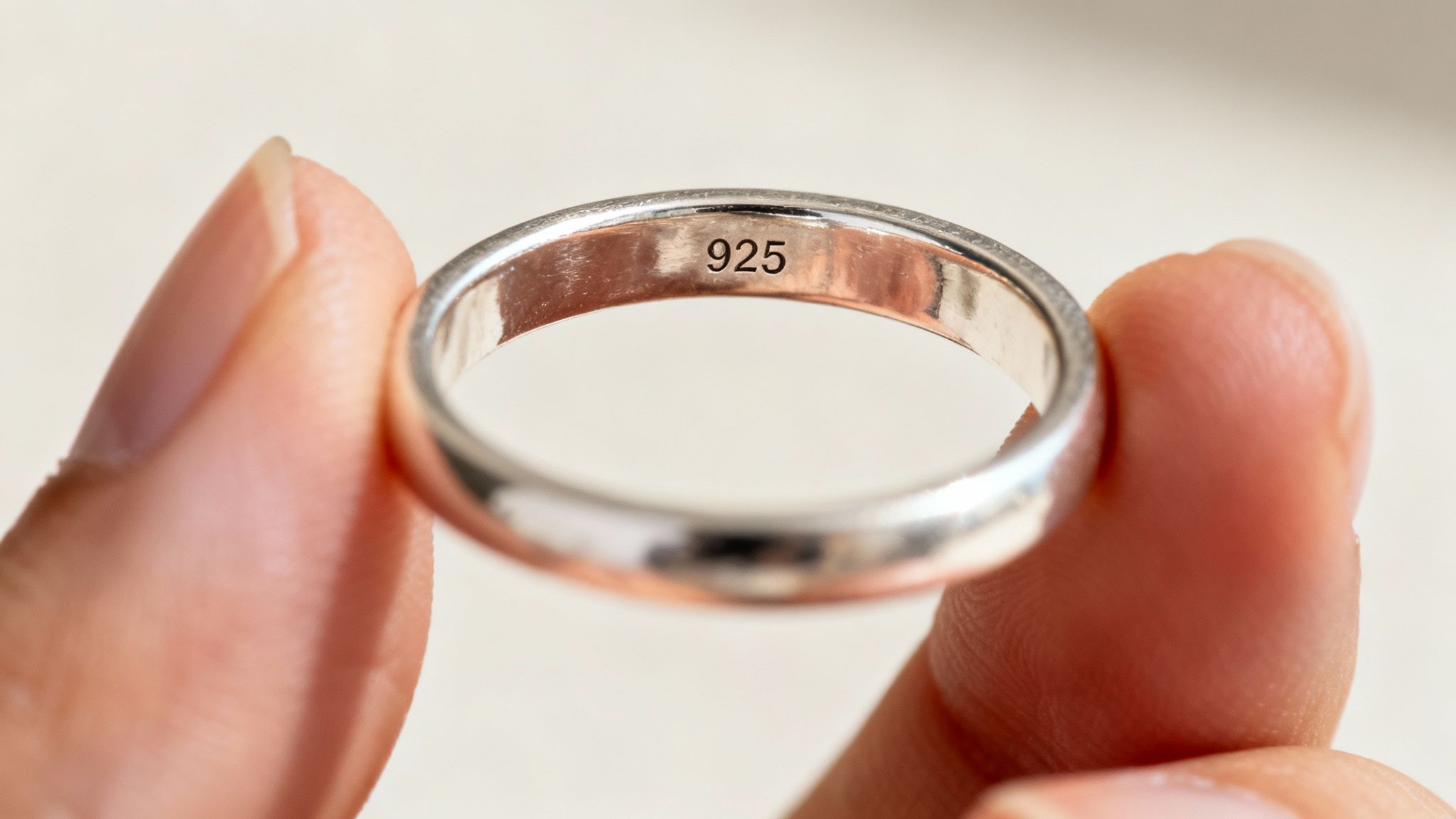
Think of that 925 stamp as a promise from the maker to you. It's a hallmark—a standardized mark that guarantees the metal's purity. Without it, you’d just be guessing.
Pure silver, also known as 999 or fine silver, is stunningly beautiful. The problem? It's incredibly soft. Seriously, you could easily bend a pure silver ring out of shape just by wearing it for a day. It’s simply not practical for jewelry meant to be worn and loved.
This is where the magic of alloying comes in. Jewelers figured out long ago that mixing pure silver with a small amount of a stronger metal, like copper, created a far more durable material. This blend is what we know and love as sterling silver.
Finding the Perfect Balance
The 925 standard isn't new; it's a time-tested recipe that delivers the best of both worlds. It strikes the perfect balance between the beauty of pure silver and the resilience needed for everyday wear.
This magical blend gives us:
Beauty and Value: With 92.5% silver, the metal keeps that unmistakable bright, white luster and its inherent precious value.
Strength for Daily Life: That extra 7.5% of alloy metals provides the hardness required to resist scratches, dents, and bending.
Workability for Artisans: This alloy is firm enough to hold its shape and set stones securely, yet soft enough for jewelers to craft intricate, beautiful designs.
The 925 hallmark is more than a number—it’s a guarantee. It tells you the item meets a global standard for sterling silver, protecting you from purchasing lower-quality or plated items masquerading as solid silver.
Understanding what 925 means on jewelry is the first step toward becoming a more confident and savvy buyer. This mark, along with others, is part of a language used by jewelers to communicate quality. To become fluent, check out our quick guide to identifying jewelry hallmarks.
925 Sterling Silver vs Pure Silver At a Glance
To really see why sterling silver is the go-to for jewelry, it helps to put it side-by-side with pure silver. The differences are pretty clear.
Characteristic | 925 Sterling Silver | 999 Fine Silver (Pure) |
|---|---|---|
Purity | 92.5% pure silver, 7.5% alloy metals | 99.9% pure silver |
Durability | Hard, strong, and scratch-resistant | Very soft, easily bent and scratched |
Best For | Everyday jewelry like rings, necklaces, bracelets | Investment bullion, delicate ceremonial pieces |
Appearance | Bright, white luster that can tarnish over time | Extremely bright, almost glowing appearance |
Hallmark | "925," "STER," "STG," or "Sterling" | "999" or "Fine Silver" |
As you can see, while pure silver wins on purity, 925 sterling silver is the clear winner for any piece you plan to wear. It’s the practical, beautiful standard that lets us enjoy the luxury of silver without having to treat it like a museum piece.
Uncovering the History Behind the 925 Mark
That little "925" stamp on your jewelry is more than just a number—it’s a mark of quality with a story that goes back centuries. It all started with a simple problem: pure silver, for all its beauty, is way too soft for everyday life. Early artisans and even kings found that coins and jewelry made from pure silver would bend, dent, and wear down in no time.
This led to a brilliant solution: alloying. By mixing pure silver with a small amount of a stronger metal (usually copper), craftsmen created a material that was both gorgeous and surprisingly durable. This simple fix was so effective it became the foundation for a worldwide quality standard.
The Rise of the Sterling Standard
The idea of "sterling" really started to take shape in medieval Europe. The term itself is thought to have popped up in 12th-century England, not long after the Norman Conquest of 1066. New coins marked with tiny stars, or 'steorling' in Old English, became the benchmark for purity: 925 parts silver per 1000. This created a reliable currency that fueled trade across the continent. In fact, by 1300, silver coins made up about 60% of all European transactions, which shows just how crucial a trustworthy standard was. You can learn more fun facts about the evolution of sterling silver jewellery.
As commerce boomed, so did the need to protect people from getting ripped off with fake or diluted silver. This is where medieval silversmith guilds stepped in. These powerful groups set strict rules, enforcing the 92.5% silver standard and holding everyone accountable. This protected both the maker's reputation and the buyer's wallet. They were the ones who started stamping finished pieces with official marks, or hallmarks, to certify their purity.
This hallmarking system completely changed the game. A tiny stamp became a powerful guarantee of authenticity. It meant merchants and customers could trade with confidence, knowing the metal was exactly what it claimed to be.
From Medieval Guilds to Modern Jewelry
The trust and quality established by those medieval guilds live on today. That 925 stamp is a direct descendant of those first hallmarks, and it does the exact same job: it tells you that you're buying genuine, high-quality sterling silver. It’s a symbol that carries centuries of craftsmanship, economic history, and a promise of lasting value.
So, when you spot that "925" on a piece of jewelry, you're not just seeing a number. You're seeing the end result of a thousand-year quest to find the perfect balance between silver's incredible beauty and the strength needed to last a lifetime. It connects your modern piece to a long and fascinating history of art, trade, and trust.
How to Identify Authentic Sterling Silver
Knowing your jewelry is the real deal transforms a simple purchase into a lasting treasure. While the "925" stamp is the most common sign of sterling silver, spotting genuine pieces goes beyond just one mark. With a few simple tricks up your sleeve, you can learn to distinguish true silver from convincing lookalikes.
The first step is always a close look. Check for a quality stamp, known as a hallmark, tucked away in a discreet spot—think the inside of a ring or on a necklace clasp. While "925" is the global standard, other marks also give genuine sterling silver away.
Decoding Common Sterling Silver Hallmarks
Not all authentic silver is stamped with "925." Different countries and time periods used their own unique marks to certify the 92.5% silver purity. Getting familiar with these variations will make you a much savvier collector.
For example, you might see STER (an abbreviation for Sterling, common on American pieces) or SS (a simple shorthand for Sterling Silver). Sometimes, you’ll just see the word Sterling spelled out, which is a clear indicator often found on older or high-end items.
Keep in mind that the absence of a stamp doesn’t automatically mean a piece is fake, especially with vintage or artisan-made jewelry. But when a stamp is present, it’s a strong first sign of authenticity. For a deeper dive, you can check out our guide on how to tell real jewelry from fake.
To make it even easier, here's a quick guide to some of the most common hallmarks you'll find.
Common Hallmarks on Sterling Silver Jewelry
Hallmark / Stamp | Meaning | Common Regions |
|---|---|---|
925 | The international standard for 92.5% pure silver. | Worldwide |
Sterling or STER | A clear declaration of sterling silver purity. | USA, UK, Canada |
SS | A simple abbreviation for "Sterling Silver." | USA |
Lion Passant | A historical English mark depicting a walking lion. | United Kingdom |
Minerva Head | The French symbol for first-standard silver (950 or 925). | France |
Knowing these stamps helps you quickly identify pieces from different parts of the world. It’s like a passport for your jewelry.
Simple At-Home Tests for Authenticity
After you’ve hunted for hallmarks, there are a few easy, non-destructive tests you can do at home to be extra sure. These methods are great for weeding out fakes made from plated metals or stainless steel.
The magnet test is hands-down the easiest and most reliable at-home method. Sterling silver is not magnetic. If a magnet snaps right onto your jewelry, it’s a dead giveaway that the piece isn’t genuine.
Here are two quick tests anyone can do:
The Magnet Test: Grab a strong magnet—the kind from your fridge probably won’t cut it, so try to find a neodymium magnet. Hold it right next to your jewelry. Real sterling silver has no magnetic attraction. If you feel a slight pull, it could just be the steel spring inside the clasp, but the main body of the piece should be completely non-reactive.
The Weight and Feel Test: Sterling silver has a satisfying heft. If a piece feels surprisingly light for its size, you might be holding a plated fake. Genuine silver just feels solid and substantial in your hand—it has a density you can notice.
By combining a good look for hallmarks with these simple physical tests, you can feel confident about the quality of your silver. These quick checks empower you to spot the real thing and ensure your favorite pieces are built on true, lasting value.
Sterling Silver Compared to Other Metals
Not everything that glitters is silver—at least, not solid silver. When you’re shopping for jewelry, you’ll run into all sorts of silver-colored metals. Knowing the difference is what separates a smart purchase from a disappointing one. While 925 sterling silver is a high-quality, trusted standard, it's often compared with more affordable, but far less valuable, lookalikes.
The most common imposter is silver-plated jewelry. Think of it like a car with a fresh coat of paint. On the surface, it’s shiny and beautiful, but underneath is a less expensive base metal, usually copper or brass. A microscopic layer of pure silver is electroplated onto this core. It looks great at first, but that thin layer inevitably wears away, exposing the different-colored metal beneath.
Lasting Value Versus Temporary Shine
Sterling silver, on the other hand, is a solid precious metal alloy through and through. Its color and composition are the same on the inside as they are on the outside. This means that even if it gets a scratch, the material underneath is still sterling silver. Its value comes from its high precious metal content—that 92.5% pure silver.
This simple breakdown shows you a few easy ways to spot the real deal.
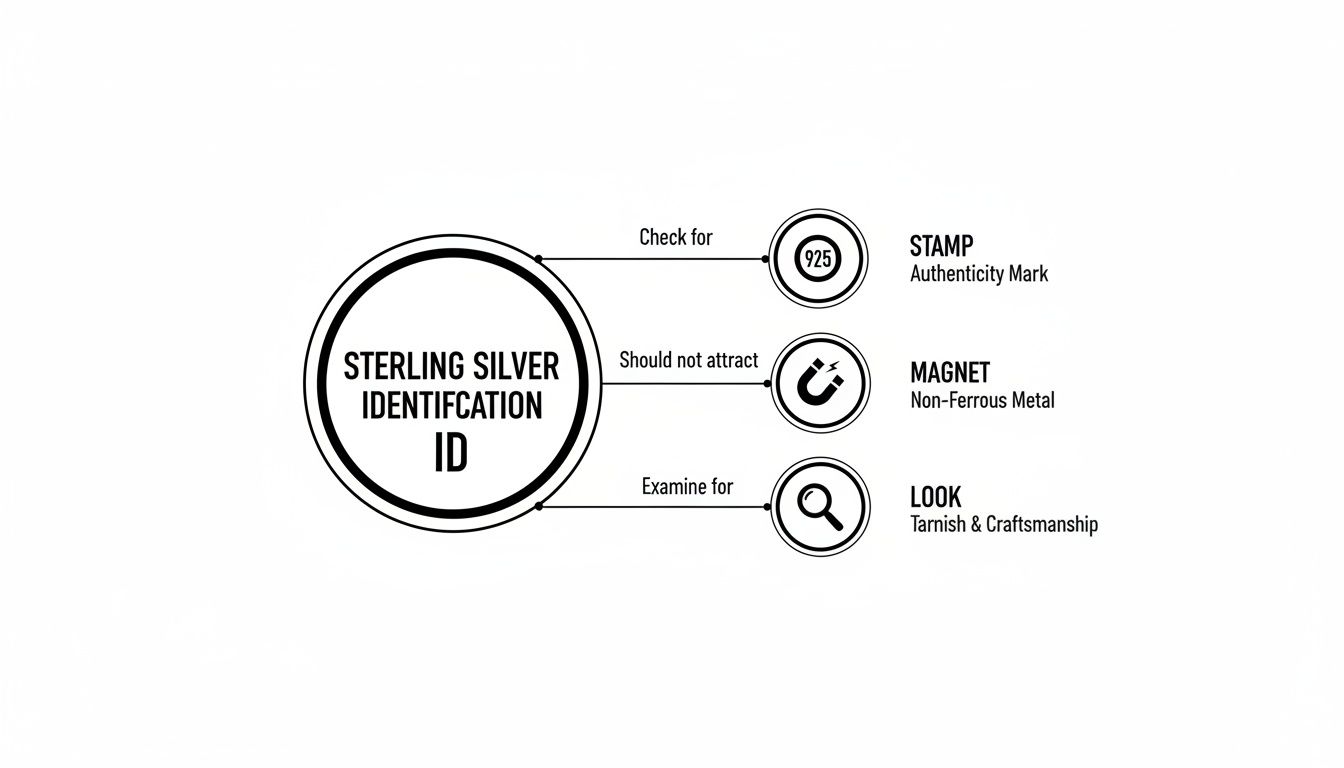
As you can see, checking for a stamp, testing with a magnet, and giving the piece a careful inspection are your best first steps for identifying genuine sterling silver.
This dedication to purity isn’t new. The 925 sterling silver standard has been building market trust for centuries, with roots stretching back to 12th-century European commerce where inconsistent purity often led to fraud. This prompted a 1275 English statute defining sterling as a minimum of 92.5% silver—a law that’s still active in the UK and now followed by roughly 80% of nations worldwide. You can read more about the history of this standard on Wikipedia.
Understanding Other Silver Alternatives
Beyond plated items, you might also see metals called "nickel silver" or "alpaca silver." Don't let the names fool you—these alloys contain zero actual silver. They are typically a mix of copper, nickel, and zinc, chosen purely for their silvery look and low cost.
Here’s a quick comparison:
925 Sterling Silver: A precious metal alloy. It’s durable, valuable, and hypoallergenic for most people.
Silver-Plated: A base metal core with a whisper-thin silver coating. The silver wears off, and the metal underneath can cause skin irritation.
Nickel Silver: A silver-colored alloy with no silver at all. It’s cheap but is a common culprit for allergic reactions in people with nickel sensitivity.
Choosing 925 sterling silver is an investment in longevity. While plated jewelry offers a budget-friendly way to try out a trend, solid sterling provides enduring beauty and value you can wear for a lifetime. It’s the difference between a fleeting look and a lasting treasure.
Caring for Your Sterling Silver Jewelry
One of the first questions people ask about 925 silver is about tarnish. So, let’s clear the air—tarnishing is a completely natural chemical reaction, not a flaw. It’s what happens when silver meets sulfur compounds floating in the air, creating that familiar dark layer on the surface.
Think of it like a beautiful leather jacket developing a rich patina over time. It’s a sign of the material’s authentic character. The best part? With just a little attention, you can easily manage tarnish and keep your sterling silver looking brilliant for decades.
Gentle Cleaning at Home
You absolutely don’t need harsh chemicals to bring back your jewelry's shine. In fact, aggressive cleaners often do more harm than good, leaving tiny scratches on the metal or damaging delicate details. When it comes to silver, simple and gentle is always the way to go.
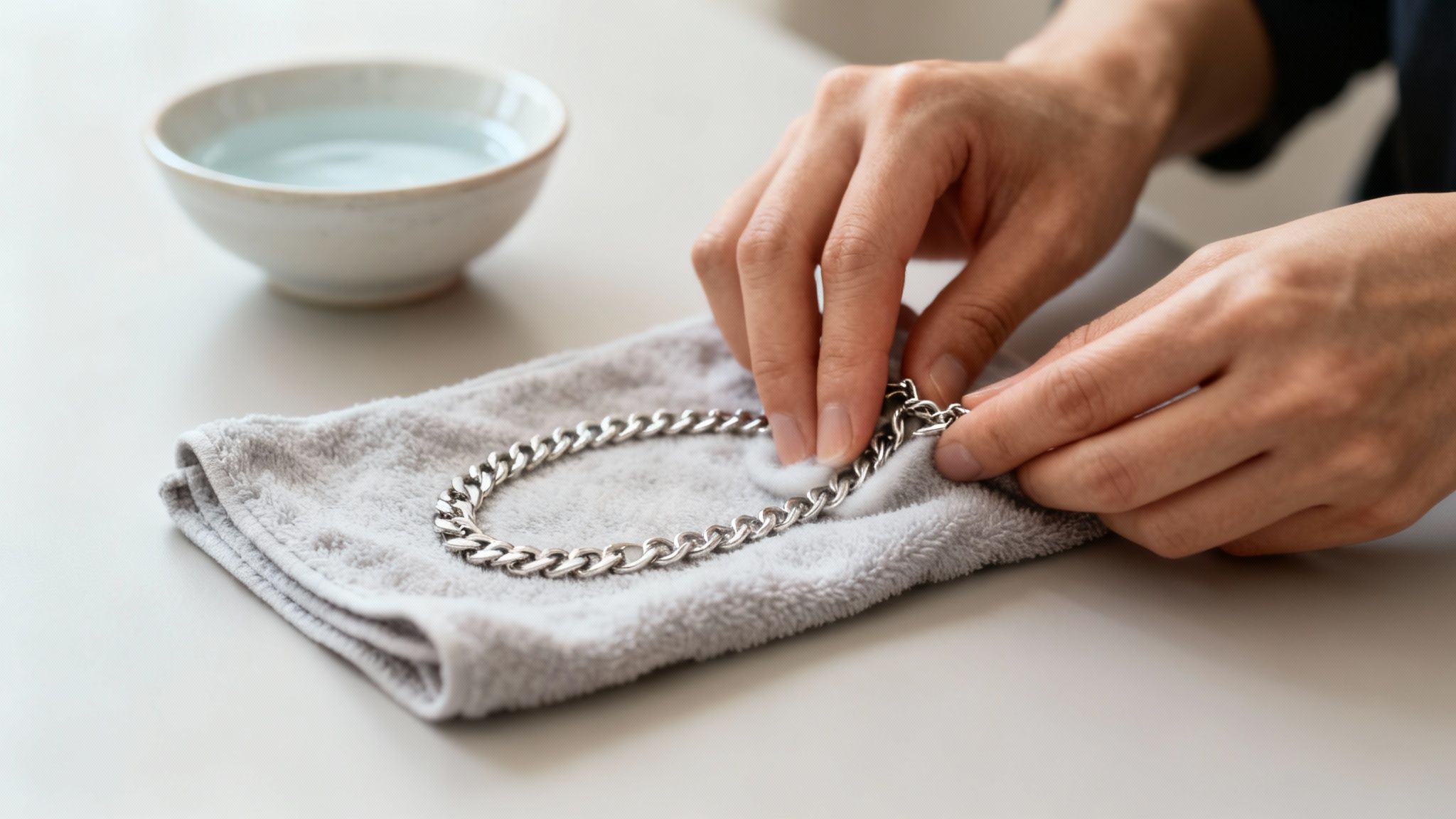
For daily upkeep, a soft, lint-free polishing cloth is your best friend. A quick wipe-down after you wear your pieces removes the oils and residues that can speed up tarnishing. For a deeper clean, a bit of mild soap and warm water work wonders. We’ve laid out all the steps in our complete guide on how to clean silver jewelry and make it shine again.
Pro Tip: Never use toothpaste, baking soda pastes, or any other abrasive material to clean your silver. These might seem like a quick fix, but they create microscopic scratches that will permanently dull its beautiful luster.
Smart Storage Makes All the Difference
How you store your jewelry is just as important as how you clean it. Since exposure to air is what kicks off the tarnishing process, limiting that contact is the key to keeping your pieces pristine. The right storage can dramatically slow everything down.
Here are a few easy storage habits to get into:
Go Airtight: Keep your pieces in a jewelry box with a snug lid or even a simple zip-top plastic bag.
Use Anti-Tarnish Strips: These little paper strips are genius. They absorb airborne sulfur, stopping tarnish before it even starts.
Give Them Space: Storing each item by itself prevents your pieces from scratching against each other.
Following these simple rules will cut down your cleaning time significantly. For a deeper dive, there are some fantastic resources out there explaining how to care for sterling silver with practical, easy-to-follow advice. With just a little care, your 925 sterling silver will remain a shining, beautiful part of your collection.
Why Choose 925 Silver for Your Collection
When you’re building a jewelry collection, the sheer number of options can be overwhelming. So why does 925 sterling silver remain such a smart, beloved choice? It really boils down to a perfect trifecta of qualities that have made it a cornerstone of the industry for centuries.
One of its most celebrated features is how gentle it is on sensitive skin. Because it’s made of 92.5% pure silver, it’s naturally hypoallergenic for the vast majority of people. Those annoying skin reactions from cheaper jewelry are almost always caused by nickel, an alloy you’ll rarely find in high-quality sterling silver. This purity means you can wear your favorite pieces all day, every day, without a second thought.
An Unbeatable Combination of Qualities
Beyond being skin-friendly, 925 silver hits a sweet spot that few other metals can. It gives you the brilliant luster and luxurious feel of a precious metal, but without the intimidating price tag of gold or platinum. This unique balance makes it both accessible enough for everyday wear and valuable enough to be treasured.
You really get the best of all worlds with sterling silver:
Durability: The added alloys give it the strength it needs to stand up to daily life, making it perfect for everything from delicate necklaces to bold statement rings.
Affordability: You get a high-end look at a price that lets you build a diverse, exciting collection without breaking the bank.
Versatility: Its bright, cool tone is a perfect match for any gemstone and works with every style imaginable—from clean, modern designs to ornate, vintage-inspired pieces.
Choosing 925 sterling silver is an investment in both style and substance. It’s a material that’s strong enough for life, beautiful enough for any occasion, and valuable enough to be treasured for years.
Ultimately, this perfect balance is what gives 925 silver its staying power. It isn't just about what 925 means on jewelry from a technical standpoint; it's about the real-world value it delivers. It’s a durable, beautiful, and accessible precious metal that serves as the foundation for countless timeless collections.
A Few Common Questions About Sterling Silver
Once you start building your collection, a few practical questions always pop up. Knowing the ins and outs of owning 925 sterling silver means you can wear your favorite pieces with total confidence. Let's get into some of the most common ones.
Will Sterling Silver Tarnish or Turn My Skin Green?
Let's clear this up right away: yes, all real sterling silver will tarnish. It’s not a flaw or a sign of poor quality—it's just a natural chemical reaction when silver meets sulfur in the air. The great news is that tarnish is only on the surface and is incredibly easy to clean off, bringing back that brilliant, like-new shine in minutes.
As for the dreaded green skin? That’s extremely rare with 925 silver. That greenish tint usually comes from a reaction to high levels of copper. Since sterling silver is 92.5% pure silver, there’s just not enough copper in the mix to cause an issue for most people, though everyone's unique body chemistry can play a small role.
Is 925 Sterling Silver a Good Investment?
While sterling silver is absolutely a precious metal, it’s better to think of it as an investment in a high-quality, personal collection that will last for years—not a financial asset like gold bars. Its true value is in its durability, timeless appeal, and the fact that it’s miles ahead of cheap, plated alternatives.
A piece of 925 silver jewelry holds its value far better than costume jewelry. It’s an investment in beautiful craftsmanship and personal style that you can wear and love for a lifetime.
Can I Wear My 925 Silver Jewelry in the Shower?
It’s really best if you don’t. A quick, accidental splash won’t cause any harm, but making a habit of it will speed up the tarnishing process. Soaps, shampoos, and even the minerals in tap water can leave a dull film on the metal's surface over time.
To keep your silver looking its best and cut down on polishing, just make it a habit to take your pieces off before showering, swimming, or getting in a hot tub. It's a simple step that makes a huge difference in preserving its shine for years to come.
At Panther De Luxe Shop, we believe beautiful jewelry is meant to be worn and loved without worry. Take a look at our curated collection of genuine 925 sterling silver pieces, all designed to last a lifetime. https://www.pantherdeluxe.com
Comments