
Is Jewelry a Good Investment? Expert Tips & Insights
- RASEL ISLAM
.jpg/v1/fill/w_320,h_320/file.jpg)
- Jun 16, 2025
- 15 min read
Understanding How Jewelry Really Works as an Investment
Is jewelry a good investment? It's a complicated question, kind of like trying to figure out the best cut for a diamond. Unlike stocks, where you're essentially buying a piece of a company’s future, jewelry investing is different. You’re looking at the craftsmanship, the materials, how rare it is, and even its place in culture. It's like comparing investing in a tech startup to investing in a vintage wine – both can increase in value, but the reasons why are totally different.
Imagine a vintage Cartier watch. Over a decade, it might double in value because of its history and timeless design. Now picture a generic gold chain from a department store. That might lose value the second you leave the store because of things like branding and how it was made. This really shows the difference between seeing jewelry as something valuable and seeing it as a get-rich-quick scheme.
Factors Affecting Jewelry's Investment Potential
What makes a piece of jewelry go up or down in value? Several things. Material value is key. Precious metals like gold and platinum have a base value that goes up and down with market prices. The quality and rarity of gemstones matters too. A big, flawless diamond is naturally worth more than a smaller, imperfect one.
But it’s not just about the materials. Craftsmanship and design are just as important. A handmade piece by a famous designer will be worth way more than something mass-produced. Then there's provenance, meaning the piece's history. Was it owned by someone famous or historically important? That can dramatically increase its price. You might find this interesting: Jewelry Through Time: A Complete History Guide – it really digs into how history affects jewelry value.
Market Dynamics and Jewelry Investment
Thinking about jewelry as an investment means looking at the bigger picture of the industry. In the United States, the jewelry market has grown a lot. Revenue is expected to hit about $68.4 billion by 2025, with a 5.7% annual growth rate over the last five years. High-end, personalized jewelry is popular right now, but after 2025, things might slow down because of factors like fewer marriages. This link offers more insights into the jewelry market. Even with a potential slowdown, certain luxury items, especially those with historical or cultural significance, can still gain value. But keep in mind, their performance is often linked to overall market demand and the economy.
So, investing in jewelry needs careful thought. Just like you'd research stocks, you should research jewelry. Look at past trends, understand what affects pricing, and realize you could gain or lose money. The jewelry market has its ups and downs, driven by the economy, fashion, and even world events. Knowing this is key to making smart investment choices.
The Investment Showdown: How Jewelry Measures Up
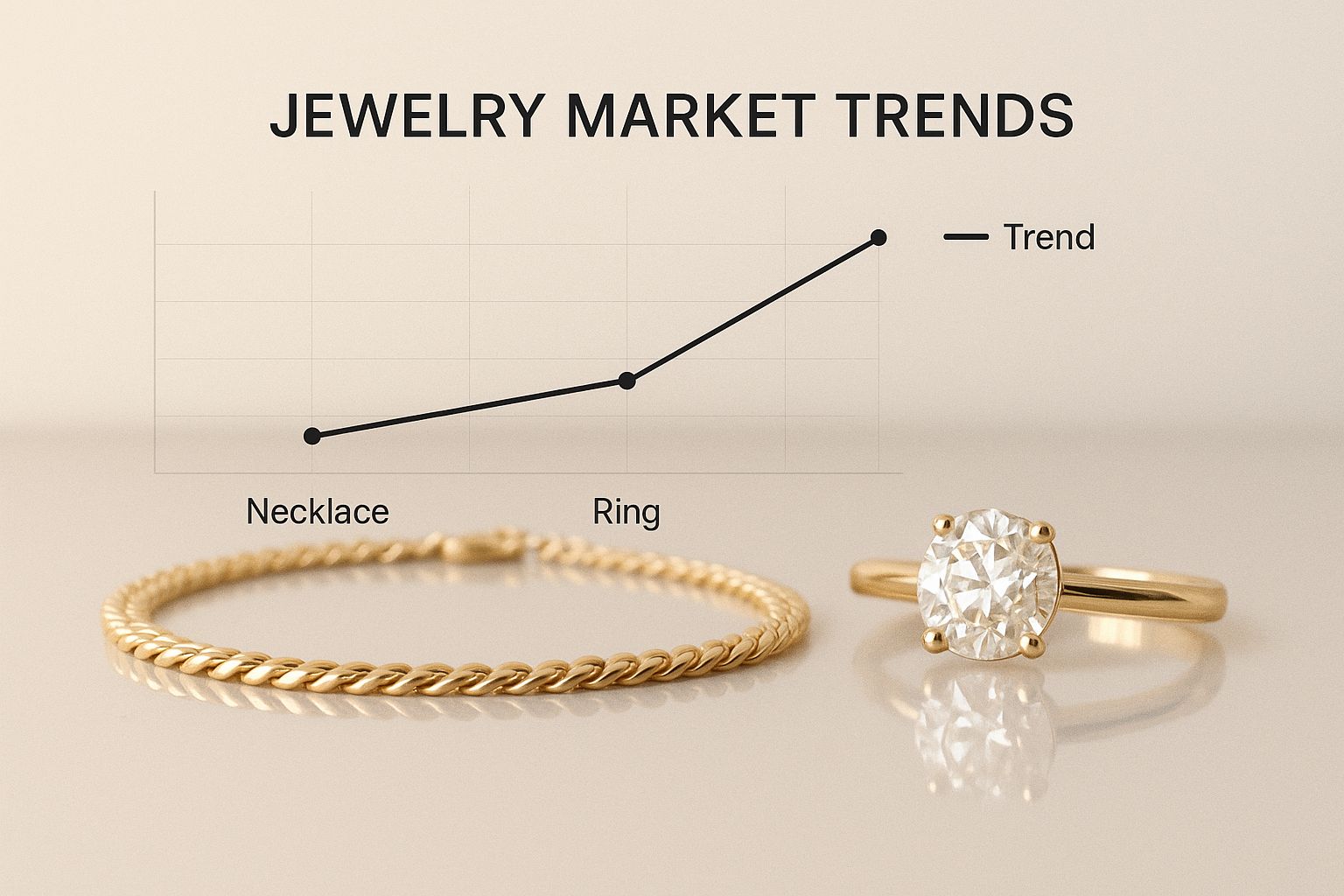
The infographic above depicts a gold necklace and diamond ring alongside a gently rising graph, hinting at jewelry's potential for growth. It’s a visual reminder that while jewelry can increase in value, it’s not always as predictable as other investments. This begs the question: is jewelry a smart investment? To find out, let's compare it to the heavy hitters of the investment world – stocks, bonds, and real estate. Think of your investment portfolio as a sports team. You wouldn't want only one type of player. You need a diverse group with different strengths. Jewelry can be that unique player, bringing its own set of advantages and disadvantages.
Jewelry vs. Traditional Investments: A Head-to-Head
One key difference is liquidity. Stocks and bonds are easy to sell quickly, like exchanging chips at a casino. Real estate takes more time, similar to selling a house. Jewelry, particularly unique pieces, can be even more challenging. Finding the right buyer who appreciates its value can require patience. This makes jewelry less suitable if you anticipate needing quick access to your funds.
Another factor is volatility. Stocks can swing dramatically, like a rollercoaster. Bonds are generally more stable, like a sailboat on a calm lake. Real estate falls somewhere in between. Jewelry's volatility depends on the specific piece. The value of gold jewelry is tied to the price of gold, which can fluctuate. Diamonds and gemstones are influenced by trends and rarity. A rare vintage piece might steadily appreciate, while a mass-produced diamond ring might not.
Then there’s market correlation. When the stock market dips, bonds often perform well, providing a cushion. Real estate tends to march to its own beat. Jewelry can be unpredictable. During economic downturns, some investors seek tangible assets like gold, potentially boosting the value of gold jewelry. Other jewelry might not be as affected by stock market swings.
Let's consider gold specifically. When comparing jewelry to other luxury assets like gold, historical data reveals that gold has demonstrated more consistent growth over time. From January 1971 to December 2022, gold provided average annual returns of roughly 7.78%, with a CAGR of about 8.5% after 1971. High-quality diamonds, in contrast, have a CAGR of around 2.6% over a similar period. Discover more insights on the historical performance of precious metals. This highlights the variability of jewelry’s investment performance.
To further illustrate these comparisons, let's look at the table below:
Investment Performance Comparison: Jewelry vs Traditional Assets A comprehensive comparison showing average annual returns, volatility levels, and liquidity factors across different asset classes including jewelry, gold, stocks, and real estate.
Asset Type | Average Annual Return | Volatility Level | Liquidity Rating | Market Correlation |
|---|---|---|---|---|
Jewelry | Varies widely (2.6% for diamonds) | Moderate to High | Low to Moderate | Low to Moderate |
Gold | 7.78% (1971-2022) | Moderate | High | Low |
Stocks | Varies widely (Historically around 10%) | High | High | High |
Real Estate | Varies widely (Historically around 4-5%) | Moderate | Low | Moderate |
This table summarizes the key differences in how these asset classes behave. Note the wide range of potential returns for jewelry, underscoring the importance of careful selection. Gold offers a more stable and historically higher return, while stocks offer potentially higher returns but with significantly higher volatility. Real estate occupies a middle ground in terms of returns and volatility but has lower liquidity.
The Role of Jewelry in Wealth Preservation
While jewelry may not consistently offer the same predictable returns as traditional investments, it holds a distinct role for some affluent families. It serves as a means of wealth preservation, passed down through generations. It's more than inheriting a stock certificate; it's inheriting a piece of family history. This tangible connection to the past imbues jewelry with a unique emotional value that traditional investments simply can’t replicate. So, while the question “Is jewelry a good investment?” requires careful thought, its unique qualities can add a valuable dimension to a well-rounded investment approach.
The Hidden Market Forces That Make or Break Jewelry Values
Ever wonder what makes one diamond necklace worth a king's ransom while another, seemingly similar, fetches a more modest price? The answer lies in the intricate dance of market forces that subtly, yet powerfully, influence jewelry values. Think of it like an invisible hand guiding prices, sometimes lifting them to dazzling heights, other times letting them gently settle.
Economic Tides: Gold, Inflation, and Global Markets
The price of gold, that ever-alluring precious metal, acts like a powerful tide affecting the entire jewelry market. When the global economy gets choppy, investors often seek the safe harbor of gold. This surge in demand pushes gold prices upwards, making your gold jewelry more valuable. Imagine a central bank deciding to buy tons of gold – that single decision can make your grandmother's gold earrings worth more overnight! On the flip side, a calm economic sea can lower the demand for gold, potentially causing a dip in jewelry prices.
Inflation also plays a key role. As the cost of everything goes up, so too does the cost of creating jewelry, from precious metals and gemstones to the artisan's labor. This, naturally, leads to higher prices. But here's the catch: higher prices don't always mean a better return on your investment. If inflation is at 5% and your jewelry only appreciates by 3%, you’re essentially losing purchasing power.
Cultural Currents: Shifting Trends and Societal Attitudes
Beyond the realm of economics, cultural trends act like powerful currents, shaping what's considered desirable and, consequently, valuable. Think about wedding traditions. Changes in marriage rates can influence demand. A decline in traditional weddings might decrease the demand for classic engagement rings while simultaneously boosting the popularity of vintage or art deco pieces. So, while a solitaire diamond might hold its value, a unique vintage ring could appreciate significantly. For a deeper dive into identifying real gold, check out this helpful guide: How to Tell Real Gold From Fake.
Increasingly, societal values are also coming into play. Ethical sourcing and sustainability are now major considerations for many consumers. Demand for jewelry made with recycled materials or ethically mined gemstones is on the rise, potentially increasing their value. It’s not just about the sparkle anymore; it's about the story behind the piece. This shift towards conscious consumerism is reshaping the jewelry landscape. This is reflected in global trends. In 2023 alone, central banks added 1,037 tonnes of gold to their reserves – the second-highest yearly purchase on record! This hints at gold's continued appeal as a safe investment. Learn more about the increasing demand for gold. Meanwhile, shifting societal attitudes are creating ripples throughout the jewelry market.
Understanding the Interplay for Savvy Investment
So, is jewelry a good investment? The answer, like the market itself, is multifaceted. It hinges on understanding the intricate interplay of economic indicators, cultural shifts, and evolving social values. By keeping an eye on these factors, you can begin to anticipate market movements and make informed decisions. This allows you to see jewelry not just as a beautiful adornment but as a potential asset influenced by a dynamic world. It’s this understanding that separates the casual buyer from the savvy investor.
Why Sophisticated Investors Are Adding Jewelry to Their Mix
There's a certain appeal to owning beautiful things that also increase in value over time. Is jewelry a good investment? For the discerning investor, the answer is increasingly yes. But it's not just about the sparkle. It's about tangible assets and a unique set of advantages that traditional investments sometimes lack. Imagine wearing your investment to a gala – that's the kind of direct ownership appeal we're talking about.
More Than Just Glitter: The Unique Allure of Jewelry
Why are high-net-worth individuals adding jewelry to their portfolios? Well, imagine this: jewelry can act as a safeguard against currency fluctuations. When the value of a currency dips, the underlying worth of the precious metals and gemstones can offer stability. It's a bit like owning a small plot of land – something real and valuable – in an uncertain financial world.
Jewelry also offers portfolio diversification. Stocks and bonds can often rise and fall together. Jewelry, however, dances to its own tune. This independent performance can cushion your portfolio against overall market swings. Think of it like adding real estate to a portfolio heavy on tech stocks.
Furthermore, jewelry offers the appealing combination of practical use and potential appreciation. Unlike a stock certificate kept in a safe deposit box, you can wear and enjoy your jewelry while it potentially increases in value. It's an investment you can experience every single day.
Beyond Financial Returns: The Intangible Benefits
The attraction of jewelry investment goes beyond simple financial returns. There can be tax benefits associated with collectibles, making jewelry a potentially useful tool for estate planning. Passing down a cherished piece of jewelry becomes more than just transferring wealth; it’s sharing a tangible piece of family history – a much more meaningful legacy than a bank transfer.
This idea of legacy connects to another significant factor: the emotional reward of building generational wealth through beautiful, enduring objects. It’s about creating a legacy that is both financially secure and emotionally rich.
Finally, there's the simple pleasure of owning something beautiful. The joy of admiring a stunning gemstone or the intricate detail of a vintage piece adds a non-monetary value to the investment. It's about appreciating artistry and beauty while also potentially building wealth.
The Sophisticated Investor's Perspective
Is jewelry a good investment? Savvy investors know it's not a get-rich-quick scheme. It requires research, patience, and a keen eye for quality. But for those willing to understand the market, jewelry can provide a compelling blend of financial and emotional returns. It’s not just about the potential to make money; it's about building a legacy of beauty and value that lasts for generations. This broader view of investing is why jewelry is increasingly finding its place in the portfolios of those who have a wide range of investment options.
The Hard Truths About Jewelry Investment Pitfalls
While the glitter of gemstones and the gleam of precious metals can be captivating, jewelry investment isn't without its challenges. It’s like venturing into a hidden cave – beautiful treasures may await, but there are also hidden dangers to navigate. Is jewelry a good investment? It can be, but it's not a guaranteed path to riches. Let’s illuminate some of the less glamorous aspects that can trip up even seasoned investors.
Liquidity Challenges: Turning Jewels into Cash
Imagine needing to sell a piece of jewelry quickly. Unlike stocks or bonds, which can be sold almost instantly through online platforms, jewelry doesn't offer the same liquidity. Think of it like owning a vintage car versus a late-model sedan. The sedan is much easier to sell quickly. Finding the right buyer for your jewelry, especially if it's a unique or antique piece, can take time and effort. You might not get the price you hoped for if you need to sell quickly.
Authentication and Appraisal Hurdles: Is It the Real Deal?
The world of jewelry is unfortunately not immune to counterfeits. Picture buying what you believe to be a rare sapphire, only to later discover it's a synthetic look-alike. Authentication is essential, and getting a piece appraised by a qualified gemologist is a crucial step. This, of course, adds to the cost of your investment. Think of it like getting a home inspection before you buy – it's an added expense, but it protects you from potentially costly surprises down the road.
The Hidden Costs: Insurance, Storage, and Maintenance
The price tag on that stunning necklace isn't the end of the story. Owning valuable jewelry comes with ongoing costs. You'll need insurance to protect against theft or loss. Secure storage is also important, especially for high-value pieces. Then there's maintenance – cleaning, polishing, and occasional repairs. These expenses can add up over time and impact your overall return on investment. It's like owning a boat – the initial purchase price is just the beginning.
Market Manipulation and Price Volatility: Riding the Rollercoaster
The jewelry market, like any other, is subject to fluctuations and trends. Prices can be influenced by everything from economic conditions to celebrity endorsements. Imagine a sudden surge in popularity for a particular gemstone. The price might skyrocket, only to plummet just as quickly when the trend fades. This price volatility is a risk to consider. It's like surfing – you need to be prepared for both the exhilarating highs and the potential wipeouts.
The Emotional Factor: Separating Sentiment from Investment
Jewelry often carries sentimental value, making it harder to make objective investment decisions. Think of a family heirloom passed down through generations. Its emotional significance might outweigh its monetary value, making it difficult to sell even if it's a smart financial move. This emotional attachment can cloud your judgment and complicate investment decisions.
Understanding these potential pitfalls doesn’t mean you should avoid jewelry investment altogether. It simply means you need to approach it with realistic expectations and a healthy dose of caution. Do your homework, get expert advice, and be prepared for the long haul. With the right knowledge and approach, you can navigate the complexities of the jewelry market and potentially uncover some real gems.
Your Strategic Blueprint for Jewelry Investment Success
Now that we've explored the potential upsides and unavoidable downsides of investing in jewelry, let's talk strategy. Imagine this as your personal roadmap for navigating the thrilling, sometimes intricate, world of jewelry as an investment. We'll delve into proven techniques for evaluating pieces, understanding their history and craftsmanship, and knowing when to make that perfect purchase.
Identifying Investment-Worthy Pieces: A Framework for Success
Is jewelry a good investment? The truth is, it depends. It hinges on careful, informed choices. This isn't about buying something simply because it's pretty; it’s about understanding the deeper qualities that make a piece valuable. Just as an experienced art collector analyzes a painting, you need a solid framework for evaluation:
Provenance: The history of a piece is paramount. Was it previously owned by a celebrity or historical figure? Does it carry documented historical significance? Like a first edition of a beloved book, these factors can significantly increase a piece's value.
Craftsmanship: Look closely. Is the piece handmade? Does it exhibit exceptional artistry and painstaking attention to detail? High-quality craftsmanship, much like a well-built house, stands the test of time and often appreciates in value.
Rarity: Is this a one-of-a-kind piece, or one of many? Limited production runs or the use of rare gemstones, similar to a rare stamp, can significantly boost its investment potential.
Market Trends: Keeping an eye on current trends is vital. Are certain time periods or styles experiencing high demand? Just as understanding which real estate markets are thriving, knowing what’s currently popular can guide you towards smarter purchases. For example, you might be interested in: Top Jewelry Trends of 2025: Stay Ahead in Style.
Insider Strategies: Learning from the Experts
Successful jewelry investors don't just get lucky; they build knowledge and relationships. Here’s how:
Auction Houses: Reputable auction houses like Christie's and Sotheby's offer access to extraordinary pieces. Think of them as the stock exchanges of the jewelry world—platforms for buying and selling high-value items.
Reputable Dealers: Developing relationships with trusted dealers is like having a secret weapon. They can give you exclusive previews of exceptional pieces and provide invaluable insights into market trends.
Documentation: For every purchase, ensure you receive the proper documentation, including certificates of authenticity and appraisals. Consider these like the deed to a house – essential proof of ownership and a record of the piece’s value.
Portfolio Allocation: Balancing Beauty and Financial Prudence
Just like any other investment strategy, the amount you allocate to jewelry depends on your personal goals and your comfort level with risk. Are you playing the long game for steady growth or aiming for quicker returns? How much risk are you willing to take on?
Consider the following:
Investment Goals: What are you aiming for—wealth preservation, portfolio diversification, or quick profits? Jewelry can be a great option for long-term growth, but it may not be the best choice if you need quick access to cash.
Risk Tolerance: Are you comfortable with the possibility of market fluctuations? Jewelry values can go up and down, so a higher risk tolerance is key.
Available Capital: How much can you comfortably invest without impacting your overall financial security? As with any investment, it's wise to start with an amount you can afford to lose.
To help you navigate this process, let’s use a practical framework:
Jewelry Investment Decision Matrix
The table below provides a handy framework for evaluating different jewelry investments. It shows key criteria like risk levels, required expertise, and typical holding periods.
Jewelry Type | Investment Risk | Required Knowledge | Liquidity Timeline | Typical ROI Range |
|---|---|---|---|---|
Antique/Vintage | High | Extensive | Long-term | Potentially High |
Signed/Designer | Moderate to High | Moderate | Moderate | Varies widely |
Gemstones (Diamonds, Sapphires, Rubies) | Moderate to High | High | Moderate | Varies widely |
Gold Jewelry | Moderate | Moderate | Moderate | Tied to Gold Prices |
This matrix provides a simplified overview of the complexities of jewelry investment, highlighting the trade-offs between different types of jewelry, their associated risks, and potential returns. It emphasizes the importance of aligning your investment choices with your financial goals and existing knowledge. This framework will enable you to make well-informed decisions and build a collection that satisfies both your aesthetic preferences and your financial objectives.
Making Your Personal Jewelry Investment Decision
After exploring the nuances of investing in jewelry, let's pause and consider the most important question: is it the right investment for you? Think of this section as your personalized guide, helping you weave together market trends, potential pitfalls, and your own financial situation into a smart decision. It's all about empowering you to find that sweet spot where your passion for beautiful objects meets sound financial strategy.
Honestly Assessing Your Financial Landscape
Before you dive headfirst into the dazzling world of jewelry investment, it's crucial to take a clear-eyed look at your finances. It's a bit like planning a road trip – you wouldn't hit the highway without knowing your budget, how much time you have, and where you want to go. So, ask yourself these key questions:
Risk Tolerance: How comfortable are you with the ebb and flow of the market? Jewelry, like many investments, can rise and fall in value. Are you prepared for both the potential gains and the possible losses?
Investment Timeline: Are you aiming for quick returns, or are you playing the long game? Jewelry often requires patience, as it may take time to find the right buyer.
Available Capital: How much can you realistically set aside for jewelry investment without impacting your overall financial health? It's essential to invest wisely, starting with an amount you're comfortable potentially losing.
Is Jewelry the Right Investment for You?
Once you’ve taken stock of your financial situation, you can begin to see if jewelry investment aligns with your overall goals. If you prioritize quick access to your money (liquidity) and predictable returns, traditional investments like stocks or bonds might be more suitable. However, if you're drawn to tangible assets with the potential for long-term growth and a unique connection to history and artistry, jewelry could be an excellent addition to your portfolio.
For those ready to explore the world of jewelry investment, here are a few practical first steps:
Research: Immerse yourself in the world of gems, settings, and design. Learn about different gemstones, historical periods, and influential designers. Knowledge is power in the jewelry market.
Network: Connect with reputable jewelers, appraisers, and auction house specialists. Building relationships with trusted professionals will unlock valuable insights and access to exclusive opportunities.
Start Small: Begin with a manageable investment in a piece you genuinely love, both aesthetically and in terms of its potential value. This allows you to gain experience and confidence before making more substantial commitments.
The screenshot above, from a Christie's auction page, showcases a stunning array of high-value jewelry. The diverse selection, ranging from antique brooches to contemporary diamond rings, illustrates the wide spectrum of the jewelry investment market and the potential for finding truly unique pieces. Auction platforms like Christie's provide access to a global marketplace where collectors and investors alike seek exceptional jewelry.
Alternative Paths for Jewelry Enthusiasts
If, after careful consideration, you decide jewelry investment isn't the right path for you right now, there are still plenty of ways to indulge your passion for beautiful adornments. Consider exploring the world of antique or vintage costume jewelry – you can still enjoy the thrill of the hunt and the artistry of these pieces without the financial commitment of investment-grade jewelry. You can also research alternative investment options that better align with your current financial goals. Remember, appreciating jewelry doesn't have to be about monetary value; it can simply be about the joy of owning and wearing something beautiful. Whether you choose to invest strategically or simply appreciate the beauty of jewelry, the most important thing is to make informed decisions that resonate with both your financial situation and your personal style.
Ready to explore the world of luxury jewelry? Visit the Panther De Luxe Shop and discover a stunning collection of exquisite pieces crafted with passion and precision.
Comments