
How to Tell Real Gold from Fake: Top Methods to Identify Genuine Gold
- seanmawhinney
- May 10, 2025
- 13 min read
Is Your Gold the Real Deal?
Want to know how to tell real gold from fake? This guide provides six effective tests to determine the authenticity of your gold. Learn how to use simple methods like the density test and the float test, as well as more sophisticated techniques like acid testing and using electronic gold testers. Understanding these methods helps protect you from fraud and ensures you know the true value of your gold items. We'll cover the density test (water displacement), acid test, magnetic test, electronic testers, ceramic tile test, and the float test. Don't get fooled—learn how to spot fake gold now.
1. The Density Test (Water Displacement Method)
One of the most reliable ways to tell real gold from fake is the density test, also known as the water displacement method. This test leverages a fundamental property of gold: its high density. Gold boasts a density of 19.3 g/cm³, significantly higher than most other metals. By comparing the density of a suspected gold item with this known value, you can gain strong evidence about its authenticity. This process involves measuring the item's weight in air and then again while submerged in water, allowing you to calculate its volume and subsequently its density. This method is rooted in Archimedes' principle, which states that the buoyant force on a submerged object is equal to the weight of the fluid displaced by the object.
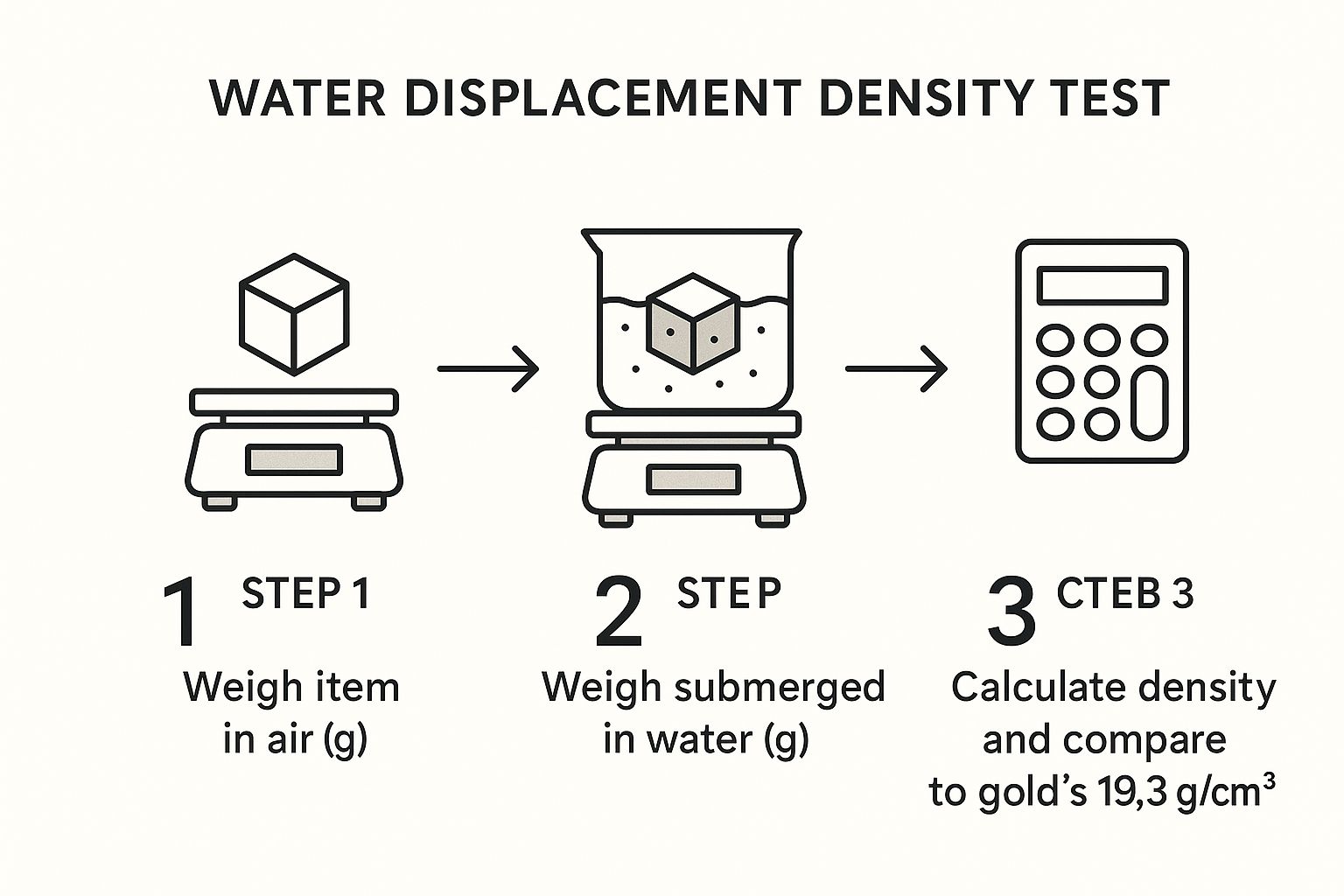
The infographic below illustrates the process flow for conducting the density test. It visualizes the key steps involved in determining if your gold is real or fake using this method.
As the infographic clearly shows, the process involves weighing the item in air, then submerging it in water and noting the weight difference. This difference represents the weight of the water displaced, which is directly related to the item's volume. The infographic emphasizes the importance of accurate measurements at each step to arrive at a reliable density calculation.
This method deserves its place on this list due to its accuracy and accessibility. It requires minimal equipment: a precise scale and a container of water. This makes it a viable option for individuals wanting to test their gold at home, as well as professionals like jewelers and pawnbrokers who routinely use this method for quick verification and initial screenings. For example, jewelers often use this method to confirm the purity of gold before setting stones, while pawn shops utilize it as a first-line test when evaluating potential gold items.
The density test is highly accurate for items made of pure gold. However, it becomes less reliable with gold alloys as the density varies depending on the metals mixed with the gold. While non-destructive, precise measurements are crucial for accurate results, making it challenging to test small or intricate items. Hollow items will also yield misleading readings.
Here are some tips for conducting the density test effectively:
Use distilled water at room temperature: This ensures consistent density readings as water density fluctuates with temperature and impurities.
Ensure the scale is properly calibrated: An accurate scale is paramount for reliable weight measurements.
Suspend the item with thin thread: This minimizes the impact of the thread's volume on the displacement measurement.
Compare the calculated density to the known density of gold (19.3 g/cm³): A close match indicates a higher probability of the item being genuine gold.
This video further demonstrates how to perform the water displacement test and provides visual guidance on how to tell real gold from fake. While this test offers a strong indication of authenticity, especially for pure gold, it is always recommended to consult a certified jeweler for a definitive appraisal.
2. Acid Test (Nitric Acid Method)
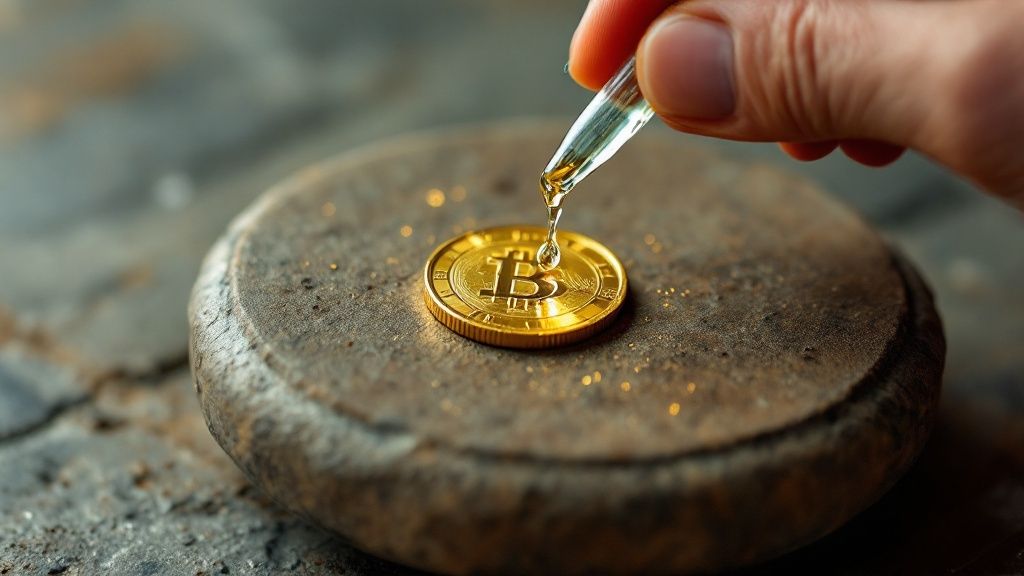
The acid test is a definitive method used to tell real gold from fake metals, and relies on a chemical reaction to determine authenticity and even purity. This process involves applying a small amount of nitric acid or a specialized acid testing solution to a tiny, inconspicuous scratch made on the item being tested. The reaction (or lack thereof) between the acid and the metal provides valuable clues. Pure gold (24K) will show no reaction when exposed to nitric acid. However, lower karat gold alloys (like 10K, 14K, and 18K) will react differently depending on their gold content, exhibiting color changes ranging from light brown to green. Base metals or gold-plated items will typically bubble or fizz and change color dramatically.
This method earns its place on the list because it's highly accurate and widely used by professionals in the jewelry industry. Its ability to not just identify real gold, but also determine the karat rating makes it a valuable tool. Gold testing kits are readily available and provide various acid strengths specifically designed for testing different karat ranges, ensuring reliable results. This makes the acid test a popular choice for pawn shops, jewelry stores, and professional appraisers when conducting valuations. For example, when someone brings in a piece of gold jewelry to a pawn shop, the pawnbroker might use an acid test to quickly and accurately assess the item's gold content before making an offer.
While the acid test is reliable, it’s crucial to understand its destructive nature. The test will inevitably leave a small scratch mark where the acid is applied. Therefore, it's not suitable for testing valuable antiques or delicate jewelry where even minor blemishes are undesirable. Moreover, the test involves handling corrosive acids, necessitating proper safety precautions. Always wear protective gloves and eyewear, and work in a well-ventilated area. The acid can permanently damage gold-plated items, stripping the thin gold layer and revealing the base metal underneath.
Tips for Using the Nitric Acid Method:
Safety First: Always wear protective gloves and eye protection.
Discreet Testing: Test on an inconspicuous area of the item.
Correct Acid Strength: Use the appropriate gold testing acid based on the suspected karat range of the item.
Neutralization: After testing, neutralize the acid residue with a baking soda solution.
This method is especially useful for those who regularly buy or sell gold, or for individuals wanting to verify the authenticity of their own gold jewelry. While you can learn more about Acid Test (Nitric Acid Method), remember this method requires careful handling of hazardous materials. If you're uncertain, consulting a professional jeweler is always the safest option.
3. Magnetic Test
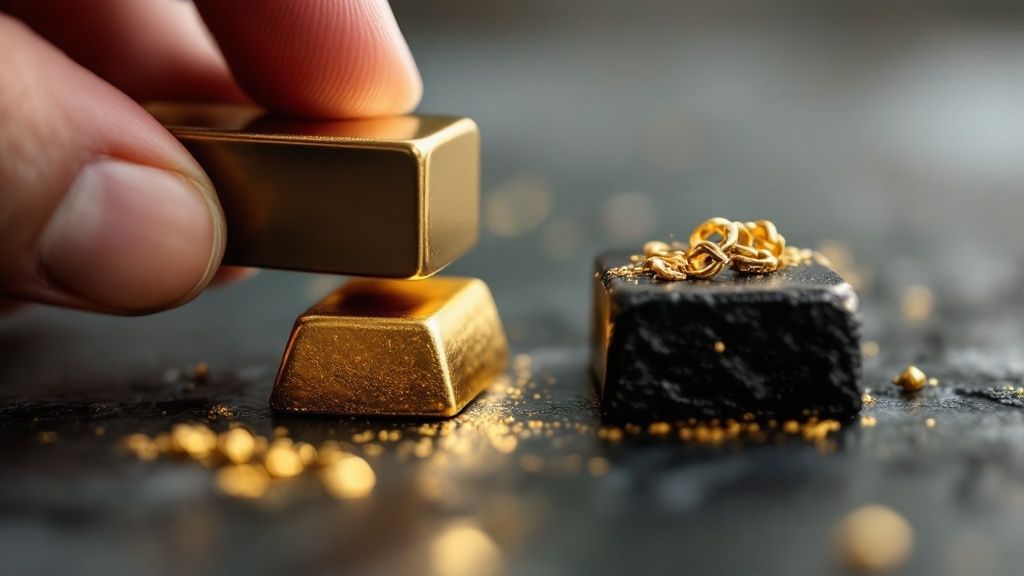
One of the quickest ways to tell real gold from fake is by using a magnet. This method, known as the magnetic test, exploits the fundamental property that pure gold is not magnetic. It works by introducing a strong magnet to the item in question. If the item is attracted to the magnet, it signals the presence of ferromagnetic metals like iron, nickel, or cobalt, and therefore indicates that the piece is not pure gold. This simple test can be a powerful tool in quickly identifying certain types of counterfeit gold.
This test deserves a place on this list because of its speed, simplicity, and non-destructive nature. It's the easiest and fastest initial screening method available, requiring no special equipment beyond a strong magnet. Imagine you're at an estate sale or browsing a collection of gold coins; a quick magnetic test can immediately weed out obvious fakes containing substantial amounts of magnetic metals. The test also leaves the item completely unharmed, unlike more invasive testing methods. For example, collectors commonly use this test before purchasing gold coins to quickly rule out common counterfeits.
However, it's crucial to understand the limitations of the magnetic test. While it’s excellent for initial screening, it’s not a definitive test for gold authenticity. This is because many non-gold metals, like brass and copper, are also non-magnetic. Therefore, a negative result (no magnetic attraction) doesn't guarantee that the item is gold. Additionally, the magnetic test doesn't provide information about the purity of gold. Gold alloys containing small percentages of magnetic metals might show slight attraction, potentially misleading the untrained eye.
To use the magnetic test effectively, consider these tips: employ a powerful rare earth magnet (neodymium) for reliable results; test the item at different angles to detect subtle attractions; slide the magnet down an inclined item – if the magnet slows or stops, it indicates weak magnetism; and test different parts of the item for consistent results, as some counterfeits might only have magnetic cores.
Despite its limitations, the magnetic test remains a valuable tool for anyone looking to tell real gold from fake. Its ease of use and speed make it the ideal initial screening method, allowing you to quickly eliminate some potential fakes. While it can’t definitively confirm gold authenticity, it can save you time and potentially money by identifying some common counterfeits. Learn more about Magnetic Test Remember to combine this test with other methods for a more comprehensive assessment.
4. Electronic Gold Testers (XRF Technology)
One of the most definitive ways to tell real gold from fake is by using an electronic gold tester employing X-ray fluorescence (XRF) technology. This sophisticated method offers unparalleled accuracy in determining the elemental composition of a metal, making it a crucial tool for professionals in the jewelry industry and beyond. If you're serious about accurately determining gold purity, understanding how XRF technology works is essential in your quest to learn how to tell real gold from fake.
So, how does it work? These devices emit X-rays that interact with the atoms within the tested sample. This interaction causes the atoms to fluoresce, emitting energy signatures unique to each element present. The XRF analyzer then interprets these signatures, providing a detailed breakdown of the metal's composition, including the exact percentage of gold, often down to 0.01% accuracy. This process is non-destructive, meaning your item remains unharmed during testing. This allows for testing of finished jewelry pieces, even those with gemstones, a distinct advantage over other methods that may require scraping or other potentially damaging procedures.
XRF technology has found its niche in various applications demonstrating its effectiveness. High-end jewelry stores utilize XRF analyzers as standard equipment to verify the purity of their gold inventory and provide accurate appraisals. Refineries rely on this technology to determine the precise gold content in raw materials, ensuring fair pricing and quality control. Even customs authorities employ XRF analyzers to verify the composition of precious metal imports, combating fraud and ensuring accurate taxation. These real-world examples highlight the reliability and importance of XRF technology in the precious metals industry.
While highly effective, XRF testers come with their own set of pros and cons.
Pros:
Extremely Accurate and Reliable: Provides the most precise measurement of gold content.
No Damage to Items: Non-destructive testing preserves the integrity of the piece.
Fast Results: Analysis often takes less than 30 seconds.
Can Identify Multiple Metals in Alloys: Offers a complete breakdown of the metal's composition.
Can Test Finished Jewelry with Stones: No need to remove stones or alter the piece.
Cons:
Expensive Equipment: Prices typically range from $5,000 to $50,000, making them impractical for most individual consumers.
Regular Calibration: Some models require consistent calibration to maintain accuracy.
Not Practical for Individual Consumers: The high cost makes ownership prohibitive for most individuals.
Lower-End Models May Have Accuracy Limitations: Be cautious when considering budget-friendly options, as their accuracy may be compromised.
Tips for Using XRF Testers:
Ensure Proper Calibration: Regular calibration is crucial for accurate results.
Test Multiple Spots: On larger items, test multiple areas to account for potential variations in composition.
Clean the Item's Surface: Removing dirt and grime can improve the accuracy of the readings.
Consider Rental Options: If purchasing an XRF analyzer is too expensive, explore rental options.
Learn more about Electronic Gold Testers (XRF Technology)
Companies like Thermo Fisher Scientific, Olympus, Bruker, and SciAps are prominent manufacturers of XRF analyzers, contributing to the widespread adoption and advancement of this technology. While XRF analysis might not be feasible for everyday consumers wanting to know how to tell real gold from fake, its importance in the industry underscores the need for accurate and reliable gold testing methods. If you require absolute certainty about the purity of your gold, seeking the services of a professional who utilizes XRF technology is the most reliable option.
5. Ceramic Tile Test (Streak Test)
One of the simplest and most accessible methods for determining if your gold is genuine is the ceramic tile test, often referred to as the streak test. This method relies on the unique properties of real gold: its softness and malleability. If you're wondering how to tell real gold from fake, this test can offer a quick preliminary assessment.
This test works by dragging the suspected gold item across an unglazed ceramic surface, like the back of a common ceramic tile. Because real gold is soft yet highly malleable, it will leave a distinct gold-colored streak. Conversely, fake gold or gold-plated items tend to leave a dark streak, typically black or even greenish. This difference arises because the base metal in fake gold scrapes off onto the tile, revealing its true color, while the genuine gold transfers to the ceramic while maintaining its characteristic golden hue.
Features and Benefits:
Tests material transfer properties: This test directly examines how the metal interacts with the ceramic, revealing differences between real and fake gold.
Evaluates color consistency: The streak color provides immediate visual feedback about the metal's authenticity.
Based on gold's unique malleability: This test leverages a fundamental characteristic of real gold, making it a reliable indicator.
Pros:
Inexpensive and accessible: Unglazed ceramic tiles are readily available and affordable.
Quick results: The test takes mere seconds to perform.
Requires no special equipment: No specialized tools or training are needed.
Can be done anywhere with a ceramic tile: This makes it ideal for quick assessments on the go, such as at flea markets or antique shows.
Cons:
Slightly abrasive to the gold item: The test can leave a small mark on the tested item.
May not work well on heavily alloyed gold: The presence of other metals in the alloy can affect the streak color.
Can be inconclusive with high-quality gold-plated items: A thick gold plating might still leave a gold streak, masking the base metal.
Not effective on items with very thin gold content: If the gold layer is extremely thin, the streak might not be visible.
Examples of Use:
The ceramic tile test is frequently used by traveling gold buyers and at flea markets and antique shows for quick, on-the-spot evaluations. This allows for initial screening before more sophisticated testing methods are employed.
Tips for Accurate Results:
Use an unglazed, white ceramic tile for optimal visibility of the streak.
Apply consistent, moderate pressure when dragging the item across the tile.
Clean the tile thoroughly between tests to avoid contamination.
Compare the resulting streak with a known real gold item for a more accurate assessment, if possible.
Counterfeit products aren't limited to precious metals. Similar deceptive practices exist in other industries, like the olive oil market. Learning how to identify fake versions of everyday products is a valuable skill. For example, you can learn more about spotting fake olive oil from Learn Olive Oil. Just like with gold, understanding a few key indicators can help protect you from fraudulent products.
6. Float Test (Water Test)
One of the simplest ways to tell real gold from fake is the float test, also known as the water test. This method relies on gold's remarkably high density. If you're looking for how to tell real gold from fake, this quick and easy check can be a valuable first step.
This test works because real gold is one of the densest metals. When placed in water, genuine gold will sink rapidly to the bottom. Counterfeit materials, often made of lighter metals or alloys, tend to be less dense. They may float, sink slowly, or hover in the water. Observing the sinking behavior of the item can quickly eliminate some obvious fakes.
How to Perform the Float Test:
Fill a tall, clear glass with water. This allows you to clearly observe the item's descent.
Clean the item thoroughly. Oils or dirt on the surface can create surface tension and affect the results, especially with smaller items.
Gently drop the item into the water. Avoid splashing or throwing it, as this can create misleading air bubbles.
Observe the sinking behavior. Real gold will sink straight to the bottom quickly.
Features and Benefits:
Tests relative density: This test directly compares the density of your item to the density of water.
Observes sinking behavior: The speed and manner of sinking provide valuable clues.
Completely non-destructive: This test won't damage or alter the item in any way.
Extremely simple to perform: Anyone can do this test with readily available materials.
No special equipment needed: All you need is a glass and some water.
Quick initial screening method: It’s a fast way to eliminate obvious fakes.
Examples of Use:
Gold prospectors: Historically, prospectors used this method to quickly distinguish gold nuggets from fool's gold (iron pyrite) in the field.
Amateur collectors: The float test is a popular home testing method for those starting their collection. It's a quick way to get a general idea of an item's authenticity before pursuing more advanced testing methods.
Pros and Cons:
Pros:
Easy and quick
No special tools required
Doesn't damage the item
Cons:
Not conclusive: While it can rule out some fakes, other heavy metals like platinum and tungsten also sink rapidly. Therefore, a sinking item doesn't guarantee that it's pure gold.
Cannot distinguish between different gold purities: This test cannot tell the difference between 10k, 14k, 18k, or 24k gold.
Small items can be challenging: Very small or lightweight items can be affected by surface tension, making the results less reliable.
Difficult with intricate jewelry: Items with many small parts or intricate designs may trap air bubbles, altering their buoyancy.
Tips for Accurate Results:
Compare the sinking behavior of your item with a known piece of real gold, if possible. This provides a valuable visual benchmark.
Ensure the water is still and free of disturbances before dropping the item.
While the float test is a helpful initial screening tool in how to tell real gold from fake, it’s important to understand its limitations. A negative result (floating or slow sinking) strongly suggests the item is not real gold. However, a positive result (rapid sinking) does not confirm authenticity. This test should be used in conjunction with other testing methods for a more definitive assessment.
6 Methods to Identify Real Gold Compared
Technique | 🔄 Implementation Complexity | ⚡ Resource Requirements | 📊 Expected Outcomes | 💡 Ideal Use Cases | ⭐ Key Advantages |
|---|---|---|---|---|---|
The Density Test (Water Displacement Method) | Moderate - requires precise measurements and equipment | Precise digital scale, water container, thin thread | Accurate density measurement for pure gold; less reliable for alloys/hollow items | Home testing, jewelers, pawn shops initial screening | Highly accurate for pure gold; non-destructive; scientific method |
Acid Test (Nitric Acid Method) | Moderate - careful chemical handling, destructive sampling | Acid kit, testing stone, protective gear | Quick and highly accurate karat purity and authenticity results | Jewelry stores, pawn shops, professional appraisal | Determines gold purity; fast; widely used industry standard |
Magnetic Test | Very low - simple and fast to perform | Strong neodymium magnet | Identifies magnetic/non-magnetic metals; not definitive for gold | Quick initial screening at estate sales, collectors | Easiest, fastest screening; non-destructive; no special equipment |
Electronic Gold Testers (XRF Technology) | High - requires technical device operation and calibration | Expensive XRF analyzer, calibration standards | Extremely accurate elemental analysis, detects impurities/alloys | High-end jewelers, refineries, customs inspections | Highly precise; non-destructive; fast; multi-metal detection |
Ceramic Tile Test (Streak Test) | Very low - simple physical test | Unglazed ceramic tile (optional magnifier) | Visual color streak indicates real gold vs fakes | Flea markets, antique shows, traveling buyers | Inexpensive; quick; no special equipment; portable |
Float Test (Water Test) | Very low - simple observational test | Clear container, water | Simple sink/float behavior; quick screening only | Amateur collectors, prospectors, initial home test | Extremely simple; no damage; quick elimination of obvious fakes |
Gold Testing: Your Path to Certainty
Knowing how to tell real gold from fake empowers you to make informed decisions and protect your investment. From the simple float test to the more sophisticated acid test and the use of electronic gold testers, each method discussed provides a valuable tool in your arsenal. Remember, combining several of these tests, such as the density test and the ceramic tile test, offers the most comprehensive approach to authentication. Mastering these techniques not only safeguards you from potential scams but also deepens your understanding and appreciation of this precious metal. Whether you’re a seasoned collector or simply curious about a piece of jewelry, the ability to distinguish genuine gold builds confidence and ensures you’re getting what you pay for.
When dealing with significant investments, however, the expertise of a professional can be invaluable. For absolute certainty and professional authentication, consulting a reputable jeweler is always recommended. At Panther De Luxe Shop, we specialize in authentic, ethically sourced gold pieces. Visit Panther De Luxe Shop to explore our collection and experience the confidence of owning genuine, high-quality gold.
Comments