
How to Tell If Pearls Are Real A Practical Guide
- Luke Zucco
- 2 days ago
- 12 min read
The fastest and most classic way to tell if pearls are real? The tooth test. Just gently rub a pearl against the front of your tooth. A real pearl will feel slightly gritty, almost sandy, because of its natural, layered structure. A fake one will feel perfectly, unnaturally smooth. It's a simple, tactile trick that has been used for generations and is surprisingly reliable.
Your Quick Guide to Identifying Real Pearls
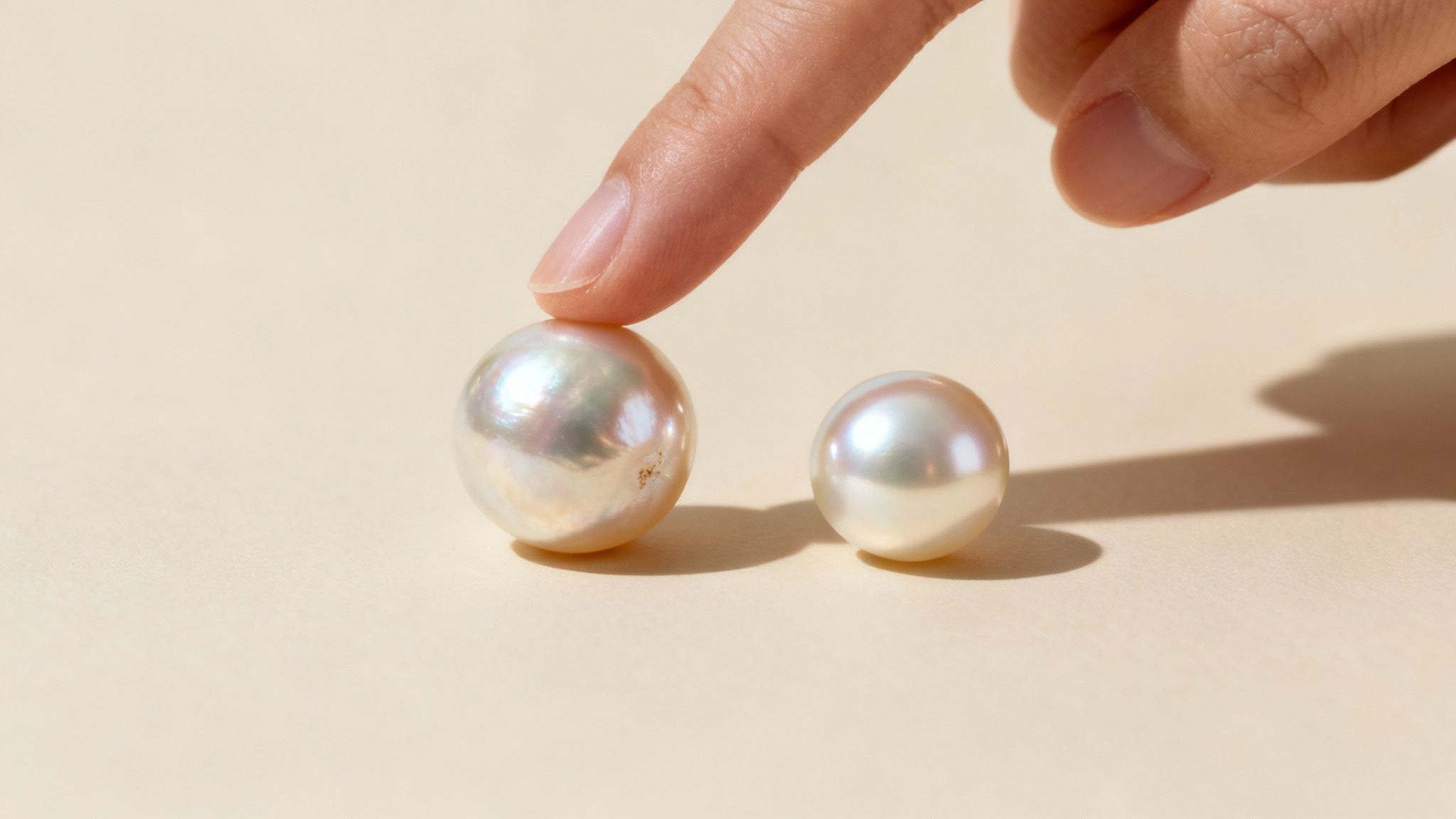
Before we get into the more detailed tests, it helps to have a gut feeling for what separates an authentic gem from a clever imitation. Whether you're sorting through a family jewelry box or eyeing a piece at a market, a few key indicators can give you a pretty good idea of what you're looking at.
Think of these as your first-glance checks—the kind of things you can spot without any special equipment.
The At-Home Authenticity Checks
First, trust your sense of touch. Real pearls feel cool against your skin at first, then slowly warm up to your body temperature. They also have a noticeable weight and density for their size. Fakes, on the other hand, often feel light, plasticky, and warm up almost instantly.
Next, it’s time to use your eyes. Think of it like a detective's first sweep of a scene. By applying solid strategies for accurate problem investigation, you can spot clues that separate the real from the replica. Here’s what to look for:
Subtle Imperfections: Nature is rarely perfect. Real pearls will almost always have tiny blemishes, slight variations in shape, or faint ridges on their surface. A strand of pearls where every single one is a flawless, identical sphere is a major red flag.
Deep Luster: Real pearls have a complex glow that seems to come from within. This is called luster. It’s soft and radiant. Imitations usually have a shallow, glassy shine that just reflects light off the surface.
Real vs Fake Pearls At a Glance
Sometimes you just need a quick cheat sheet. This table breaks down the essential differences between genuine and imitation pearls, making it easier to spot the fakes.
Characteristic | Real Pearls (Cultured or Natural) | Fake Pearls (Imitation) |
|---|---|---|
Surface Feel | Slightly gritty, sandy, or textured. | Perfectly smooth, slippery, or glassy. |
Luster | Deep, radiant glow that comes from within. | Shallow, surface-level shine; looks painted on. |
Imperfections | Minor blemishes, rings, or variations are common. | Usually flawless and perfectly uniform. |
Weight | Surprisingly heavy and dense for their size. | Feel light, hollow, or plasticky. |
Temperature | Cool to the touch, then warms to your skin. | Room temperature or warms up very quickly. |
Shape | Slightly off-round or unique shapes are typical. | Perfectly spherical and identical to each other. |
Drill Hole | Sharp, clean edges. May see nacre layers. | Often has chipped paint or a messy, rounded edge. |
Use these points as your mental checklist when you're examining a piece. With a little practice, these differences will become second nature.
Mastering the Visual Inspection
Learning to spot the subtle clues that scream "real" is one of the most powerful skills you can develop. It’s about going beyond a quick glance and really seeing what’s in front of you. The very things that make a genuine pearl so beautiful are often the exact details that fakes just can't get right.
A real pearl’s beauty isn’t just on the surface; it’s a deep, radiant glow that seems to come from within. This quality is called luster, and it’s the number one sign of a pearl's value and authenticity. Think of a soft light glowing inside a foggy orb—that's true luster. It has depth and complexity. Imitations, on the other hand, usually have a flat, glassy shine that just bounces light off the surface like a mirror.
The Beauty of Imperfection
Nature is an artist, not a machine. Because real pearls are organic gems, they have unique character traits. A strand of perfectly identical, flawless spheres is actually a major red flag for an imitation. Real pearls will almost always have minor surface blemishes or variations.
Look closely for these little signs of authenticity:
Small Blemishes: You might see tiny pits or spots on the surface. These aren't flaws—they’re birthmarks that prove the pearl’s natural origin.
Concentric Rings: Some pearls have faint circles or ridges running around them, which are the tell-tale evidence of their layered growth inside the mollusk.
Slight Variations: In a strand, each pearl will be slightly different. Even when they're carefully matched for size and color, a close look will reveal subtle differences in shape, luster, and overtone.
Think about it this way: a perfectly uniform strand is suspicious for a good reason. Statistics from top luxury markets show that only about 1 in 10,000 oysters will produce a perfectly round pearl. This incredible rarity means a perfectly matched, perfectly round strand is almost certainly fake unless it comes with a hefty price tag and proper certification. You can discover more insights about pearl authenticity and what makes genuine pearls so special.
Inspecting the Drill Holes
One of the most overlooked yet revealing details is the drill hole. This tiny opening is a window into the pearl's entire construction. Grab a magnifying glass if you have one and take a close look at where the string passes through.
A real pearl’s drill hole will typically have sharp, clean, well-defined edges. You might even be able to see the distinct layers of nacre around the rim, which look like fine, tight rings.
Fake pearls often give themselves away right here. The coating on imitation beads—whether plastic or glass—tends to chip or flake around the drill hole. You might see a messy, uneven edge or a buildup of the coating. On cheaper fakes, the coating can even look like it's peeling away, revealing a completely different material underneath. This small detail provides a huge clue when you're trying to figure out how to tell if pearls are real.
Simple At-Home Tests Anyone Can Perform
You don't need a gemology lab to figure out if your pearls are the real deal. In fact, some of the most reliable methods are beautifully low-tech, relying on nothing more than your sense of touch and a sharp eye. These are the kinds of quick, hands-on tests you can do right at home to get some powerful clues.
The most famous of these is the tooth test. It sounds a little strange, but it’s a classic for a reason. To try it, gently rub a pearl against the biting edge of your front tooth. A real pearl is made of countless layers of nacre, so it will feel slightly gritty or sandy. An imitation made of plastic or glass, on the other hand, will feel perfectly smooth and slippery.
The Rub and Weight Tests
If the tooth test isn't for you, there's another great option. The rub test is just as effective. Take two pearls from the same strand and gently rub them against each other. Real pearls will create a subtle friction—that same slight grittiness you'd feel with your tooth. You might even notice a fine, powdery residue when you're done, which is just a tiny bit of nacre. It's a hallmark of authenticity that perfectly smooth fakes just can't replicate.
Next, pay attention to the pearl’s temperature and weight before you even put them on. Just hold them in your hand for a moment.
Temperature Check: Genuine pearls are organic gems, and they feel surprisingly cool to the touch when you first pick them up. After a few seconds, they’ll slowly warm up to your body temperature.
Weight Check: Don't underestimate their heft. Real pearls are quite dense for their size, and a genuine strand will feel noticeably substantial.
Imitations made of plastic will feel light, almost hollow, and they'll be at room temperature from the start. Some high-quality fakes made from glass can mimic the weight, but they often fail the temperature test by warming up way too quickly. This simple, hands-on approach is often your first big clue.
This decision tree shows how a quick visual once-over can help you start sorting real from fake.
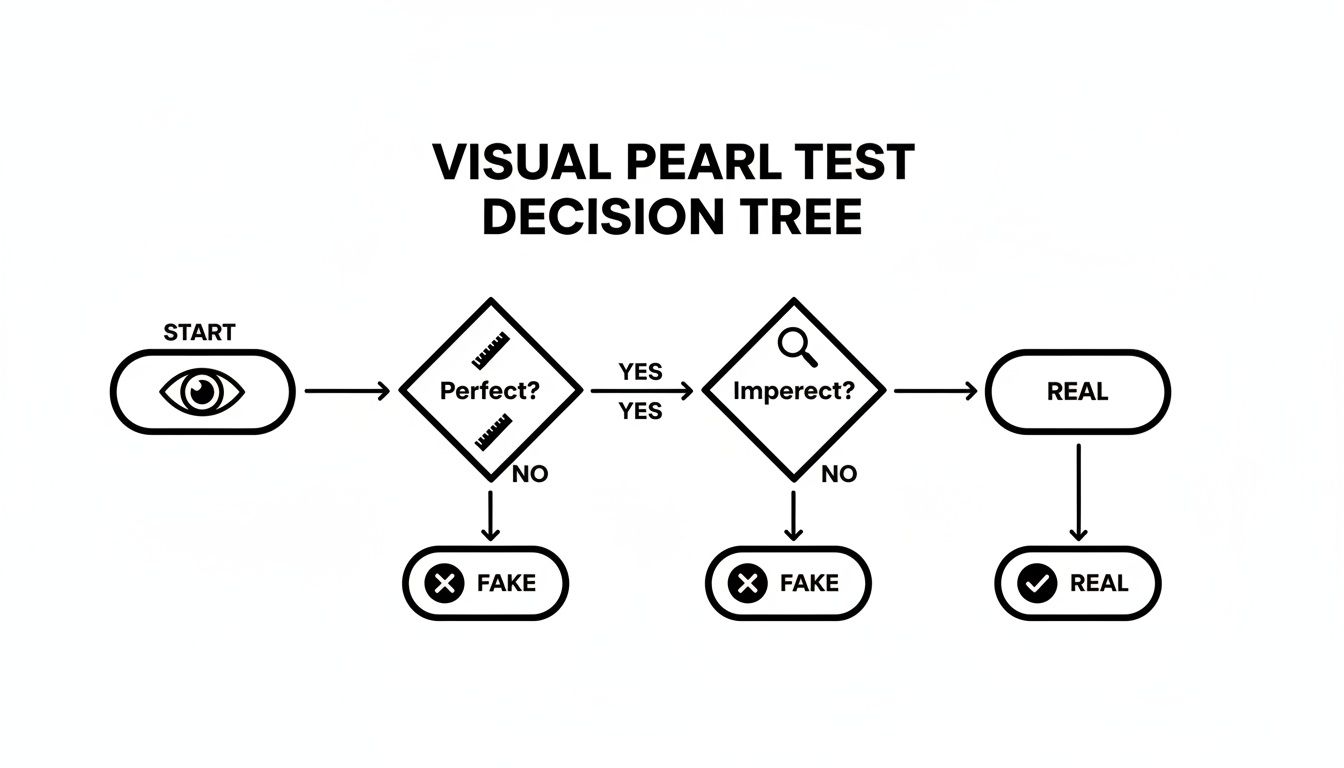
It’s a great reminder that perfection is often a red flag in the world of pearls, while natural, subtle imperfections are a strong sign of authenticity.
The Science Behind the Heft
That satisfying weight isn't just a feeling; it's rooted in science. A material's density is measured by its specific gravity, and genuine pearls have a specific gravity of 2.72-2.78. This makes them denser than over 90% of imitations.
For comparison, hollow glass beads land around 2.5, while common plastic fakes are significantly lighter at 1.3-1.5. This difference is what gives real pearls their signature weight.
Expert Tip: Never rely on just one test. The best way to tell if pearls are real is to combine a few methods. If a pearl feels cool and heavy, has that gritty friction, and shows minor surface imperfections, you can feel much more confident that you have a genuine piece.
These at-home tests are a fantastic starting point for any enthusiast. For more general advice on authenticating different types of jewelry, check out our comprehensive guide on how to tell real jewelry from fake. Building your knowledge is the best way to assess any piece with a more discerning and confident eye.
When to Seek a Professional Opinion
While at-home tests are fantastic for sorting out costume jewelry from the real deal, there are moments when you absolutely need a definitive, expert verdict. Think bigger. We’re talking about evaluating a potential family heirloom, verifying an antique find for an insurance policy, or bidding on a major piece at auction.
In these high-stakes situations, a simple tooth test just isn't going to cut it. When a piece carries significant financial or sentimental weight, getting a professional opinion isn’t just a good idea—it’s essential for your peace of mind.
This is where a certified gemologist comes in. These pros have the training, experience, and specialized equipment to see things our eyes and hands simply can't. They provide a formal appraisal, which is a detailed document outlining a piece's authenticity, quality, and market value. If you're curious about the process, our guide on how to appraise jewelry yourself is a great place to start before you consult an expert.
The Power of Gemological Science
A gemologist doesn’t just look at a pearl; they analyze its very structure. Using advanced tools, they can gather irrefutable evidence of a pearl's origin and composition.
X-radiography: This is like giving the pearl an X-ray. It lets an expert see inside, revealing its internal growth rings and structure. This method clearly distinguishes a natural pearl from a bead-nucleated cultured pearl or a solid imitation.
Microscopes: With high-powered magnification, a gemologist can examine surface details and drill hole characteristics with a level of clarity that’s impossible to achieve with a standard loupe or magnifying glass.
These scientific methods remove all the guesswork. They offer concrete proof of whether you're holding an organic gem created by nature or a well-made replica.
The gold standard for confirming a pearl's identity is a lab report from a respected gemological institution, like the GIA (Gemological Institute of America). This document details everything from the pearl's measurements and weight to its origin (natural or cultured) and any treatments it may have undergone.
When Even the Experts Are Challenged
The science of pearl identification is incredibly advanced, but these natural gems can sometimes be so complex that they challenge even the world’s top experts.
In a notable pearl identification challenge, the GIA tested two mysterious pearls across three leading labs using cutting-edge methods like X-ray tomography and μ-CT scanning. Despite this, they couldn't definitively say whether the pearls were natural or cultured. This just goes to show that a tiny fraction—less than 1% of pearls submitted annually—can present these kinds of ambiguities. You can read the full research about this pearl challenge to learn more.
Ultimately, for any piece of real value, a professional appraisal is the only way to be completely certain. And when you're ready to invest in authentic pearls, it's always smart to buy from reputable jewelry brands like Enewton, who are known for their quality standards and transparency.
Caring for Your Authentic Pearl Jewelry
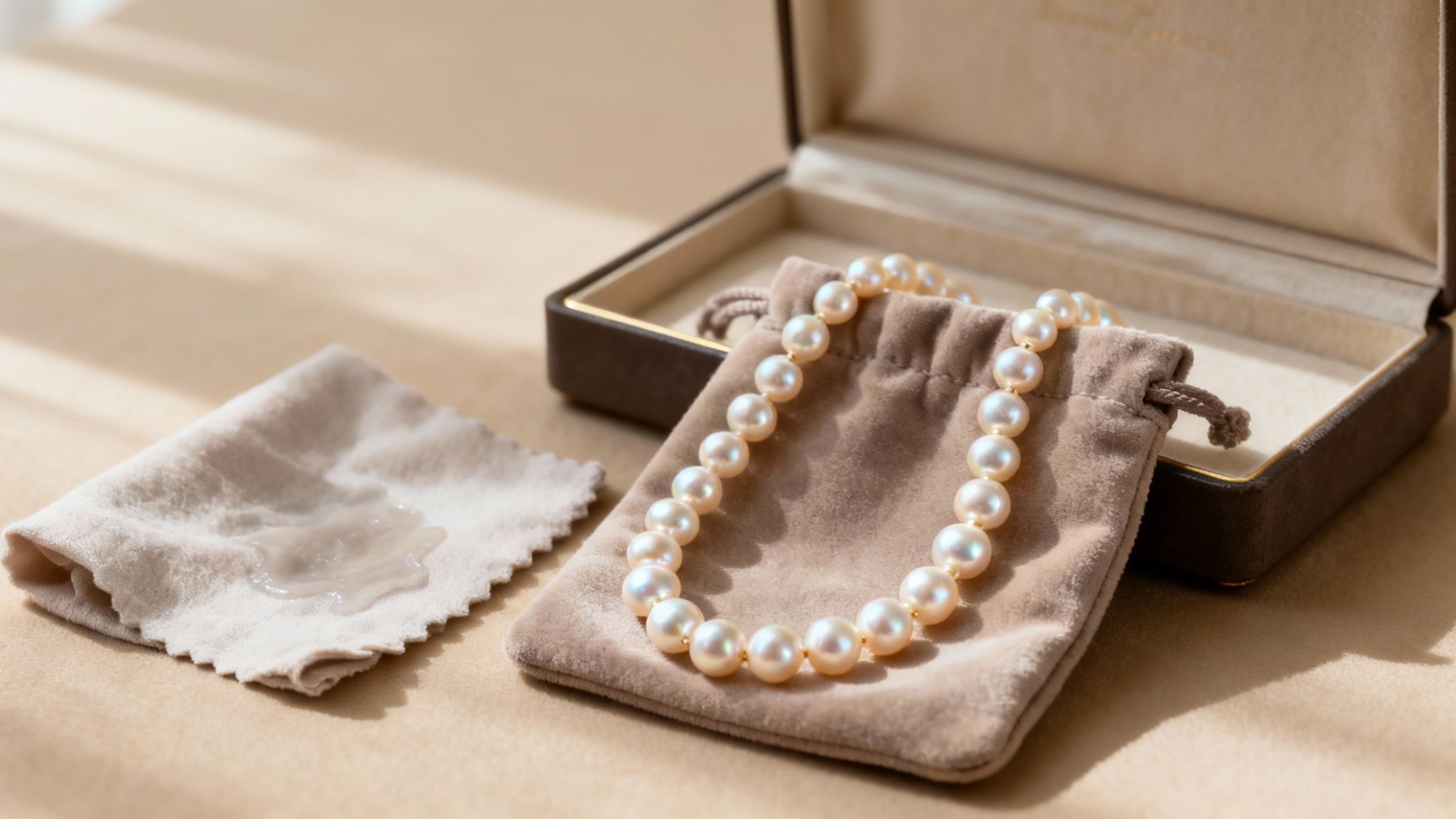
So, you've done the tests and confirmed your pearls are the real deal. Congratulations. Now the real relationship begins: taking care of them. Real pearls are organic gems, born from living creatures, and they need a little TLC to keep that incredible luster shining for years—or even generations.
The most important thing to remember is the golden rule of pearl care: "last on, first off." It’s a simple mantra, but it’s your best defense against damage. Your pearls should be the final touch after applying all your makeup, hairspray, and perfume. And they should be the very first thing you take off at the end of the day.
Gentle Cleaning and Safe Storage
Think of your pearls as having sensitive skin. Chemicals are their worst enemy. The acids and alcohols in cosmetics and fragrances will slowly but surely eat away at the delicate nacre, leaving the surface looking dull, cloudy, or even pitted. That kind of damage is heartbreaking because it's irreversible.
When it's time to clean them, simpler is always better. Just a gentle wipe-down with a soft, damp cloth after you wear them is usually enough to remove any oils or residue from the day. That's it.
Never, ever put your pearls in an ultrasonic cleaner. The same goes for steamers or harsh chemical jewelry dips. Those intense vibrations and chemicals can wreck the nacre and weaken the silk cord holding your strand together.
How you store them matters just as much. Here’s a quick rundown of what to do:
Let Them Breathe: Never store pearls in a plastic bag. They need a bit of moisture from the air to stay lustrous, and airtight plastic can dry them out or expose them to damaging chemicals over time.
Give Them a Soft Home: Keep them in a fabric-lined pouch or a separate compartment in your jewelry box. This prevents harder gemstones like diamonds or the sharp edges of other jewelry from scratching their delicate surface.
Lay Strands Flat: To keep the silk cord from stretching out, it’s best to store your pearl necklaces and bracelets flat rather than hanging them.
For a more detailed walkthrough, you can learn more about how to clean pearl jewelry safely and effectively to keep your pieces looking their best.
Finally, keep an eye on the cord of your pearl strands. If you wear them often, having them professionally restrung every few years is a wise investment. It prevents a catastrophic break and ensures your beloved pearls stay right where they belong. A few simple habits are all it takes to enjoy them for a lifetime.
Common Questions About Pearl Authenticity
Even after you've learned the tests, a few common questions always seem to pop up. These are the details that often trip people up, but getting them straight will give you total confidence when you're looking at a piece of pearl jewelry. Let's clear up some of the most frequent points of confusion.
Are Cultured Pearls Considered Real Pearls?
Yes, absolutely. Cultured pearls are 100% real pearls. The only thing that separates a cultured pearl from a natural one is how it gets started.
A natural pearl is a happy accident—it forms when a random irritant gets inside a mollusk. With a cultured pearl, a pearl farmer intentionally places a tiny bead inside the mollusk to kick off the nacre-building process. From that point forward, the oyster does all the work, creating beautiful, concentric layers of nacre just like it would in the wild.
The vast majority of pearls you see on the market today are cultured. They are genuine organic gems with the same qualities and composition as their natural cousins.
Key Takeaway: Don't let the word "cultured" throw you off. It just means a human helped start a natural process. The pearl itself is as real as it gets.
Can the Tooth Test Damage My Pearls?
When done correctly, the tooth test is perfectly safe. The nacre that makes up a real pearl is surprisingly tough and won't be harmed by a gentle glide against your tooth.
You only need to rub it lightly against the edge of your tooth—never bite down or scrape aggressively. All you're trying to do is feel for that subtle, gritty texture. In fact, you should be more careful with fakes, as some have a thin coating that can easily scratch or chip if you apply too much pressure. Gentle is always the way to go.
What Are Majorica Pearls and Are They Real?
This is a great question and a very common one. Majorica pearls are a famous brand of high-quality imitation pearls, but they are not real, organic gems. They are completely man-made.
The process is pretty sophisticated: they start with a solid glass core and coat it with multiple layers of a special iridescent lacquer designed to mimic genuine nacre. They are considered some of the best fakes out there, but they’ll still feel perfectly smooth in a tooth test. They also lack the deep, complex luster and subtle surface variations of a true, oyster-created pearl.
Why Is a Perfectly Round Pearl Strand a Potential Red Flag?
Because pearls are organic gems made by a living creature, a perfectly spherical shape is incredibly rare. As a result, a strand where every single pearl is flawlessly round and identical is a huge red flag—it almost certainly means they're man-made.
Even the most expertly matched strands of real pearls will have tiny, subtle variations in shape, size, and surface from one pearl to the next. Those little imperfections are actually signs of authenticity. Unless you're looking at an incredibly expensive, certified strand with a price tag to match, absolute uniformity should make you skeptical. The unique character of each pearl is part of its charm.
At Panther De Luxe Shop, we celebrate the natural beauty of authentic jewelry. Explore our curated collections to find your perfect piece, confident in its quality and craftsmanship. Discover more at https://www.pantherdeluxe.com.