
A Guide to Resizing a Ring for the Perfect Fit
- Luke Zucco
- Jan 6
- 15 min read

A ring should feel like it was made just for you, but over time, life has a way of changing that perfect fit. Whether you’ve inherited a family heirloom or a favorite band now spins a little too freely, ring resizing is a common fix that brings back that secure, comfortable feeling.
Why a Perfect Fit Matters for Your Ring
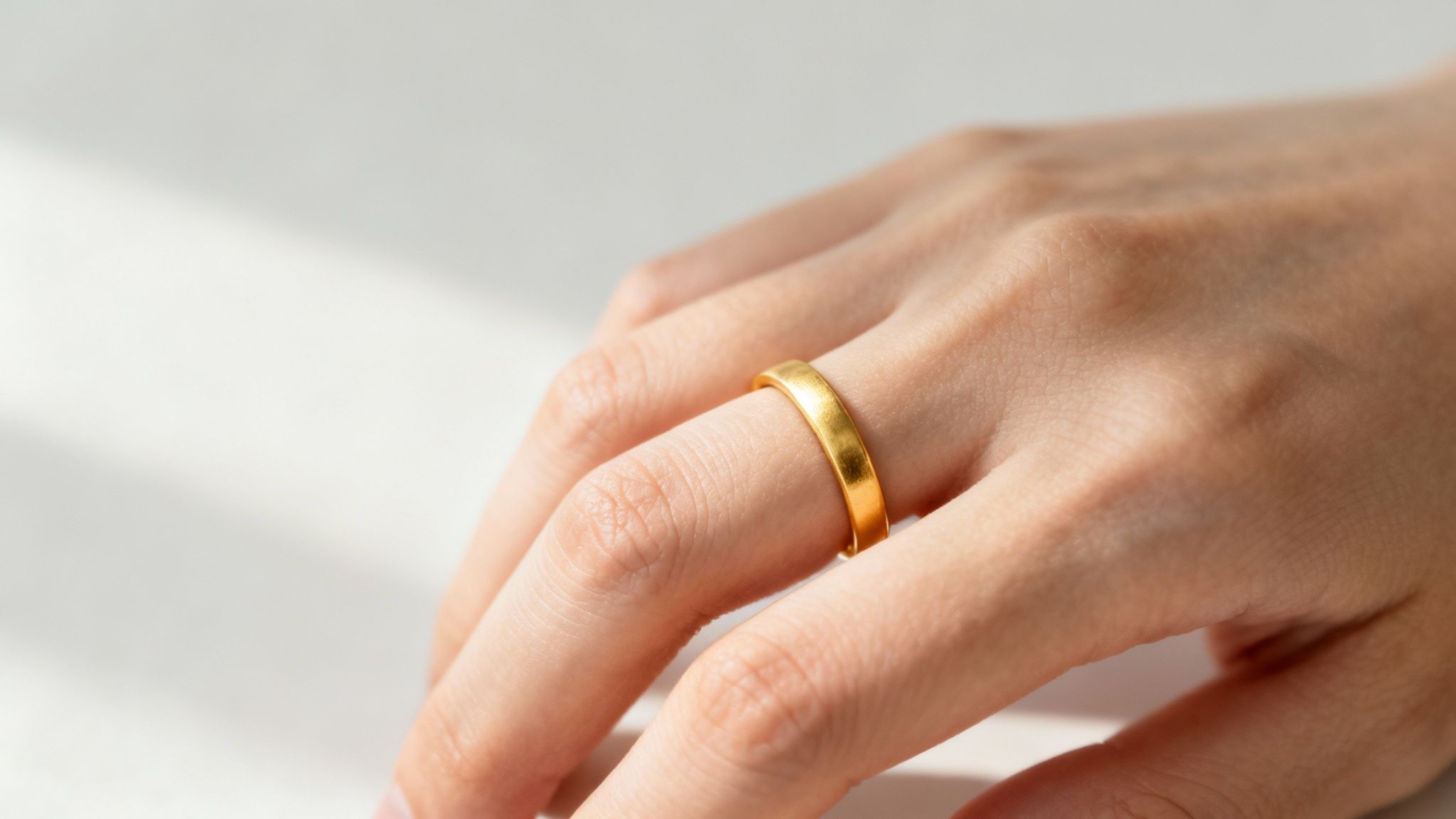
A well-fitted ring is about so much more than comfort—it’s about security. When a ring doesn’t fit right, a piece you love can quickly become a source of constant worry.
If it’s too loose, you live with the fear of it slipping off without you noticing. And if it's too tight? It can cause anything from annoying skin irritation to cutting off circulation. Neither is ideal.
The Balance Between Comfort and Security
The sweet spot is a ring that feels snug enough to stay put but is still loose enough to slide over your knuckle without a major fight. But finding and keeping that balance isn't always easy, because our bodies are always changing.
Here’s what often throws a perfect fit off-kilter:
Seasonal Swells: Our fingers tend to swell a bit in warmer weather and shrink when it gets cold. It's completely normal.
Life Milestones: Things like pregnancy or changes in weight can permanently alter your ring size.
Natural Aging: Over the years, our joints and skin change, which can definitely affect how our rings fit.
These subtle shifts are exactly why a ring that once felt perfect might suddenly feel way too tight or dangerously loose.
The Resizing Solution Explained
The thought of someone cutting into a treasured ring can be nerve-wracking, but understanding the process helps. It's a craft that jewelers have perfected.
If your ring is too big, a jeweler will remove a tiny piece of the band, expertly reshape it into a perfect circle, and solder the ends back together. The final step is polishing the join until it's completely invisible.
A professional resizing job should be seamless. The goal is to return your ring looking like it was never touched—preserving its beauty and structural integrity.
And if you need to go up a size? The jeweler can either gently stretch the metal for small adjustments or add a new piece of perfectly matched metal into the band. This ensures the ring’s design stays strong and intact.
By getting the fit just right, you can finally wear your favorite pieces with the confidence they deserve.
Signs It Is Time to Resize Your Ring
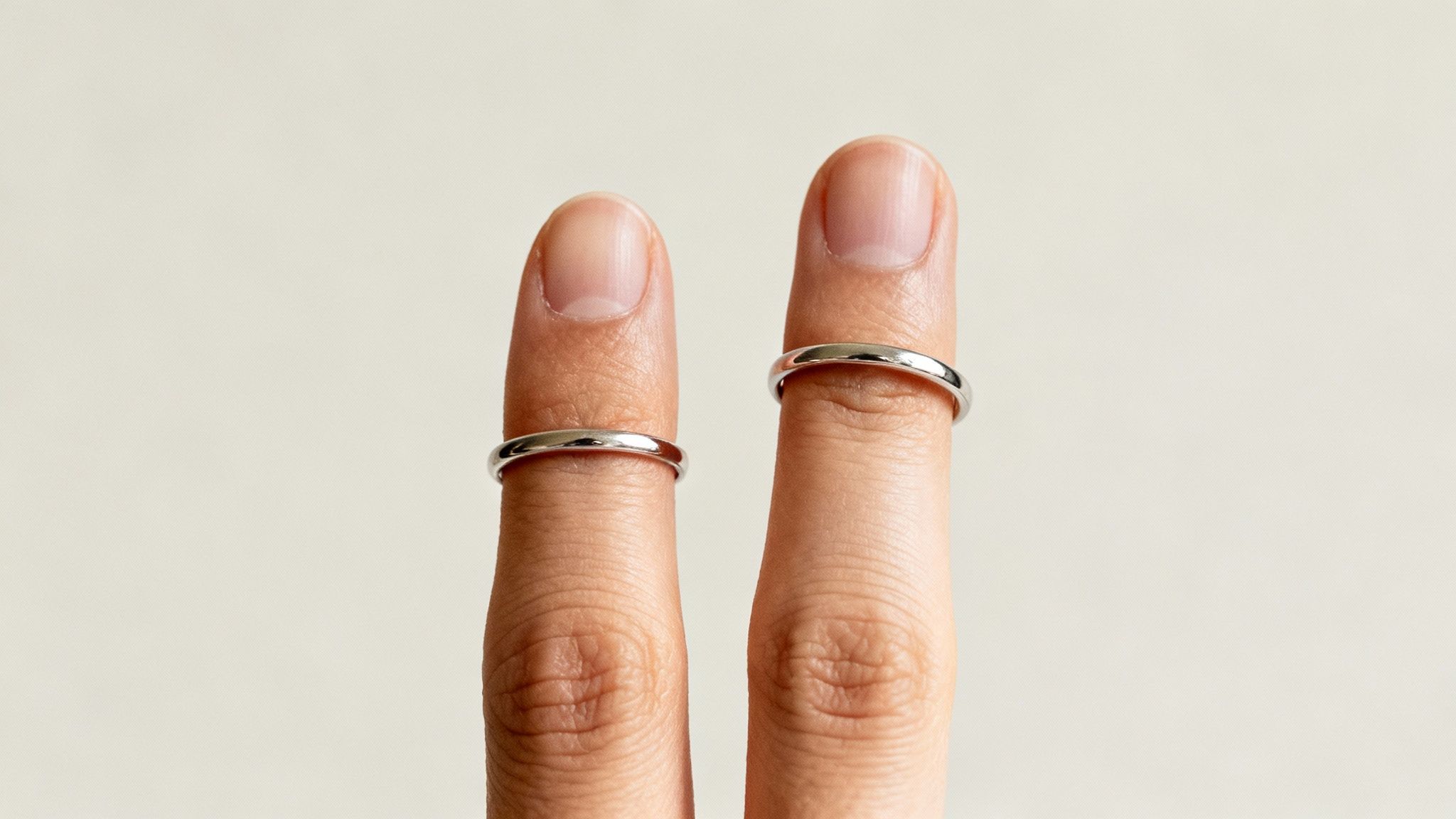
Realizing your favorite ring doesn’t fit anymore can happen slowly, then all at once. Our bodies are always changing, reacting to everything from a salty dinner to a change in the weather, or even major life events. Learning to spot the signs—both subtle and obvious—is the first step in deciding if it's time to consider resizing a ring.
Sometimes, a tight or loose fit is just temporary. A humid day can make your fingers swell, while a cold morning can cause them to shrink, leaving your ring feeling dangerously loose. It’s always a good idea to watch how your ring fits over a few weeks to see if it’s a consistent issue or just a fleeting fluctuation.
But other changes are here to stay. Things like pregnancy, significant weight shifts, or even just the natural process of aging can alter your ring size for good. If your ring has become a source of daily discomfort or constant worry, that’s a clear signal it's time for a professional adjustment.
When the Fit Is Too Tight
A ring that’s too snug is more than just uncomfortable—it can be a genuine health concern. A tight fit can restrict circulation, irritate your skin, and make the ring nearly impossible to take off. The signs are pretty hard to miss once you know what to look for.
Maybe you’ve noticed a stubborn red mark or an indentation that lingers long after you’ve taken the ring off. Another dead giveaway is the "muffin top" effect, where your skin bulges around the band. If you find yourself reaching for soap or lotion just to get the ring over your knuckle, it’s definitely too tight.
A properly sized ring should slide over your knuckle with just a little effort and sit securely at the base of your finger. It should never cause pain, discoloration, or require force to remove.
The good news? Resizing a ring is one of the most requested services in the jewelry world, holding the largest market share of all repairs globally. Life changes, and a ring that fit perfectly last year might not today. For perspective, resizing a gold band typically costs between $50-$150—a small investment to comfortably wear a piece worth $500 or more, protecting both its sentimental and financial value.
When the Fit Is Too Loose
A loose ring is a constant source of anxiety. That nagging fear of it slipping off while you’re washing your hands or pulling on a sweater can really take the joy out of wearing it. If your ring spins freely on your finger, especially when your hands are cold, that’s your first clue it’s too big.
Other tell-tale signs include:
The ring constantly slides up to your knuckle.
You can take it off with zero resistance.
The main stone or design keeps flopping to the side of your finger.
This isn’t just about the risk of losing it. A loose ring can also suffer unnecessary wear and tear from knocking against surfaces. Before you commit to resizing, you need to be absolutely sure of your correct size. Our guide on how to determine ring size accurately every time can help you nail the perfect fit.
Is It Time to Resize Your Ring? A Fit-Check Guide
Still on the fence? This simple chart can help you diagnose your ring's fit. Just compare your daily experience with these common symptoms to see whether your ring is too tight, too loose, or just right.
Symptom | Too Tight | Too Loose | Just Right |
|---|---|---|---|
Knuckle Test | Requires significant force, soap, or twisting to get over the knuckle. | Slides off over the knuckle with no resistance at all. | Slides over the knuckle with a slight turn and gentle pull. |
On the Finger | Leaves a lasting indent or causes skin to bulge ("muffin top"). | Spins constantly and the main stone won't stay upright. | Sits securely at the base of the finger without spinning or sliding. |
Removal | Difficult or painful to take off, especially at the end of the day. | Feels like it could fall off with a flick of the wrist. | Can be removed with a gentle twist but feels secure during activity. |
Temperature | Feels extremely constricting in warm weather or after exercise. | Feels especially insecure when hands are cold or wet. | Fit may vary slightly but never feels painful or at risk of falling off. |
After running through this checklist, you should have a much clearer idea of whether a resize is in your future. A well-fitting ring shouldn’t be something you have to think about—it should just feel like a part of you.
Which Rings Can and Cannot Be Resized
Before you even think about resizing, it’s important to know that not all rings are created equal. The dream of a perfect fit can sometimes run up against the hard reality of a ring’s material or design. Whether a ring can be successfully resized really boils down to two things: the metal it’s made from and how complex the design is.
Some metals are a jeweler’s dream to work with, while others are a total nightmare. A simple, solid band is far more forgiving than a ring covered in delicate pavé stones. Knowing these limitations upfront will save you time, manage your expectations, and help you have a much more productive conversation with your jeweler.
The Best Metals for Resizing
Certain precious metals are loved not just for their shine, but for how workable they are. These metals are malleable, meaning they can be reshaped, cut, and soldered without losing their strength or beauty—making them perfect candidates for resizing.
The most common and easiest metals to resize include:
Gold (Yellow, White, Rose): Gold is wonderfully pliable, making it straightforward for a jeweler to either add or remove a small piece of the band.
Platinum: It's a bit denser and needs higher temperatures to work with, but platinum is also highly malleable and can be resized beautifully by a skilled professional.
Sterling Silver: Just like gold, silver is a soft, workable metal. If you want to dive deeper, our guide on whether sterling silver can be resized breaks down the whole process.
With these metals, a good jeweler can make the adjustment virtually invisible, preserving your ring's original look and feel.
The Challenging and Impossible Materials
On the flip side, you have contemporary metals chosen for their extreme durability and modern look. The very qualities that make them tough and scratch-resistant, unfortunately, also make them incredibly difficult—or flat-out impossible—to resize.
Metals that typically cannot be resized:
Tungsten Carbide: This metal is so hard that it can't be cut and soldered like gold. It would simply shatter under the pressure.
Titanium: A specialist might be able to make a tiny adjustment by shaving the inside of the ring, but significant resizing is off the table due to its strength and high melting point.
Ceramic and Wood: Once crafted, these materials are set. Any attempt to change their size would just break them.
If your ring is made from one of these, you’ll likely need to have it completely remade in the correct size.
How Ring Design Impacts Resizing
Beyond the metal itself, the ring's design plays a huge part in what’s possible. The more complex the ring, the trickier the job. A simple, plain band is the easiest to adjust because the jeweler has a clear, solid section to work with at the bottom.
But some designs throw a real wrench in the works.
Resizing isn't just about changing the circumference; it's about maintaining the ring's structural integrity and the security of its settings. An intricate design can turn a standard procedure into a high-stakes operation.
Here are a few designs that are notoriously problematic:
Eternity Bands: These rings have stones going all the way around. Cutting into the band would disrupt the pattern and could compromise the setting of multiple stones. Most eternity bands just can't be resized.
Pavé or Channel Settings: Rings with lots of small, closely-set stones are also a challenge. When you bend the band into a new curve, the tension on the metal holding the stones changes, which can cause them to loosen or pop out. A jeweler has to meticulously check and tighten every single stone after this kind of resize.
Intricate Engravings or Patterns: If a pattern wraps around the entire band, resizing will create a noticeable break in the design where the new metal is added or the cut is made.
The ring market is a massive part of the jewelry world, holding a 33.8% share of the global market. This means more rings are being sold, but it also means more people are running into these limitations. In fact, some insiders suggest up to 70% of buyers face fit issues within the first year, which is why understanding resizability before you buy is so crucial. You can see more insights on the jewelry market from Grand View Research.
Ultimately, the only way to know for sure what’s possible for your specific ring is to bring it to a professional. A trusted jeweler at a place like Panther De Luxe can assess the material, inspect the settings, and give you an honest take on the risks and potential outcomes of resizing your cherished piece.
What Actually Happens When a Jeweler Resizes Your Ring?
Handing over a beloved ring to a jeweler can feel a little nerve-wracking. You trust the experts, of course, but the whole process can seem like a mystery. Let's pull back the curtain on what really goes on behind the counter.
Resizing is a delicate blend of precision craftsmanship and artistry. It takes specialized tools, a rock-steady hand, and a deep understanding of how different metals behave. Whether your ring is getting bigger or smaller, the goal is always the same: a seamless, invisible change that respects the ring's original design.
This quick visual breaks down which rings are simple to resize and which ones are a real challenge for even the most skilled jewelers.
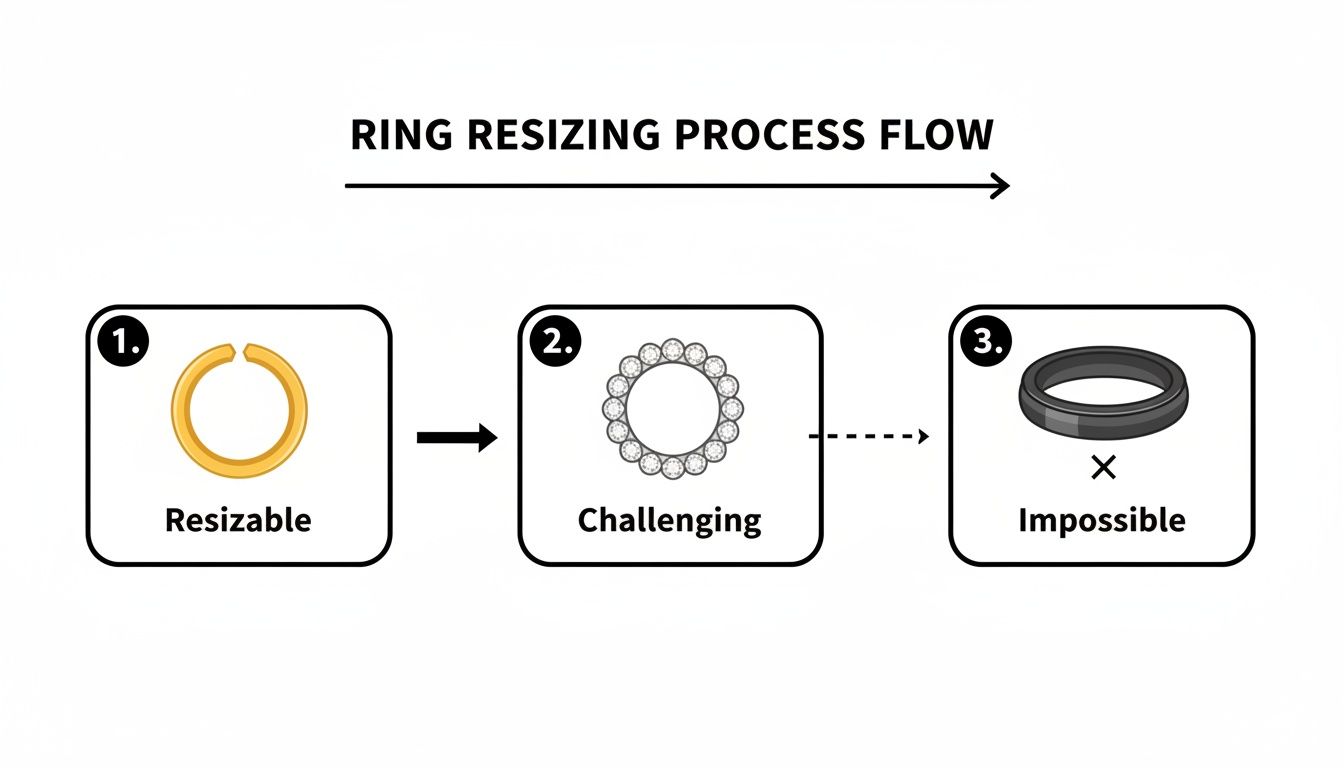
As you can see, the ring's material and style—from a simple gold band to a diamond-packed eternity ring—are the biggest factors in determining if a resize is even on the table.
Making a Ring Smaller
When a ring is too loose, the process is surprisingly surgical. A jeweler doesn't just squeeze it smaller; they perform a careful operation on the band, usually at the bottom where the work will be hidden from view.
First, they measure with extreme precision and mark exactly how much metal needs to come out. Then, using a very fine jeweler’s saw, they cut out that tiny segment. It’s a step that requires intense focus to avoid nicking any settings or engravings.
With the small piece removed, the two ends of the ring are filed and shaped so they'll meet perfectly. The jeweler then solders them together using an alloy that is an exact match for your ring's metal, whether it's 14k gold or platinum. This creates a bond that’s just as strong as the original.
The final step is all about the finish. The jeweler will meticulously file, sand, and polish the area until the seam completely disappears. When it's done right, you should never be able to tell where the ring was cut.
Making a Ring Larger
Going up in size calls for a different approach, and it all depends on how much bigger the ring needs to be. For a tiny adjustment—think half a size or less—stretching is sometimes an option.
The ring is slipped onto a tool called a ring stretcher, which gently expands the metal. But this method really only works for plain bands without any stones, as the pressure can easily damage settings or warp the ring’s shape.
For larger size increases, the process is basically the reverse of making a ring smaller.
The jeweler cuts the shank, usually at the bottom.
Instead of removing metal, they add a new, perfectly matched piece into the gap.
This new metal "bridge" is then soldered into place on both sides.
This is by far the more common and safer method for rings with gemstones because it doesn't put any stress on the settings. Afterwards, the ring goes through that same tough finishing process of filing, sanding, and polishing to make the new section totally invisible. Want a closer look? We break it all down in our deep-dive on how jewelers resize rings.
Why You Need a Professional
Ring resizing is not a weekend DIY project—it’s a highly skilled craft. A professional jeweler has to think about the metal type, the band's thickness, the stone settings, and the overall design before they even begin.
They need to choose the right solder, make sure the ring stays perfectly round, and re-secure any stones that might have loosened up. Trying this at home can lead to a lopsided band, a visible seam, or worse, a lost gemstone.
If you're curious about the entire journey from start to finish, check out a complete guide to resizing a ring, including methods, costs, and how to find a trusted jeweller. It's a fantastic resource. Ultimately, putting your ring in an expert's hands ensures the job is done right, protecting its beauty and value for years to come.
How to Budget and Find a Trusted Jeweler
Once you’ve decided resizing is the way to go, two big questions immediately come to mind: "How much is this going to set me back?" and "Who can I actually trust with my ring?"
Getting these practical details sorted is just as important as understanding the resizing process itself. Clear answers here give you the confidence to move forward and ensure your cherished piece is in the right hands.
The cost isn't a simple flat fee; it really depends on the ring's metal, its design complexity, and whether you're sizing up or down. A straightforward resize to make a simple sterling silver or gold band smaller might run you $40 to $75. Sizing up, however, usually costs a bit more because the jeweler has to add new, perfectly matched metal to the band.
Platinum rings are a different story altogether. This metal is incredibly dense and durable, which means it requires specialized tools and much higher temperatures to work with. That complexity pushes the resizing cost up to $100 to $300 or even more, especially if you need to go up by a few sizes.
Setting Realistic Timeline Expectations
Good jewelry work takes time, so patience is a virtue. While a simple sizing job on a plain gold band might be done in a few days (or sometimes even while you wait), more intricate projects need a bit more time on the bench.
Simple Adjustments (1-3 days): Think a straightforward resize down on a plain gold or silver band.
Complex Jobs (1-2 weeks): This is typical for rings with pavé or channel-set stones, as each tiny stone needs to be checked and secured after resizing.
Specialized Work (2+ weeks): Intricate vintage pieces or rings made from trickier metals like platinum may take longer, especially if materials need to be sourced.
Always ask for a clear timeline upfront. A reputable jeweler will be transparent about their current workload and the specific care your ring needs.
Vetting and Choosing Your Jeweler
This is easily the most critical step. You're not just buying a service; you're entrusting someone with an item of huge sentimental and financial value.
Start by looking for jewelers with a solid local reputation, glowing online reviews, and professional certifications. Before you even think about resizing, it helps to understand the whole picture, from managing a budget to finding the right person for the job. You can get a great overview by exploring guides on choosing the perfect wedding band.
When you visit a potential jeweler, treat it like an interview. Come prepared with questions that help you gauge their expertise.
Ask them directly: "Have you worked on rings like mine before?" Show them your ring and get specific about their experience with similar metals, settings, and designs. An expert will confidently walk you through the potential challenges and how they plan to handle them.
Your next question should be about their insurance policy. Any professional handling valuable items should have comprehensive insurance that covers your piece the entire time it’s in their workshop. Don't feel awkward asking for proof—it’s a standard and responsible business practice.
Taking these steps really pays off. The global demand for jewelry repair is on the rise, with the US alone making up 92.6% of a North American market projected to hit $6 billion by 2033. For Panther De Luxe customers, this means high-quality, trusted services are more accessible than ever, turning a simple resize into a lasting relationship with a skilled artisan.
Common Questions About Ring Resizing
Deciding to resize a ring is a big step, and it’s totally normal to have a few last-minute questions. After all, you’re trusting someone with a piece of jewelry that holds real sentimental value. Getting clear answers is the best way to feel confident about the process.
We hear the same questions from clients all the time, so we’ve put together some straightforward answers to clear up any lingering doubts.
How Many Times Can a Ring Be Resized?
This is easily one of the most common—and important—questions we get. The truth is, there’s no magic number. It all comes down to the ring’s design, the type of metal, and what it’s already been through.
A simple, solid gold or platinum band without any stones could probably handle two or three resizings over its lifetime without an issue. But each time a jeweler works on a ring, the metal experiences some stress. Think of it like bending a paperclip back and forth; eventually, it creates a weak spot. For rings with intricate details or delicate settings, that risk gets a little higher with every adjustment.
There are also a few hard limits to keep in mind:
Eternity Bands: With an unbroken circle of gemstones, these rings usually can't be resized at all. Adding or removing a section would completely disrupt the pattern.
Delicate Vintage Pieces: Older rings often have more fragile metal or settings, which makes resizing them a much riskier move.
Big Jumps in Size: Changing a ring by more than two sizes puts a lot of strain on the band. It’s a major adjustment that we generally wouldn’t recommend doing more than once.
Ultimately, the only way to know for sure is to have an expert physically inspect the ring. They can check the shank's thickness and its overall structure to tell you what’s truly possible.
Does Resizing a Ring Lower Its Value?
When a skilled professional does the work, resizing should not lower your ring’s value. You could even argue it increases its value, because what good is a ring that’s just sitting in a box? A perfectly fitting ring is one you can actually wear and enjoy.
The work of a master jeweler is invisible. They leave behind no seams, the color matching is perfect, and the final polish makes it look like it was never touched. The ring’s integrity remains completely intact.
The only time resizing threatens a ring's value is when it's a botched job. A poor resizing can leave visible solder marks, a mismatched patch of metal, an "out-of-round" shape, or weakened prongs that put your stones at risk.
This is exactly why choosing a reputable jeweler is so critical. Their craftsmanship protects not just the ring’s beauty, but its financial and sentimental worth for the long haul.
What if I Cannot Resize My Ring?
Finding out your ring can’t be resized is disappointing, but don’t lose hope. You still have some great options for making it wearable.
If a ring is too loose, temporary solutions are your best friend. They’re non-invasive and get the job done.
Ring Guards: These are small plastic or metal coils that you wrap around the bottom of the band. They’re nearly invisible when worn and fill in the extra space to create a snug fit.
Sizing Beads: A jeweler can solder two tiny metal beads to the inside of the band. These little bumps stop the ring from spinning on your finger without permanently altering the size, and they can be easily removed later.
If your ring is just a little too tight, it’s more about management. Pay attention to how your finger size fluctuates. You might find it fits perfectly in the morning or on a cool day, but gets snug after a salty meal or in humid weather. Simply timing when you wear it can make all the difference.
Will Resizing Make My Ring Weaker?
This is a huge concern for many people, but a professionally resized ring will not be weaker. Modern jewelry techniques are designed to maintain the band’s original strength. Jewelers use high-quality solders that are fully compatible with the ring's metal, whether it's 14k gold, 18k gold, or platinum.
When done right, the new join is just as strong—if not stronger—than the rest of the ring. An expert reshapes the ring perfectly and makes sure the connection point is completely seamless and solid. They also know when a resize is too extreme and would genuinely compromise the ring’s structure.
A good jeweler will always be upfront with you. If they think resizing your ring by the amount you want would weaken it, they’ll tell you and suggest other solutions. Their goal is to make sure your ring stays beautiful, secure, and durable enough for a lifetime of wear.
Now that your questions are answered, you can approach the resizing process with confidence. If you're ready to get that perfect fit, the experts at Panther De Luxe Shop are here to help. Explore our services and let us restore your treasured ring to its rightful place on your finger. Visit us at https://www.pantherdeluxe.com.
Comments