
Can You Resize a Ring? A Complete Guide to a Perfect Fit
- Luke Zucco
- Jan 2
- 14 min read

So you've received a beautiful ring, but it just doesn't quite fit. It's a common story, and the good news is, in most cases, yes, you can resize a ring.
But whether your specific ring is a good candidate for this delicate procedure comes down to a few key things: its material, its design, and just how much bigger or smaller it needs to be.
Your Guide to Achieving the Perfect Ring Fit
Think of a jeweler as a master tailor for your most precious accessories. Some materials are like fine, workable fabrics, while others are rigid and unforgiving. This guide will walk you through exactly what makes a ring resizable—or not.
Precious metals like gold, silver, and platinum are a jeweler’s best friend. They’re malleable, meaning they respond beautifully to being cut, soldered, or gently stretched. On the other hand, contemporary metals like tungsten, titanium, or ceramic are incredibly brittle. Try to bend them, and they’ll crack or shatter, making resizing pretty much impossible.
The ring's design is just as critical as its material.
Simple Bands: A plain, solid metal band is the easiest and most straightforward ring to resize.
Engraved or Patterned Bands: Rings with detailed patterns or engravings take a lot more skill. A good jeweler can often resize them, but it’s a delicate operation to keep the design looking seamless.
Eternity Bands: These are the real challenge. Because they feature a continuous circle of gemstones, there’s no plain metal to work with. Resizing an eternity band usually means rebuilding a significant part of the ring, if it's possible at all.
Luckily, resizing is one of the most common jewelry repairs out there. Statistically, about 70-80% of rings can be successfully resized, which is a huge relief for anyone with an heirloom or gift that isn't quite right.
Before you head to a jeweler, it’s a great idea to get an accurate measurement of your finger. To help with that, check out our guide to using a printable ring sizer chart for the perfect fit.
The whole point of resizing is to get an invisible repair that honors the ring's original design. A jeweler carefully alters your treasured piece to make sure it’s not just beautiful, but comfortable enough to wear for a lifetime.
To make things even clearer, here’s a quick-glance table to help you figure out where your ring might fall on the resizing spectrum.
Ring Resizing At a Glance
Ring Type / Material | Generally Resizable? | Key Considerations |
|---|---|---|
Gold, Silver, Platinum | Yes | Highly malleable and ideal for resizing up or down. |
Palladium | Yes | Similar to platinum, but can be slightly trickier to work with. |
Eternity Bands | No | Continuous stones leave no room for alterations without a full rebuild. |
Tungsten & Titanium | No | These metals are too hard and brittle; they will crack under pressure. |
Stainless Steel | Difficult | Can be resized, but requires specialized tools and expertise. |
Rose Gold | With Caution | Can be brittle and prone to cracking, especially when sizing up. |
Engraved/Patterned Rings | Yes, but tricky | Resizing can disrupt the pattern, requiring a highly skilled jeweler. |
Pave or Channel Set | With Caution | Stones may loosen during the process and need to be re-secured. |
This table should give you a solid starting point, but remember that a professional jeweler can give you the final word after seeing the ring in person. They’ll be able to assess the metal, the stone settings, and the overall construction to let you know what’s possible.
Which Rings Can and Cannot Be Resized
Figuring out if a ring can be resized is a bit like knowing if a suit can be tailored. Some fabrics, like wool, are easy for a tailor to work with. Others, like a structured leather jacket, are a completely different story. The same idea applies to jewelry—both the metal and the design determine what a jeweler can realistically do.
Malleable precious metals are a jeweler's best friend. Think of gold, platinum, and silver as the "clay" of the jewelry world. They're relatively soft, respond well to heat, and can be expertly cut, soldered, and reshaped without losing their integrity. This flexibility is why rings made from these materials are the most common candidates for resizing. For a deeper dive into one of these, our guide on whether sterling silver can be resized offers more detail.
On the other hand, you have the modern, alternative metals. These are a whole different ballgame.
Tungsten Carbide: It’s famous for being incredibly scratch-resistant, but that strength comes with a catch: it's extremely brittle. Trying to bend or cut tungsten will cause it to shatter, not resize.
Titanium: While not as brittle, titanium is exceptionally hard and has a super high melting point. This makes it very difficult for most jewelers to work with using standard tools.
Stainless Steel: It is possible to resize stainless steel, but it demands specialized equipment and expertise that not every shop has on hand.
This flowchart breaks it down visually, showing which common materials are good to go and which are usually a no-go.
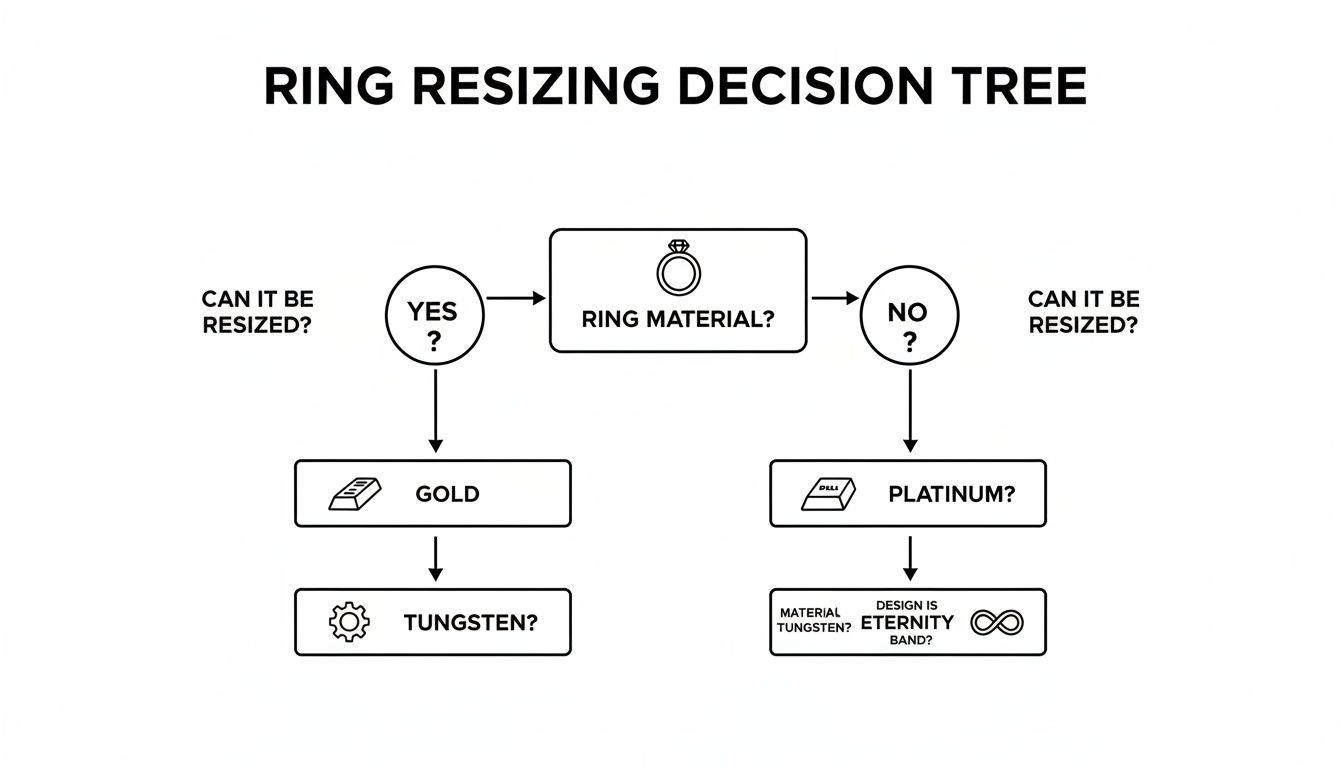
As you can see, precious metals give you the most options, while hard, modern metals and intricate designs are generally off-limits for alteration.
How a Ring's Design Impacts Resizing
Beyond the metal itself, the ring's construction is the next biggest factor. Even a gold ring can be impossible to resize if the design is too complex. A simple, solid band is a jeweler’s dream—it's a clean slate, making it the easiest type of ring to adjust.
However, certain designs throw a wrench in the works:
Eternity Bands: With a continuous circle of gemstones, there’s no bare metal to cut into. Resizing an eternity band means removing stones and rebuilding the setting—a process so complex and expensive it's rarely worth it.
Tension Settings: These rings are cool because they hold a gem in place using the band's pressure. But if you cut that band, the tension is gone, and the stone could fall right out. The ring would have to be completely remade to change the size.
Intricate Patterns: Rings with detailed engravings or delicate milgrain that wrap all the way around are tough. A skilled jeweler might manage a tiny adjustment, but it often creates a noticeable break in the pattern.
Ultimately, asking "can my ring be resized?" depends just as much on its style as its substance. Simple designs in precious metals are almost always a yes, while complex settings and hard metals are usually a no.
How Jewelers Resize a Ring: The Process Explained
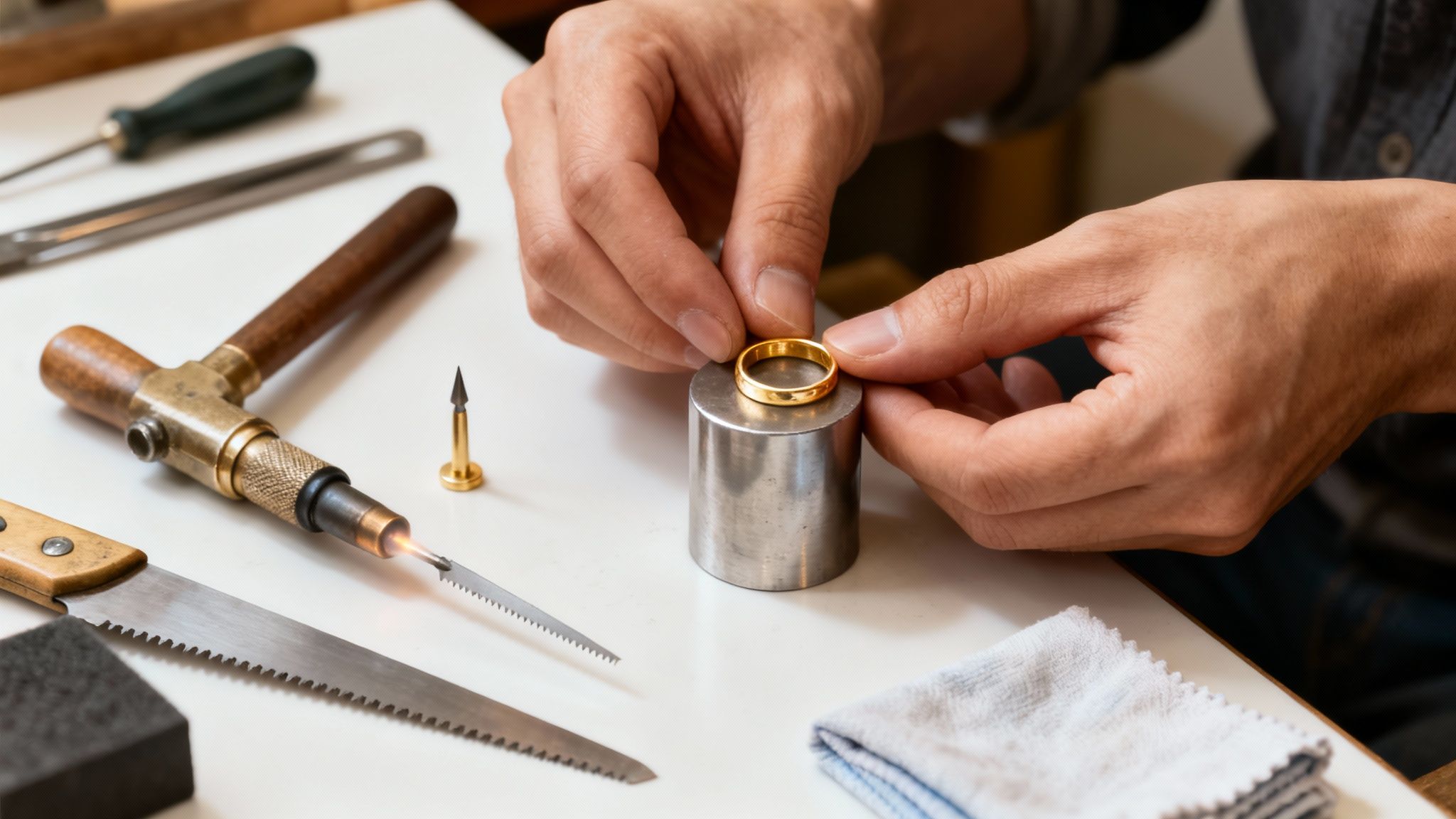
Ever wondered what actually happens behind the jeweler's bench when a ring gets resized? It’s a delicate blend of art and science, a lot like a skilled tailor altering a custom suit to fit just right. This is way more than just bending metal; it involves precise cutting, soldering, and finishing to make sure the final result is absolutely seamless.
Whether your ring needs to go up or down in size dictates the exact technique a jeweler will use. Each method requires a steady hand and a deep understanding of how different metals behave under heat and pressure. The goal is always the same: to create a perfect fit while keeping the ring's original beauty and strength intact.
Making a Ring Smaller
Making a ring smaller is generally the more straightforward of the two processes. It involves carefully removing a small piece of the band, usually from the bottom where it's least noticeable and won't interfere with the design.
Here’s a quick look at the steps:
Precise Measurement: First, the jeweler measures your finger and the ring to figure out exactly how much metal needs to go.
Cutting the Shank: Using a fine jeweler's saw, a small section of the shank (the band) is expertly cut out.
Reshaping and Soldering: The two newly cut ends are then carefully brought together, forming a perfect circle again. The jeweler solders the join using a metal alloy that perfectly matches your ring's material and color.
Finishing and Polishing: The final step is all about the details. The soldered area is meticulously cleaned, filed, and polished until the seam becomes completely invisible. When done correctly, you should never be able to tell where the ring was cut.
This method also ensures that any gemstones are kept safely away from the heat and that the overall shape of the ring remains balanced.
Making a Ring Larger
Enlarging a ring can be done in two main ways, depending on how much of an adjustment is needed and the style of the ring.
Stretching the Metal For minor size increases—typically up to half a size—a jeweler can sometimes stretch the ring. This is done by placing the band on a tool called a ring mandrel and applying gentle, even pressure to expand the metal. However, this method really only works for plain bands without stones, as the process thins the metal slightly and can weaken or compromise any settings.
Important Takeaway: While stretching is a quick option for a small tweak, it's not always the best choice. Adding metal is usually the preferred method for preserving a ring's strength and durability, especially for valuable pieces like engagement rings.
Adding a Piece of Metal For larger adjustments or rings with stones, the process is pretty much the reverse of sizing down. The jeweler will cut the shank at the bottom and insert a small, perfectly matched piece of metal. This new piece is then soldered securely into place on both ends.
After the new metal is added, the ring goes through the same tough finishing and polishing process to make sure the additions are entirely seamless. This is the most common and safest way to increase a ring's size, guaranteeing its strength and appearance remain pristine.
Understanding the Cost and Timeline for Resizing
When you realize your ring needs resizing, two questions probably pop into your head right away: "How much is this going to set me back?" and "How long will I be without it?" There’s no simple, one-size-fits-all answer, because every ring tells a different story.
Think of it like getting a car repaired. Fixing a tiny scratch is a quick, inexpensive job, but rebuilding the engine is a whole different ball game. The same logic applies here. A plain gold band is a straightforward fix, but a complex platinum engagement ring with a halo of diamonds requires far more expertise and time.
The final price and timeline really boil down to what your ring is made of, how complex its design is, and how much bigger or smaller it needs to be.
Breaking Down the Cost Factors
You can expect to pay anywhere from $20 to over $150, though highly intricate rings can certainly cost more. One thing to keep in mind is that sizing up is almost always more expensive than sizing down. Why? Because to make a ring larger, the jeweler has to add new precious metal, which adds to both material and labor costs.
Here are the main things that will influence your final bill:
Type of Metal: Gold and silver are the easiest metals to work with, making them more affordable to resize. Platinum, on the other hand, is a tough one. It has an incredibly high melting point and requires specialized tools and a lot more skill, which drives up the cost.
Ring Complexity: A simple, solid band without any stones is the dream job for a quick resize. But if your ring has channel-set stones, delicate engravings, or a pavé setting, the jeweler has to painstakingly check and tighten every single stone after resizing. That extra labor adds up.
Size Adjustment: A tiny tweak of half a size will naturally cost less than a major change of two or three sizes. Big adjustments require more metal and more work to perfectly reshape the band without leaving a trace.
It’s a common myth that ring resizing comes with a flat fee. The reality is that every ring presents its own unique puzzle, and the price reflects the specific materials, skill, and time needed to get the job done right—without ever compromising your ring's beauty or strength.
What to Expect for Turnaround Time
Just like the cost, the time it takes to get your ring back can vary quite a bit. This isn't usually a "while-you-wait" kind of service. A simple resizing on a plain wedding band could be done in just a few hours or maybe a couple of days, depending on how busy the jeweler is.
For more complicated pieces, though, a little patience goes a long way. If you have an engagement ring with delicate side stones or an ornate design, the jeweler will need more time to ensure every single detail is perfect. This could mean a wait of one to two weeks, or sometimes even longer.
For a deeper dive into what to expect, check out our complete guide on how long it takes to resize a ring. The best advice? Always ask your jeweler for an estimated timeline upfront. That way, you'll know exactly when you can expect to have your treasured piece back on your finger where it belongs.
Why Smart Rings and Modern Materials Are Off-Limits for Resizing
While most traditional metal rings have a little wiggle room for adjustments, the world of wearable tech and modern materials plays by a completely different set of rules. Smart rings, like the popular Oura Ring, are a perfect example of jewelry that's simply not built to be altered.
Think of it like trying to resize a tiny, intricate computer, because that's essentially what a smart ring is. These devices are packed with delicate electronics—sensors, batteries, and microprocessors—all carefully sealed inside the band. The intense heat and physical force a jeweler uses for resizing would instantly fry those sensitive components, leaving you with a very expensive, useless piece of tech. This is exactly why manufacturers put so much effort into creating detailed sizing kits to help you nail the fit from day one.
The Un-Resizables: Materials That Don't Bend or Budge
Beyond the high-tech stuff, some of the coolest modern materials in jewelry just aren't resizable because of their physical properties. Unlike gold or platinum, which are soft and malleable, these materials are rigid, and in some cases, surprisingly brittle.
Ceramic: Famous for its sleek, scratch-proof finish, ceramic is incredibly hard. That same hardness, however, is its downfall when it comes to resizing. Any attempt to cut or bend a ceramic ring won't end well—it will just shatter.
Wood: Wooden rings are beautiful, but they're carved from a single block of material. Their natural grain and structure can't be pieced back together. Cutting into one would destroy its seamless look and compromise its integrity for good.
Silicone: Sure, silicone bands are flexible, but they are molded into a fixed size. There's simply no way for a jeweler to add or remove material to permanently change how it fits.
With these materials, the size you buy is the size you're stuck with. There’s no "after-purchase tailoring" here, which makes getting that initial measurement spot-on absolutely critical.
The global smart ring market is expected to hit USD 271.8 million by 2030, but getting the size right is a massive hurdle. Some reports show that a staggering 40-50% of users run into fit issues. An improper fit doesn't just feel wrong; it can slash health tracking accuracy by 15-20%. This leads to return rates as high as 25% for sizing problems alone. You can dig deeper into the smart jewelry market's growth and challenges on Grand View Research.
Clever Alternatives When Resizing Is Not an Option
So, you’ve just been told your favorite ring can't be resized. Don't despair. It’s a common scenario, especially with full eternity bands or rings made from tough metals like tungsten. But it’s definitely not the end of the road.
When cutting into the metal is off the table, jewelers have a whole bag of tricks to get that perfect, secure fit without any permanent changes. Think of these as clever workarounds—both temporary and semi-permanent—that let you wear your beloved piece comfortably and safely.
Temporary and Reversible Solutions
For a quick, non-invasive fix, temporary sizers are your best friend. They're perfect for minor fit issues or if your finger size tends to change with the seasons (which is more common than you'd think!).
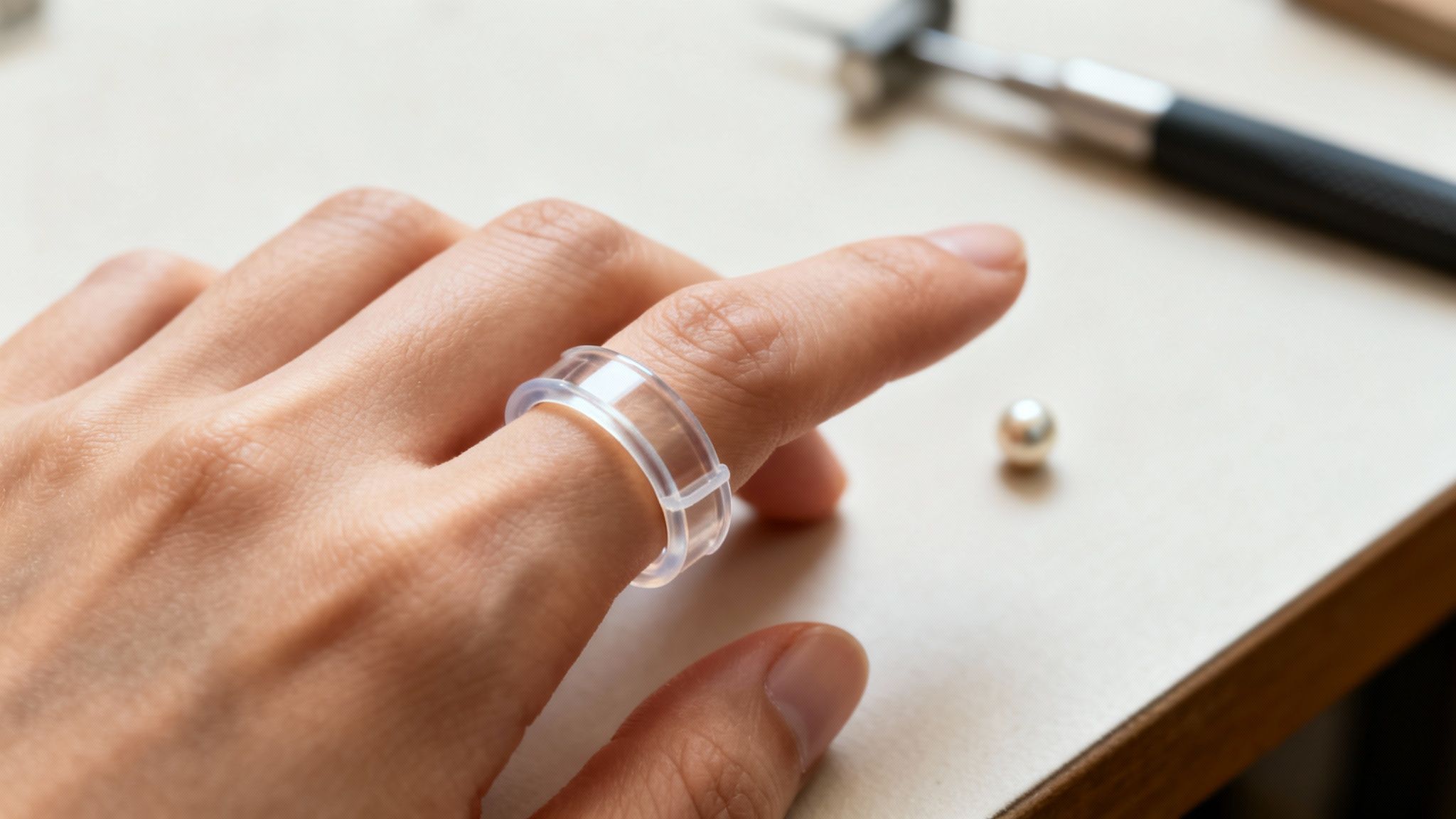
Ring Guards and Sizers: These are typically small coils made of clear plastic or silicone that you wrap around the bottom of the band. They’re nearly invisible and work by simply filling in the extra space, making the ring feel snugger in seconds.
Sizing Bars: A spring insert or a small hinged bar can be clipped or soldered inside the ring’s band. This is a brilliant solution for anyone with larger knuckles, as the bar flexes to slide over the knuckle then settles back into place for a secure fit at the base of your finger.
Modern solutions are always popping up, too. Consider exploring innovative products like Ring String that offer new, user-friendly ways to get a custom fit at home.
The real beauty of these fixes? They require zero permanent changes to your ring. You can add them, remove them, and adjust them as needed, all while keeping the original piece completely intact.
More Permanent But Still Reversible Options
If you need something a little more durable but still want to avoid cutting the ring, a jeweler can add metal to the inside of the band instead.
One of the most popular methods is adding sizing beads. A jeweler will solder two tiny metal balls to the inner surface of the band. These beads do two jobs at once: they make the ring fit about a half-size smaller and also help stop top-heavy rings from spinning around on your finger. It's a secure, long-term solution that a jeweler can easily remove later on if you ever need to.
Comparing Ring Resizing Alternatives
Choosing the right alternative can feel tricky. Each option has its own strengths, whether you need a quick fix for a night out or a more durable solution for daily wear. This table breaks down the most common choices to help you decide.
Solution | Best For | Cost Estimate | Pros | Cons |
|---|---|---|---|---|
Ring Guards/Sizers | A quick, temporary fix for rings that are slightly too big (1/4 to 1 size). | $5 - $15 | Inexpensive, DIY, and completely removable. | Can sometimes be felt on the finger; may need replacing. |
Sizing Beads | Top-heavy rings that spin; needing a semi-permanent fix of about a half-size. | $40 - $100 | Prevents spinning, durable, and professionally installed. | Can feel unusual at first; requires a jeweler to add/remove. |
Spring Inserts | People with large knuckles and slim fingers; needing up to a full size adjustment. | $75 - $150 | Excellent for knuckle issues; provides a snug, custom fit. | More expensive; must be installed by a professional. |
Ring Remake | Rings that are impossible to resize (e.g., tungsten) or need a major size change. | $200+ | Creates a brand new, perfectly fitting ring while preserving stones. | Most expensive option; sentimental value of the original band is lost. |
Ultimately, the best alternative depends on your ring's design, how much of a size change you need, and your personal comfort. A quick chat with your jeweler can point you in the right direction, ensuring you find a solution that lets you enjoy your ring for years to come.
Your Top Ring Resizing Questions, Answered
When you're thinking about resizing a ring, especially one that holds sentimental value, a few questions always seem to pop up. Getting clear, honest answers helps you know what to expect and make the best call for your jewelry, keeping it strong and beautiful for the long haul.
How Many Times Can You Resize a Ring?
For most rings made of gold or platinum, you can safely resize them two to three times over their entire lifetime. It's a bit like bending a paperclip back and forth—each time the metal is heated and reshaped, it undergoes stress. Doing it too often, especially with big size changes, can eventually weaken the band.
That’s why it’s so important to get a professional’s opinion. A good jeweler can look at the ring’s current condition, see how thick the band is, and tell you if another resize is a safe bet.
Will Resizing Damage My Gemstones?
A skilled jeweler’s top priority is protecting your gemstones, and they have a few tricks up their sleeve to do it right. Their method really depends on the stone itself.
Heat-Sensitive Stones: Softer, more delicate gems like opals, pearls, and emeralds can't handle high heat. A jeweler will almost always remove these stones before touching the band with a torch and will carefully reset them once the work is done.
Durable Stones: For tougher stones like diamonds, a jeweler might be able to leave them in the setting. They often use a special heat-absorbing gel or a high-tech laser welder that focuses the heat precisely on the metal, keeping the gems cool and safe.
The best insurance for your gemstones is choosing an experienced, reputable jeweler. Their expertise is what stands between a flawless job and an accident, ensuring your stones stay safe and sparkling.
Does Resizing a Ring Decrease Its Value?
When it’s done right, resizing absolutely should not decrease your ring's value. A professional job is seamless. You shouldn't be able to see where the work was done, and the ring’s strength and beauty will be completely preserved. If anything, making a ring wearable again increases its personal value immensely.
The only real risk comes from a sloppy job that leaves visible seams, thins out the band too much, or compromises the settings. This is exactly why investing in a true expert is non-negotiable for any piece you care about.
At Panther De Luxe Shop, we believe every piece of jewelry is meant to be worn and loved. Explore our collection to find your next timeless piece, crafted with care and designed to last a lifetime. Find your perfect fit at https://www.pantherdeluxe.com.
Comments