
what is rhodium plated jewelry? A Quick Guide
- Luke Zucco
- 2 days ago
- 13 min read

Rhodium plated jewelry is what you get when you take a beautiful piece made from a metal like sterling silver or even white gold and give it a super-thin, protective coating of rhodium. This isn't just any metal—it's part of the platinum family, and it delivers a stunningly bright, mirror-like shine that’s hard to beat. More than just looks, it also protects the jewelry from scratches and tarnish.
What Is Rhodium Plated Jewelry?
Think of rhodium plating as a luxurious, protective shield for your favorite jewelry. It’s an impossibly thin layer of rhodium—one of the rarest and most valuable precious metals on the planet—applied over another metal. The technique, called electroplating, actually bonds the rhodium to the base metal, creating a finish that’s both durable and dazzling.
So, why do jewelers do this? It comes down to two things: making the piece look incredible and making it last longer. Rhodium gives jewelry a crisp, reflective white finish that outshines both sterling silver and white gold. It also acts as a tough barrier, guarding the softer metals underneath from the bumps and scrapes of everyday life.
It’s a lot like the high-gloss, protective topcoat on a luxury car. It doesn't change the car itself, but it makes the color pop and protects the paint from minor dings and the elements. Rhodium plating does the exact same thing for your jewelry.
This protective quality is a big reason why the rhodium plating service market has become so vital to the jewelry world. It's a market valued at around $36.2 million globally, and it's expected to climb to nearly $44.7 million by 2031. That growth reflects a real demand from people who want jewelry that looks brilliant and wears well over time.
Key Benefits of Rhodium Plating
Beyond its undeniable good looks, rhodium plating has some serious practical advantages. It’s a go-to choice for everything from engagement rings to everyday accessories for a few key reasons.
Exceptional Brilliance: It gives jewelry a bright, cool-toned white luster that makes diamonds and other gemstones look even more vibrant.
Superior Durability: Rhodium is a seriously tough metal—harder than gold, silver, and platinum. That means excellent resistance to scratches and scuffs.
Tarnish Resistance: It forms a barrier that stops sterling silver from oxidizing and turning dull, keeping it looking brand new for longer.
Hypoallergenic Properties: Since rhodium is nickel-free, it creates a safe barrier between your skin and any potentially irritating alloys in the base metal. For a deeper dive into this, check out our guide on hypoallergenic jewelry.
The Rhodium Electroplating Process Step By Step
Creating that brilliant, mirror-like finish on rhodium plated jewelry is a precise science, a perfect blend of chemistry and skilled craftsmanship. The technique is called electroplating, a fascinating process that uses an electric current to apply a super-thin layer of one metal onto another.
Think of it like this: an electric current acts like a powerful, controlled magnet, wrapping a delicate rhodium film around a piece of jewelry. This ensures a seamless, durable bond that looks incredible. It’s far more than a simple dip-and-dry job; every step has to be perfect to achieve that flawless, high-end look.
The Foundation: A Meticulous Cleaning
Before any plating can even begin, the jewelry has to be absolutely spotless. This is probably the most critical part of the whole process. Even a microscopic speck of dust, an oily fingerprint, or a tiny bit of leftover polishing compound can completely ruin the plating, preventing the rhodium from sticking properly. Jewelers use powerful ultrasonic cleaners and specialized solutions to strip away every last impurity.
This deep cleaning ensures the surface of the base metal—whether it's sterling silver or white gold—is a perfectly pure canvas. It's this pristine surface that allows the rhodium to form a strong, lasting bond. Skip this, and you risk plating that peels, flakes, or just looks uneven.
This diagram shows how a piece is transformed from a simple base metal to a brilliantly plated final product.
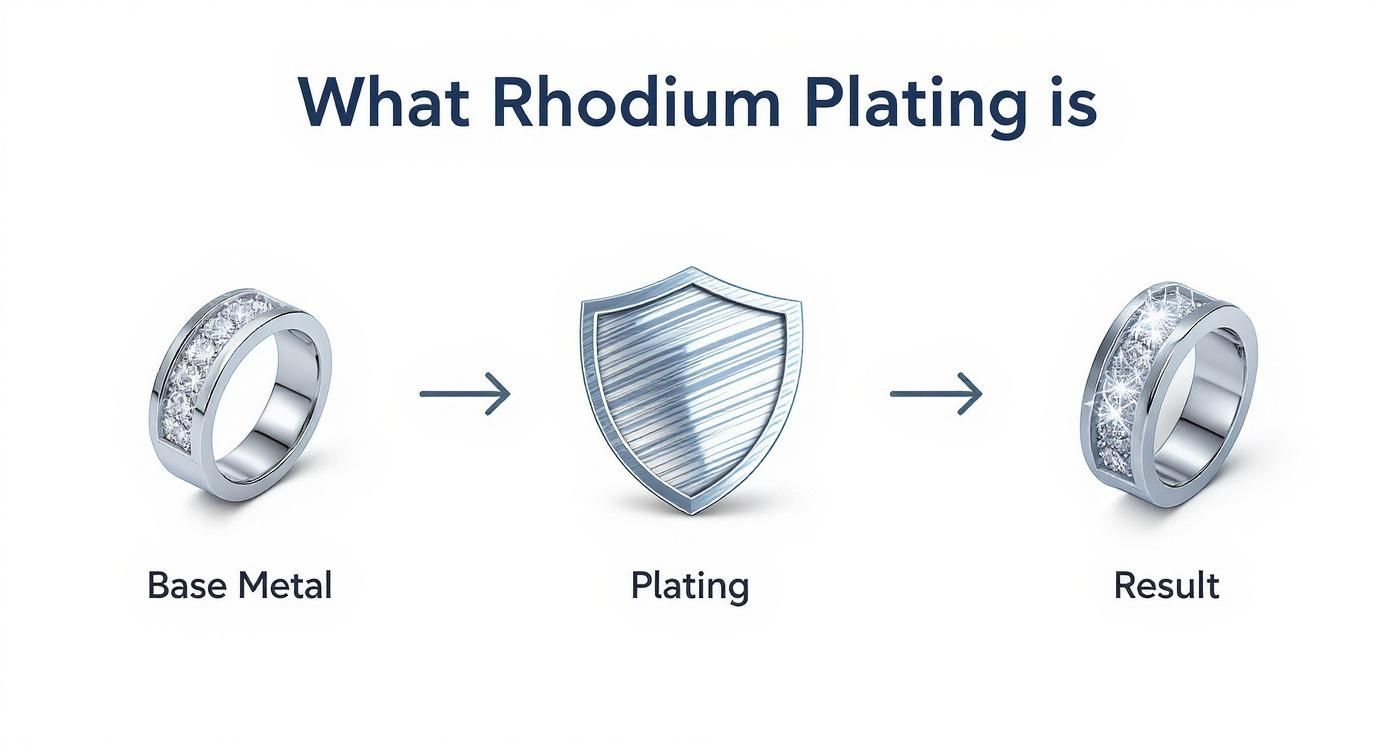
As you can see, the process adds a protective, beautifying layer that makes the original piece far more durable and radiant.
The Electroplating Bath
Once it’s perfectly clean, the piece is submerged in a special solution that contains rhodium particles. This is where the real magic happens. A carefully controlled electrical current is passed through this bath, kicking off a chemical reaction.
Here’s how it works: the electric current gives the rhodium particles in the solution a positive charge, while the jewelry itself gets a negative charge. And just like with magnets, opposites attract. The positively charged rhodium ions are drawn directly to the negatively charged jewelry, where they deposit themselves in a thin, perfectly uniform layer across the entire surface.
The key steps in this stage are:
Submersion: The piece is carefully lowered into the rhodium solution.
Electrification: A specific voltage is applied for a precise amount of time.
Bonding: Rhodium particles create a molecular bond with the base metal's surface.
This intricate dance of ions is what creates the strong, consistent coating that defines rhodium plated jewelry. The thickness of the plating, usually just 0.75 to 1.5 microns, is controlled by how long the piece is in the bath and the intensity of the current.
While the specifics are unique to rhodium, you can get a better sense of how it all works by looking at similar techniques. For example, exploring the gold electroplating process shows how these methods compare.
Finally, the piece is rinsed and carefully dried, revealing its stunning new brilliance.
Weighing the Pros and Cons of Rhodium Plating
Deciding if rhodium plated jewelry is right for you means looking at both its incredible strengths and its practical limitations. This finish offers a stunning mix of beauty and resilience, but it also comes with a specific maintenance routine. Getting this balance right is the key to choosing a piece that fits your lifestyle.
The main draw of rhodium is its visual punch. It gives jewelry an unmatched brilliance and a crisp, reflective white shine that elevates any design. This isn't just about looking luxurious—it actually makes diamonds and other gemstones pop, enhancing their natural sparkle.
The Clear Advantages of Rhodium Plating
The benefits of rhodium go way beyond its good looks. It brings a few practical advantages to the table that make it a go-to choice for everything from everyday rings to special occasion pieces. The biggest wins are its toughness and how gentle it is on your skin.
Incredible Durability: Rhodium is an exceptionally hard metal. This natural toughness adds a strong, protective layer over softer metals like sterling silver or white gold, making your jewelry much more resistant to the scratches and scuffs of daily life.
Stunning Luster: The bright, mirror-like finish is rhodium's signature move. It gives jewelry a cool, brilliant white color that many feel is even more striking than platinum or natural white gold.
Hypoallergenic Qualities: For anyone with sensitive skin, rhodium plating is a game-changer. It’s completely nickel-free and creates a safe barrier between your skin and any potentially irritating metal alloys in the base jewelry, so you can wear your favorite pieces in comfort.
Rhodium plating essentially offers the best of both worlds: the high-end, brilliant look of a rare platinum-group metal combined with a protective shield that preserves the jewelry underneath. It’s a practical luxury that boosts both beauty and longevity.
Understanding the Drawbacks and Maintenance
While the benefits are compelling, it’s just as important to know the downsides. The main thing to remember is that rhodium plating is a surface coating, not a permanent treatment. Over time, this layer will wear away, which brings up a couple of key points.
First, the need for re-plating is a reality. As the thin rhodium layer wears down from friction, the base metal underneath will start to peek through. This happens fastest on high-contact items like rings. To keep that original brilliance, you'll need to have the piece professionally re-plated every one to three years, depending on how often you wear it.
Second, there’s the cost factor. Rhodium is one of the rarest and most expensive precious metals on earth. While the amount used for plating is tiny, its high market value adds to the initial cost of the jewelry and the ongoing expense of re-plating. The global rhodium market, valued at about $2 billion, is expected to grow, driven largely by its use in jewelry for that unique mix of beauty and protection. You can learn more about the global rhodium market growth on dataintelo.com.
Ultimately, choosing rhodium plated jewelry is a trade-off. You get superior brilliance, durability, and hypoallergenic benefits in exchange for a long-term commitment to periodic maintenance.
To make it even clearer, here’s a quick summary of what you're getting into.
Rhodium Plated Jewelry Pros and Cons at a Glance
Feature | Benefit (Pro) | Drawback (Con) |
|---|---|---|
Appearance | Bright, mirror-like white finish that enhances gemstones. | The original color of the base metal may show as plating wears off. |
Durability | Creates a hard, protective layer that resists scratches and tarnishing. | The plating is not permanent and will wear down over time. |
Hypoallergenic | Nickel-free and creates a barrier, making it safe for sensitive skin. | The hypoallergenic benefit is lost once the plating wears away. |
Maintenance | Easy to clean with mild soap and water. | Requires professional re-plating every 1-3 years to maintain its look. |
Cost | Provides the look of a very expensive metal for a lower initial price. | The long-term cost of re-plating can add up over the piece's lifetime. |
This table shows the give-and-take that comes with rhodium plating. You get an absolutely gorgeous, durable finish, but you have to be prepared for the upkeep. For many, that's a trade they're happy to make.
How Rhodium Plating Compares to Other Finishes
To really get why rhodium plating is such a big deal in jewelry, it helps to see how it stacks up against the other options out there. Every metal and finish has its own personality—its own look, feel, and level of upkeep.
When you put them side-by-side, you start to see the magic of rhodium’s crisp, cool brilliance. It’s not just a matter of color; it’s about a whole different league of performance when it comes to durability and keeping tarnish at bay.
Rhodium Plated White Gold Versus Natural White Gold
Here’s a little secret: most white gold isn’t naturally that pure, bright white you see in the display case. It’s actually an alloy, made by mixing pure yellow gold with white metals like palladium or nickel. Because of that, it almost always has a faint, warm, yellowish hue.
This is exactly where rhodium plating comes in. By adding a thin layer of rhodium, that yellowish tint vanishes, replaced by a brilliant, cool-white, mirror-like finish. It's the look everyone pictures when they think of a classic white gold engagement ring. Essentially, rhodium is what gives white gold its premium, iconic appearance.
Natural white gold has a subtle warmth, but rhodium plating delivers that ultra-bright, reflective white that makes diamonds and gemstones appear even more vibrant. The plating is the industry standard for achieving that classic look.
Rhodium Plated Silver Versus Sterling Silver
Sterling silver is stunning, but its one major weakness is tarnishing. When it’s exposed to air, silver oxidizes and develops a dull, dark layer that needs constant polishing. It’s a natural process, but let’s be honest—it can be a real pain.
Rhodium plating is like a protective forcefield for your silver. It creates a barrier that stops oxygen and sulfur from ever reaching the metal underneath. The result? No more tarnishing, and way less time spent polishing.
Besides keeping your silver bright, the plating adds some serious scratch resistance. Sterling silver is a fairly soft metal, but the hard rhodium layer acts as an excellent defense against the everyday scuffs and bumps, keeping your jewelry looking flawless.
Rhodium Plating Versus Solid Platinum
At first glance, rhodium plating and solid platinum can look almost identical. Both have that beautiful, cool-white shine. But underneath the surface, there are key differences in their feel, cost, and how they age over time.
Color and Luster: While both are white, rhodium has a slightly brighter, more reflective shine, almost like a mirror. Platinum is a naturally grayish-white that develops a soft, satin finish over time—a feature known as a patina.
Hardness and Durability: Rhodium is a much harder metal, which makes it more resistant to scratches. But since it's just a coating, it will eventually wear away. Platinum is softer and scratches more easily, but because it’s a solid metal, scratches just move the metal around instead of revealing another color.
Cost and Maintenance: Platinum is significantly more expensive than rhodium-plated jewelry because it's denser and rarer. However, it needs less long-term maintenance—just a good polish now and then. Rhodium-plated pieces are much more affordable upfront but will need to be re-plated every 1-3 years to keep looking their best.
Essential Care Tips for Rhodium Plated Jewelry
Keeping that brilliant, mirror-like finish on your rhodium plated jewelry is simpler than you might think. It’s not about complicated routines, but rather a gentle, consistent approach. Proper care protects that ultra-thin rhodium layer, ensuring your pieces hold onto their stunning luster for as long as possible.
The golden rule? Treat your jewelry with kindness. Rhodium is incredibly hard, yes, but the plating itself is thin and can wear down from friction and harsh chemicals. A few simple daily habits can make all the difference in extending its life and shine.
Simple Cleaning and Daily Wear Rules
Think of your rhodium plated jewelry as the last thing you put on and the first thing you take off. This simple mantra helps you dodge contact with cosmetics, lotions, and perfumes that can slowly eat away at the plating.
Here are the essential do’s and don’ts to keep in mind:
What You Should Do
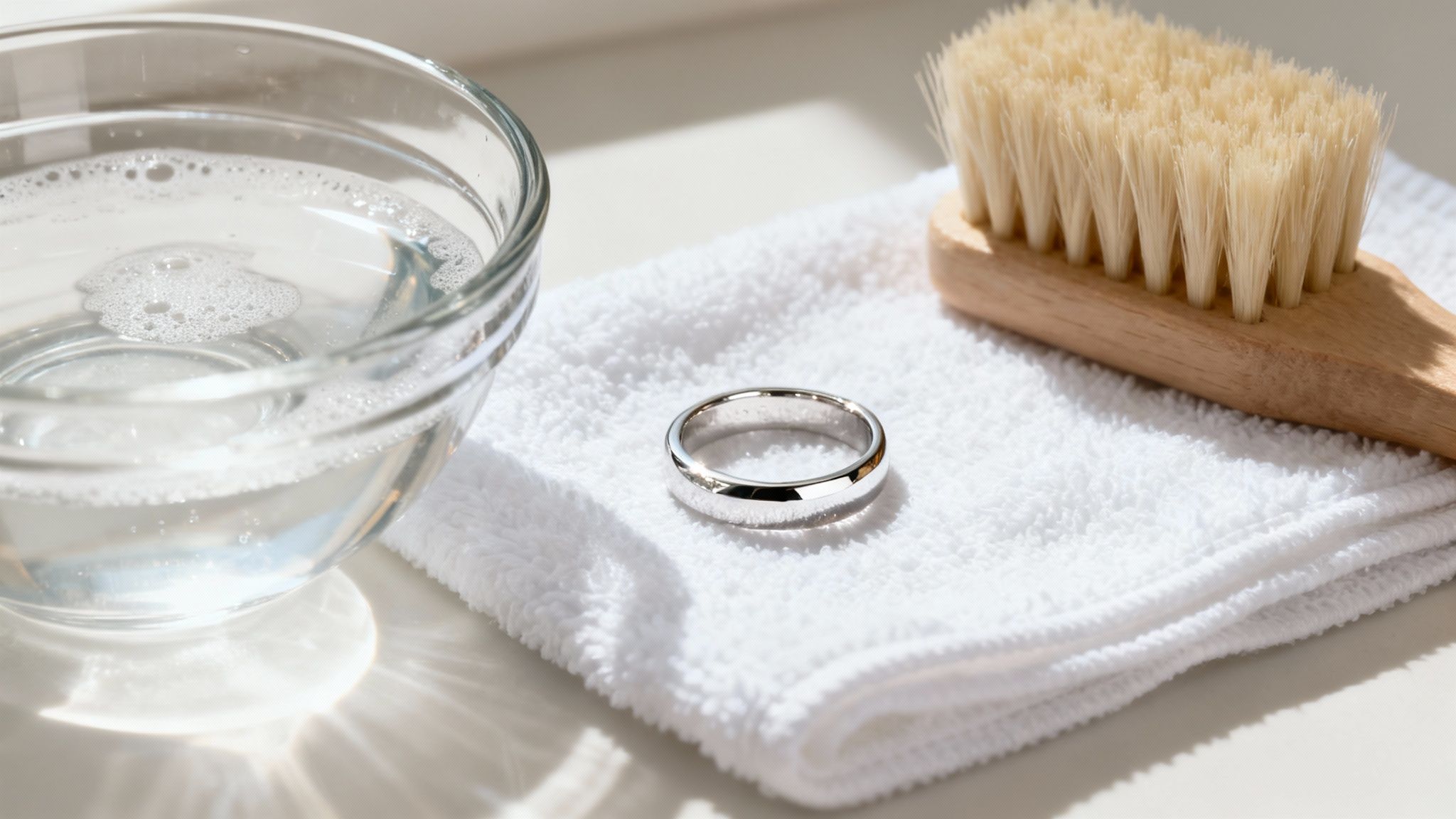
Clean Gently: A simple solution of lukewarm water with a few drops of mild, phosphate-free dish soap is all you need. Swirl the jewelry in the water, and only use a super soft-bristled toothbrush for hard-to-reach spots.
Pat Dry Carefully: After a quick rinse in clean water, gently pat the piece completely dry with a soft, lint-free cloth. Avoid rubbing—that friction is the enemy of a long-lasting rhodium finish.
Store Individually: Keep your plated pieces in separate soft pouches or a lined jewelry box. This prevents them from getting scratched up by your other jewelry.
Pro Tip: For pieces that see a lot of action, like rings and bracelets, give them a quick wipe with a soft, dry cloth after each wear. This removes skin oils and moisture that can speed up the wear and tear on the plating.
What You Must Avoid
Harsh Chemicals: Never let your jewelry come into contact with chlorine (think pools and hot tubs), bleach, hairspray, or other aggressive cleaning agents. These substances will ruin the rhodium finish in a hurry.
Abrasive Cleaners: Stay away from toothpaste, baking soda, or any commercial jewelry cleaners with gritty particles. These will literally scratch and strip the plating right off. To maintain your pieces, understanding the right jewelry care products is key.
Intense Activities: Always take your jewelry off before exercising, swimming, cleaning, or gardening. It’s the easiest way to prevent physical damage and chemical exposure.
Proper care is especially crucial for pieces with a sterling silver base, as it’s the rhodium layer that keeps the underlying metal from tarnishing. If you want to learn more, our guide explains how to remove tarnish and restore jewelry shine for all kinds of metals.
Knowing When and How to Re-Plate Your Jewelry
Because rhodium plating is a surface finish, it’s not meant to be permanent. Think of it less like a forever feature and more like a high-quality, protective shield for your jewelry—one that needs a refresh every now and then to keep it looking its best. Over time, friction from daily life will gradually wear the rhodium layer away. It's just part of the deal.
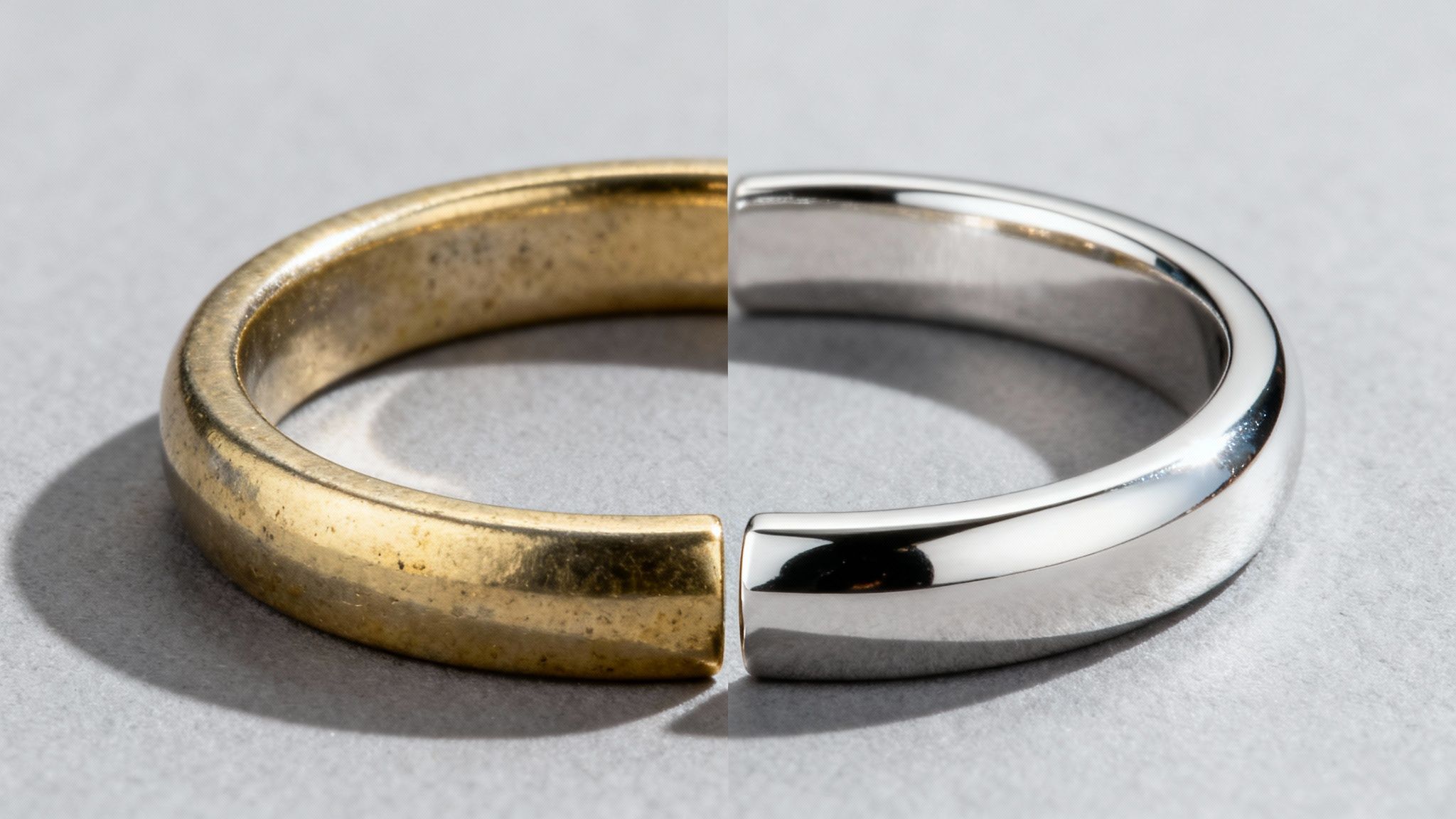
So, how do you know when it’s time for a touch-up? It’s actually pretty easy to spot. If you notice that brilliant, cool-white shine starting to look a little dull, or you see a faint yellowish tint peeking through on a white gold piece, that’s your signal. The base metal is starting to say hello. This is completely normal for rhodium-plated jewelry.
The lifespan of your plating usually falls somewhere between 1 to 3 years, but this can vary wildly depending on how you wear your piece. A ring you wear every single day is going to need re-plating much sooner than a pair of earrings you only bring out for special occasions.
Finding a Pro for Re-Plating
Once you see the signs, it's time to find a reputable jeweler. The process itself is straightforward: they’ll professionally strip any remaining rhodium, polish the base metal underneath to perfection, and then re-apply a fresh, new layer through electroplating.
When you’re looking for someone to do the job, here are a few things to keep in mind:
Look for Experience: Find a jeweler who specifically mentions they have experience with rhodium plating. It's a common service, but you want someone who does it well.
Get a Quote: Ask about the cost upfront. Prices can vary depending on the size and complexity of the jewelry.
Ask About Turnaround Time: Find out how long they'll need to keep your piece.
Historically, rhodium’s extreme rarity made it the ultimate choice for plating fine jewelry. With global production hovering around just 25 tons per year, its value isn’t dropping anytime soon. A standard plating thickness of 0.75 to 1.5 microns is the sweet spot that balances cost with durability, giving you that 1-3 year lifespan. If you're curious, you can learn more about the global rhodium supply on ResearchAndMarkets.com.
Re-plating isn't a repair—it's standard maintenance. Once you start thinking of it that way, it just becomes a normal part of caring for the jewelry you love.
And if you’re wondering why your white gold piece is showing that yellow tint in the first place, our guide on why white gold turns yellow breaks down everything you need to know about the metal itself.
Common Questions About Rhodium Plating
Navigating the world of jewelry finishes can bring up a few questions. To help clear things up, we’ve put together answers to the queries we hear most often, so you can feel confident in the pieces you choose.
Is Rhodium Plating Real Metal?
Absolutely. Rhodium is a genuine, incredibly rare, and precious metal. It’s part of the platinum group, famous for its exceptional durability and brilliant, silvery-white shine. The layer on your jewelry is 100% real rhodium—it’s just applied as a very thin, protective coating.
Can You Be Allergic to Rhodium Plating?
It’s exceptionally rare for someone to have an allergic reaction to rhodium. The metal is naturally nickel-free and is considered one of the safest choices for sensitive skin, making it a fantastic hypoallergenic option. Think of it as a protective barrier between your skin and the base metal of the jewelry.
Because it’s inert and hypoallergenic, rhodium plating lets people with metal sensitivities comfortably wear pieces that might otherwise cause irritation.
How Thick Is the Plating on Jewelry?
Rhodium plating is incredibly thin and is typically measured in microns (which is one-millionth of a meter). A quality plating usually falls between 0.75 and 1.5 microns thick.
That might sound tiny, but it’s the industry sweet spot. This thickness offers a great balance of durability for everyday wear without making the piece unnecessarily expensive. A thicker layer simply means longer-lasting protection against scratches and tarnish.
What Does It Cost to Re-Plate a Ring?
The cost to get a piece of jewelry re-plated can vary, but you can generally expect it to range from $50 to over $150. A few things will influence the final price:
The size and complexity of the piece: A simple band will naturally cost less to re-plate than an intricate engagement ring setting.
The current market price of rhodium: Like any precious metal, its cost fluctuates.
The jeweler's labor and expertise: A master jeweler's skill and time are part of the investment in restoring your piece.
At Panther De Luxe Shop, we believe in the lasting beauty and practical benefits of rhodium plated jewelry. Explore our collection to find a piece that combines brilliant style with everyday durability.
Comments