
Sapphire vs Diamond Engagement Rings A Definitive Guide
- Luke Zucco
- 1 day ago
- 13 min read
When you get down to it, the choice between a sapphire and a diamond engagement ring is all about what you value most. Diamonds bring that unmatched, fiery brilliance and a deep sense of tradition, while sapphires offer a pop of vibrant, personal color and incredible value. It’s a decision between classic sparkle and unique character.
Choosing Your Forever Gemstone
Picking the perfect stone for an engagement ring is one of the most exciting and personal moments in the entire wedding journey. It’s a choice that goes far beyond looks—it’s about your style, your values, and the story you want the ring to tell every single day.
While diamonds have long held the crown as the ultimate symbol of love, more and more couples are falling for the deep, regal allure of sapphires. This guide will take you beyond the surface-level chatter, giving you a real, balanced look at everything from how each stone handles light to how well it holds up to daily life.
Attribute | Diamond | Sapphire |
|---|---|---|
Primary Appeal | Unmatched brilliance and fire | Rich, deep color and luster |
Durability (Mohs) | 10 (Hardest natural material) | 9 (Exceptionally durable) |
Symbolism | Eternal love, commitment | Wisdom, royalty, faithfulness |
Typical Cost | Higher per carat | More accessible per carat |
At the end of the day, whether you land on the timeless sparkle of a diamond or the distinct personality of a sapphire, the goal is the same: find a stone that feels like you. And for anyone curious about looking beyond these two classics, our guide to unique diamond engagement ring alternatives has plenty more inspiration.
The right gemstone is more than just a centerpiece for your ring; it’s a daily reminder of your commitment and a reflection of the life you're building together. This decision sets the tone for your shared future.
Once you’ve made this huge choice, the rest of the wedding prep starts to fall into place. For that next phase, a solid wedding planning timeline template can be a lifesaver for keeping everything organized. Our goal here is to give you the clarity to pick a ring you’ll love for a lifetime.
Sapphire vs Diamond At a Glance
Before we dive deep, let's start with a high-level look at how these two incredible stones measure up. When you're choosing an engagement ring, the decision usually boils down to a handful of core traits that define each gem's personality, strength, and price tag. Getting a feel for these fundamentals early on makes the whole process easier.
This quick overview cuts right to the chase, comparing the qualities that truly matter for a ring you’ll wear every day. We’ll touch on everything from their signature looks and durability to cost and the stories they tell. Think of it as the foundation for the more detailed analysis to come.
Sapphire vs Diamond Core Attributes Comparison
To keep things simple, here’s a side-by-side look at how these legendary stones stack up. This table is perfect for a quick initial assessment, helping you see right away which gem feels more like you.
Attribute | Diamond | Sapphire |
|---|---|---|
Durability (Mohs Scale) | 10 - The hardest natural material on Earth. It's exceptionally resistant to scratches and built for a lifetime of daily wear. | 9 - An incredibly hard and durable gemstone, second only to diamond, that easily withstands the rigors of everyday life. |
Appearance & Brilliance | Famous for its fiery brilliance, scintillation (sparkle), and fire (flashes of color). Its structure is perfectly cut for maximum light return. | Known for its rich, velvety color and deep luster. It offers a soulful glow rather than an intense, fiery sparkle. |
Color Spectrum | Traditionally prized for being colorless. "Fancy" colored diamonds exist (pink, blue, yellow), but they're extremely rare and expensive. | Most famous for its classic blue hue, but it comes in nearly every color imaginable—including pink, yellow, green, and the rare Padparadscha. |
Cost Per Carat | Generally higher. The price is heavily influenced by the 4Cs (Cut, Color, Clarity, Carat), with high-quality stones commanding premium prices. | More accessible. For the same budget, you can often get a much larger sapphire than a diamond of similar quality, offering incredible value. |
Symbolism | A modern symbol of unbreakable love, commitment, and eternal devotion, popularized in the 20th century. | A historic symbol of royalty, wisdom, faithfulness, and sincerity, cherished by nobles and clergy for centuries. |
This quick comparison helps frame the choice based on your personal style, values, and budget.
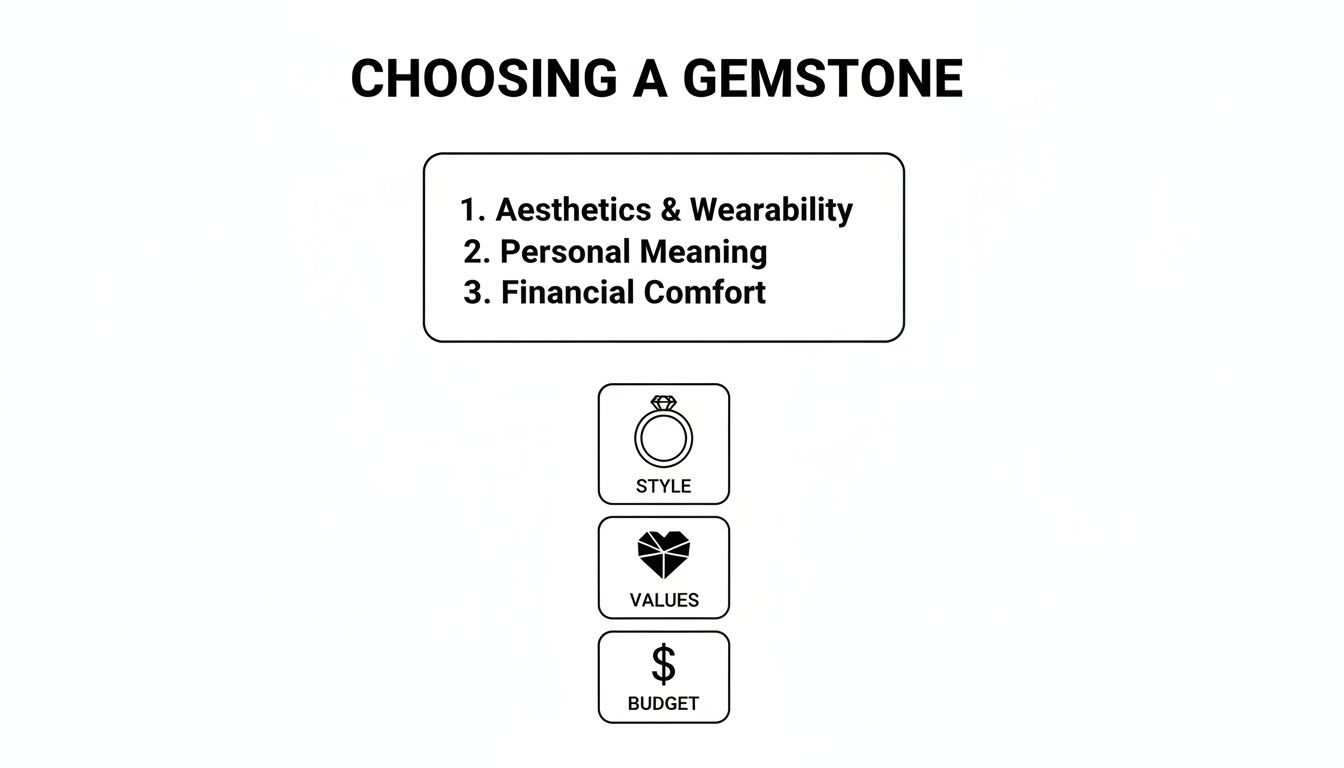
As you can see, the "right" choice often comes down to whether you lean toward classic tradition (diamond) or personal expression and vibrant color (sapphire).
Ultimately, this first look clarifies the main trade-offs. Choosing a diamond is an investment in unparalleled hardness and classic brilliance. Choosing a sapphire is an investment in vivid color, individuality, and exceptional value.
Decoding Brilliance, Luster, and Color
When you put a sapphire and a diamond side-by-side, the first thing you'll notice is how differently they play with light. One is a master of dazzling sparkle, the other a master of deep, soulful color. This visual personality is what gives your ring its character, making it the most important place to start your comparison.
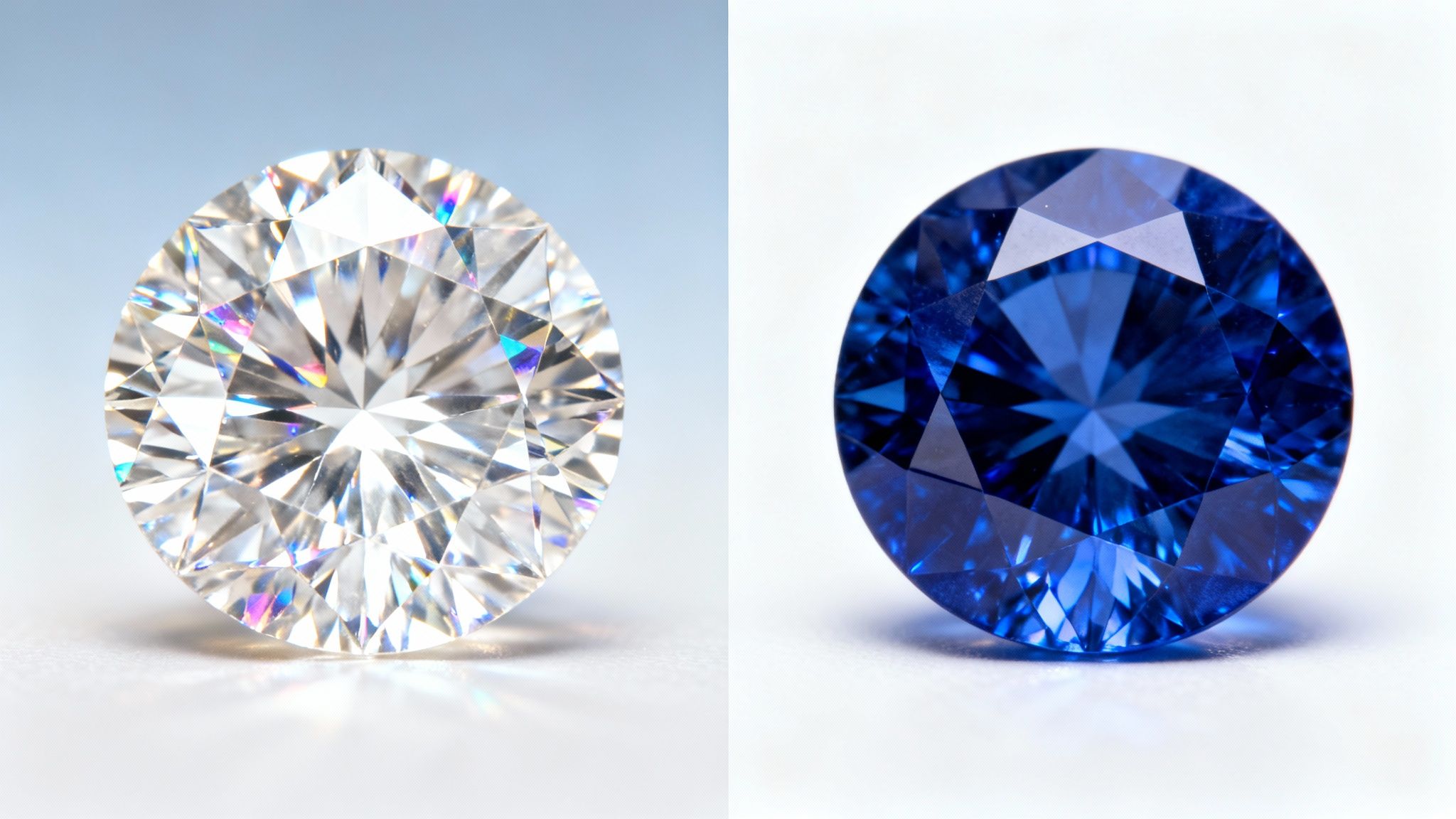
A diamond’s beauty is all about its incredible light performance. Gemologists break this down into three key elements: brilliance (the pure white light it reflects back), fire (the flashes of rainbow color), and scintillation (the captivating sparkle you see when it moves). Think of a perfectly cut diamond as a tiny disco ball, with each facet angled to catch and throw light in a brilliant, fiery explosion.
This energetic light show is why diamonds became so iconic. The entire value of the stone is wrapped up in how well the cut maximizes this sparkle, turning a simple mineral into something that commands attention from across the room.
The Soulful Glow of Sapphires
A sapphire’s appeal is something else entirely. Instead of throwing light back at you, it seems to absorb it, creating a deep, velvety luster that pulls you in. Its beauty isn't about fiery sparkle; it's about the richness and intensity of its color. This gives the sapphire a regal, sophisticated presence that feels both personal and profound.
What makes a sapphire beautiful comes down to its hue (its main color), tone (how light or dark it is), and saturation (the pureness of the color). A top-quality sapphire will have a vivid, even color that seems to glow from within. It’s a quieter, more mysterious kind of beauty compared to a diamond’s brilliant flash.
The choice really comes down to personality: A diamond shouts with brilliant light, while a sapphire speaks with profound color. One is an energetic dance of sparkle; the other is a deep, captivating gaze.
A Spectrum of Personal Expression
While classic blue is what most people picture, the world of sapphires offers a whole rainbow of options. This versatility is a huge reason why more couples are looking beyond the traditional diamond for something that feels more personal.
This family of "fancy sapphires" includes:
Pink Sapphires: Offering a romantic, feminine feel, from delicate pastels to vibrant magentas.
Yellow Sapphires: Radiating warmth and joy, these stones provide a sunny, cheerful alternative.
Padparadscha Sapphires: The rarest and most prized, these stones have a unique pinkish-orange hue, like a lotus blossom at sunset.
Green, Purple, and Teal Sapphires: These unique colors offer a distinctive, modern look for those who want something truly different.
This incredible color diversity lets you choose a stone that genuinely reflects your personality or holds special meaning. And this trend toward personalization is making waves. The global sapphire jewellery market, valued at around USD 9.50 billion in 2024, is expected to grow to USD 14.20 billion by 2030. Engagement rings are a huge driver of this demand, especially in North America, showing a clear shift where sapphires are moving from a niche choice to a mainstream favorite. You can explore more data on this growing trend in this comprehensive market report.
Ultimately, the visual difference is a matter of pure aesthetic preference. Do you gravitate toward the timeless, fiery brilliance of a diamond, or are you drawn to the rich, personal, and colorful world of sapphires? Your answer will lead you to the perfect stone for your engagement ring.
Durability for a Lifetime of Wear
An engagement ring is part of your daily life. It’s a constant companion through every task, bump, and adventure, so it needs to hold up beautifully for a lifetime. When you're choosing between a sapphire and a diamond, durability is a huge piece of the puzzle, and it goes deeper than just a number on a chart.
The industry standard for a gem's scratch resistance is the Mohs scale of hardness. It ranks minerals from 1 (the softest, like Talc) up to 10 (the hardest). It's not a linear scale, though—each step up represents a massive leap in hardness.
A diamond, of course, scores a perfect 10 on the Mohs scale. It’s the hardest natural material known to man, making it incredibly resistant to scratches from everyday encounters. This is a big reason why it's the classic engagement ring choice.
How Sapphires Measure Up for Daily Wear
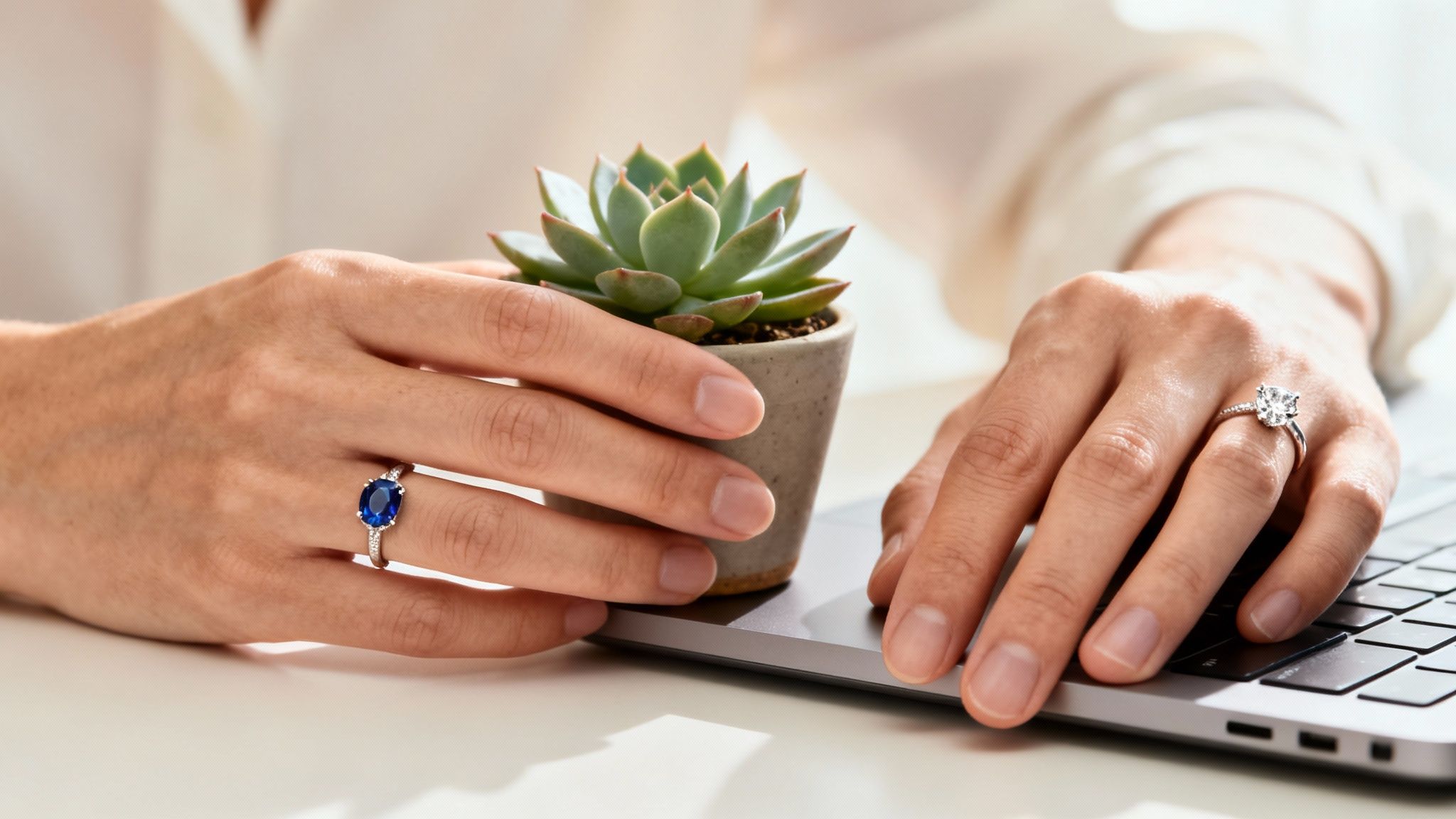
So, where does that leave sapphires? They score an impressive 9 on the Mohs scale, placing them right behind diamonds as one of the most durable gemstones you can get. This makes them perfectly suited for the demands of a ring you'll wear every single day.
While a 9 is technically softer than a 10, the real-world difference isn't as dramatic as you might think. A sapphire is exceptionally tough and will stand up to scratches from almost anything. The only things that can reliably scratch a sapphire are another sapphire or, you guessed it, a diamond.
This means you can wear a sapphire ring with total confidence, whether you're typing, gardening, or living an active life. It's built to last.
A sapphire's 9 on the Mohs scale isn't a compromise; it's a testament to its exceptional resilience. For all practical purposes, it offers more than enough durability for an heirloom-quality engagement ring designed to last forever.
To put it in perspective, here’s how they stack up against other popular gemstones:
Diamond: 10 (The ultimate in hardness)
Sapphire & Ruby: 9 (Excellent hardness, ideal for daily wear)
Topaz & Aquamarine: 8 (Very good hardness, but require a bit more care in a ring)
Emerald: 7.5-8 (Good hardness, though internal fractures can affect toughness)
Amethyst & Citrine: 7 (Fair hardness, better suited for occasional-wear jewelry)
The Role of Toughness and Setting
Beyond just scratch resistance (hardness), it’s also important to think about toughness—a stone's ability to resist chipping or breaking from an impact. Both diamonds and sapphires have excellent toughness, so they hold up well against accidental knocks.
The security of your stone also depends heavily on its setting, which can add a significant layer of protection. For a deep dive, check out our practical guide to engagement ring settings to see how different styles can safeguard your center stone.
In the end, while the diamond wears the crown for supreme hardness, the sapphire is a powerful contender offering outstanding durability. Choosing a sapphire doesn't mean you're sacrificing longevity. It means you’re picking a beautiful, robust, and reliable gem that's more than ready to endure a lifetime of memories with you.
Understanding Cost and Long-Term Value
When it comes to choosing an engagement ring, the price tag is often where the sapphire vs. diamond conversation starts. While it’s true that sapphires can give you more size for your money, the real story behind their value is far more interesting. It's not just about the initial cost, but about understanding what makes each stone a worthwhile investment.
For diamonds, value is famously straightforward, governed by the 4Cs—Cut, Color, Clarity, and Carat weight. This global standard creates a predictable pricing model. A one-carat, high-quality diamond will almost always be priced significantly higher than a top-tier sapphire of the same size. This means your budget goes a lot further with a sapphire, allowing for a larger or more visually striking centerpiece.
Sapphires, on the other hand, play by a different set of rules. The single most important factor is color. A gemologist looks at its hue, tone, and saturation. A deep, velvety blue sapphire with even color is exponentially more valuable than one that’s too dark or washed out. Clarity and cut matter, of course, but that captivating, rich color is what truly drives a sapphire’s worth.
The Nuances of Gemstone Pricing
Beyond the basics, a few other factors can dramatically influence a sapphire's price. The stone's origin can play a huge role. Sapphires from historic mines like Kashmir or Burma (Myanmar) are the stuff of legends. They are exceptionally rare and can command prices that easily rival—or even surpass—those of high-quality diamonds, thanks to their unique color and storied past.
Another critical detail is whether the stone has been heat-treated. The vast majority of sapphires undergo this process to enhance their color and clarity, and it's a completely standard, accepted practice in the industry. But a completely untreated sapphire with stunning natural color? That’s incredibly rare. These gems are true collector's items and carry a serious price premium.
A diamond's value is built on a foundation of measurable grades and data. A high-end sapphire's value is often driven by rarity, origin, and the intangible allure of its color—making it feel as much like a piece of art as a gemstone.
This dynamic creates two different paths for a buyer. With a diamond, your budget buys you a specific combination of quality grades within a globally understood system. With a sapphire, that same budget can unlock a larger stone or one with a uniquely mesmerizing color that feels more personal and distinctive.
Market Dynamics and Future Value
The long-term value of your ring is also tied to market trends. For decades, diamonds have been positioned as a stable store of value, dominating the bridal world. But the ground is shifting.
While diamonds still command the lion's share of the market, colored gemstones are gaining momentum fast. Younger buyers, in particular, are drawn to the individuality and color that sapphires offer. Recent data shows that while diamonds held an 84.8% revenue share in the gemstone market in 2024, colored gemstone imports shot up by 136% between 2020 and 2024. That's a powerful signal of changing tastes. This growing demand suggests a very strong future for the value of high-quality sapphires. You can dive deeper into these trends in this detailed gemstone market report.
Ultimately, choosing between a sapphire and a diamond is a financial decision wrapped in personal priorities. A diamond offers the security of a traditional asset with a clear, established value structure. A sapphire offers the chance to own a larger, more colorful stone for your budget, with rare, untreated gems holding exceptional potential as their demand continues to climb.
Ethical Sourcing and Modern Symbolism
An engagement ring is more than just a beautiful object—it’s a story worn on your hand. And when you're choosing between a sapphire and a diamond, you're deciding on more than just aesthetics. You’re choosing the meaning and ethics behind the stone, picking a gem that really reflects your values and the story you want to tell together.
For centuries, sapphires were the stones of royalty, wisdom, and faithfulness. They were believed to protect the wearer from harm and envy, which makes them a powerful symbol of sincerity and trust. That rich history gives a sapphire ring a sense of depth and heritage that really resonates with couples looking for a meaningful, timeless connection.
The diamond’s status as the ultimate symbol of unbreakable love is actually a much more recent story, brilliantly crafted in the 20th century. Its incredible hardness and fiery brilliance became synonymous with eternal commitment. For many, a diamond is still the quintessential promise of forever.
The Conscientious Buyer’s Guide to Diamonds
In recent years, the conversation around diamonds has rightfully turned to ethical sourcing. The industry has had to grapple with "conflict diamonds"—stones mined in war zones and sold to fund violence. The main response to this was the Kimberley Process, an international certification scheme meant to keep these gems out of the market.
While it was a big step, the Kimberley Process isn't perfect. This has led a new generation of buyers to look for alternatives with cleaner, more transparent supply chains. One of the most popular and reliable choices? Lab-grown diamonds.
Identical Properties: Lab-grown diamonds are physically, chemically, and optically identical to mined diamonds. They are real diamonds, just created in a controlled environment.
Guaranteed Conflict-Free: Because their origin is a lab, not a mine, they offer complete peace of mind. There are zero concerns about unethical mining practices.
Environmental Benefits: Creating a diamond in a lab generally has a much smaller environmental footprint than large-scale mining operations.
Choosing a lab-grown diamond doesn't mean you're compromising on beauty or quality. It means making a conscious decision for a transparent, ethical, and often more affordable stone that is completely indistinguishable from its mined counterpart.
If your heart is set on a natural stone, the key is to find jewelers who can provide detailed provenance. Taking the time to learn what makes a diamond truly ethical is a crucial step. You can explore this topic further in our guide on what conflict-free diamonds are and how to buy ethically. This knowledge will empower you to ask the right questions and make a choice you feel genuinely good about.
Tracing the Journey of a Sapphire
The ethical landscape for sapphires is different, but just as important. Sapphires are often sourced from smaller, artisanal mines all over the world—from Sri Lanka and Madagascar to right here in Montana, USA. Because of this, the main ethical focus is on a traceable and transparent supply chain.
Reputable jewelers build relationships with suppliers who can verify where their sapphires come from, ensuring fair labor practices and minimal environmental impact. Unlike the diamond world, there isn't a single big certification process like the Kimberley Process for colored gemstones. Instead, it all comes down to trust and responsible sourcing.
This focus on traceability means that when you buy a sapphire from a trusted vendor, you're often directly supporting smaller mining communities. Many couples find deep satisfaction in knowing their ring has a clear, positive story from the mine to their finger. Whether you're drawn to the ancient symbolism of a sapphire or the modern promise of a diamond, understanding the journey of your stone adds a profound layer of meaning.
Frequently Asked Questions
Even after weighing all the pros and cons, a few common questions always come up when choosing between a sapphire and a diamond. We get it. This is a huge decision, so let's clear up those final thoughts.
Is a Sapphire Truly Durable Enough for Daily Wear?
Absolutely. Let's talk numbers for a second. Sapphires score a 9 on the Mohs hardness scale, which is right behind diamonds at a perfect 10. This isn't just a close second; it means a sapphire has exceptional resistance to the scratches and bumps of everyday life.
This puts sapphires in an elite class of gemstones tough enough for a ring you'll wear for a lifetime. So yes, you can wear it with total confidence, knowing it’s built to keep up with you.
How Does a High-Quality Sapphire's Price Compare to a Diamond's?
For the most part, a beautiful, high-quality sapphire will be significantly easier on your budget than a diamond of a similar size and grade. It’s one of their biggest draws, really—letting you get a larger, more dramatic stone without breaking the bank.
But don’t let that fool you into thinking all sapphires are a budget-friendly alternative.
The world of sapphires has its own superstars. An unheated, top-color sapphire from a legendary mine like Kashmir, or a rare Padparadscha sapphire, can easily fetch prices that rival—or even soar past—high-quality diamonds. These gems are in a league of their own.
So, while sapphires generally offer incredible value, the most coveted specimens are serious investments prized for their rarity.
Will a Sapphire Sparkle Like a Diamond?
Here’s the thing: they're not supposed to. Sapphires and diamonds handle light in completely different ways, and that’s what makes each one special. A diamond is cut for maximum brilliance and fire—that’s the classic, flashy sparkle that throws white and rainbow light everywhere.
A sapphire, on the other hand, is all about its deep, rich color and luxurious luster. It has a more soulful, captivating glow that draws you into the stone, rather than a fiery sparkle that jumps out at you. It still shines, but it’s a deeper, more colorful kind of light. It really just comes down to what you love more: timeless brilliance or vibrant, personal color.
At Panther De Luxe Shop, we believe the perfect engagement ring is the one that tells your story. Whether you’re drawn to the iconic fire of a diamond or the soulful glow of a sapphire, you can explore our curated collection of ethically sourced, beautifully crafted rings today at https://www.pantherdeluxe.com.