
Necklace with Birthstone: Meaning, Styles, and Care Tips
- Luke Zucco
- Jan 17
- 16 min read

A necklace with birthstone is so much more than a pretty accessory. It's a piece of you, connecting your story to the specific gemstone that represents your birth month. These necklaces manage to feel both timeless and totally modern, making them one of the most meaningful gifts you can give or a personal keepsake to treasure for yourself.
Why a Birthstone Necklace Is More Than Just Jewelry
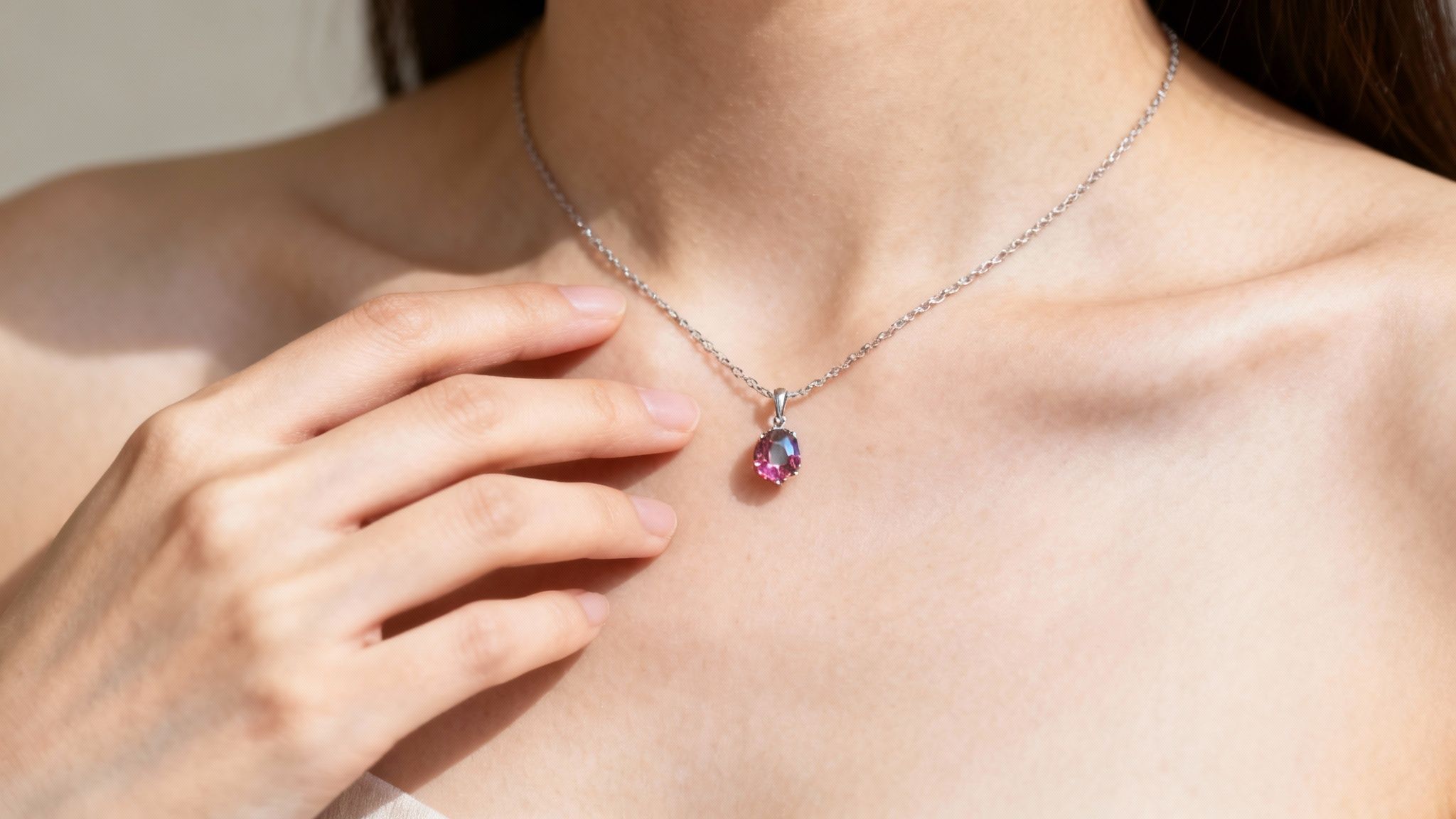
Welcome to the world of birthstone necklaces, where every shimmering gem tells a story. Think of a birthstone necklace as a personal emblem—a way to celebrate who you are, connect with old traditions, and add a layer of personal meaning to your style. It’s jewelry with a soul.
It's like wearing a little piece of your own history. Each gemstone is packed with centuries of folklore and symbolism, turning your necklace into an instant conversation starter. Whether you're drawn to the fiery red of a July ruby or the calm blue of a March aquamarine, your birthstone is a reflection of you.
A Tradition with Deep Roots
The idea of connecting gems to the calendar is ancient, but the modern system we all know and love was officially put in place in 1912. The National Association of Jewelers in the US assigned specific gems to each month, creating a standardized list that has since been adopted all over the world. This move helped launch birthstone jewelry into the mainstream, creating a tradition that just keeps growing.
Today, birthstone necklaces are more popular than ever, especially with shoppers in the United States, Europe, and Australia who are looking for that personal touch. This tradition drives a huge part of the fine jewelry market, blending classic sentiment with what's happening in design right now. If you're curious about the numbers, you can explore detailed jewelry industry statistics to see just how big this trend has become.
Ready to find your stone? Instantly find your birthstone or a loved one's with this easy-to-use table listing the traditional gemstone for each month of the year.
A Quick Guide to Birthstones by Month
Month | Traditional Birthstone |
|---|---|
January | Garnet |
February | Amethyst |
March | Aquamarine |
April | Diamond |
May | Emerald |
June | Pearl or Alexandrite |
July | Ruby |
August | Peridot |
September | Sapphire |
October | Opal or Tourmaline |
November | Topaz or Citrine |
December | Turquoise, Zircon, or Tanzanite |
Each of these stones carries its own unique energy and story, making the choice a truly personal one.
More Than Just a Gemstone
Choosing a necklace with birthstone is really about celebrating individuality. It’s the perfect way to honor a loved one’s birthday with a thoughtful, customized gift, or to treat yourself to something that feels like it was made just for you.
The best part is how versatile they are. Birthstone jewelry can fit any vibe:
Minimalist Pendants: A single, elegant stone for a classic, understated look that goes with everything.
Family Necklaces: Multiple stones clustered together, representing the birth months of children or other loved ones.
Modern Designs: Raw, uncut stones or unique settings for a more contemporary, organic feel.
This guide is here to walk you through every aspect of these special necklaces—from the rich symbolism behind each gem to picking out the perfect metal and style for you or someone you love.
Discover the Meaning Behind Your Birthstone
A birthstone necklace is so much more than a beautiful accessory. It’s a wearable story, a personal talisman loaded with centuries of history and symbolism. Each gemstone is believed to carry a unique energy that resonates with people born in its designated month. When you understand that story, a piece of jewelry transforms into something deeply personal.
Think of it like a family crest or a personal motto. Those symbols represent heritage and identity, and in the same way, your birthstone connects you to the unique qualities and virtues associated with the month you were born. It’s a link to an ancient tradition where gems were thought to offer protection, grant strength, or attract love.
A Journey Through the Calendar Year
Every month’s gemstone tells a different tale. From the fiery passion of January's Garnet to the serene, celestial blue of September's Sapphire, exploring the birthstone calendar is a rich journey through color and meaning. Let's dive into the stories that make these stones so special.
January Garnet: This deep red gem has long been associated with protection. Historically, travelers wore it to light their way and shield them from harm. Today, it symbolizes friendship, trust, and enduring affection.
February Amethyst: With its regal purple hue, Amethyst has always been linked to royalty and spiritual clarity. The ancient Greeks even believed it could prevent intoxication. It now represents peace, courage, and stability.
March Aquamarine: Named for the sea, this tranquil blue-green stone was thought to protect sailors on their voyages. It’s a symbol of youth, health, and hope, with a calming energy said to cool the temper.
April Diamond: Unmatched in brilliance and strength, the diamond is a universal symbol of everlasting love, purity, and invincibility. It’s believed to bring clarity and abundance to whoever wears it.
From Earth's Treasures to Personal Emblems
The connection between a person and their birthstone can feel incredibly personal. Someone born in May might feel a special kinship with the vibrant green Emerald, a stone that represents rebirth, foresight, and good fortune. Wearing an Emerald necklace isn't just a style choice; it’s an embrace of the life and renewal that spring represents.
Similarly, a July-born individual might be drawn to the Ruby's bold red, a color that has always symbolized passion, power, and a zest for life. A necklace with a birthstone like this becomes a daily reminder of your own inner fire and strength.
Each gem has a story that intertwines with culture, history, and personal belief. Choosing your birthstone is about more than just aesthetics; it's about connecting with a narrative that feels like your own.
Exploring these deeper meanings helps you find a piece that truly resonates. For a comprehensive look at the lore behind each gem, you can uncover the meaning of birthstones in our detailed guide.
The Second Half of the Year
The symbolism continues with gems that capture the essence of summer, autumn, and the transition into winter.
August Peridot: This vibrant lime-green gem, sometimes called the "evening emerald," is associated with strength and is believed to ward off nightmares. It symbolizes opportunity and prosperity.
September Sapphire: Known for its stunning blue color, the Sapphire has long been a favorite of royalty. It represents wisdom, virtue, and good fortune, and is a symbol of loyalty and trust.
October Opal & Tourmaline: Opal, with its mesmerizing play-of-color, symbolizes faithfulness and confidence. Tourmaline, which comes in a rainbow of colors, is seen as a stone of creative and healing energy.
November Topaz & Citrine: Golden Topaz and sunny Citrine are stones of warmth and energy. They’re associated with success and joy and are believed to soothe and recharge the wearer.
December Turquoise, Zircon & Tanzanite: These beautiful blue stones are tied to happiness, good fortune, and protection from harm. Turquoise, in particular, has been a sacred stone in many cultures for millennia.
Each birthstone carries its own energy and story. When selecting a piece, you can even consider how different gems complement each other in unique gemstone necklaces, such as those combining Druzy Grape Agate, Rhodolite, and Garnet. Ultimately, wearing your birthstone is a celebration of your own journey, connecting you to a legacy of meaning that’s as beautiful and enduring as the gem itself.
Choosing the Best Metal for Your Necklace
Think of the metal you choose for a birthstone necklace as the frame for a masterpiece painting. It does more than just hold the gem—it enhances its beauty, sets the mood, and makes the entire piece feel complete and personal.
The right metal can make a cool-toned gem feel even more vibrant or give a warm-toned stone a beautiful inner fire. But this choice goes beyond looks. You also have to consider your lifestyle, skin sensitivity, and budget. Each metal offers a unique mix of style, feel, and practicality, so it's a huge part of creating a necklace you'll love for years.
Warm Tones Versus Cool Tones
One of the first decisions you'll make is whether to go with warm metals like yellow and rose gold, or cool metals like sterling silver, white gold, or platinum. This choice completely changes how your birthstone's color comes across.
Yellow Gold: Classic and traditional, yellow gold brings out the warmth in gems like July's ruby, January's garnet, and November's citrine. Its rich, sunny hue creates a luxurious contrast that can make any stone feel more regal.
Rose Gold: With its romantic, pinkish tint from a little added copper, rose gold is a modern favorite. It pairs beautifully with soft-hued stones like morganite or October's opal, and it creates a stunning, warm look with cooler gems like aquamarine.
White Gold & Sterling Silver: These bright, silvery metals provide a crisp, clean backdrop that makes colors pop. They’re perfect for cool-toned gems like September's sapphire or December's tanzanite, amplifying their brilliance without competing.
Durability and Lifestyle Considerations
How often you plan to wear your necklace plays a big role in picking the right metal. Some are built for the daily grind, while others are better saved for special occasions.
A key factor here is durability, which often comes down to the metal's purity or alloy. Gold, for instance, is measured in karats. 14k gold (which is 58.3% pure gold) is a popular choice because it strikes a perfect balance between rich color and strength, making it ideal for a necklace you wear all the time. On the other hand, 24k gold is pure but way too soft for most jewelry.
To get a better handle on these differences, check out our complete guide to the different types of jewelry metals.
The metal's setting does more than just secure the gem—it defines the necklace's character. A durable, well-chosen metal ensures your personal story can be worn and cherished every day without worry.
Budget and Long-Term Value
Finally, let's talk budget—it's a practical and important part of the decision. Sterling silver is an attractive and affordable option, while platinum sits at the higher end of the price spectrum because it's so rare and dense. Gold options—yellow, white, and rose—typically fall somewhere in between, with prices varying by karat weight.
Ethical sourcing has also become a major factor for many buyers. Gold is still the dominant force, with 78% of precious metal jewelry featuring gold-set birthstones, a trend that supports a growing luxury market. More and more, people are drawn to pieces with transparent origins, which adds another layer of value to their investment.
Finding a Style That Tells Your Story
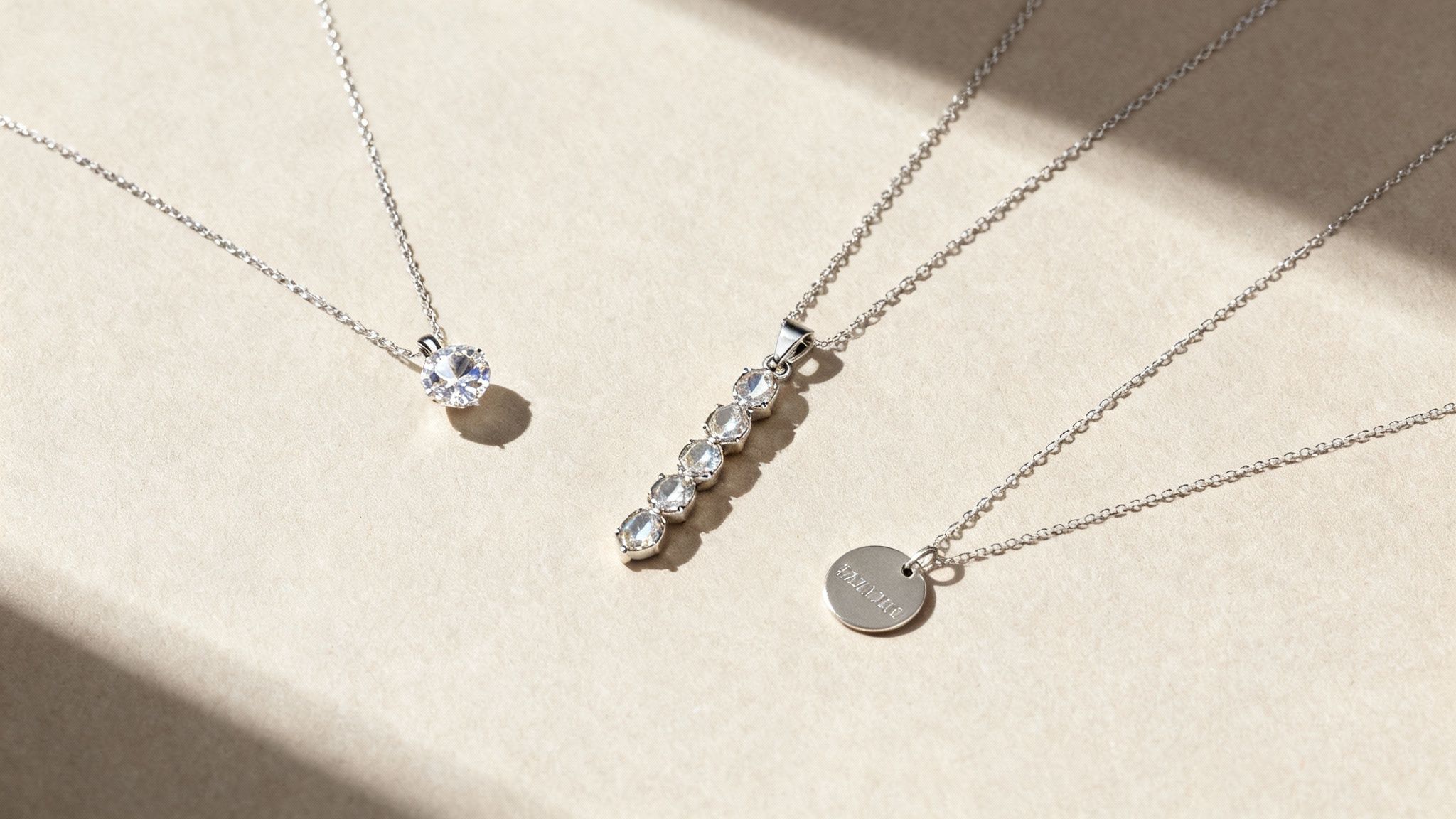
A necklace with birthstone should feel like it was made just for you. Beyond the stone itself, the actual design—the setting, the chain, any little engravings—is what makes it more than just a pretty accessory. It's what turns it into a true personal emblem. The style you choose is the final touch that tells your story.
Think of it like putting together an outfit for a big moment. You pick pieces that not only look good but feel like you. The same idea applies here. Whether you love things classic and understated or you're all about a bold, modern look, there's a design out there that captures your spirit perfectly.
This is your chance to go beyond just another piece of jewelry and create something that speaks to your journey, celebrates the people you love, or holds a memory close.
Classic and Minimalist Styles
For anyone who appreciates timeless elegance, minimalist designs are a perfect match. These styles are all about letting the birthstone's natural beauty shine without a lot of fuss. They’re incredibly versatile, looking just as right with a t-shirt as they do with a cocktail dress.
The most iconic look here is the solitaire pendant. It’s simple: a single birthstone, usually in a clean prong or bezel setting, hanging from a delicate chain. It's a sophisticated style that honestly never gets old.
Another great option is the birthstone bar necklace. In this design, one or more small birthstones are set side-by-side in a sleek metal bar. It’s a modern, geometric take on the classic pendant and a fantastic way to include multiple birthstones in a subtle, organized way.
Creating a Family Heirloom
A necklace with birthstone can be such a powerful way to honor your family. Designs that bring multiple stones together create a beautiful cluster effect, symbolizing the unique bond you all share. These pieces instantly become heirlooms, packed with love and history.
Some of the most loved family necklace styles include:
The Family Tree Necklace: This design often has a tree-shaped pendant, with each family member's birthstone set like a leaf on a branch.
The Cluster Pendant: Multiple birthstones are artfully grouped together, creating a vibrant bouquet of color and meaning. You can arrange them by birth order or in a more organic, free-flowing way.
The Vertical Bar Necklace: Similar to the horizontal bar, this style stacks the birthstones vertically, often with engraved names or initials next to each gem.
These pieces are like a wearable family portrait, a constant reminder of the people you hold closest.
A birthstone necklace becomes more than just a personal statement; it can be a tribute to your entire family. By combining the birthstones of parents, children, or partners, you create a deeply meaningful piece that celebrates your collective story.
The Power of Personalization
Customization is what takes a beautiful necklace and makes it unforgettable. Adding those personal details elevates the piece, turning it into a one-of-a-kind treasure that’s yours and yours alone. Engravings are one of the best ways to add that extra layer of meaning.
Consider adding elements like:
Initials or Names: Engraving the initials of a loved one next to their birthstone makes it undeniably personal.
Significant Dates: A wedding anniversary, a child's birthday, or the date you met can be subtly engraved on the back of a pendant.
Meaningful Coordinates: The latitude and longitude of a special place—your hometown, where you got engaged—can be a unique and modern secret message.
This move toward personalization is a huge part of what's happening in jewelry right now. People want pieces that tell their own stories. In fact, this trend is a key driver of the global jewelry market, which is projected to see custom pieces valued at $76.24 billion by 2030. It also goes hand-in-hand with the growing demand for ethical sourcing, making sentimental, sustainably made birthstone necklaces more desirable than ever. You can read the full research about the jewelry market to learn more.
Ultimately, choosing a style is all about finding a design that just feels right—and tells your story in the most authentic way possible.
How to Select a High-Quality Birthstone
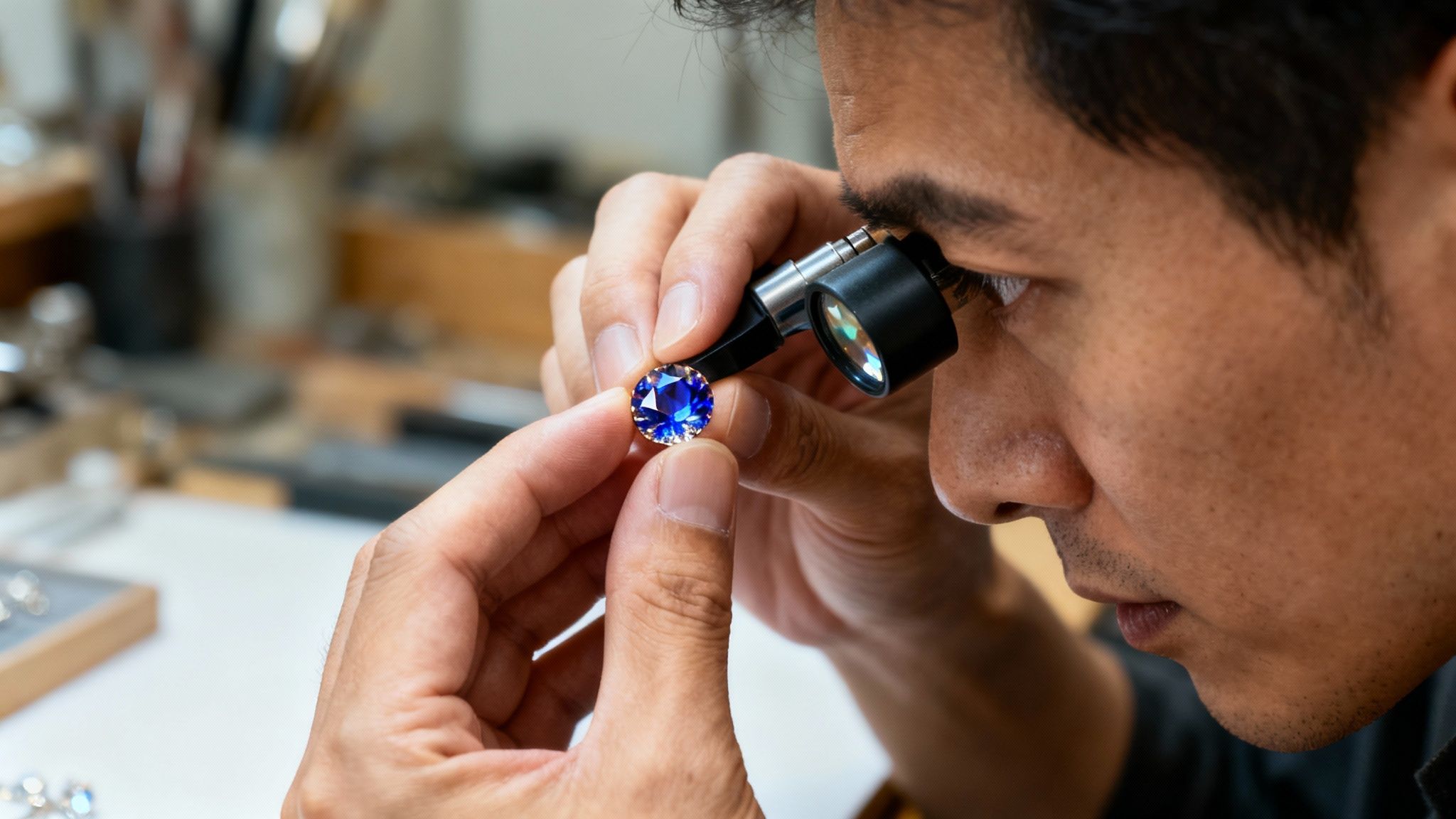
Shopping for a necklace with a birthstone should be fun, not a high-stakes guessing game. Knowing just a little about what gives a gemstone its sparkle and value can make all the difference. It empowers you to ask the right questions and feel confident you’re choosing a truly beautiful piece.
Think of it like picking the perfect piece of fruit. It’s not just one thing that makes it great, but a combination of color, clarity, and form. For gemstones, the pros use a simple framework called the “Four Cs” to evaluate any stone.
Decoding the Four Cs of Gemstone Quality
The Four Cs—Color, Clarity, Cut, and Carat—are the universal language of gemstone quality. Once you get the hang of them, you’ll be able to spot a standout stone from a mile away.
Color: This is usually the first thing you notice and, for colored gems, it's the most important factor. You’re looking for rich, vibrant, and even color. A top-tier amethyst, for instance, won't be a pale lilac; it will have a deep, regal purple hue from edge to edge.
Clarity: This refers to the natural imperfections, or inclusions, inside a stone. Think of them as tiny fingerprints from Mother Nature. While a perfectly flawless stone is incredibly rare, the key is that any inclusions shouldn't distract from the gem’s overall beauty.
Cut: The cut has nothing to do with the shape of the stone—it’s all about how well its facets have been angled to catch and reflect light. A brilliant cut will make a gemstone dance with sparkle. A poor cut, on the other hand, can make even the most beautiful raw stone look dull and lifeless.
Carat: This is simply the weight of the gemstone, not its visual size. While bigger often means more expensive, don’t get too hung up on carat weight alone. A smaller stone with fantastic color and an expert cut will always outshine a larger, lower-quality one.
Natural, Lab-Grown, or Imitation Stones?
When you’re looking at a birthstone necklace, the stone itself will fall into one of three categories. Each has its own place, and the best one for you really comes down to your budget and personal priorities.
Natural GemstonesThese are the real deal, mined from the earth after forming over millions of years. Their rarity and unique character—including those natural inclusions—are what make them so prized. Each one has its own story.
Lab-Grown GemstonesChemically, physically, and visually, lab-grown gems are identical to their natural counterparts. They’re just created in a controlled environment instead of deep within the earth. They are a fantastic choice if you're looking for a flawless stone that's often more affordable and ethically sourced.
Imitation GemstonesThese are lookalikes, typically made from materials like glass or plastic. They’re the most budget-friendly option by far, but they don't have the durability, sparkle, or value of a true natural or lab-grown gemstone.
It's crucial to know the difference. A lab-grown ruby is a real ruby. An imitation ruby is not. Always ask the jeweler to clarify a stone's origin so you know exactly what you’re buying.
Armed with this knowledge, you can confidently shop for a necklace with a birthstone. You'll be able to appreciate the subtle details that make a gem truly special and pick a piece that feels just right.
Caring for Your Birthstone Necklace
A birthstone necklace is one of the most personal pieces you can own, and with the right care, it’ll stay just as brilliant as the day you got it. Keeping that sparkle alive for a lifetime is actually pretty simple. It just takes a little mindful attention.
Think of it this way: you wouldn't treat a fine silk shirt the same way you treat a pair of denim jeans. The same goes for gemstones. A super-durable diamond can handle a more thorough cleaning than a soft, porous opal, which needs a much gentler touch. Knowing where your stone lands on the Mohs hardness scale is really the first step to great care.
Gentle Cleaning for Lasting Sparkle
Over time, everyday life—oils from your skin, lotions, and dust—can build up and dull your gemstone's shine. But for most birthstone necklaces, a simple, safe cleaning at home is all it takes to bring it back to life.
The go-to method? A bowl of warm water with a few drops of mild dish soap. Just create a sudsy little bath and let your necklace soak for a few minutes. Then, you can gently scrub the stone and its setting with a super soft-bristled toothbrush (a baby toothbrush is perfect for this). Rinse it all off under cool water and pat it dry with a soft, lint-free cloth.
Remember, harsh chemicals like bleach or ammonia are a no-go. They can permanently damage more delicate gems like pearls and opals. When in doubt, the mild soap-and-water method is always your safest bet.
For a deeper dive into maintenance, you can explore detailed jewelry care tips to keep your pieces sparkling to ensure every piece in your collection stays radiant. And if you're dealing with metals that have started to darken, it's worth knowing some actionable methods on how to clean tarnished jewelry.
Smart Storage and Everyday Protection
How you store your necklace is just as important as how you clean it. Tossing it into a crowded jewelry box is a recipe for tangled chains and, worse, scratched gemstones.
A few simple storage habits can make all the difference:
Separate and Secure: Keep each necklace in its own soft pouch or a lined jewelry box compartment. This is key to preventing harder gems (like diamonds) from scratching softer ones.
Avoid Direct Sunlight: Some colored gemstones, like amethyst and citrine, can actually fade over time with too much sun exposure. Store them somewhere dark and cool.
Control Humidity: Moisture is the enemy of shine, especially for sterling silver. Always store your jewelry away from humid spots like the bathroom to slow down tarnishing.
Finally, probably the best way to care for your birthstone necklace is knowing when not to wear it. Think of it as protecting your investment.
Always take it off before:
Swimming in pools or the ocean (chlorine and salt are harsh!)
Exercising or playing sports
Cleaning with household chemicals
Applying lotions, perfumes, or hairspray
Follow these simple steps, and you’ll protect your treasured piece, making sure it remains a beautiful symbol of your story for years to come.
Frequently Asked Questions About Birthstone Necklaces
Jumping into the world of birthstone jewelry can bring up a few questions, whether you're hunting for the perfect gift or treating yourself. Getting straight answers helps you choose a necklace with birthstone with total confidence. Here are some quick, helpful responses to the questions we hear most often.
From daily wear to special care, a little bit of knowledge goes a long way in making sure your necklace stays beautiful for years. Let's cover everything from durability to the real meaning behind choosing your stones.
Can I Wear My Birthstone Necklace Every Day?
That really depends on the gemstone's hardness. Not all stones are created equal. Jewelers use the Mohs scale, which rates gems from 1 (super soft) to 10 (the toughest), to measure durability.
Hardy gems like diamonds (10), sapphires (9), and rubies (9) are fantastic for everyday wear because they can handle the inevitable bumps and scrapes of daily life. Softer stones, however, need a bit more TLC. Things like opals (5.5-6.5) and pearls (2.5-4.5) are more delicate and can be damaged by knocks, chemicals, or even big temperature swings. It's best to save those for occasions where they won’t be put to the test.
To help you figure out what's best for your stone, we've put together a quick guide.
Birthstone Hardness And Care Guide
This table gives you a snapshot of how different birthstones stack up on the Mohs scale and what that means for their day-to-day care.
Birthstone | Mohs Hardness (1-10) | General Care Advice |
|---|---|---|
Diamond | 10 | Extremely durable; perfect for daily wear. |
Sapphire | 9 | Very tough; suitable for everyday use. |
Ruby | 9 | Excellent durability; great for daily wear. |
Alexandrite | 8.5 | Hard and durable; can be worn daily. |
Topaz | 8 | Resilient, but can chip. Wear with care. |
Aquamarine | 7.5-8 | Good hardness; fine for frequent wear. |
Emerald | 7.5-8 | Can be brittle; best for occasional wear. |
Garnet | 6.5-7.5 | Durable enough for regular wear. |
Amethyst | 7 | Good hardness; suitable for most activities. |
Peridot | 6.5-7 | Avoid harsh knocks; wear mindfully. |
Tanzanite | 6-7 | Softer stone; handle with special care. |
Opal | 5.5-6.5 | Delicate; protect from impacts and chemicals. |
Moonstone | 6-6.5 | Can scratch easily; best for special occasions. |
Pearl | 2.5-4.5 | Very soft; last on, first off. Avoid chemicals. |
Turquoise | 5-6 | Porous and soft; handle with gentle care. |
Think of this as your cheat sheet for keeping your birthstone necklace looking its best. The tougher the stone, the less you have to worry about it.
Is It Okay to Wear a Birthstone That Isn't Mine?
Absolutely! While wearing your own birthstone is a beautiful tradition, there are no rules set in stone. Lots of people choose a gem simply because they adore its color, connect with its symbolic meaning, or just love the way it makes them feel. You might wear a sapphire for its connection to wisdom or an aquamarine for its calming vibe, regardless of your birth month.
Another popular choice is to wear the birthstones of your kids, partner, or other loved ones. This turns your necklace into a beautiful, wearable tribute to the most important people in your life, creating a piece that’s rich with personal meaning.
Key Takeaway: Jewelry is an expression of you. Feel free to choose any gemstone that speaks to your personal style, your story, or your heart.
Why Are Birthstone Necklaces So Popular?
The magic of birthstone necklaces is their perfect mix of personal meaning, beauty, and tradition. They’re one of the few pieces of jewelry that instantly tell a story about the person wearing them. It's this deep, personal connection that’s fueling major growth in the jewelry world.
In fact, the global gemstone market is projected to jump from $58.29 billion in 2023 to over $101.02 billion by 2032. That's a huge leap, and it shows just how much we all value personalized, meaningful pieces. You can discover more insights about the gemstone market trends to see how birthstones are leading the charge.
This simple guide breaks down the core principles of proper necklace care into three easy steps.
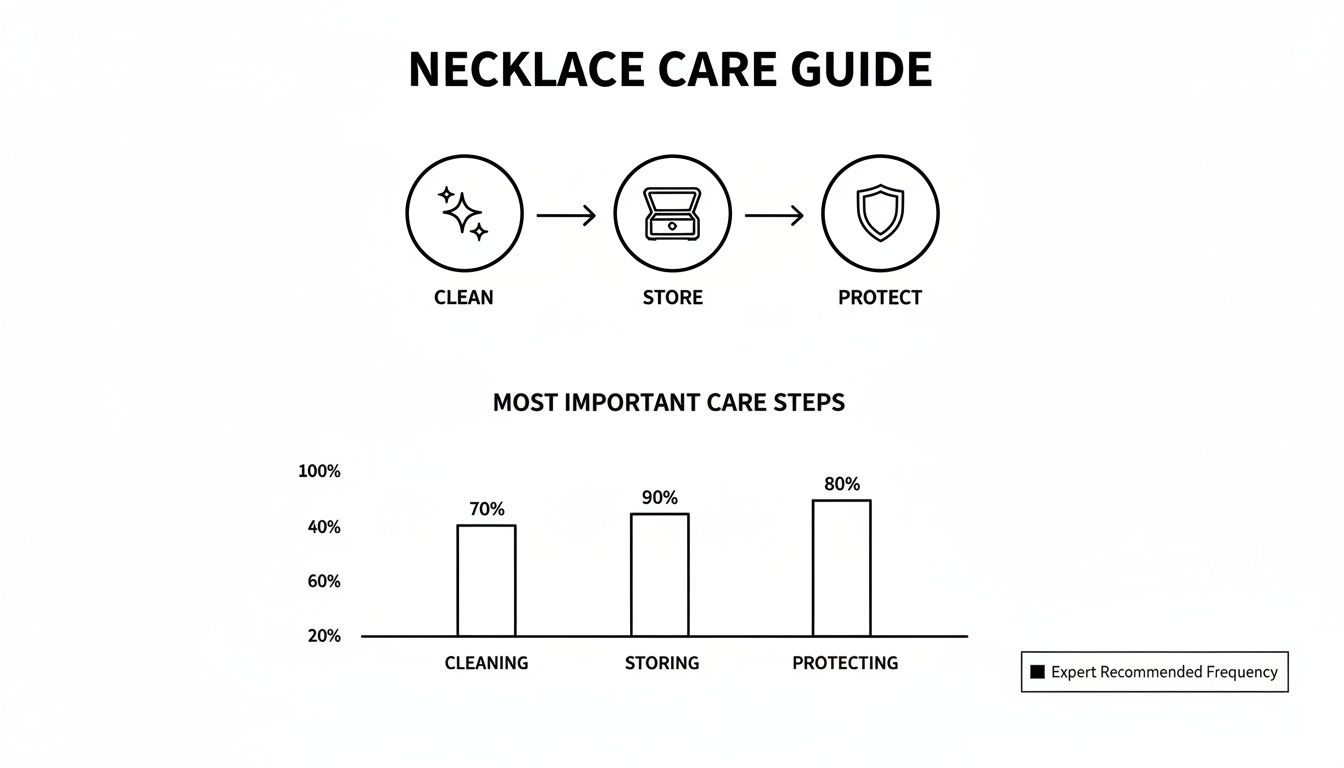
Following these tips for cleaning, storing, and protecting your piece is the best way to ensure it keeps its shine for a lifetime.
Ready to find the perfect piece that tells your unique story? Explore the stunning, handcrafted collections at Panther De Luxe Shop and discover a birthstone necklace you’ll treasure forever. Visit us at https://www.pantherdeluxe.com.
Comments