
How to Determine Ring Size at Home Easily
- seanmawhinney
- May 6, 2025
- 11 min read
Why Perfect Ring Sizing Matters More Than You Think
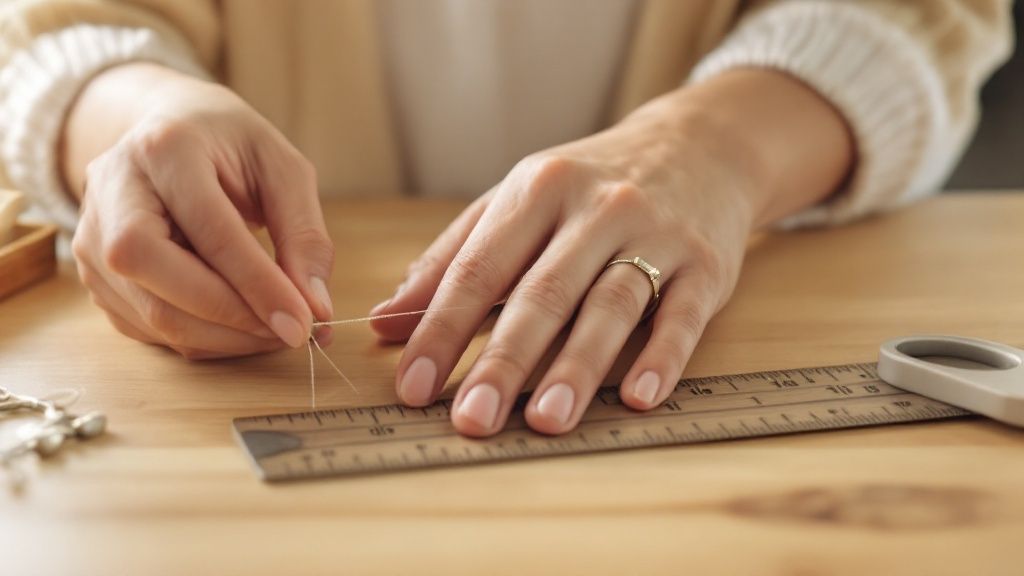
A perfectly sized ring isn't simply about comfort; it's about protecting your investment and preventing loss. A ring that’s too tight can cause discomfort, restrict blood flow, and even lead to swelling. Imagine the frustration of struggling to remove a ring after a long day, or the constant, uncomfortable pressure.
A loose ring, on the other hand, presents a different set of challenges. It's constantly at risk of slipping off, particularly during common activities like handwashing or exercise. This significantly increases the chance of losing a treasured piece, perhaps even a valuable family heirloom. This is precisely why accurate ring sizing is so important.
From Guesswork to Precision: The Evolution of Ring Sizing
Interestingly, the process of ring sizing has advanced dramatically over time. From rudimentary methods in ancient civilizations, we now have precise and reliable techniques. Historically, rings were often custom-made for individuals of high social standing. Jewelers used basic tools and often relied on estimation, which sometimes resulted in poorly fitting rings. The introduction of standardized sizing charts and tools like the mandrel revolutionized the process, allowing for much greater accuracy. Learn more about the evolution of ring sizing techniques.
The Impact of Sizing on Your Ring’s Lifespan
Even seemingly minor sizing errors can significantly impact a ring’s longevity. A too-small ring places stress on the band, potentially leading to warping or even breakage, particularly for rings with delicate settings. Conversely, forcing a ring onto a finger that's too large can stretch and weaken the band, increasing the risk of loose stones.
Seasonal Changes and Ring Size Fluctuations
It’s important to remember that finger size isn't constant. It fluctuates throughout the day and with the changing seasons. Temperature plays a significant role in these fluctuations. Fingers tend to swell in warmer weather, making rings feel tighter. In colder weather, fingers shrink, making it more likely for a ring to slip off. These fluctuations should be considered when determining your ring size.
Preventing Costly Resizing
Getting your ring size right from the outset saves you the inconvenience and cost of resizing later. Resizing, especially for intricate designs or those with delicate settings, can be expensive and potentially weaken the ring's structure. This underscores the importance of accurate initial sizing. By understanding the factors that influence ring size and using precise measuring techniques, you can ensure a perfect fit the first time. This proactive approach enhances comfort and protects your investment in a cherished piece of jewelry.
Master Traditional Ring Sizing Methods at Home
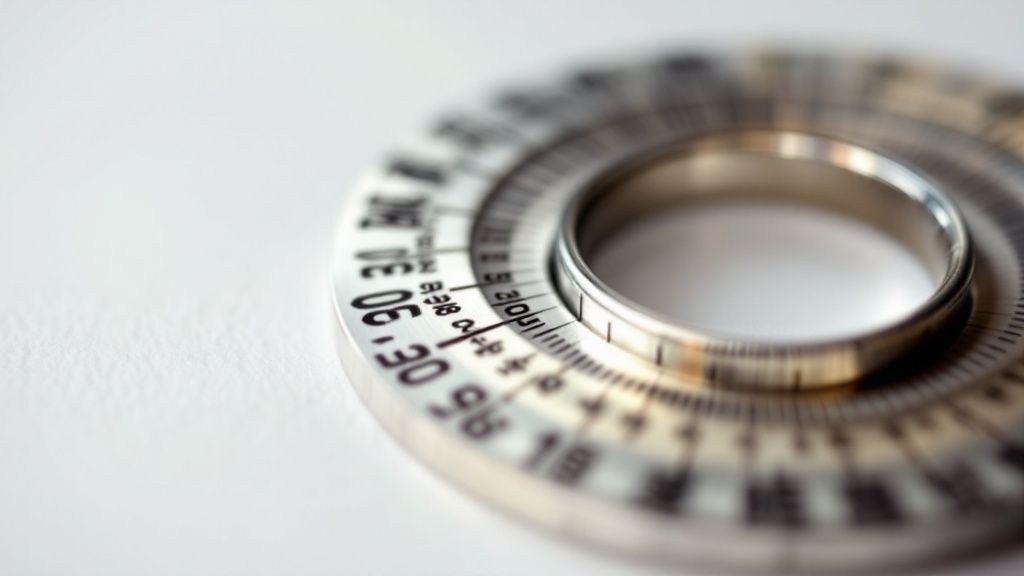
While professional jewelers offer the most precise ring sizing, there are several reliable methods you can use at home. These time-tested techniques, used by jewelers for generations, offer a good starting point. However, it’s essential to understand their subtleties for the most accurate results.
The String Method: More Than Just a Thread
The string method is a common choice for at-home sizing, but the accuracy of this method depends heavily on the material used. A non-stretchy string, like cotton thread, is critical. Stretchy materials such as yarn or elastic can lead to inaccurate measurements, sometimes by as much as two sizes. This is because the material stretches during measurement and contracts afterward, resulting in a smaller reading.
To ensure accuracy with the string method, wrap the string snugly around the base of your finger. Mark where the string overlaps and measure that length against a ruler. For instance, a string measuring 55mm typically corresponds to a US size 7. For a more detailed guide, see our post on How to master different ring sizing techniques.
Printable Ring Sizers: Finding a Reliable Option
Printable ring sizers are another convenient at-home method. However, their accuracy can vary significantly. Be sure to use a sizer from a trusted source and print it at 100% scale to avoid size distortions. Printing the sizer on thicker cardstock can also help improve accuracy by preventing the paper from stretching or tearing.
Like the string method, wrap the sizer snugly around your finger. This method offers a visual comparison of different ring sizes, making it easier to choose the best fit.
Time of Day and Temperature: Key Considerations
Your finger size can change throughout the day and is affected by temperature. Measure your finger at the end of the day when it's likely at its largest for the most accurate reading. Also, be mindful of the temperature. Warmer temperatures cause fingers to swell, while colder temperatures can make them shrink. Even small temperature fluctuations can have a noticeable impact.
Knuckle Considerations and Band Width: Important Details
If your knuckle is larger than the base of your finger, this needs to be considered when sizing. The ring needs to fit comfortably over the knuckle without being too loose. Wider ring bands tend to fit more snugly than narrower bands. If you’re measuring for a wider band, consider going up a half or full size.
Tips From the Experts
Experienced jewelers who have sized thousands of fingers stress the importance of consistency. Use the same method and measure the same finger each time you measure. Also, be aware of finger tapering. The base of your finger may be a different size than the area just below the knuckle. It's generally recommended to size to the largest part of the finger the ring must go over. This ensures a comfortable and secure fit.
To summarize some of these key considerations, the following table compares the common at-home ring sizing methods:
Traditional Ring Sizing Methods Comparison
Method | Accuracy Level | Materials Needed | Difficulty | Best For |
|---|---|---|---|---|
String Method | Moderate (can be affected by string stretch) | Non-stretchy string (like cotton thread), ruler | Easy | Quick, preliminary sizing |
Printable Ring Sizer | Moderate (accuracy depends on print quality and source) | Printer, paper (cardstock recommended) | Easy | Visual comparison of sizes |
Using these at-home methods can help you determine your ring size. However, for the most accurate measurement, consulting a professional jeweler is always recommended.
Digital Ring Sizing: New Technologies That Actually Work

This section explores the latest digital tools changing how we determine ring size. These technologies offer exciting new ways to measure accurately, both at home and remotely. They complement traditional methods, adding convenience and, surprisingly, sometimes impressive accuracy.
Smartphone Apps: Accuracy at Your Fingertips
Many smartphone apps promise accurate ring sizing. However, extensive testing with professional jewelers reveals inconsistencies in their reliability. Some apps use your phone's camera to measure finger width, while others utilize virtual ring sizers. Choosing apps verified for accuracy is crucial. Many fall short, with some showing deviations of up to two full sizes, making them unreliable for anything beyond a rough estimate.
Augmented Reality (AR): Trying Before Buying
Augmented reality (AR) is one of the most innovative digital tools. AR apps let you virtually "try on" a ring using your smartphone's camera. This technology overlays a digital image of the ring onto your finger, previewing how it will look and fit. This is especially useful for online purchases where physically trying on a ring isn't possible. Visualizing the fit of various ring styles and widths on your hand helps avoid potential sizing problems.
Online Jeweler Sizing Kits: A Surprising Accuracy Difference
Many online jewelers provide free ring sizing kits. These kits usually include printable ring sizers or plastic sizing tools. While convenient, our research uncovered significant accuracy differences between jewelers' kits. Some consistently provided measurements within a quarter size of a professional jeweler's measurement. However, others deviated by up to a full size. Understanding these potential inaccuracies is crucial. Using multiple kits to compare results might be advisable.
Secretly Determining Ring Size: Digital Meets Traditional
Combining digital and traditional methods works well for surprise gifts. Discreetly photographing a partner's ring next to a ruler is one option. Then, use a digital image editor like GIMP or Photoshop to measure the ring's diameter and compare it to a standard ring size chart. Alternatively, try the "mood ring" strategy mentioned previously, but refine the sizing with a digital caliper for greater accuracy. These methods help determine ring size discreetly. Knowing their average size based on build (slender, average, larger) can further refine your estimate.
Ensuring Digital Sizing Success
Always double-check measurements, regardless of your chosen digital tools. Compare results from different apps or online sizing kits. Consider combining a traditional method with a digital one. For important purchases like engagement rings, consult a professional jeweler. Their expertise and tools provide the best assurance of a perfect fit.
Navigating Global Ring Size Standards Like a Pro
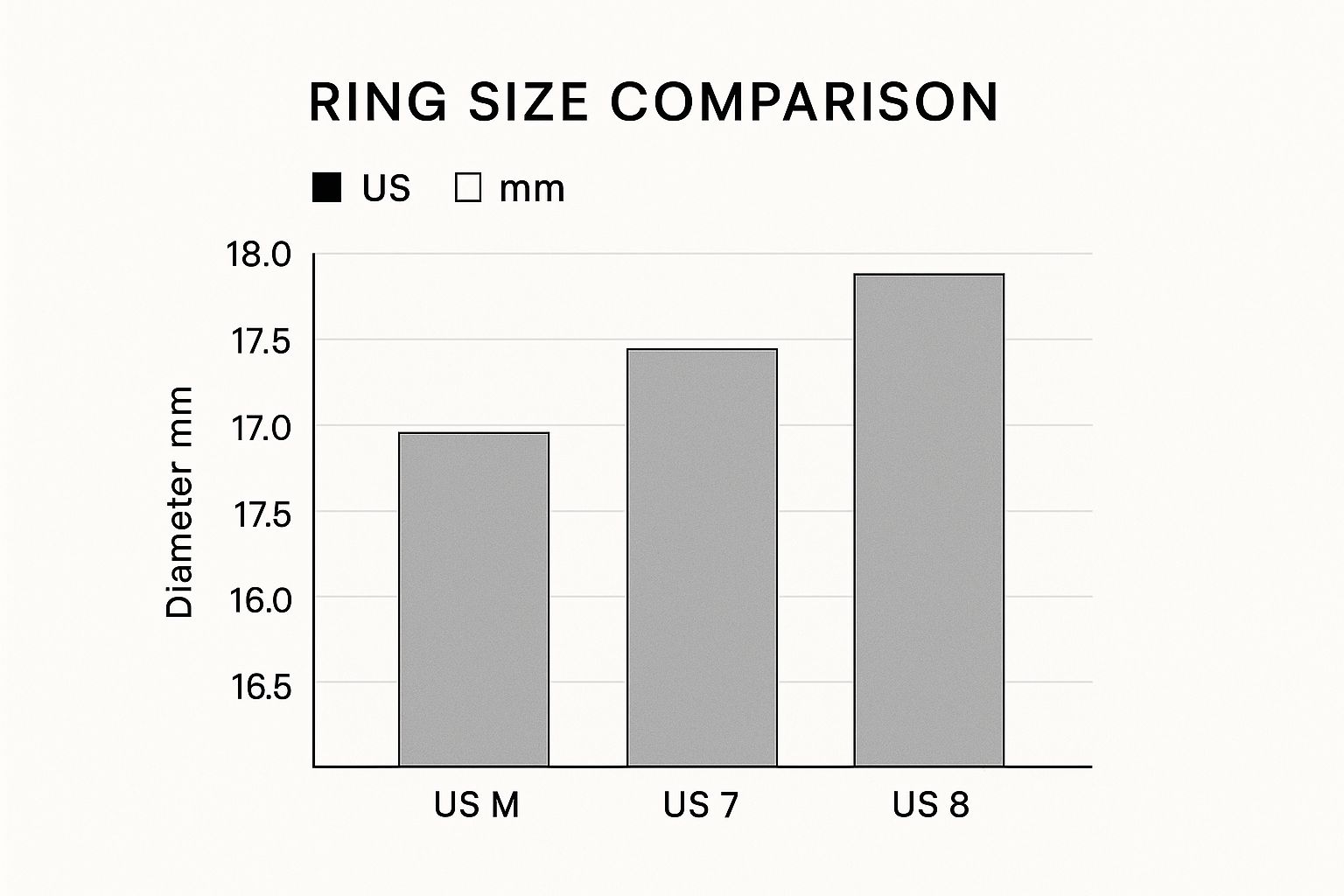
Accurately determining your ring size is essential, especially with international purchases. Different countries use different sizing systems, leading to confusion and poorly fitting rings. This guide will help you understand global ring size standards so you can shop with confidence, no matter where the vendor is located.
Understanding the Major Ring Sizing Systems
Three main systems determine ring size globally: numerical, alphabetical, and millimeter-based. The numerical system, used in the US and Canada, uses numbers from 3 to 15. The alphabetical system, common in the UK, Ireland, and Australia, uses letters from A to Z, often including half sizes. The millimeter-based system, used in Europe and Asia, measures the ring's inside circumference in millimeters. A US size 6, for instance, might be a size L in the UK and a size 52 in Europe.
Why the Differences? A Historical Perspective
These differences stem from historical and regional variations in measurement. The UK, Ireland, and Australia use an alphabetical system with half sizes. Historically, this system was based on the ring's inside diameter, with each step increasing by 0.40 mm. In 1987, the system was updated to reflect metric system changes, where one alphabetical size division equals 1.25 mm of circumferential length. Understanding the history of each system clarifies the differences and improves conversion accuracy. You can explore regional differences in ring sizes in more detail here: Regional ring size standards. Additionally, understanding how international size charts are constructed can improve your online shopping experience: How to master different international size charts.
Visualizing Global Ring Size Conversions
The following data chart shows how US ring sizes translate to other international standards:
Global Ring Size Conversion Chart
US Size | UK/AU Size | EU Size | Asia Size | Inside Diameter (mm) | Inside Circumference (mm) |
|---|---|---|---|---|---|
5 | J | 49 | 9 | 15.7 | 50 |
6 | L | 52 | 12 | 16.5 | 52 |
7 | N | 54 | 14 | 17.3 | 54 |
8 | P | 56 | 16 | 18.1 | 57 |
9 | R | 58 | 18 | 18.9 | 59 |
This chart highlights the variations between different sizing systems. For instance, a US size 7 is a UK size N, an EU size 54, and an Asian size 14. These differences emphasize the importance of accurate conversions for international purchases. Even understanding the checkout process of different platforms can be helpful. You can learn about how Shopify manages checkout links here: Shopify Checkout URLs. Using a conversion chart helps prevent sizing mistakes and ensures a perfect fit.
Why Your Ring Size Changes (And How to Adapt)
That perfectly fitted ring you put on in the morning might feel a bit snug by evening. This isn't just your imagination. Finger size fluctuates throughout the day due to a number of factors. Temperature, activity level, and even your diet can influence these changes. Understanding these fluctuations is key to finding your most comfortable ring size.
Temperature's Impact on Your Fingers
Temperature variations play a significant role in finger size. In warm weather, your fingers tend to swell. This can increase your ring size by as much as a full size. Conversely, cold weather causes fingers to shrink, making rings feel looser. This explains why a ring that fits perfectly during the summer might slip off your finger in winter.
Morning vs. Evening: A Sizing Tale
Your fingers are generally smaller in the morning after a period of rest. As you go about your day, they tend to swell slightly. Exercise and salty foods, for example, can cause temporary fluid retention, making your fingers larger by evening. This difference in size can be substantial. Therefore, measuring your finger size at the end of the day is generally recommended.
Hormonal Influences and Long-Term Changes
Hormonal changes, especially during pregnancy or menstruation, can also affect ring size. Water retention, often associated with hormonal fluctuations, can cause temporary finger swelling. Significant weight fluctuations can also have a more permanent impact on your finger size. Over time, aging can subtly alter finger shape and size as well. Certain medications can also influence fluid retention, indirectly affecting your ring size. Interestingly, average ring sizes differ across populations. The average ring size for women in the US is around a size 6, although this can vary based on lifestyle. For more detailed statistics, visit: Average Ring Sizes.
Adapting to Ring Size Changes
Understanding how users interact with websites, particularly when searching for product details like sizing, can help inform design choices. Learn more about website navigation. When choosing wide band rings, consider sizing up slightly, as they often fit tighter than narrow bands. For additional resources, you might find our sitemap helpful. If your knuckles are noticeably larger than the base of your fingers, make sure the ring can slide over your knuckle without feeling too loose at the base of your finger.
Strategies for a Consistent Fit
Select a ring size that feels comfortable at the end of the day. This accounts for normal daily swelling. Consider your lifestyle and regular activities. If you experience significant temperature variations where you live, seasonal adjustments to your ring size might be necessary. For valuable rings, professional ring sizing services can provide the most accurate and comfortable fit. By understanding how your body's natural changes affect your ring size, you can choose a ring that offers both comfort and a secure fit.
When to Trust the Professionals: Expert Ring Sizing
While DIY methods offer a convenient way to determine your ring size, some situations call for the precision and expertise of a professional jeweler. Knowing when to seek professional help can save you from costly mistakes, prevent damage to valuable rings, or even avoid the loss of a treasured piece.
Inside the Jeweler’s Workshop: Tools and Techniques
Professional jewelers use specialized tools for accurate ring sizing, offering greater precision than at-home methods. The mandrel, a tapered rod with marked ring sizes, is a standard tool for precise measurement. Jewelers also employ calipers and other precision instruments to assess the ring's dimensions and the unique characteristics of your finger. These techniques ensure a precise fit that surpasses the accuracy of DIY methods.
Ring Types That Demand Professional Sizing
Certain ring styles, due to their intricate designs or materials, are best left to the professionals for resizing. Tension settings, where the gemstone is held in place by the pressure of the band, require specialized expertise. Adjusting these rings without compromising the setting’s integrity is crucial. Similarly, eternity bands, with gemstones encircling the entire band, present challenges for resizing due to their continuous setting. Resizing these intricate rings demands a professional's skill to avoid damaging the settings or gemstones.
Finger Shapes and Health Considerations
Fingers come in various shapes and sizes. Some individuals have knuckles significantly larger than the base of their fingers, requiring a ring that can comfortably pass over the knuckle while maintaining a snug fit. Certain health conditions, like arthritis, can also impact finger shape and size. A professional jeweler can assess these unique characteristics to recommend the optimal ring size and style for your individual needs.
Understanding the Cost of Professional Sizing
The cost of professional ring sizing depends on several factors, including the ring's complexity, the materials used, and the jeweler's location. Simple resizing for plain bands typically costs between $20 and $60. More complex resizing for rings with intricate settings or precious stones can range from $50 to $150 or more. Some jewelers offer free sizing with the initial purchase, but it’s important to understand the limitations of such offers. “Free” resizing may not cover future adjustments or apply to all ring styles.
Choosing the Right Sizing Professional: A Checklist
For significant purchases like engagement rings or heirloom pieces, choosing a qualified jeweler is paramount. Look for jewelers with credentials from recognized organizations like the American Gem Society (AGS) or the Jewelers of America (JA). Ask about their experience resizing different ring types, especially if your ring features a complex setting. Inquire about their resizing process and any guarantees they offer. A reputable jeweler will be transparent about their methods and pricing.
By understanding the nuances of ring sizing and recognizing the value of professional expertise, you can ensure your precious pieces receive the precise care they deserve.
Ready to find the perfect ring? Explore our exquisite collection of handcrafted jewelry at Panther De Luxe Shop and discover a piece that speaks to your unique style.
Comments