
How to Clean Costume Jewelry That Is Tarnished and Restore Its Shine
- Luke Zucco
- Jan 8
- 14 min read
Learning how to clean tarnished costume jewelry is way simpler than you might think. Forget harsh chemicals or aggressive scrubbing. The real key is using gentle, non-abrasive methods to lift that discoloration without damaging the delicate plating or materials underneath.
This guide will walk you through safe, effective household solutions to bring your favorite pieces back to life.
What to Do When Your Favorite Jewelry Tarnishes
We’ve all been there. You reach for that beloved necklace or a pair of statement earrings, only to find them dull, discolored, or worse—sporting that dreaded greenish tint. It’s a frustrating moment, and that initial disappointment can make you wonder if the piece is ruined forever.
The good news? It’s almost certainly not. What you’re seeing is just tarnish, a super common chemical reaction that happens when the base metals in costume jewelry meet the elements. This isn't a sign of poor quality; it's just the nature of these fun, affordable accessories.
Understanding Why Tarnish Happens
Unlike fine jewelry made from solid gold or platinum, most costume pieces are made with a base of copper, brass, or another alloy. That base is then coated with a thin layer of gold, silver, or rhodium. When this plating gets exposed to air and moisture, the metal underneath reacts, causing the surface to darken.
A few everyday things can really speed up this process:
Moisture and Humidity: Storing jewelry in a steamy bathroom or wearing it on a humid day creates the perfect storm for tarnish.
Chemical Exposure: Think perfumes, lotions, hairspray, and even the natural oils on your skin. They all contribute to the chemical reaction.
Airborne Pollutants: Believe it or not, even tiny amounts of sulfur compounds in the air can cause discoloration over time.
This isn't just a rare fluke. Tarnishing affects an estimated 8 out of 10 costume jewelry pieces within 18 months of regular wear, especially in humid climates. The whole process gets a boost from environmental factors like sweat, humidity, and all those cosmetic products we love. Fun fact: women make up 72% of costume jewelry consumers globally, with North America and Europe driving a huge 58% of worldwide demand. You can learn more about how to properly care for costume jewelry at Lumoir-Jewelry.com.
Key Takeaway: Tarnish is just a surface-level issue, not a permanent flaw. With the right techniques, you can easily remove it and restore the original shine without messing up the delicate finish of your accessories.
This guide is designed to move past generic advice and give you practical, safe solutions that actually work. We'll show you how to figure out what your jewelry is made of and choose the best cleaning method, so you can confidently bring your favorite pieces back from the brink. You don't need expensive commercial cleaners or special tools—just a few common household items and a little know-how.
Identifying Your Jewelry and Gathering Supplies
Before you even think about cleaning, you need to play detective. Seriously, this is the most important step. "Costume jewelry" isn't one specific thing; it's a catch-all for pieces made from a huge range of materials. Figuring out what you're working with is the key to bringing back the shine without accidentally causing a disaster.
Think of it this way: you wouldn’t use a harsh cleaner on a delicate silk blouse, right? The same logic applies here. Most costume pieces are made from base metals like brass or copper that have a super thin layer of gold or silver plated on top. If you scrub too hard or use the wrong chemical, you can scratch that plating or strip it right off.
A Quick Inspection Guide
Get up close and personal with your piece. Is it heavy or light? Do you see any markings? Pay extra attention to high-wear spots like the clasp or the back of a pendant, since that's where trouble usually shows up first. To get a really good look at tiny details and potential problem areas, a craft light with a magnifying glass is a game-changer. It helps you spot issues before they get worse.
Here’s what to look for:
Worn Plating: See any pinkish or coppery tones peeking through the gold or silver? That’s a dead giveaway the plating is wearing thin. Aggressive cleaning will only make it more obvious.
Loose Stones or Beads: Gently wiggle any rhinestones, faux pearls, or other embellishments. If anything feels loose, you’ll need to avoid soaking the piece entirely, as water can dissolve the old glue holding everything together.
Greenish Tarnish: That classic green stuff? It's a telltale sign of copper reacting with air and moisture. It confirms you're working with a copper-based alloy.
This flowchart can help you visualize that first assessment.
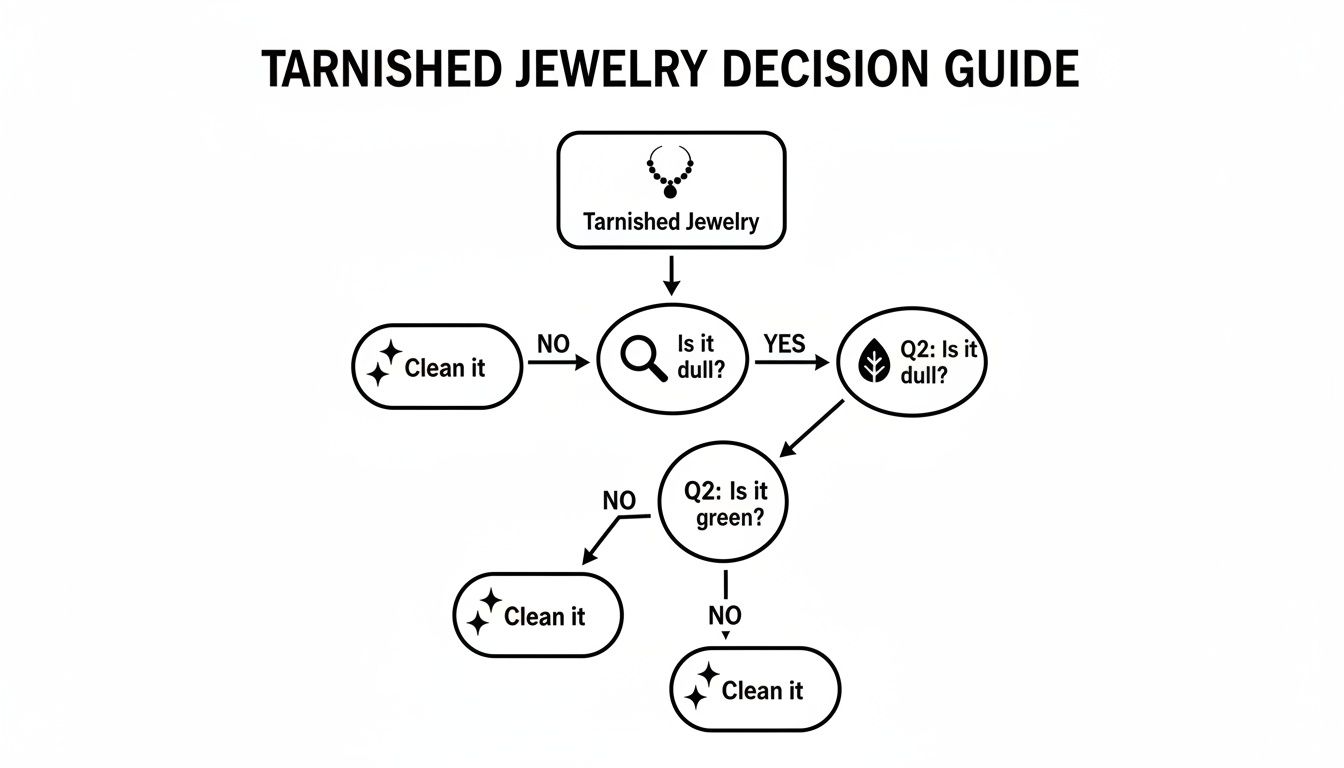
As you can see, whether your jewelry is just looking dull or has full-on green spots, gentle cleaning is always the answer. For a deeper dive into the specific metals and materials you might be dealing with, our guide on what costume jewelry is made of is a great resource.
Your Gentle Cleaning Toolkit
Once you’ve done your inspection, it’s time to gather your supplies. You really don’t need anything fancy or expensive. In fact, the best and safest tools are probably already sitting in your house.
Here's a quick look at the essentials you'll want to have on hand.
Supply Item | Purpose | Where to Find It |
|---|---|---|
Microfiber Cloths | Gently wiping, polishing, and drying without leaving lint or causing scratches. | Home goods store, online |
Mild Dish Soap | A non-abrasive liquid soap (without bleach or moisturizers) for creating a gentle cleaning solution. | Grocery store |
Soft-Bristled Brush | A baby toothbrush or a soft makeup brush for getting into small crevices without scratching. | Pharmacy, beauty aisle |
Small Bowls | Two bowls are ideal—one for the soapy water solution and one for clean rinsing water. | Kitchen cupboard |
Cotton Swabs | Perfect for precise cleaning around delicate stones, rhinestones, or intricate details. | Pharmacy, bathroom cabinet |
Having these items ready to go means you won't be tempted to grab something harsh in a pinch. This careful prep work is what sets you up for a successful restoration.
Pro Tip: Always, always do a spot test. Before you clean the whole piece, dab a tiny bit of your cleaning solution on an inconspicuous area—like the back of an earring or the inside of a bracelet. Wait a minute to make sure it doesn’t cause any damage or discoloration.
Gentle DIY Methods for Cleaning Tarnish
Alright, you've inspected your jewelry and have your supplies ready. Now for the fun part—actually getting rid of that tarnish. The great news is you don't need harsh or expensive commercial cleaners to do it. Some of the most effective solutions are probably sitting in your kitchen right now.
We're going to walk through a few proven, gentle methods that work wonders on most costume jewelry. The key is to always start with the mildest option first. You can always move to something stronger if you need to, but you can't undo damage.
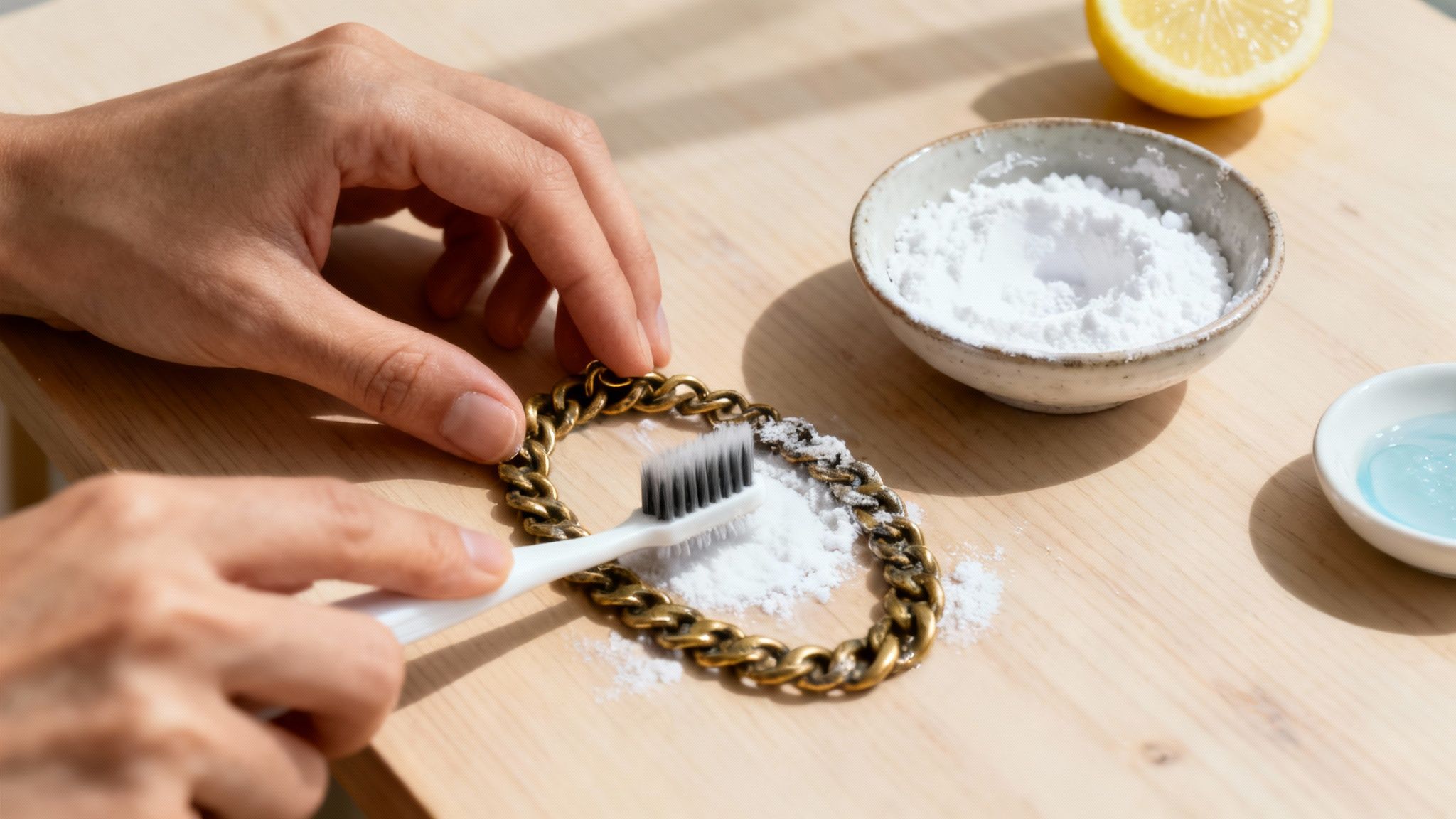
The First Line of Defense: Soap and Water
For light dullness or just routine upkeep, you really can't beat the simplicity of mild soap and warm water. This is by far the safest method for almost all costume jewelry, especially pieces with delicate parts like rhinestones or faux pearls, since it avoids soaking.
Think about a pair of gold-plated hoop earrings that have just lost their luster from regular wear. This is the perfect technique to bring back their shine without risking the plating.
Here’s how I do it:
Mix the solution: Put a few drops of a mild liquid dish soap (the kind without bleach or heavy degreasers) into a small bowl of warm—not hot—water.
Get your cloth ready: Dip a soft, lint-free cloth or a cotton swab into the soapy water. Squeeze out all the excess; you just want it damp, not dripping.
Wipe it down: Gently wipe the surface of your jewelry, giving a little extra attention to the tarnished spots. For intricate designs, a cotton swab is your best friend for getting into all the nooks and crannies.
Rinse and dry immediately: Use a separate cloth dampened with plain water to wipe away any soap residue. Then, right away, pat the piece completely dry with a clean, dry microfiber cloth. This last step is crucial!
This simple wash works wonders. In fact, jewelry care pros report a success rate of 81% for removing light to moderate tarnish using just a mild soap and water solution.
Tackling Stubborn Tarnish with Baking Soda
If soap and water didn't quite get the job done, it's time to bring out the baking soda. This is my go-to for more significant discoloration on durable metal pieces, like a solid brass cuff or a chunky chain. Baking soda is a fantastic mild abrasive that lifts tarnish without scratching most surfaces.
A word of caution, though: be careful using this on thinly plated items. While the abrasion is gentle, it could still be too much for an extremely delicate or worn finish. Always test it on a small, hidden spot first.
Creating the Paste
The Mix: Combine two parts baking soda with one part water in a small bowl.
The Consistency: Stir it until you have a smooth, thick paste—think toothpaste.
Once your paste is ready, use your finger or a cotton swab to apply a thin layer to the tarnished areas. Let it sit for a minute or two, then gently rub the surface with a soft cloth or a baby toothbrush. You should see the tarnish start to lift almost instantly. Rinse the piece thoroughly under cool running water and dry it completely.
The 2:1 ratio of baking soda to water is a well-known trick for creating the perfect paste. It’s effective and fast. Consumer surveys even show that 64% of people have had success with this classic DIY method.
This technique is fantastic for restoring shine to more robust pieces. But remember, not all jewelry is created equal. For items with specific stones like Cubic Zirconia, you might need a slightly different approach. Our guide on how to clean CZ jewelry and make it sparkle has specialized tips just for those brilliant gems.
Using Lemon Juice with Extreme Caution
For certain metals like solid brass or copper that have developed a heavy, dark patina, a little bit of lemon juice can work magic. The mild citric acid is great at dissolving stubborn oxidation. That said, this is the strongest method we'll cover, and it comes with some serious warnings.
When to Use Lemon Juice
On solid brass or copper pieces with significant, dark tarnish.
When baking soda just wasn't strong enough.
When to AVOID Lemon Juice
Never on plated jewelry. The acid can eat right through the thin plating and expose the base metal, causing permanent damage.
Never on pieces with pearls, rhinestones, or porous stones. It will dull their finish, dissolve glue, and can even ruin the foil backing on rhinestones that gives them their sparkle.
If it’s safe for your piece, mix equal parts lemon juice and water. Dip a cotton swab in the solution and apply it only to the tarnished spots on your brass or copper item. Do not soak the jewelry. Let it sit for no more than a minute before rinsing it thoroughly and drying it completely. This quick, targeted approach can brighten up heavily oxidized metals beautifully.
How to Handle Delicate Jewelry Components
Not every piece of costume jewelry is a simple metal chain. Some of our favorite accessories are a delicate dance of rhinestones, faux pearls, and colorful enamel. When these components are part of the equation, cleaning tarnish requires a much lighter touch and a completely different game plan.
Soaking is off the table, and aggressive scrubbing is a definite no-go.
Think of it less like washing a dish and more like a careful restoration. Your goal is to clean the metal around these fragile elements without disturbing them, dissolving their glue, or dulling their shine. This is where you learn to handle the tricky stuff.
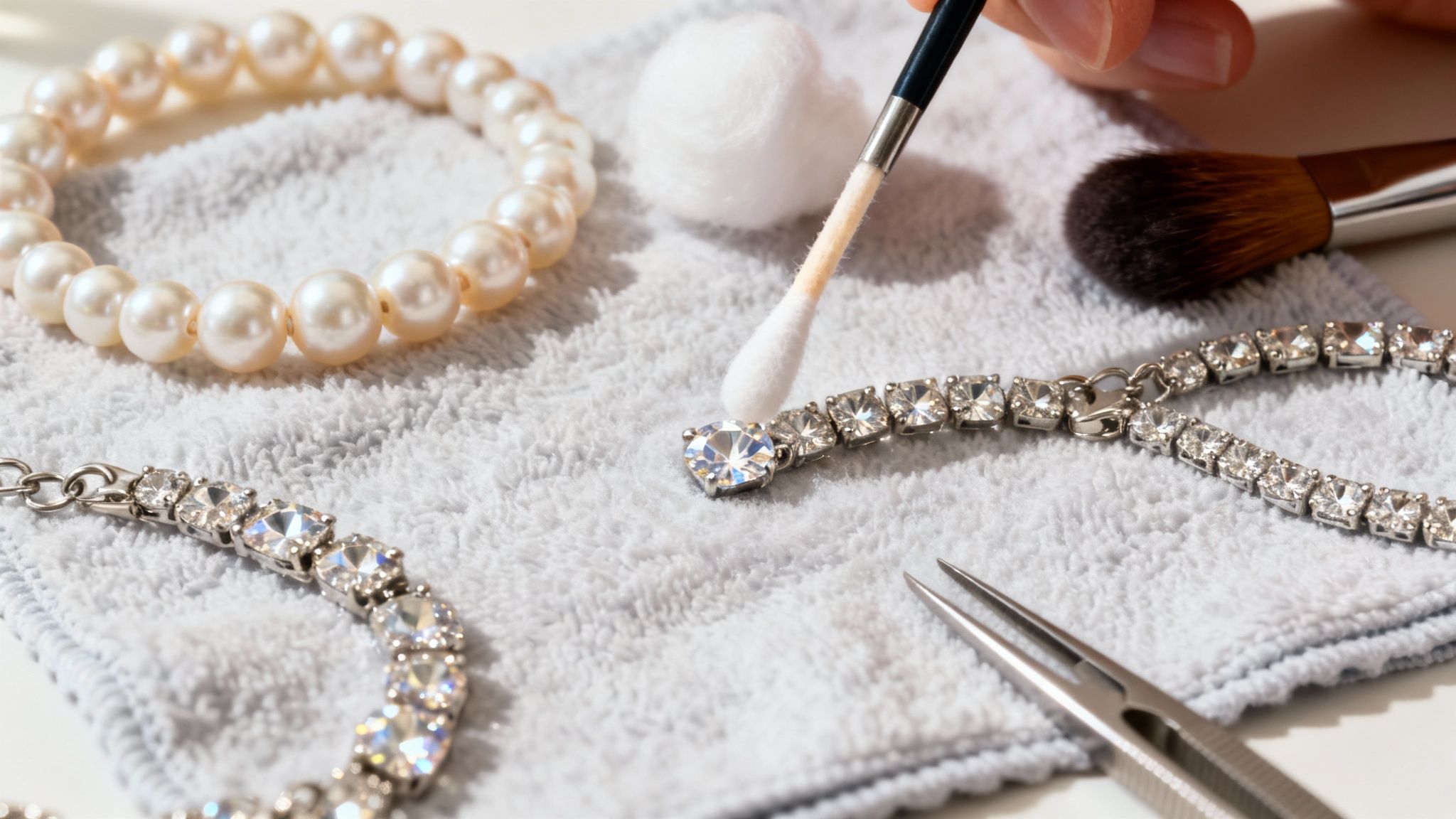
Working Around Rhinestones and Glued Stones
Rhinestones get their incredible sparkle from a metallic foil backing. If that foil gets wet, the stone turns dull and loses its fire for good. The glue holding these stones in place is also incredibly sensitive to moisture, which can make them pop right out.
For a vintage brooch covered in tiny rhinestones, your best friends are a cotton swab and a very light hand.
Make a Minimal Solution: Mix just one or two drops of mild dish soap into a very small bowl of warm water.
Create a Barely Damp Swab: Dip a cotton swab in, then press it firmly against a dry towel to wick out almost all the moisture. It should feel nearly dry.
Clean with Precision: Gently work the swab around the base of each stone, cleaning only the tarnished metal. Avoid the top of the rhinestone and its foil backing entirely.
Dry Immediately: Use a clean, completely dry cotton swab to absorb any lingering dampness from the crevices.
This "spot cleaning" technique is the only safe way to go. It lets you tackle the discoloration on the metal without putting the delicate stones in danger.
A critical mistake is using a dripping swab. Too much water will seep underneath the stone, trapping moisture against the foil. This can take days to evaporate, causing permanent damage to the rhinestone's sparkle long after you've put it away.
Caring for Faux Pearls and Beads
Faux pearls are another common—and incredibly fragile—feature. They're usually just glass or plastic beads coated with a delicate, iridescent finish. That coating is easily damaged by chemicals and abrasives.
Acids from things like lemon juice or vinegar will strip the lustrous coating right off, leaving behind a plain, dull bead. Even a baking soda paste is too gritty and can scratch the delicate surface.
For faux pearls and coated beads, stick to the absolute basics:
A Simple Wipe-Down: A soft, dry microfiber cloth is often all you need. Gently buff the pearls and the metal around them to remove light tarnish and fingerprints.
Minimal Moisture if Needed: For a stubborn spot, use a cloth that is very slightly dampened with plain water. Wipe the area and immediately follow up with a dry cloth. Never use soap on faux pearls.
Imagine a classic multi-strand faux pearl necklace. The pearls themselves just need a gentle buffing, while the tarnished clasp can be carefully cleaned using the damp cotton swab method described for rhinestones. This targeted approach ensures every part of the piece gets the right care.
Cleaning Enameled and Painted Jewelry
Enamel adds that beautiful pop of color to jewelry, but it's essentially a layer of fused glass or durable paint. While pretty resilient, it can still chip or get discolored by harsh chemicals.
Your safest bet here is the mild soap and water method. Use a damp cloth to gently wipe down the enameled surfaces, which is usually enough to bring back their vibrancy.
For any surrounding metal that's tarnished, you can again use that targeted cotton swab approach to clean right up to the edge of the enamel without scrubbing the colored surface. The goal is just to avoid anything abrasive that could scratch or dull that glossy finish.
Preventing Tarnish to Keep Your Jewelry Shiny
Once you've brought your favorite pieces back to life, the real goal is to keep them that way. Honestly, the best way to deal with tarnish is to stop it from ever starting. Shifting your mindset from reactive cleaning to proactive care will make a massive difference in the life and brilliance of your collection.
Think of it this way: a few simple, consistent habits are far more powerful than the occasional deep clean. It saves you so much time and effort in the long run, and your accessories are always ready to wear when you are.
Adopt the Last On, First Off Rule
One of the easiest yet most effective habits you can build is the "last on, first off" rule. It’s a simple mantra that shields your jewelry from the daily chemical cocktail of personal care products.
Just think about your morning routine. Hairspray, perfume, lotions, and makeup all contain ingredients that can seriously speed up tarnishing on plated metals. By putting your jewelry on after you've applied everything and let it dry, you're creating a much safer environment for your accessories.
The same logic works in reverse at the end of the day. Your jewelry should be the very first thing you take off before you change or wash your face. This little move minimizes its contact with the sweat and oils that have built up on your skin.
Smart Storage Is Your Best Defense
Where you keep your jewelry is just as important as when you wear it. Tossing everything into an open dish on your dresser is a recipe for disaster—scratches, tangles, and, you guessed it, tarnish. Your two main enemies here are air and moisture.
Your entire storage strategy should be about limiting exposure to both. Here are a few simple but highly effective solutions:
Airtight Containers: Small, individual zip-top bags are fantastic. So is a jewelry box with a lid that actually seals properly. Just squeeze out any excess air before you close it up.
Separate and Conquer: Store each piece on its own to prevent them from scratching each other up. Soft pouches or a jewelry organizer with separate compartments work wonders.
Anti-Tarnish Strips: These little non-toxic paper strips are a game-changer. Tuck one inside your jewelry box or bag, and it will absorb the airborne pollutants that cause tarnish.
Silica Gel Packets: Don’t throw out those little packets that come in new shoeboxes or purses! Toss one into your jewelry box to soak up any excess moisture. This is especially helpful if you live somewhere humid.
Taking care of jewelry is becoming a bigger deal for everyone. The market for cleaning products is growing, which shows a huge shift toward preservation. In fact, industry data shows that around 67% of jewelry owners are now actively looking for cleaning solutions. A survey of U.S. retailers also found that 61% of customers ask for advice on proper care, which tells us people really want this guidance. You can see more about these trends over at Westpack.com.
Expert Insight: Never, ever store your costume jewelry in the bathroom. The constant humidity from the shower creates the perfect storm for tarnish to form fast, undoing all your hard work.
Proactive Care for Long-Lasting Shine
Beyond the "last on, first off" rule and smart storage, a few other proactive habits can make all the difference. These small actions really add up, keeping your pieces looking brand new for years.
Giving each piece a quick wipe-down with a soft, dry microfiber cloth after you wear it removes skin oils and residue before they have a chance to react with the metal. For a deeper dive into proactive care, check out our complete guide on how to prevent jewelry from tarnishing.
Finally, always remember to take your jewelry off before doing anything that involves moisture or chemicals. That means swimming, showering, exercising, or even just cleaning the house. If you treat your costume jewelry with a little bit of mindful care, you’ll preserve its beauty and ensure it stays a favorite part of your collection.
Common Questions About Cleaning Costume Jewelry
Even with the best advice, you're bound to run into a few tricky situations or wonder about those "cleaning hacks" you've seen online. Let's tackle some of the most common questions that pop up when you're trying to bring your favorite pieces back to life.
Can I Use Toothpaste to Clean My Tarnished Costume Jewelry?
This is probably the most persistent cleaning myth out there, and the short answer is a hard no. It might seem like a clever, cheap solution, but most toothpastes are designed with mild abrasives to polish tough tooth enamel.
Those same polishing agents are way too harsh for the ultra-thin plating on fashion jewelry. Using toothpaste can easily scratch, dull, or even strip the finish right off, revealing the base metal underneath. It's just not worth the risk of permanent damage. Stick to something gentle like a soft baking soda paste or a little bit of mild dish soap.
What Should I Do If My Skin Turns Green from Costume Jewelry?
We've all been there—you take off a favorite ring or bracelet and find that dreaded green smudge. Don't worry, it's a completely harmless (though annoying) chemical reaction. It happens when the acids in your skin and sweat react with the copper in the jewelry's base metal.
Giving the jewelry a good clean will definitely help by removing any surface oxides that speed up the process. But for a more lasting solution, try this simple trick: apply a thin, even coat of clear nail polish to the parts of the jewelry that touch your skin. It creates an invisible barrier that stops the reaction in its tracks.
Pro Tip: That clear coat isn't permanent. It will wear off over time, so plan on reapplying it every few weeks to keep your skin green-free.
Are Commercial Jewelry Cleaners Safe for Costume Pieces?
This is where you need to be extremely careful. Most commercial jewelry cleaners you see on the shelf are formulated for fine jewelry—think solid gold, sterling silver, and platinum. Their powerful formulas often contain chemicals like ammonia or strong acids that are great for durable precious metals.
But for costume jewelry? Those same chemicals can be an instant disaster. They can strip the delicate plating clean off in a matter of seconds, completely ruining the piece. If you want to go the commercial route, you absolutely must read the label. Only buy products that explicitly say they are "safe for plated jewelry" or "safe for fashion jewelry."
Even then, always play it safe. Test the cleaner on a small, inconspicuous spot first just to be sure.
How Do I Know If Plating Is Worn Off or Just Tarnished?
It’s easy to confuse the two, but knowing the difference is key. Tarnish is a surface-level discoloration—it’s that dull, dark, or sometimes greenish film that sits on top of the metal. You can remove tarnish with gentle cleaning and restore the shine underneath.
Worn plating, on the other hand, is physical damage. It means the top layer of metal has physically rubbed away over time. After cleaning, if you can see a different color metal peeking through—often a pinkish copper, yellowy brass, or dull gray—that’s a sign the plating is gone for good. Unfortunately, cleaning can't fix that. The only way to restore it would be to have the piece professionally re-plated.
At Panther De Luxe Shop, we believe every piece of jewelry deserves to shine. Explore our stunning collection of high-quality accessories designed for lasting beauty and style. https://www.pantherdeluxe.com