
Gold vs Platinum The Definitive Jewelry Comparison Guide
- Luke Zucco
- Dec 14, 2025
- 14 min read

When you're trying to decide between gold and platinum, the choice really comes down to your priorities. Think of it this way: platinum is a naturally white, dense, and incredibly durable metal, making it perfect for heirloom pieces that will last a lifetime. On the other hand, gold gives you a whole spectrum of colors and a much friendlier price point.
Your final decision will be a balance between your personal style, your lifestyle, and what you value most in a piece of jewelry for the long haul.
Gold vs Platinum A Quick Comparison For Buyers
Choosing the perfect metal for an engagement ring, wedding band, or a signature piece you'll wear every day is a big deal. Both gold and platinum are iconic precious metals, but they offer completely different experiences. Getting a handle on these differences from the start will help you pick the metal that actually fits your life and expectations.
This is your starting point—a quick look at how they stack up before we get into the nitty-gritty of each attribute. We'll cover everything from their unique colors and shine to how they handle the bumps and scrapes of daily life. This section gives you the basic framework to decide which metal is the right choice for you.
At-a-Glance Comparison Gold vs Platinum
To make things even clearer, this table breaks down the most important differences between these two metals. Use it as a quick cheat sheet to see how they compare in the areas that matter most.
Attribute | Gold | Platinum |
|---|---|---|
Natural Color | Naturally yellow; alloyed for white and rose | Naturally silvery-white |
Durability | Harder and more scratch-resistant (especially 14k/18k) | Softer (scratches easier) but more durable (metal displaces, not lost) |
Purity | Typically 58.5% (14k) or 75% (18k) pure | Typically 95% pure, making it a purer metal in jewelry |
Weight | Lighter and less dense | Roughly 60% denser than 14k gold, feels more substantial |
Hypoallergenic | Can contain nickel (especially white gold), a common allergen | Naturally hypoallergenic and ideal for sensitive skin |
Maintenance | White gold requires re-plating every 1-2 years | Scratches can be polished out; develops a natural patina |
Upfront Cost | Generally more affordable | Higher initial cost due to density, purity, and labor |
This table shows the real trade-offs you're making. While gold might be better at resisting scratches day-to-day, platinum's durability means it holds gemstones more securely over decades because the metal doesn't wear away. At the same time, gold's versatility in color and lower price make it a timeless and practical option for many people.
These distinctions are what it's all about, and understanding the various types of jewelry metals can give you even more context for your decision.
Key Takeaway: The "gold vs platinum" debate isn't about which metal is better overall, but which one is better for a specific person and purpose. Your lifestyle, budget, and personal taste will ultimately point you to the right choice for a piece you'll love for years to come.
Comparing Appearance Color and Luster
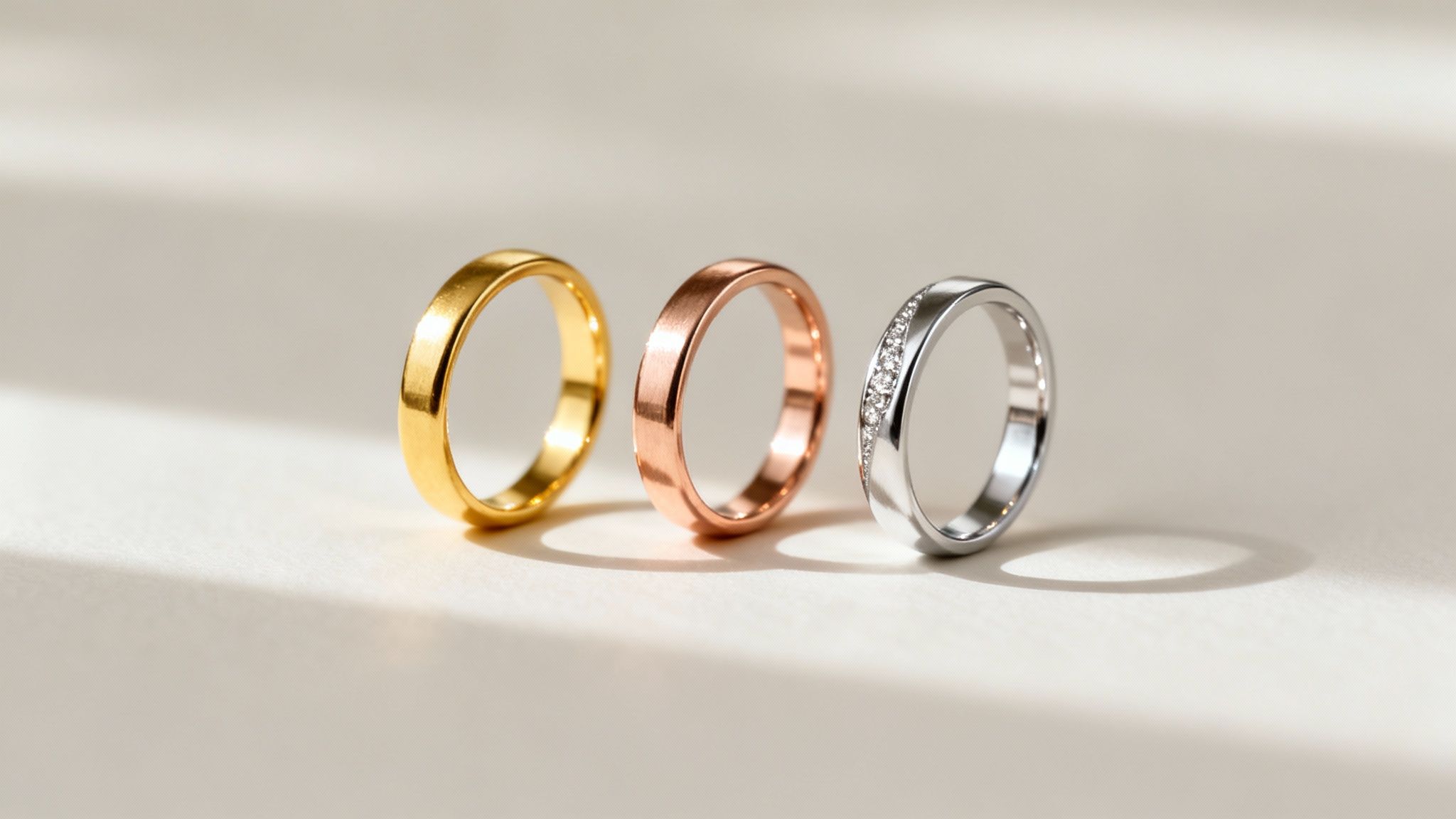
When you’re standing at the jewelry counter, the first thing that grabs your eye is the metal itself. Gold and platinum both create stunning white jewelry, but they get there in completely different ways, which affects not just how they look today, but how they’ll look years from now.
Gold's story is one of versatility and warmth, while platinum’s appeal comes from its pure, unchanging nature. Figuring out which aesthetic speaks to you—the adaptable glow of gold or the cool, steadfast brilliance of platinum—is the best place to start.
Gold: The Spectrum of Colors
Pure gold is a brilliant, deep yellow. But you'll almost never see 24k gold in a ring you can wear every day; it's just too soft. To get the strength and beauty we love, jewelers mix pure gold with other metals, creating alloys with their own unique colors and resilience.
This is where gold really shines. The alloying process gives it an incredible color palette, something platinum can’t offer. You get three main choices, each with a personality of its own.
Yellow Gold: The classic. It's made by mixing pure gold with metals like silver and copper, which keeps its sunny warmth while making it tough enough for daily life.
Rose Gold: A modern, romantic favorite. Rose gold gets that signature pinkish hue from a higher amount of copper in the alloy.
White Gold: The most popular alternative to platinum. It’s created by mixing pure gold with white metals like palladium, silver, and nickel.
But white gold has a secret. Since it starts with yellow gold, the final alloy always has a slight yellowish tint. To get that crisp, bright white finish, it's almost always plated with a thin layer of rhodium.
Key Insight: That rhodium plating is what gives white gold its stunning, mirror-like shine, but it’s not forever. It wears off over time and usually needs to be reapplied every 12 to 24 months to keep the metal looking its best.
Platinum: The Naturally White Metal
Platinum, on the other hand, is a naturally white metal. Its cool, silvery-white color is its true hue—it doesn't need any plating or special alloys to look that way. This is one of the biggest differences when you compare it to white gold.
Because its color is inherent, platinum will never fade or change hue. A platinum ring will look just as brilliantly white on its 50th anniversary as it did the day you bought it. For anyone looking for a pure, low-maintenance white metal, this is a massive selling point. For a closer look at these two, our guide on platinum vs. white gold breaks it all down.
The difference isn't just about the color, though. It’s also about how each metal reflects light and ages over time.
Luster and The Evolution of Shine
How a metal’s surface wears over the years is just as important as its initial color. Gold and platinum age in completely different ways, developing unique characters that appeal to different people.
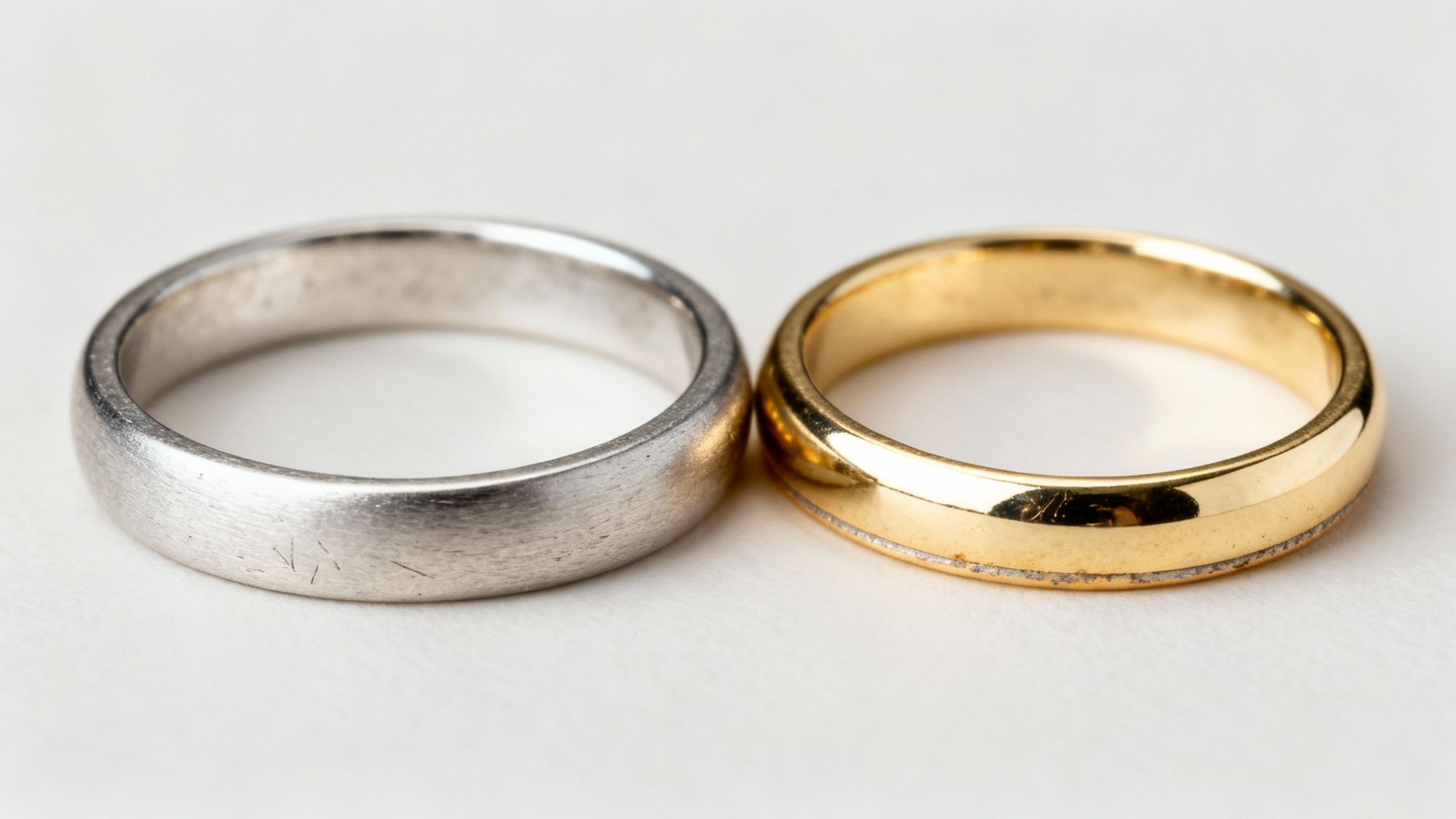
Gold, especially 14k and 18k alloys, is known for its bright, reflective shine. When it gets scratched, tiny bits of the metal are actually lost, but the piece generally keeps its high-gloss finish. It’s also quite easy for a jeweler to polish it back to that original, mirror-like state.
Platinum develops something else entirely: a patina. When platinum gets scratched, the metal is simply moved around, not lost. Over time, these tiny scratches create a soft, matte, almost grayish finish. Many jewelry lovers find this patina beautiful, as it gives the piece a sense of history and character. But if you prefer that high-shine look, a quick polish from a jeweler will bring it right back to its original brilliance.
Understanding Durability, Hardness, and Daily Wear
When you're choosing a ring you’ll wear every day, how it holds up is just as important as how it looks. The debate between gold and platinum often gets tangled up in two words that sound similar but mean very different things in jewelry: hardness and durability.
Getting this distinction right is the key to picking a metal that actually fits your life. One metal is better at shrugging off daily scratches, while the other offers unmatched security for your gemstones over a lifetime.
Hardness: How Your Ring Resists Scratches
Hardness is all about a metal's ability to resist surface-level scratches and dings. Think of it as the first line of defense against everyday bumps—like brushing against a wall or digging for your keys.
On the Mohs scale of hardness, platinum scores a 4 to 4.5. That’s actually softer than the alloys used for gold rings. For example, 14k gold (which is 58.5% pure gold mixed with stronger metals) scores higher, making it more resistant to surface scuffs than platinum.
So, if your main goal is to keep your ring looking polished and scratch-free for as long as possible with minimal fuss, a 14k or 18k gold alloy has a slight advantage. But that's only half the story.
Durability: A Story of Metal Loss vs. Metal Movement
Durability isn't about scratches; it’s about how a metal withstands wear and tear over decades without being worn away. This is where platinum truly shines and sets itself apart.
When a gold ring gets scratched, microscopic bits of the metal are flaked off and lost forever. Over many years, this slow erosion can thin the band and, more critically, weaken the prongs holding your diamond in place.
Platinum is different. It's incredibly dense and malleable, so when it gets scratched, the metal is simply pushed aside—it moves, but it doesn't disappear. No material is actually lost.
Key Difference: Gold loses tiny particles with every scratch, leading to gradual metal loss over time. Platinum displaces metal when scratched, preserving its volume and making it a far more secure setting for gemstones in the long run.
This unique property is why jewelers often call platinum a “forever metal.” It doesn’t wear down, meaning the prongs securing your precious stones stay strong and safe for generations.
Practical Scenarios For Your Lifestyle
Let's ground this in the real world. Your daily routine should be a huge factor in your decision.
Consider these situations:
For the Office Worker: If you have a lower-impact lifestyle and are good about taking off your ring for hands-on tasks, the superior scratch resistance of 14k gold might be perfect. It’ll keep its polished look with less frequent maintenance.
For the Active Individual: If you’re a nurse, a teacher, or someone who works with their hands, platinum's durability is the clear winner. It might collect more surface scuffs (developing a patina), but the ring’s structural integrity and the security of its settings are unparalleled.
For the Heirloom Piece: If this is an engagement ring you hope to pass down, platinum is the ideal choice. Its resistance to metal loss ensures that crucial settings and fine details will endure for generations without needing major repairs.
Ultimately, the choice comes down to what matters more to you. Do you prefer a metal that stays polished and resists minor scuffs, or one that offers unbeatable strength and security for your most precious gems, even if it shows its life story through a soft patina?
Analyzing Weight Density and Hypoallergenic Properties
Looks aren't everything. How a piece of jewelry feels against your skin—its weight, its warmth, its reaction with your body chemistry—is a huge part of the experience. The differences between gold and platinum here aren't just details; they fundamentally change how you'll wear and enjoy your jewelry every day.
This is where the choice gets really personal. One metal offers a satisfying heft and pure, worry-free comfort, while the other is lighter but sometimes brings along alloys that don't agree with sensitive skin.
The Substantial Feel of Platinum
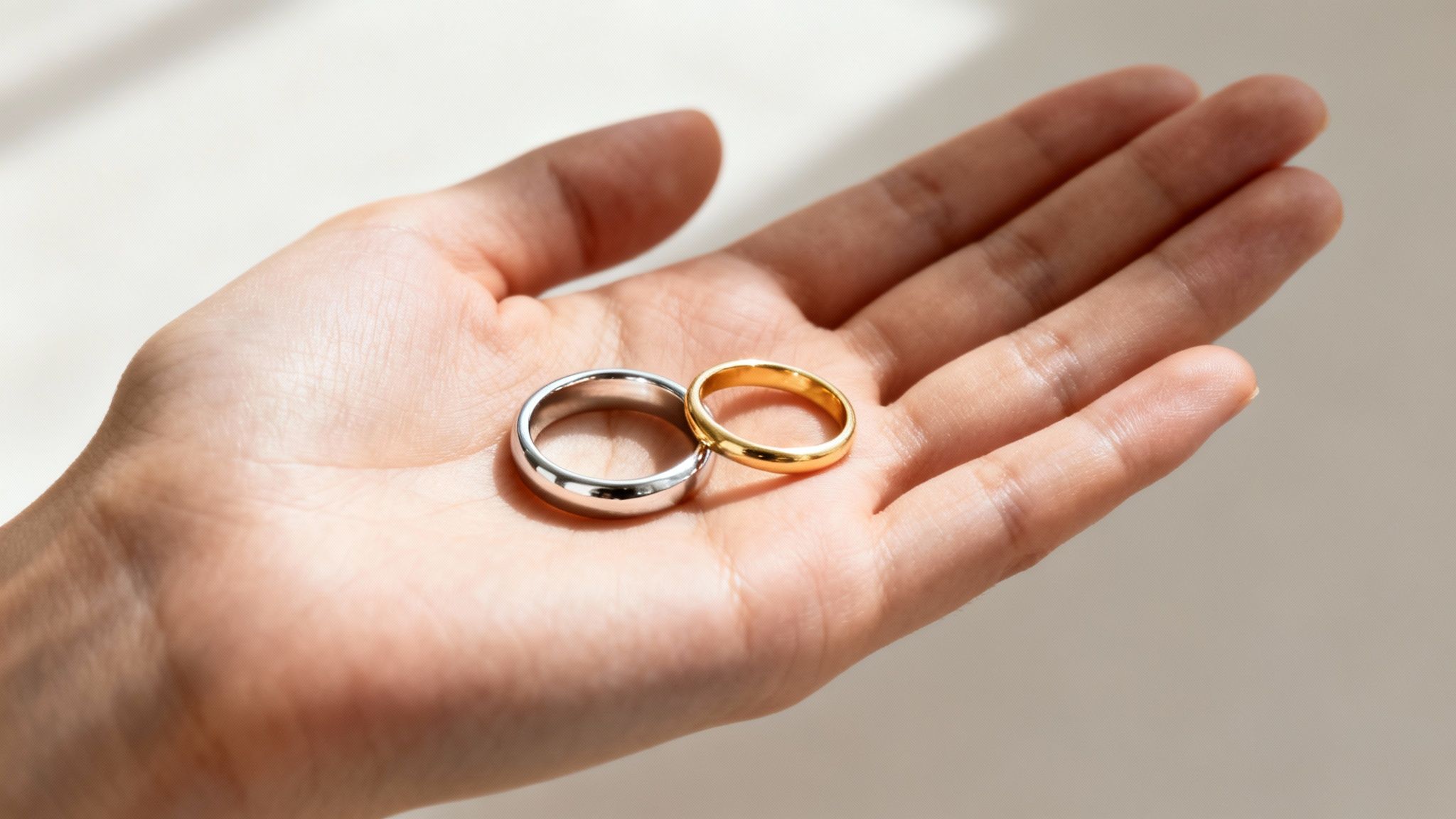
If you held two identical rings, one gold and one platinum, you’d notice the difference in weight instantly. It’s not subtle. Platinum is significantly denser, giving it a satisfying heft that many people associate with luxury and permanence.
Just how much denser? Platinum is about 60% denser than 14k gold. That weight feels reassuring on your finger, a constant reminder of the quality you’re wearing. For anyone who loves a solid, substantial piece of jewelry, platinum is the obvious winner.
On the flip side, if you prefer jewelry that feels light—almost like it isn’t there—gold is your metal. A gold ring of the same size will feel noticeably lighter, which some people find far more comfortable for constant, all-day wear.
Key Insight: The choice between gold's lightness and platinum's weighty presence is purely preferential. There's no right or wrong answer—it's about which sensation you connect with more.
Hypoallergenic Champion: Platinum
For anyone with sensitive skin, this is probably the most important part of the comparison. Most skin reactions to jewelry aren't from the precious metal itself but from the alloys mixed in with it—especially nickel.
Platinum is the undisputed champion here. It's naturally hypoallergenic. Jewelry-grade platinum is typically 95% pure (you’ll see it stamped "950 Plat" or "PLAT"), and since it's almost entirely pure and nickel-free, allergic reactions are practically unheard of. It’s the safest, most reliable choice for true peace of mind.
Gold is a different story. Pure gold is too soft for most jewelry, so it has to be mixed with other metals for strength. These alloys are where the trouble starts.
White Gold: This is the most common culprit for skin irritation. It often contains nickel to get that silvery-white color and add durability, which can trigger dermatitis in sensitive people.
Yellow and Rose Gold: While generally better tolerated, these alloys can still contain trace amounts of nickel or other metals that might cause a reaction in extremely sensitive individuals.
If you have sensitive skin, choosing platinum removes all the guesswork. It’s an investment in comfort. For those wanting to explore other safe bets, our guide covers the 7 best hypoallergenic metals for jewelry in 2025 in more detail. But with platinum, you get beauty and comfort, guaranteed.
Breaking Down Cost and Long Term Value
When you're comparing gold and platinum jewelry, the price tags can be a bit confusing. You might see that the spot price for an ounce of platinum is actually lower than gold on the market, yet a platinum ring will almost always cost more. It’s not a mistake—it’s a reflection of purity, density, and the sheer skill it takes to work with the metal.
Understanding what’s behind that price difference is key. The number on the tag is about so much more than just the raw material.
The Reasons Behind Platinum's Higher Price
So, why the premium? Three big factors drive up the cost of platinum jewelry.
First up is purity. Platinum jewelry is typically 95% pure platinum (you'll see it stamped as 950 Plat). That means almost the entire piece is made of the precious metal itself. Compare that to 18k gold, which is 75% pure gold, or 14k gold at just 58.5% pure. With platinum, you’re simply getting more of the good stuff.
Next is density. Platinum is a much heavier, denser metal than gold. If you were to make two identical rings, one in gold and one in platinum, the platinum version would require more grams of metal to create the same volume. That extra weight directly adds to the material cost.
Finally, there’s the craftsmanship. Platinum is a beast to work with. It has an incredibly high melting point and demands specialized tools and a much higher level of skill from the jeweler. All that extra labor and expertise gets factored into the final price, making it a true premium choice.
Market Dynamics and Investment Value
Beyond the jeweler's bench, the long-term value of gold and platinum is shaped by totally different forces. Gold is, first and foremost, a monetary asset. It’s the safe-haven investment people flock to when the economy gets rocky. Its value is driven by financial markets, central banks, and investor confidence.
Platinum, on the other hand, is an industrial workhorse. A staggering 70% of platinum's demand comes from industries, mainly for making catalytic converters in cars. This ties its value directly to the health of the global economy and consumer demand for manufactured goods.
We’ve seen this play out dramatically during economic crises. Take the 2008 financial meltdown. As car sales plummeted, platinum’s price crashed by 75%. Meanwhile, investors seeking safety drove gold’s price up by 25% by the end of that year.
Key Takeaway: Gold's value is anchored in its role as a global financial safe haven, making it more stable during economic downturns. Platinum's value is closely tied to industrial health, making it more volatile and susceptible to economic slumps that affect manufacturing.
Resale Value Considerations
When it comes to selling a piece down the road, both metals hold their value, but the experience is different. Gold is universally recognized, and its refining process is simpler. This usually makes it easier to sell back to jewelers or pawn shops for a price that’s closer to its melt value. The demand is constant and global.
Platinum’s resale market is a bit more specialized. It absolutely holds intrinsic value because of its rarity and purity, but fewer jewelers have the equipment and expertise to work with and refine it. This can sometimes mean you get a lower percentage of its initial purchase price back compared to gold—though its higher initial cost often still translates to a significant return.
For anyone curious about the broader investment world of precious metals beyond jewelry, you can find more details on investing in gold coins. Understanding the bullion market gives you great context for how these metals are valued purely as assets. Ultimately, the choice between gold and platinum really comes down to your priorities: do you lean toward upfront affordability and financial stability, or are you ready to invest in the unmatched rarity, purity, and craftsmanship of platinum?
How To Choose The Right Metal For You
Deciding between gold and platinum really comes down to what fits your life. It’s not about which metal is better overall, but which one is the right fit for your style, daily routine, and budget. When you break down what you truly value in a piece of jewelry, the choice becomes much clearer.
We can simplify the decision by looking at a few real-world scenarios. Each one plays to the unique strengths of either gold or platinum, guiding you toward a piece you’ll love wearing for years to come.
Choose Platinum for Unwavering Durability
If your top priorities are security and long-term resilience, platinum is your answer. Its incredible density and unique wear properties make it the superior choice for certain situations, justifying the premium price for anyone who needs peak performance from their jewelry.
Consider platinum if any of these sound like you:
You Have an Active Lifestyle: If you work with your hands or rarely take your jewelry off, you need platinum’s durability. It holds gemstones securely through daily wear and tear because the metal merely displaces instead of wearing away.
You're Buying an Heirloom Piece: For an engagement ring or another significant piece meant to be passed down for generations, platinum is the ultimate foundation. Its structural integrity simply won’t degrade over time.
Your Design is Intricate or Delicate: Platinum's strength makes it the best choice for holding delicate micropavé diamonds or supporting intricate, detailed settings. It ensures every tiny element stays exactly where it should.
The Platinum Promise: Investing in platinum means you’re prioritizing lifelong durability and the absolute security of your gemstones. The higher upfront cost buys you peace of mind and minimizes prong maintenance for decades.
Choose Gold for Versatility and Value
Gold’s timeless appeal is rooted in its beautiful color options and more accessible price point. It delivers exceptional quality and luxury, making it the perfect choice if you value aesthetic flexibility without stretching your budget.
Gold is probably your best bet in these situations:
You Love Having Color Options: If your heart is set on the warm glow of yellow gold or the soft blush of rose gold, the decision is already made. Gold is unmatched in its diverse color palette.
Your Budget is a Key Factor: Gold, especially 14k, comes at a more approachable price than platinum. This frees up more of your budget to put toward a higher-quality center stone.
You Prefer a Lighter Feel: For anyone who finds heavy jewelry a bit cumbersome, gold is a clear winner. Its lower density makes it feel significantly lighter and more comfortable for all-day wear.
This flowchart breaks down the decision-making process, showing how budget priorities often point toward gold, while a focus on long-term wear might lead you to platinum.
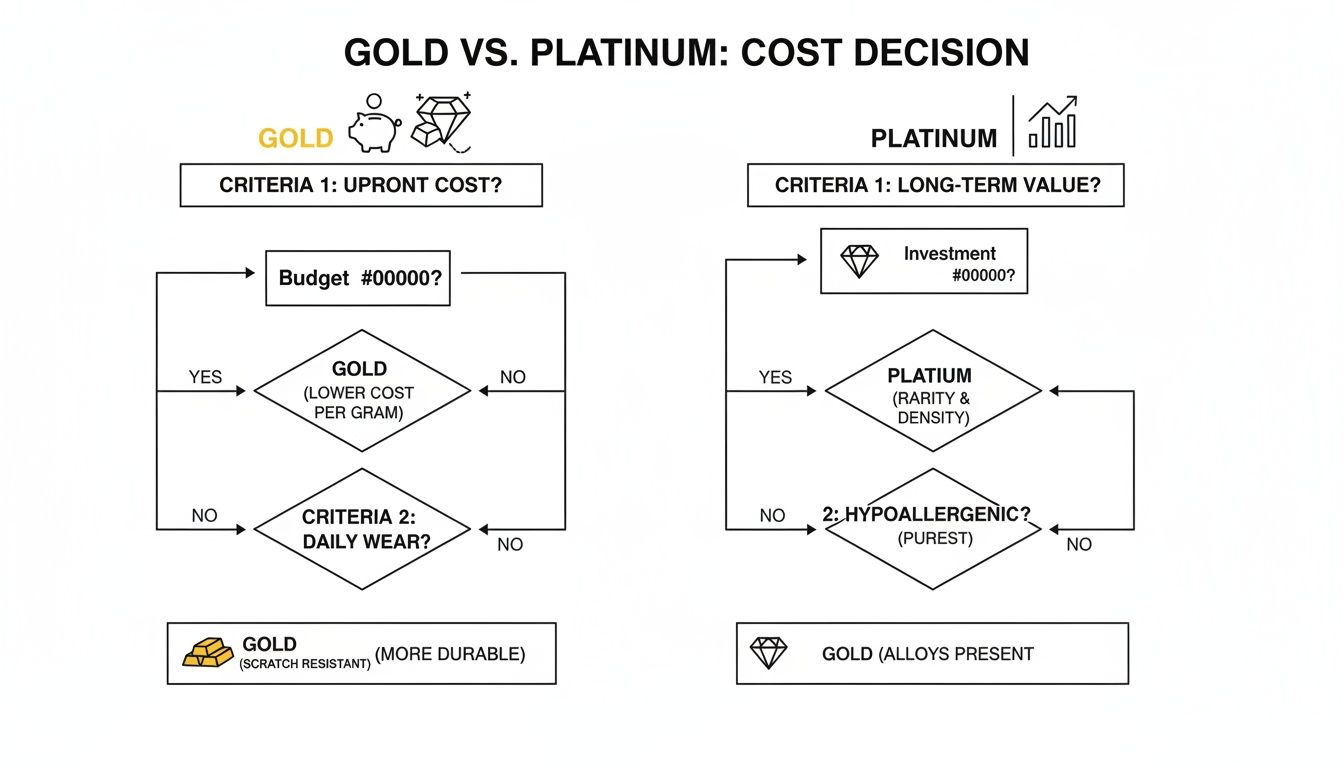
Ultimately, your choice in the gold vs. platinum debate hangs on what you value most—the timeless versatility of gold or the quiet, enduring strength of platinum.
A Few Final Questions
When you're weighing two incredible metals like gold and platinum, a few questions always seem to pop up right before making a decision. Getting straight answers can be the final step in choosing a piece you’ll love for a lifetime.
Here are the most common things people ask when they're on the fence.
Which One Is Better for an Engagement Ring?
Honestly, there's no single "better" metal—it all comes down to what you value most for such a meaningful piece. Think about your lifestyle and priorities.
If you’re looking for maximum durability and peace of mind for your stone, platinum is the winner. It’s also naturally hypoallergenic, which is a huge plus if you have sensitive skin or a very active job. But if you love the warmth of yellow or rose gold, or if budget is a key factor, gold offers that classic beauty and versatility in a more accessible way.
Does Platinum Really Scratch More Than 14k Gold?
Yes, technically it does. Platinum is a softer metal than a 14k gold alloy, so it will show minor surface scratches more readily. But here’s the part that really matters: those scratches don’t mean it’s less durable. Over time, they blend together to form a soft, grayish luster called a patina, which many people adore.
The key difference is what happens when they get scratched. When platinum gets a mark, the metal is just moved around—nothing is actually lost. When 14k gold gets scratched, tiny flecks of the metal are permanently worn away. So while gold might resist the initial scratch better, platinum holds its own for the long haul.
Why Is a Platinum Ring So Much More Expensive?
It really comes down to three things. First, platinum is a much denser metal. To make the exact same ring, you simply need more of it by weight, which drives up the material cost right away.
Second, the platinum used in jewelry is incredibly pure—usually 95% pure platinum. For comparison, 14k gold is only 58.5% pure gold. Finally, platinum is tougher to work with. Its high melting point and hardness demand more specialized tools and skill from the jeweler, adding to the labor cost.
At Panther De Luxe Shop, we believe the right piece of jewelry is the one that feels like you. Whether you land on gold or platinum, we have curated collections waiting to tell your story. Come find your next treasure at https://www.pantherdeluxe.com.
Comments