
Choosing 10k or 14k gold: A Practical Guide to the Right Metal
- Luke Zucco
- Dec 21, 2025
- 11 min read

When you're trying to decide between 10k or 14k gold, the choice really comes down to a simple trade-off: purity versus strength. On one hand, 14k gold has a richer, warmer color and higher value because it’s 58.3% pure gold. On the other, 10k gold offers way better durability and a friendlier price tag, with 41.7% pure gold content.
There's no single "best" option here. It all depends on what you value more—the luxurious feel of higher-purity gold or the practical, everyday resilience of a tougher alloy.
Decoding the Karat Difference
Picking the right gold for your next piece is about more than just looks; it’s about understanding what those numbers—10k and 14k—really mean for your budget, style, and how you live your life. The term "karat" is simply a measure of gold purity, based on a 24-part system. Pure, 24k gold is stunning but far too soft for most jewelry. To make it strong enough to wear, it’s mixed with other metals (called alloys) like silver, copper, and zinc.
This quick visual breaks down the key differences you need to know.
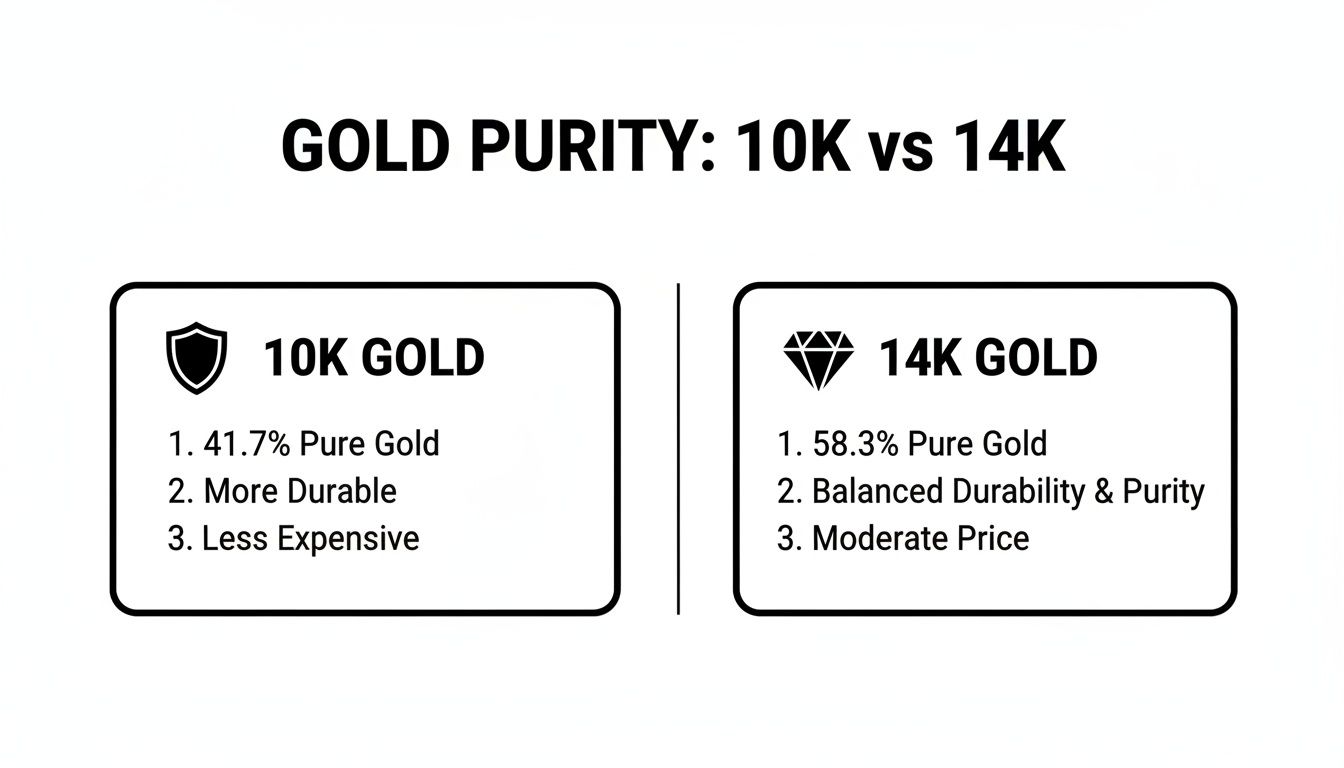
As you can see, 10k gold is framed as the more durable choice (hence the shield), while 14k gold is all about higher purity and value (represented by the gemstone). It’s a great starting point for figuring out what matters most to you. If you want to dig a bit deeper, we have a whole guide on https://www.pantherdeluxe.com/post/what-is-10k-gold-everything-you-need-to-know.
Quick Comparison: 10k Vs 14k Gold at a Glance
When you get right down to it, the main distinction is in their DNA. 14k gold contains 58.3% pure gold, with the other 41.7% being a mix of durable alloys. In contrast, 10k gold is made of 41.7% pure gold and 58.3% alloys—which is exactly why it costs less but offers greater hardness.
For those who like to see it all laid out, this table breaks down the essentials.
Attribute | 10k Gold | 14k Gold |
|---|---|---|
Purity | 41.7% Pure Gold | 58.3% Pure Gold |
Durability | Higher scratch resistance | Good durability, but slightly softer |
Appearance | Paler, softer yellow hue | Richer, warmer yellow hue |
Price | More affordable | Higher price point |
Best For | Daily wear, active lifestyles | Engagement rings, special occasion jewelry |
Ultimately, what works for one person might not for another. Sometimes, the best way to make a decision is just to see how the materials look in real life. It helps to check out visual examples of various jewelry pieces to get a feel for how the color and shine differ across different designs.
Diving Deeper: How 10k and 14k Gold Really Compare
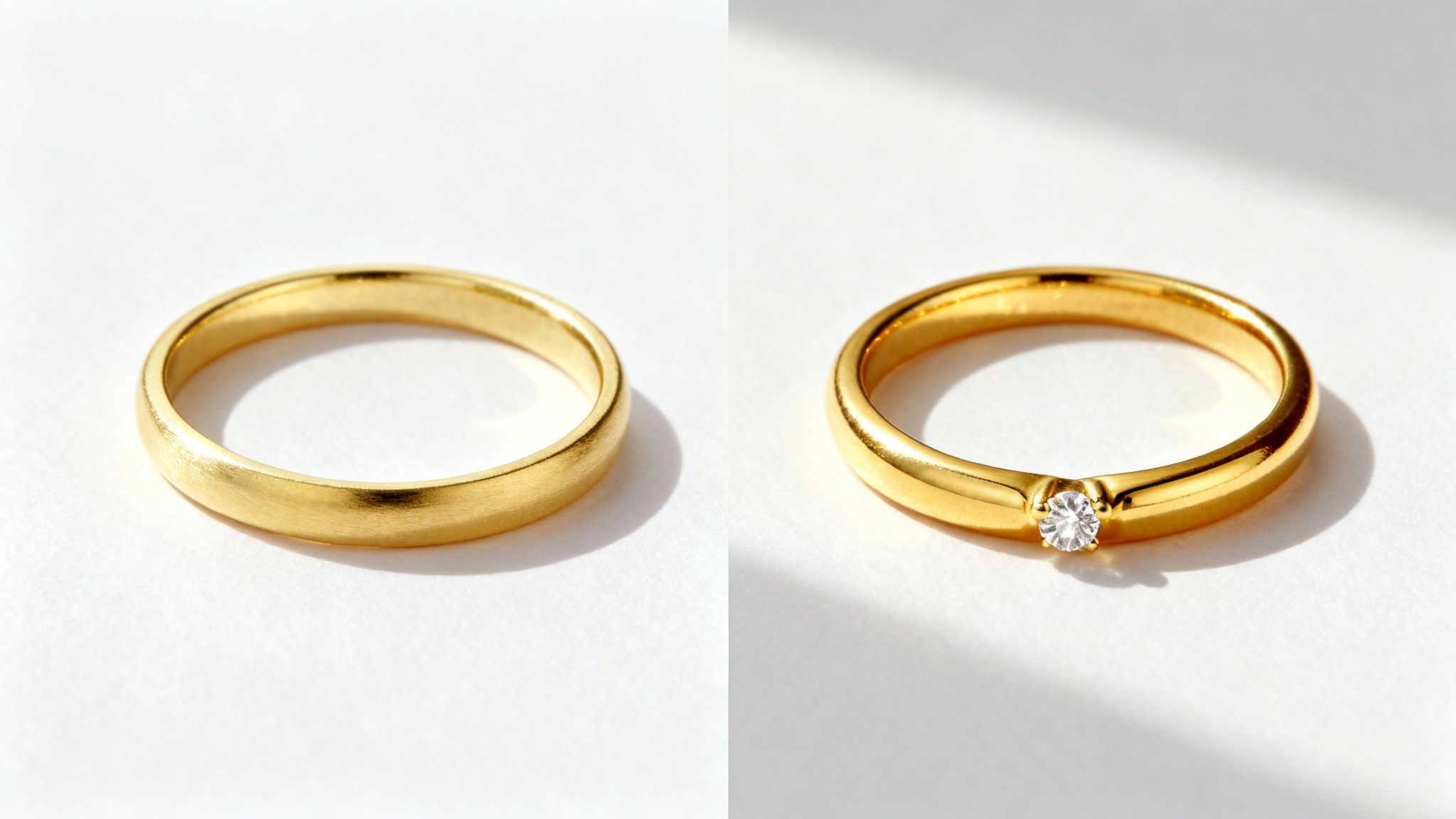
It’s easy to get lost in the numbers, but what do those percentages actually mean for the jewelry you wear every day? The choice between 10k and 14k gold affects everything from how a ring holds up against daily life to its color and even the way it feels on your skin.
Understanding these subtle but important differences is the secret to choosing a piece you’ll be happy with for the long haul.
Durability: The Hardness vs. Resilience Tradeoff
When it comes to durability, it's not as simple as one being "stronger." It’s really a tradeoff between two different qualities: hardness and resilience.
10k gold contains more alloy metals (58.3% of them, to be exact), making it significantly harder than its 14k counterpart. This hardness is its superpower against surface-level damage. If you’re wearing a ring while typing at a desk or a bracelet that gets bumped around, 10k gold is much better at resisting all those little scratches and scuffs that build up over time. It’s the workhorse of the two.
On the flip side, 14k gold is more resilient. Because it has more pure gold (58.3%), it’s a bit softer but also more malleable. This means it’s less likely to crack or fracture from a sharp impact. If you accidentally knock your ring against a countertop, 14k gold is more likely to dent—which can often be repaired—whereas the harder, more brittle 10k alloy might be at greater risk of breaking.
Key Takeaway: Choose 10k gold for its superior scratch resistance, perfect for high-contact pieces like everyday rings and bracelets. Go with 14k gold for better resilience against drops and impacts, making it a safer bet for precious settings like engagement rings.
Appearance: Color, Tone, and That Classic Glow
The difference in gold content also creates a subtle but distinct difference in color.
14k gold has that rich, warm, and saturated yellow hue that most people picture when they think of fine jewelry. It’s a classic, deep glow that beautifully complements diamonds and other gemstones, making them pop.
Meanwhile, 10k gold has a paler, softer yellow tone. The higher percentage of alloys like silver and copper dilutes the intense yellow of pure gold, resulting in a lighter look. This is actually a plus for anyone who prefers a more understated aesthetic or finds that softer tones work better with their skin.
Ultimately, this one comes down to your personal taste.
For a classic, vibrant look: 14k gold’s deep, traditional color makes a timeless statement.
For a subtle, modern aesthetic: 10k gold’s lighter hue offers a more muted, contemporary elegance.
Hypoallergenic Properties and Skin Sensitivity
For many of us, the most important question is: will this irritate my skin? Allergic reactions to gold jewelry are almost always caused by the alloy metals mixed in, especially nickel.
Because 10k gold contains a larger proportion of these other metals, the risk of a reaction is statistically higher. It’s just simple math—more alloy means a greater chance of containing a trigger metal.
This is why 14k gold is generally seen as the safer starting point for anyone with sensitive skin. With a lower alloy content, there's less probability of it containing enough nickel to cause a problem.
It's a difference that jewelers and manufacturers pay close attention to. Nickel allergies are common enough that many retailers now actively promote nickel-free 14k alloys to keep their customers happy and avoid returns. You can learn more about how different alloys affect commercial jewelry from industry resources like the World Gold Council.
Matching the Right Gold Karat to Your Lifestyle
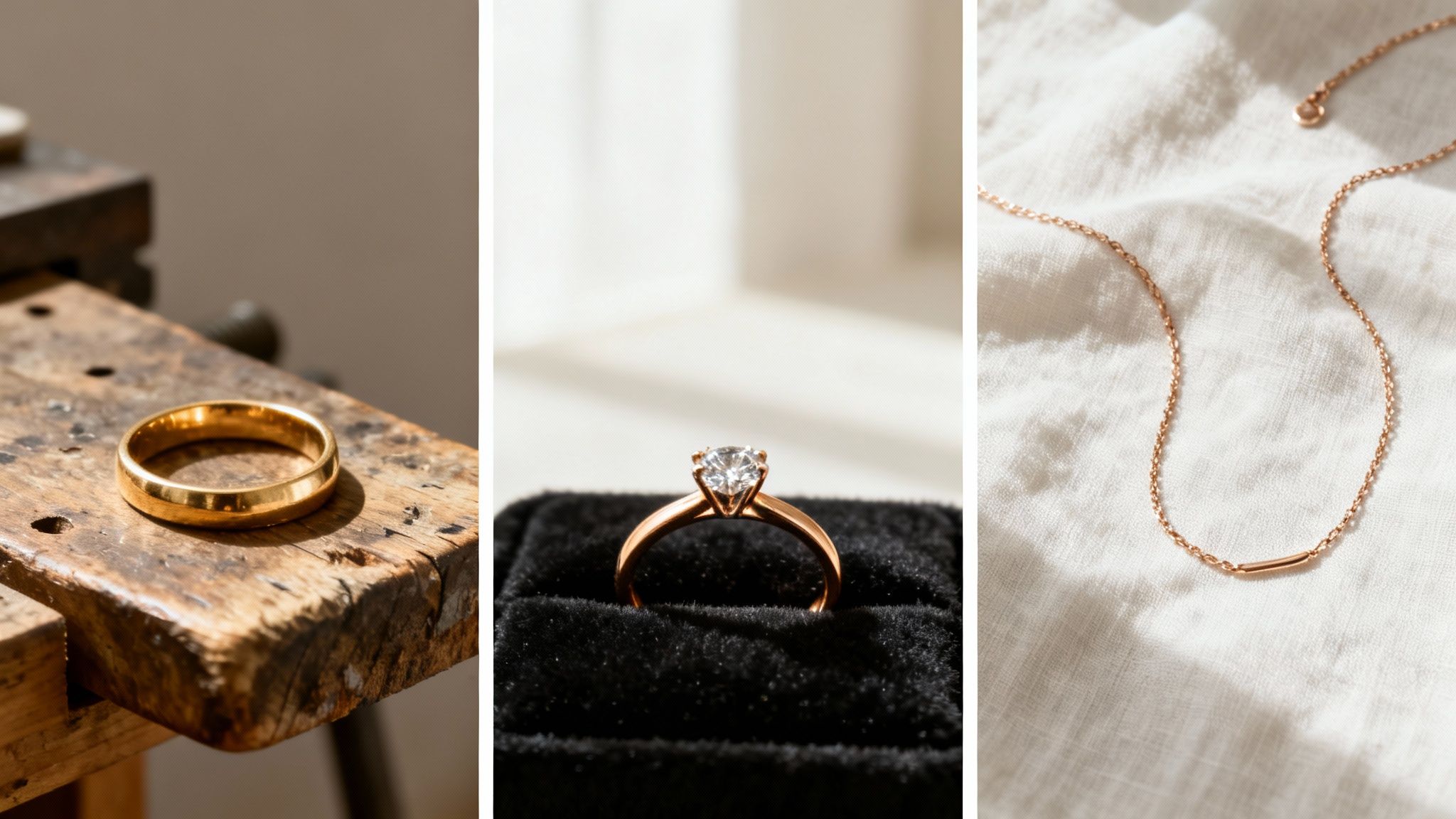
Choosing between 10k or 14k gold isn’t just about the numbers. It’s about matching the metal to your real life. The right choice really depends on what you're buying and how often you plan to wear it. A ring you never take off faces a lot more wear and tear than a pair of earrings saved for special occasions.
When you align the karat with how you live, you’re ensuring your jewelry doesn’t just look good on day one, but holds up for years. It’s a practical approach that guarantees you get the best value and longevity from your investment.
For Engagement and Wedding Rings
When it comes to the pieces that symbolize a lifetime, like engagement and wedding rings, 14k gold is the undisputed industry standard for a reason. These rings are worn every single day and represent a lasting commitment, so they need a metal that balances elegance with genuine strength.
The 58.3% gold content in 14k gives it that rich, classic color that makes diamonds and other gemstones pop. Just as important, while it's a little softer than 10k, it's actually more resilient against cracking from a sharp hit—a vital feature for a ring you’ll wear through decades of daily activities.
Why 14k Reigns for Rings: It hits the sweet spot. You get the luxurious look people expect from fine jewelry, combined with the durability needed for constant, lifelong wear. That’s why it’s the go-to choice for bridal sets.
For Necklaces and Earrings
For jewelry that sees less action, like necklaces and earrings, the choice between 10k and 14k leans more toward aesthetics. These pieces are far less likely to get scratched or knocked around, so extreme durability isn't the main concern.
Here, the richer, warmer hue of 14k gold can truly elevate a design. Its deeper color provides a more luxurious backdrop for pendants and enhances the whole look, making it a fantastic choice for statement pieces where visual appeal is everything.
That said, a well-made 10k gold chain or a simple pair of studs can be a brilliant, budget-friendly option that still offers a beautiful finish.
For Bracelets and Active Lifestyles
Bracelets and daily-wear rings have a tough life. They're constantly at risk of scuffs, dings, and scratches. For anyone with a hands-on job, an active lifestyle, or who just wants a worry-free piece for everyday wear, 10k gold is often the smarter, more practical pick.
Its superior hardness, thanks to a higher percentage of strong alloy metals, gives it exceptional scratch resistance. This means a 10k bracelet will keep its smooth finish longer, even with constant contact with desks, keyboards, and everything else you touch. It’s a workhorse metal.
Hands-on professionals: Think mechanics, artists, or healthcare workers. 10k holds up better to the daily grind.
Active individuals: Athletes or regular gym-goers can wear 10k with more confidence.
Budget-conscious buyers: The lower price of 10k makes it an accessible way to own fine jewelry without sacrificing toughness.
This same logic applies to children's jewelry. The toughness and affordability of 10k gold make it an ideal choice that can withstand playtime and is less of a financial hit if it gets lost.
Understanding Market Trends and Resale Value
Beyond the sparkle and durability, your choice between 10k or 14k gold comes with real financial implications. Think of your jewelry as more than just an accessory; it’s a tangible asset with a value that shifts with the market. Understanding this side of the equation helps you make a smarter investment.
In the United States, 14k gold isn't just a popular choice—it's the industry standard, especially for milestone purchases like engagement rings and wedding bands. Its widespread appeal means it's more recognized and sought after by both consumers and jewelers, giving it a clear advantage in perceived value and liquidity.
The Role of Market Preference
Market demand is a huge driver in the jewelry world. In North America, retailers have consistently favored 14k gold, making it the go-to for their most important collections. In fact, industry data shows that somewhere between 60–90% of all engagement and wedding rings sold in the U.S. are made from 14k gold.
10k gold, on the other hand, holds a smaller piece of the market, usually found in more budget-friendly or mass-market pieces. This trend is all about perception—consumers see 14k gold as the sweet spot, hitting that perfect balance of luxury, purity, and strength. This preference creates a cycle: higher demand for 14k gold leads to more options in stores and a stronger secondary market.
Unpacking Resale and Melt Value
When it comes time to sell, the single most important factor is the pure gold content. The resale value, often called the "melt" value, is based on how much pure gold is in the piece. This is where the difference between karats becomes undeniable.
A higher karat always means a higher return based on its weight.
Let's break it down with a simple example:
A 10-gram 10k gold ring contains 4.17 grams of pure gold (41.7%).
A 10-gram 14k gold ring contains 5.83 grams of pure gold (58.3%).
The Bottom Line: The 14k ring contains nearly 40% more pure gold than an identical 10k ring. This means its intrinsic value is significantly higher, no matter what its original design or retail price was.
This difference is fundamental. While you pay more for 14k gold upfront, you're buying a larger amount of a precious metal. That translates directly into a higher retained value over time, making it a more substantial asset. If you want to dive deeper, you can check out our guide on how much a 14k gold ring is worth for a more detailed analysis.
Of course, a piece's value isn't just about the metal. The world of jewelry is also about connection and brand loyalty. For businesses, creating that connection is key, and it's interesting to see how brands use things like loyalty programs for jewelry brands to build lasting relationships with customers.
How to Identify and Care for Your Gold Jewelry
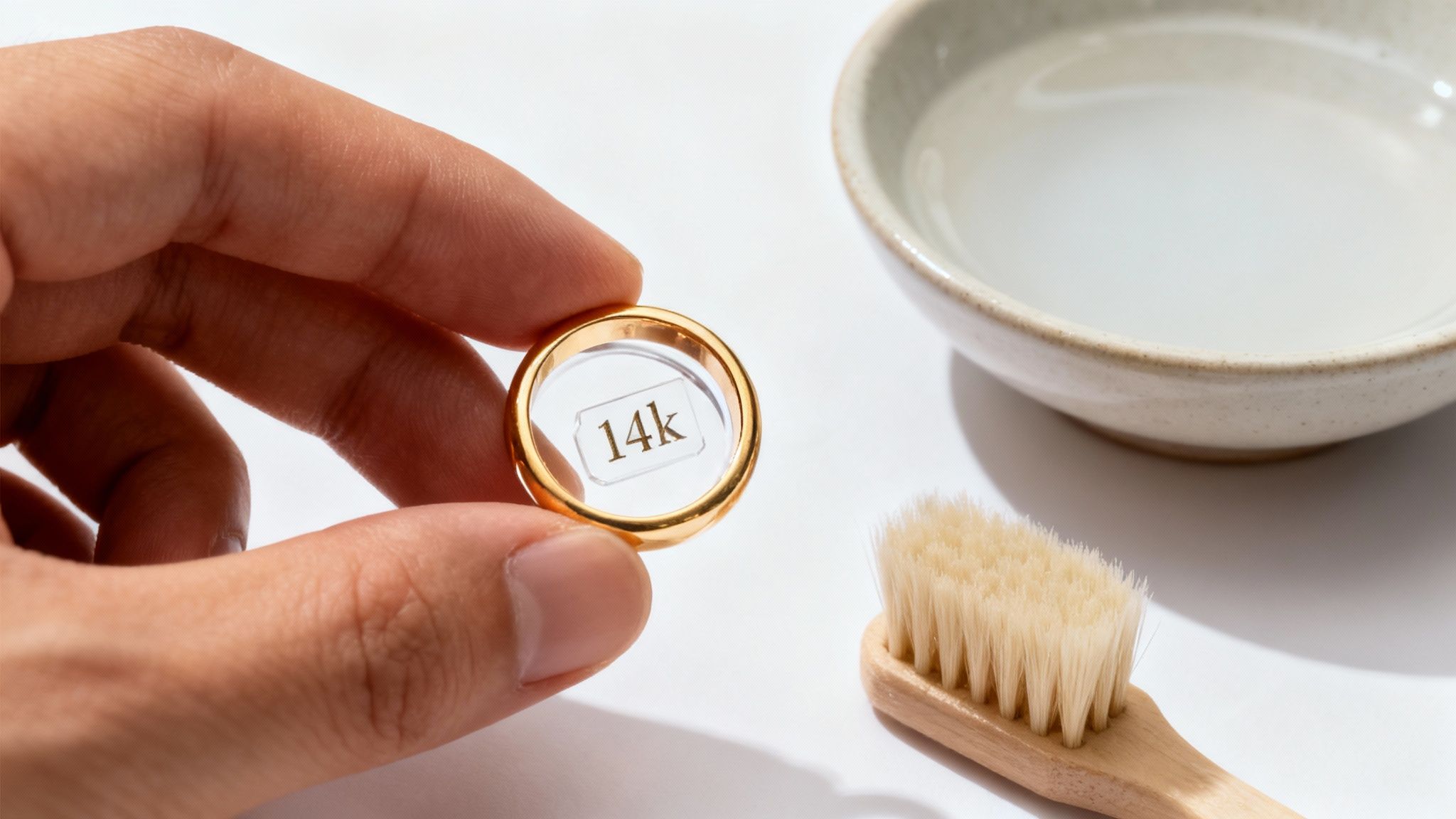
Once you’ve found the perfect piece, whether it’s 10k or 14k gold, knowing how to identify and care for it is the best way to protect your investment. Being able to read the story stamped right onto the metal confirms its authenticity, while the right care routine keeps it looking beautiful for years.
Every genuine gold piece comes with a hallmark—a tiny stamp that indicates its purity. You can usually find it tucked away on the inside of a ring’s band or near the clasp of a necklace. Learning to spot these marks is the quickest way to verify your jewelry’s quality.
Decoding Gold Purity Stamps
Understanding these stamps is simple once you know what to look for. Jewelers use both a karat marking (like "10k") and a numerical system based on gold percentage.
Here’s what you’ll find:
10k Gold: Look for a stamp that says "10k" or "10kt". Its numerical twin is "417," which means the piece is 41.7% pure gold.
14k Gold: This will be marked "14k" or "14kt." The numerical hallmark is "585," indicating 58.3% pure gold.
These marks are your guarantee. If you see "585," you know you're holding a 14k gold piece, no questions asked.
Tailored Care for 10k Gold Jewelry
While 10k gold is a champion against scratches, its higher alloy content (58.3%) makes it a bit more prone to tarnishing over time. This usually happens after contact with harsh chemicals like chlorine, hairspray, or even certain lotions.
Care Tip: Clean your 10k gold with a simple mix of warm water and a few drops of mild dish soap. Use a soft-bristled toothbrush to gently scrub away any grime, rinse it well, and pat dry with a soft, lint-free cloth.
Maintaining the Luster of 14k Gold Jewelry
With more pure gold in the mix, 14k has a rich, warm luster that’s worth preserving. It’s slightly softer than 10k, so your main goal is to avoid scratches and dents. The easiest way to do this is by storing your pieces separately in a fabric-lined jewelry box or individual pouches.
Tarnish is less of a worry here, but regular cleaning keeps it looking its best. For a deeper dive, you can learn more about how 14k gold tarnishes and how to prevent it. A little gentle care will ensure your 14k gold jewelry maintains its brilliant shine for a lifetime.
Your Top Questions About 10k and 14k Gold, Answered
Even with all the facts, a few practical questions always pop up when choosing between 10k and 14k gold. Getting straight answers to these common concerns is the final step to picking a piece you’ll love for years.
Here, we'll tackle those last-minute doubts—from skin reactions to resizing and those subtle differences in color that you can't quite put your finger on. Let's clear things up so you can make your choice with total confidence.
Does 10k Gold Tarnish or Turn Your Skin Green?
This is probably the number one worry we hear about 10k gold, and it’s a fair question. Because it contains a higher percentage of other metals like copper and silver (58.3%), 10k gold can be more prone to oxidation over time, especially if it's regularly exposed to chemicals.
In some rare cases, the copper in the alloy can react with a person's skin chemistry or sweat, leaving a harmless—but annoying—greenish mark. This is far less likely with 14k gold, since its higher pure gold content is naturally non-reactive.
Is 14k Gold Better for Sensitive Skin?
For anyone with sensitive skin, this is a huge deal. The short answer? Yes, 14k gold is usually the better choice. Skin sensitivities are almost always triggered by the alloy metals, not the gold itself. Nickel is a common culprit and can be found in both 10k and 14k gold alloys.
Since 14k gold has a lower percentage of these alloy metals (41.7%), the risk of irritation is significantly lower.
A Quick Note for Allergy Sufferers: If you know you have a nickel allergy, always look for pieces specifically marked "nickel-free." This is especially important for white gold, where nickel is often used as a whitening agent in both karats.
Is It Easy to Resize a 10k Gold Ring Compared to 14k?
Good news: any skilled jeweler can resize both 10k and 14k gold rings. That said, there's a slight difference in how they handle the process.
14k gold is more malleable because of its higher gold content. This makes it a bit easier for jewelers to work with, as there's less risk of the metal cracking during resizing. It's a smoother, more forgiving job.
10k gold, on the other hand, is harder and more brittle. While resizing is still a routine task, it requires a little extra care from the jeweler to avoid putting too much stress on the metal.
How Does the Color Differ in 10k and 14k Gold?
The amount of pure gold directly affects the final color of a piece, whether it's yellow, white, or rose gold. The rule is simple: the higher gold content in 14k gives it a richer, more saturated color.
Yellow Gold: 14k has that classic, bright, warm yellow glow. By comparison, 10k yellow gold looks paler and softer.
Rose Gold: The 14k version has a delicate, warm pinkish hue. The higher copper content in 10k can give it a deeper, more reddish tone.
White Gold: Honestly, the difference here is minimal. Both are usually plated with rhodium to achieve a brilliant, silvery-white finish, making them look nearly identical.
At Panther De Luxe Shop, we believe an informed choice is the right choice. Explore our collections of both 10k and 14k gold jewelry to find the perfect piece that fits your style, budget, and life. Discover your next treasure at https://www.pantherdeluxe.com.
Comments