
A Guide to the Most Popular Types of Chain for Jewelry
- Luke Zucco
- Dec 22, 2025
- 16 min read

The right chain does more than just hold a pendant—it defines your entire look. Think of it as the foundation of your necklace game.
From the timeless Cable chain to an intricate Rope chain, different styles bring their own unique textures and vibes. Getting to know the basics is the first step to choosing a piece that fits your style and is built to last.
Your Guide to Choosing the Perfect Jewelry Chain
A jewelry chain is the canvas for your style. It can be quiet enough to let a pendant get all the attention or bold enough to be the main event.
With so many designs out there, it can feel like a lot to take in. But here’s the secret: every chain’s look, flexibility, and strength comes down to how its links are put together. Once you get that, everything else clicks into place.
This guide will walk you through the core designs every jewelry lover should know. We'll break down what makes each chain different so you can feel confident picking out your next piece from Panther De Luxe Shop.
Key Factors to Consider
Before you start browsing, it helps to know what you’re looking for. The best chain is a perfect mix of looks and practicality, fitting both your aesthetic and your lifestyle.
Link Structure: How are the links connected? Are they simple ovals, twisted squares, or something more complex? This is what gives a chain its signature texture.
Durability and Strength: Some chains, like the Wheat or Box chain, are total workhorses—perfect for heavier pendants. Others, like a delicate Herringbone, are more for show and need a gentle touch.
Flexibility and Movement: The way a chain is built affects how it sits. A Snake chain is fluid and slinky, while a Curb chain lies flatter and feels more structured against the skin.
Pendant Pairing: A tiny charm needs a delicate chain to match, but a big, chunky medallion needs something substantial to hold its own. The pendant’s weight and style really guide your choice.
To cut through the noise, first ask yourself what the chain is for. Is it for everyday wear with a special pendant, or a standalone piece for nights out? Answering that will narrow down your options instantly.
To make things even easier, the table below gives you a quick side-by-side of the most popular chain types. Use it as a starting point to see which styles catch your eye before we dive deeper into each one.
Quick Guide to Common Jewelry Chain Styles
This table offers a quick comparison of popular chain types, highlighting their core features to guide your choice.
Chain Style | Visual Texture | Pendant Suitability | Key Strength |
|---|---|---|---|
Cable Chain | Classic, uniform oval links | Excellent for most pendants | Simplicity and versatility |
Curb Chain | Flat, interlocking twisted links | Great for medium to heavy pendants | Durability and bold appearance |
Rope Chain | Woven, twisting strands | Best worn alone or with sliders | Intricate texture and shine |
Box Chain | Square, interlocking links | Excellent for small to medium pendants | High strength and modern look |
Now that you've got the lay of the land, let's get into the specifics of what makes each of these chains a great choice.
The Classic Chain Styles Every Collection Needs
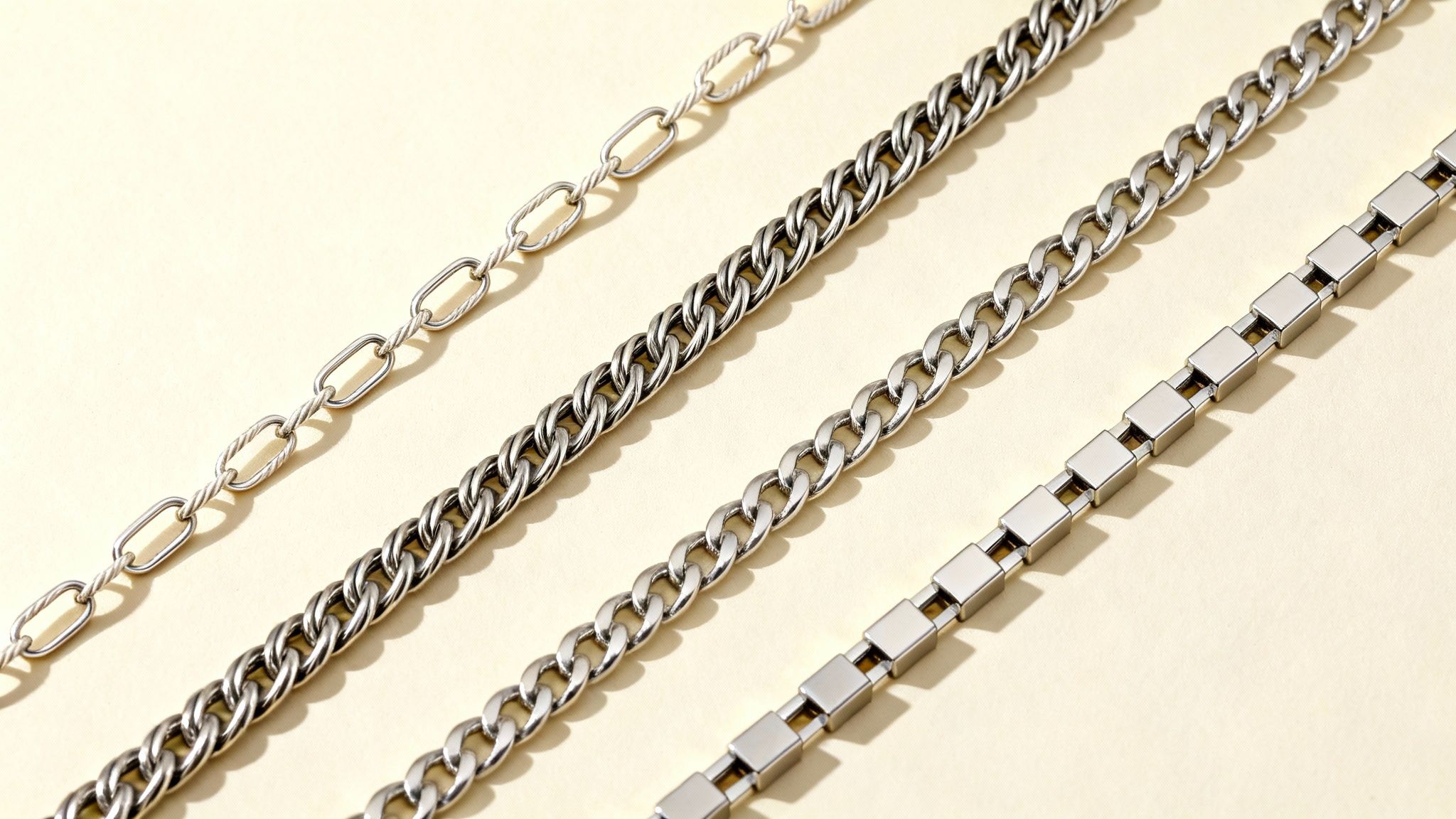
Some chain styles are just timeless. They’re the foundational pieces you see everywhere because they just work—they're versatile, reliable, and look great with almost anything. These are the chains that form the backbone of any solid jewelry collection.
Getting to know these classics is the perfect starting point for understanding how a chain's design impacts its whole vibe. From the quiet elegance of a Cable chain to the rhythmic pattern of a Figaro, these cornerstone designs have something for every look. Let's dive into the four essentials.
The Cable Chain: The Universal Staple
The Cable chain is what most people picture when they think of a necklace. It’s beautifully simple, made of uniform round or oval links interlocked one by one. Think of a classic anchor chain, just scaled down to create a clean, minimalist accessory.
That simplicity is its biggest strength. The Cable chain is understated and never tries to steal the show, which makes it the perfect partner for almost any pendant you can imagine.
Pros: Incredibly versatile, surprisingly strong for its weight, and its open-link style makes it easy for any jeweler to repair.
Cons: The super-fine versions can be delicate, and its straightforward look might feel too simple for someone wanting a statement piece.
Best For: Small-to-medium pendants, layering with other necklaces, or wearing solo for a subtle, everyday look.
The Curb Chain: Strength and Presence
Next up is the Curb chain, the tougher, bolder sibling of the Cable. It starts with similar oval links, but each link is twisted and flattened so it lies perfectly flat against your skin. This creates a smooth, substantial look with a confident edge.
The result is a chain that feels grounded and has an almost masculine-leaning aesthetic, especially in thicker sizes. It's known for being exceptionally durable, making it a go-to for men's jewelry and for holding heavier pendants. Think of it as the leather jacket of chains—cool, classic, and built to last.
This interlocking principle is so effective that it's used in heavy-duty industrial applications. For example, the market for industrial roller chains—which use a similar design for maximum strength—was valued at a massive USD 1,742.10 million back in 2019. You can discover more insights about the industrial chain market and its growth.
The Figaro Chain: A Touch of Italian Flair
The Figaro chain brings rhythm and personality to the party. This style originated in Italy and is famous for its repeating pattern: usually two or three short, round links followed by a single longer, oval link. This sequence breaks up the uniformity, adding visual interest and a touch of effortless European style.
Its distinct pattern makes the Figaro a great choice to wear all on its own, but it also pairs well with a simple pendant. Like the Curb chain, its links lie flat, making it comfortable enough for daily wear while still making a statement.
The name "Figaro" is said to be inspired by the lead character in the famous Italian opera, The Barber of Seville. The chain's popularity grew right alongside the opera's fame.
Figaro Chain at a Glance:
Feature | Description |
|---|---|
Pattern | A repeating sequence of short and long links. |
Durability | Very strong and durable, making it perfect for daily wear. |
Pendant Pairing | Works well with medium to large pendants or worn solo. |
Aesthetic | Classic with a unique, rhythmic flair. |
The Box Chain: Modern and Sleek
For a more contemporary and polished look, the Box chain is a standout. Also called a Venetian chain, it’s built from tiny square links connected to form a smooth, four-sided shape. The result is a fluid, almost liquid-like chain that’s both strong and incredibly elegant.
The Box chain’s structure gives it a brilliant shine because its flat surfaces catch the light from every angle. Its interlocking design also makes it surprisingly durable and less likely to kink than other styles, which is a huge plus for pendants you wear every day.
It hits that perfect sweet spot between delicate and sturdy, offering a modern alternative to traditional round-link chains. Whether it's a whisper-thin version or a thick, bold statement piece, the Box chain always delivers a clean, architectural look that feels both fresh and timeless.
Exploring Intricate and Decorative Chain Designs
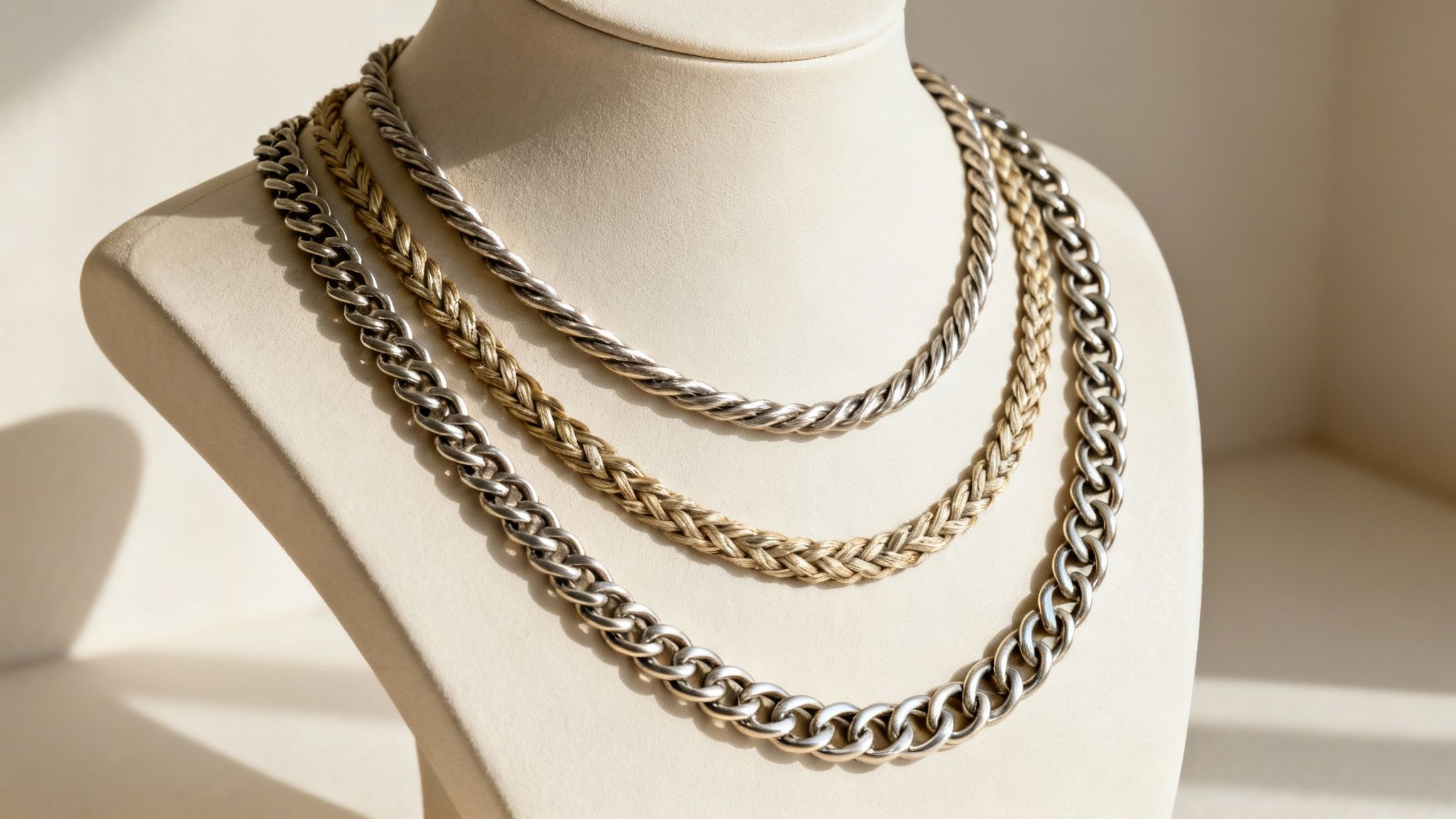
While the classics give you a perfect foundation, the world of chains gets really interesting when craftsmanship takes center stage. This is where simple accessories transform into true works of art. These intricate, decorative chains aren't just meant to hold a pendant—they're designed to be noticed all on their own.
Unlike their simpler cousins, these designs often feature complex weaves, unique textures, and a much more substantial presence. They’re perfect for wearing solo as a statement piece, creating a look that feels both confident and refined. Let’s get into some of the most captivating designs out there.
The Rope Chain: A Twisting Masterpiece
The Rope chain is a masterclass in detail. It’s made by weaving together dozens—sometimes hundreds—of tiny metal segments into strands that twist around each other. The final result looks just like a classic rope, with a beautiful, spiraling texture that catches light from every single angle.
This woven structure is what gives it that brilliant shine and a heavy, luxurious feel. Rope chains are incredibly popular as standalone pieces because, honestly, their intricate pattern is more than enough visual interest on its own.
Pros: Exceptional shine and a rich, textured look. It’s also very strong and doesn't kink as easily as other styles.
Cons: That detailed weave can trap dirt and oils, so it needs a bit more cleaning. Fixing a broken Rope chain can also be tricky.
Best For: Wearing solo as a statement necklace. Thinner versions can hold a pendant, but the chain's texture might compete with it.
The Wheat Chain: Elegant and Enduring
The Wheat chain, also called a Spiga chain, is loved for its perfect mix of beauty and brawn. It’s built from four strands of twisted oval links, all braided together and pointing in the same direction. This creates a stunning pattern that looks a lot like the tips of a wheat stalk.
What makes the Wheat chain so special is its semi-rigid structure. It drapes beautifully but is exceptionally durable and resistant to kinks. This strength makes it one of the absolute best choices for supporting heavy or precious pendants without you having to worry about it breaking.
The name "Spiga" is Italian for "wheat," a direct nod to the chain's unique, braided texture that mimics the natural pattern of the grain.
The Byzantine Chain: An Ancient Weave
The Byzantine chain is easily one of the most complex and visually arresting chains you can find. It’s an ancient design, featuring an intricate pattern of interlocking rings that create a rope-like, textural tube. Each link passes through four others, resulting in a flexible, supple chain with an almost regal vibe.
This chain has a rich history and a substantial feel, making it a powerful statement piece. Its detailed construction commands attention and really shows off the skill it takes to create such a complex weave. While often seen in men's jewelry, it’s a striking choice for anyone looking for a bold accessory.
These intricate designs are part of a broader category known as specialty chains, valued for their unique construction. The market for these advanced designs is huge; the global specialty chains market was valued at USD 6,916.09 million in 2021 and is projected to grow substantially. You can learn more about the specialty chains market growth and trends to see just how popular they are.
The Snake Chain: Fluid and Modern
The Snake chain is the definition of sleek sophistication. It's made of tightly interlocked plates or bands that form a continuous, smooth tube. The surface is so seamless it looks and feels like a single, fluid piece of metal—much like the skin of a snake.
This chain is incredibly flexible and has an almost liquid-like movement that drapes beautifully against the skin. It’s a very modern and minimalist choice, perfect for achieving a clean, polished look.
Snake Chain Characteristics:
Feature | Description |
|---|---|
Texture | Perfectly smooth and round, with no visible links. |
Flexibility | Highly flexible but can be prone to kinking if not stored properly. |
Pendant Pairing | An excellent choice for small to medium pendants; it won't distract from the centerpiece. |
Aesthetic | Modern, minimalist, and exceptionally sleek. |
Choosing one of these decorative chains means you're opting for a piece with personality. Whether it’s the brilliant twist of a Rope chain or the ancient complexity of a Byzantine, these designs are for those who want their jewelry to tell a story.
How to Choose the Right Metal for Your Chain
If the style of a chain gives it a personality, the metal is its soul. The material you pick determines pretty much everything—its color, weight, durability, and even how you'll care for it. Choosing the right metal is about making sure your chain not only looks amazing but also fits right into your life.
This decision is all about balancing aesthetics, budget, and practicality. Maybe you need a hypoallergenic option for sensitive skin or something tough enough for daily wear. Understanding what makes each metal different is the key to finding your perfect match.
The World of Precious Metals
Precious metals are the timeless classics of the jewelry world for a reason. They're prized for their rarity, natural beauty, and inherent value, and they've been the gold standard for centuries. They just offer a premium look and feel that's hard to beat.
When you invest in a precious metal, you're not just buying a chain; you're getting a piece with lasting quality. They do come with a higher price tag, but their elegance and longevity make them a worthwhile choice for the core pieces in your collection.
Gold (Yellow, White, and Rose): Gold is the ultimate chameleon. Yellow gold has that classic, warm glow. White gold offers a cool, silvery look, often plated with rhodium for extra brightness. And rose gold gets its romantic pink hue from a copper alloy. All are incredible choices, but just remember that higher karats (like 18K) are softer than lower karats (like 14K), which hold up better for everyday wear.
Sterling Silver: Known for its brilliant shine and affordability, sterling silver (made of 92.5% pure silver) is a fantastic, versatile option that looks good on any skin tone. Its one downside? It can tarnish. But a little regular polishing is all it takes to bring its shine right back.
Platinum: Meet the king of precious metals. Platinum is incredibly rare, dense, and durable. It’s also naturally hypoallergenic, making it the absolute best choice if you have very sensitive skin. Its heavy, substantial feel and bright white sheen that never fades make it a true luxury investment.
Durable and Budget-Friendly Alternatives
You don't have to break the bank to get a stylish and long-lasting chain. Modern alternative metals offer incredible durability and a great look at a much more accessible price point. These are perfect for trendier pieces, daily "beaters," or if you're just starting to build out your jewelry collection.
These materials are engineered for performance. They often deliver better scratch resistance and require less maintenance than their precious counterparts.
Stainless Steel: This is the workhorse of jewelry metals. Stainless steel is seriously tough, scratch-resistant, and it won't tarnish or rust. It’s also hypoallergenic, which makes it a safe and super practical choice for anyone—especially for those pieces you literally never take off.
Gold-Plated and Gold-Filled: These options give you the luxe look of gold without the hefty price tag. Gold-plated pieces have a thin layer of gold bonded to a base metal, making them very affordable. Gold-filled pieces have a much thicker layer of gold pressure-bonded to the base, which means they’re more durable and resist tarnishing for much longer.
Making the right choice really just comes down to weighing these factors against what you need. For a deeper dive into the properties of each material, check out our guide on the types of jewelry metals. It’s the perfect resource to help you lock in your decision.
Finding the Perfect Chain Length and Thickness
It's amazing how the same chain can feel completely different just by changing its dimensions. A whisper-thin Box chain at 16 inches gives off a totally different vibe than the same style at 24 inches. Nailing the length and width is the secret sauce to making sure your chain works with your style, your features, and even the clothes in your closet.
Think of length as setting the stage—it decides where everyone's eyes will land. A shorter chain puts the focus on your collarbone and face, while a longer one creates a sleek, elongating line down your torso.
Thickness, on the other hand, is all about the impact you want to make. A fine, delicate chain has a quiet elegance. A thick, heavy one? That’s a bold statement.
Choosing the Right Chain Length
Thankfully, most necklace lengths are standardized, which takes a lot of the guesswork out of finding a good fit. Each length is designed to hit a specific spot on the body, creating its own distinct look. Once you know the standards, you can easily picture how a chain will sit on you.
Here are the most common lengths and where they typically fall:
Choker (14-16 inches): Sits snugly right at the base of your neck. It’s a modern, high-impact style that looks incredible with V-necks or anything off-the-shoulder.
Princess (18 inches): This is the crowd-pleaser. It rests right on the collarbone and is the go-to length for most pendants because it puts them perfectly on display.
Matinee (20-24 inches): Lands somewhere between the collarbone and the bust. It's a super versatile length that’s perfect for layering with shorter chains or for wearing over a simple crew neck.
Opera (28-36 inches): Drapes well below the bust. It’s often long enough to be doubled up into a layered choker look, adding a touch of instant drama and elegance to any outfit.
A great tip is to think about your face shape and the necklines you wear all the time. A shorter chain can soften a longer face, while a V-shaped Matinee length really complements a rounder face. Not sure? Just grab a piece of string and measure it out to see exactly where different lengths will fall on your own frame.
This quick overview covers the essential properties of the most popular metals you'll find in jewelry.
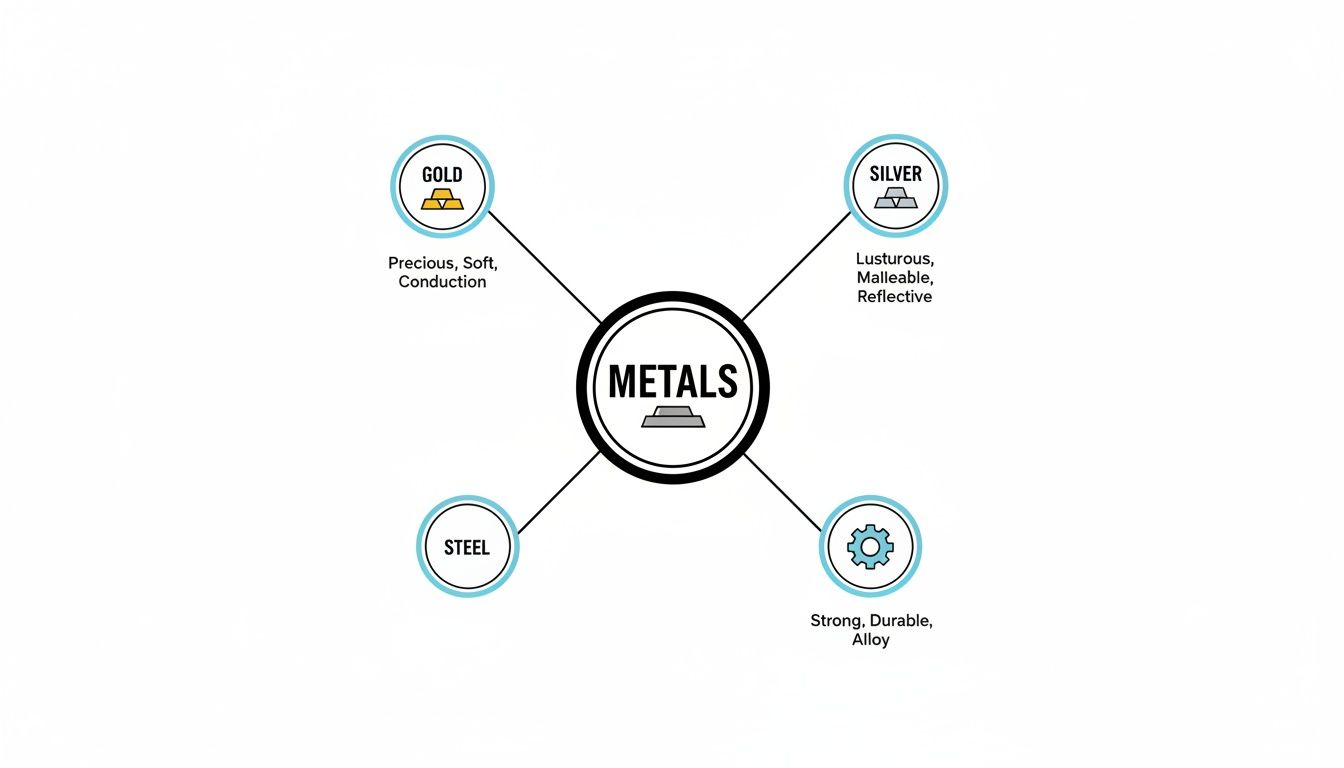
This visual breaks down the unique traits of gold, silver, and steel—all of which play a huge role in a chain's look, durability, and how you'll need to care for it.
Understanding Chain Thickness
Chain thickness, measured in millimeters (mm), is what gives a chain its visual weight and strength. Picking the right thickness means your chain doesn't just look balanced, but it's also strong enough for whatever you pair it with. For instance, a dainty 0.9mm chain is perfect for a tiny charm, but it would never hold up to a heavy, chunky pendant.
You can generally break thickness down into a few categories:
Delicate (0.9mm - 1.5mm): These are the fine, subtle chains that feel elegant and minimalist. They're ideal for small, lightweight pendants or wearing solo for just a hint of shine.
Medium (1.5mm - 4mm): This is the sweet spot. This range offers a great balance of durability and style, works with tons of different pendants, and has enough presence to be worn alone.
Heavy (4mm+): Bold and powerful, these chains are meant to be the star of the show. They’re built to last and are almost always worn without a pendant.
Getting the width just right is a big deal, especially when you're investing in something like a gold chain. If you want a deeper dive, our gold chain thickness guide has detailed comparisons and styling ideas to help you lock in the perfect fit. At the end of the day, the right combo of length and thickness is all about your personal style and how you see yourself wearing your new piece.
How to Care for and Maintain Your Jewelry Chains
Proper care is the secret weapon to keeping your favorite chains looking brand new for years to come. Just like any prized possession, a little maintenance goes a long way in preserving its shine and strength. These simple habits will protect your investment and ensure your pieces remain part of your story for a lifetime.
Think of chain care in three key areas: cleaning, storage, and handling. Mastering these basics means you can prevent the most common problems—like tarnish, tangles, and damage—before they even start. It’s less about intensive work and more about forming smart routines.
Routine Cleaning for Lasting Shine
Regular cleaning is the most important thing you can do for your jewelry’s sparkle. Over time, chains collect oils from your skin, lotions, and everyday dust, which dulls their finish almost overnight. A gentle cleaning routine is all it takes to remove that buildup without harming the metal.
For most chains, especially solid gold and platinum, a simple soak is incredibly effective. Just mix a few drops of mild dish soap into warm water and let the chain sit for about 15-20 minutes. Afterward, use a soft-bristled brush to gently scrub any crevices and rinse it well with clean water.
Sterling silver, which is notorious for tarnishing, benefits from a quality polishing cloth for quick touch-ups. If you're dealing with more stubborn discoloration, it's worth learning how to remove tarnish and restore jewelry shine with specific techniques that keep your silver looking brilliant.
Smart Storage to Prevent Tangles and Damage
How you store your chains is just as important as how you clean them. We’ve all dealt with that dreaded necklace tangle—it’s not just frustrating, but it can stress and weaken delicate links, leading to breakage. The goal is to keep each chain separate and secure.
Here are a few of the best storage methods:
Jewelry Boxes: A classic for a reason. Use a box with individual compartments to keep chains from rubbing against each other.
Hanging Organizers: Hanging your chains vertically is one of the easiest ways to prevent knots. A wall-mounted rack or a jewelry tree works perfectly.
Travel Pouches: When you're on the go, store each chain in a separate soft pouch. This will save you from a tangled mess in your luggage.
A simple DIY trick for travel is to thread a fine chain through a drinking straw and fasten the clasp. This keeps it straight and completely tangle-free.
Handling Common Issues Like a Pro
Even with the best care, you might still run into a stubborn knot. When this happens, stay calm and whatever you do, don't pull it tighter. Instead, lay the chain on a flat surface and use two fine-tipped pins to gently work the knot apart. Adding a tiny drop of baby oil can help lubricate the links, making them easier to separate.
It’s also important to know when a professional's touch is needed. If you notice a broken link, a faulty clasp, or deep scratches, it's time to visit a jeweler. For more specific advice on maintaining different types of jewelry, especially pieces with gemstones, you can refer to a comprehensive jewelry care guide for expert tips.
Your Top Jewelry Chain Questions, Answered
Jumping into the world of jewelry chains can feel a bit overwhelming. Getting clear, honest answers is the best way to feel great about your choice, so you can pick a piece that’s not just stunning but actually works for your life.
Below, we’re tackling the most common questions we hear. From strength to daily care, think of this as your personal guide to finding a chain you’ll love for years.
What Is the Strongest Type of Chain for a Pendant?
When you’ve got a pendant you love, you want a chain that can handle it day in and day out. For that kind of reliability, strength is everything.
Wheat chains (also known as Spiga) and Box chains are the undisputed champions here. Their complex, interlocking links are brilliant at spreading out any stress or pulling, which makes them incredibly resistant to snapping or kinking. They’re built to last.
If you’re working with a heavier or more substantial pendant, a thicker Curb or Figaro chain is another fantastic and seriously sturdy option. Those flattened, interconnected links create a solid foundation that can take on significant weight without sacrificing an ounce of style.
Which Types of Chain Tangle the Least?
Let’s be honest: nothing kills the vibe faster than a knotted necklace. If you want to avoid that tangled mess, go for chains with a smooth, fluid design that lets them move without tying themselves up.
Snake chains are a top contender. Their tightly connected plates form a single, seamless surface that glides instead of tangles.
Box chains are another great choice. Their sturdy, square links give them a structure that naturally resists getting knotted.
Herringbone chains also lie flat and are less likely to tangle, but they do need to be stored carefully to avoid permanent kinks.
As a general rule, thicker chains of any style are always going to be less prone to tangling than their finer, more delicate counterparts.
Should you wear your necklace in the shower? It’s better not to. While high-quality metals like solid gold or stainless steel can handle water just fine, the soaps and shampoos you use can leave a dull film over time. For sterling silver and gold-plated pieces, water can speed up tarnishing and wear. The easiest way to keep your chains shining? Just take them off before you hop in.
At Panther De Luxe Shop, we've curated a collection of high-quality chains made to fit any style or need. Explore our collection today and find the perfect foundation for your look.
Comments