
A Complete Guide to Necklace Chains Types
- Luke Zucco
- Nov 16, 2025
- 16 min read

The world of necklace chains can feel endless. You've got everything from the classic Cable chain to the super intricate Rope chain, and dozens of styles in between. Getting to know the real differences is the first step to picking a piece that doesn't just look good, but also holds up and feels like you.
Why Your Necklace Chain Matters More Than You Think
Ever think about the chain itself? It's easy to overlook, but your necklace chain is the unsung hero of your jewelry box. It’s way more than just a thing to hold a pendant; it's the foundation of the whole look.
The right chain can turn a simple t-shirt into a statement. The wrong one can feel awkward, break easily, or just completely overwhelm your favorite charm. Think of it as the spine of your necklace—it gives it structure, style, and security.
It really comes down to balancing beauty with practicality. A delicate, shimmery Singapore chain might look amazing with a tiny gemstone, but it's not the right call for a heavy, solid gold medallion. On the flip side, a thick, bold Cuban link makes a powerful statement all by itself but would swallow a tiny pendant whole. Every single chain type has its own personality, defined entirely by how its links are built.
Building Your Foundational Knowledge
Before we get into specific styles, let’s cover the basics. This is the stuff that will help you shop with total confidence at Panther De Luxe Shop.
Here’s what really makes one chain different from another:
Link Structure: How are the links actually shaped and put together? Are they round, oval, flat, or twisted? This is what creates the chain's flexibility, feel, and overall vibe.
Durability and Strength: Some chains are built tough. Think Wheat or Curb chains—they’re perfect for everyday wear. Others, like the slinky Herringbone, look incredible but need a bit more TLC.
Intended Use: This is a big one. Are you looking for a chain to rock on its own, or do you need a workhorse to support a pendant? Answering this question will narrow things down fast.
Style and Versatility: Certain chains just nail a specific look. A Paperclip chain has that modern, clean feel, while a Figaro chain gives off a classic, rhythmic pattern you often see in men's jewelry.
A necklace chain is like the frame for a piece of art. It has to support, enhance, and balance the main attraction—whether that’s a brilliant pendant or the chain itself.
This guide will walk you through the most popular necklace chain types, breaking down what makes each one unique. We’ll explore everything from the everyday Cable chain to the ornate Byzantine, helping you find the perfect match for your style. And for anyone curious about how these trends take off, checking out winning SEO strategies for fashion brands offers a cool peek behind the curtain at how jewelry gets seen online.
Exploring the Most Popular Necklace Chain Types
Stepping into the world of necklace chains is a lot like exploring different architectural styles. Each one is built differently, serves a unique purpose, and creates a completely different feel. Instead of getting bogged down in textbook definitions, let's get to know the personalities behind the most popular styles and see how their construction gives them character.
To pick the right one, you'll want to think about how a chain’s style, durability, and versatility line up with what you need. Are you looking for a barely-there chain for a delicate pendant, or a bold statement piece to wear solo?
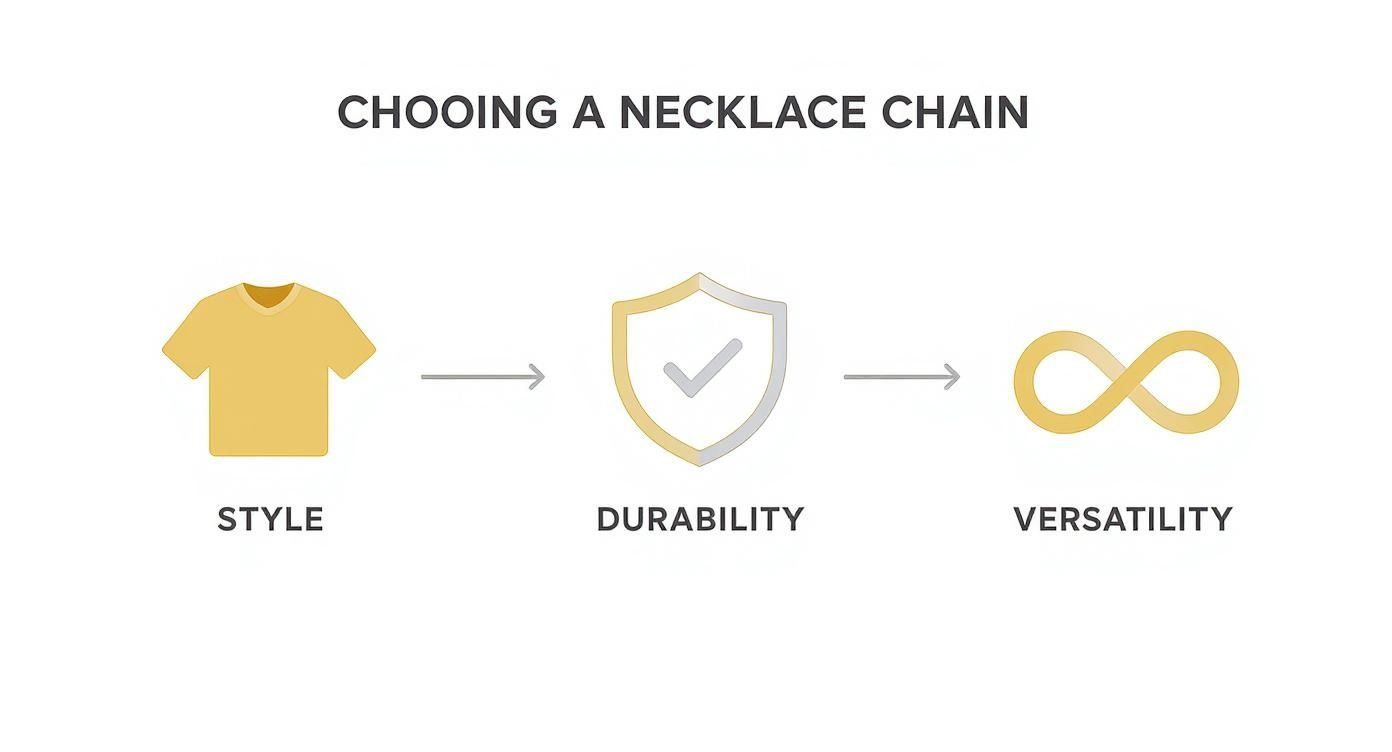
This visual guide breaks down the relationship between your personal style, the durability you need, and the versatility you want from a necklace, helping you figure out what matters most.
The Cable Chain: The Timeless Classic
The Cable chain is the one you probably picture in your head when you think "necklace." It’s the OG. Made of simple, interlocking oval or round links, it’s the delicate, refined version of the heavy-duty chains used for anchors.
This straightforward design makes it a true workhorse in the jewelry world. Its simplicity is its biggest strength, creating a clean, understated backdrop that lets a pendant steal the show. You’ll find it in every thickness imaginable, from whisper-thin versions for tiny charms to chunkier links that look great on their own.
It's no surprise this style dominates the market. Cable chains made up roughly 35% of all necklace chain sales worldwide in recent years, making them the undisputed favorite for their blend of classic style and reliable strength.
The Curb Chain: The Sleek Powerhouse
Next up is the Curb chain—think of it as the cable chain’s tougher, more polished sibling. The links here are also oval, but they’ve been twisted and flattened to interlock tightly and lie flat against your skin. This is what gives the curb chain its signature smooth, solid look.
Because the links are so closely connected, curb chains are incredibly durable and resistant to snagging. This makes them a go-to for men's jewelry and for anyone wanting a chain with a confident, substantial presence. The thicker versions, often called Cuban links, are iconic statement pieces that command attention.
A curb chain offers a feeling of structure and stability. Its flattened links create a continuous, reflective surface that feels both modern and powerful, making it an excellent choice for a standalone piece.
The Figaro Chain: The Rhythmic Original
The Figaro chain brings a touch of Italian flair with its unique, rhythmic pattern. It’s a creative spin on the curb chain, featuring a repeating sequence of several small, round links followed by one longer, oval link. The most common pattern you'll see is three short links to one long link.
This alternating design breaks up the monotony of a uniform chain, adding visual interest without being too flashy. It’s strong and stylish, making it another favorite in men's fashion but equally stunning as a unisex option. The Figaro is perfect for anyone who appreciates classic design with a subtle twist.
The Box Chain: The Modern Marvel
Picture a series of tiny, interconnected cubes, and you’ve got the Box chain. Also known as a Venetian chain, it’s built from square links that join together to form a smooth, four-sided chain. The result is a sleek, geometric look that feels both modern and incredibly sophisticated.
What makes the box chain so special is its blend of strength and fluidity. It drapes beautifully and has a polished, almost liquid-like shine.
Pendant Perfection: Its sturdy structure makes it one of the best chains for holding pendants, as it resists twisting and provides a secure foundation.
Light Reflection: The flat sides of the square links catch the light from every angle, giving it a subtle but beautiful shimmer.
Durability: While it looks delicate, the box chain is quite strong. Even if a link breaks, it can often be repaired without disrupting the chain's overall look.
If you want to dive deeper into different styles, you might like our guide to the most popular types of gold chains.
Quick Guide to Common Necklace Chain Styles
To help you see the differences at a glance, here’s a quick comparison of the top chain styles we’ve covered. Think of this as your cheat sheet for matching a chain to your vibe and needs.
Chain Type | Visual Characteristic | Best For | Durability Level |
|---|---|---|---|
Cable Chain | Uniform oval or round interlocking links | Everyday wear, delicate pendants | High |
Curb Chain | Flattened, interlocking links that lie flat | Statement pieces, men's jewelry | Very High |
Figaro Chain | Pattern of small links and one long link | Adding visual interest, unisex styles | High |
Box Chain | Square links forming a smooth, geometric line | Pendants, modern and sleek looks | High |
Rope Chain | Woven links creating a twisted, rope-like texture | Standalone wear, adding texture | Very High |
Snake Chain | Tightly connected rings forming a smooth, solid tube | Minimalist pendants, sophisticated looks | Medium (Prone to kinking) |
This table should make it easier to pinpoint the exact style that will work best for your next piece, whether you're shopping for yourself or for a gift.
The Rope Chain: The Textured Icon
The Rope chain is a masterpiece of texture and dimension. It's made from multiple small links woven together in a spiral, creating the look and feel of a real rope. This intricate build makes it one of the most durable and heaviest chain styles out there.
Its twisted design catches and reflects light from countless angles, giving it a brilliant sparkle that few other chains can match. Thicker rope chains are iconic statement pieces, often associated with luxury and high fashion. Thinner versions, though, are just as elegant and perfect for adding a touch of texture to a layered look.
The Snake Chain: The Fluid Beauty
Finally, there’s the Snake chain. This style gets its name from its uncanny resemblance to the smooth, flexible body of a snake. It’s made of tightly connected rings or plates that form a sleek, solid, and round chain with no visible links—just a continuous, polished surface.
The snake chain is loved for its fluid, slinky movement and silky feel against the skin. It drapes like liquid metal, creating a sophisticated and modern look that’s truly captivating.
But its unique beauty comes with one catch.
Handle with Care: The tight construction that gives the snake chain its signature look also makes it prone to kinking if it’s bent too sharply or stored improperly. Always lay it flat or hang it up to keep it in perfect shape.
Because of this, snake chains are best worn alone or with a very light, minimalist pendant. They're designed to be the star of the show, offering an unmatched elegance for those who appreciate refined, contemporary jewelry. Each of these chains brings its own story and style, ensuring there’s a perfect match for every taste here at Panther De Luxe Shop.
How to Match Your Chain to Pendants and Style
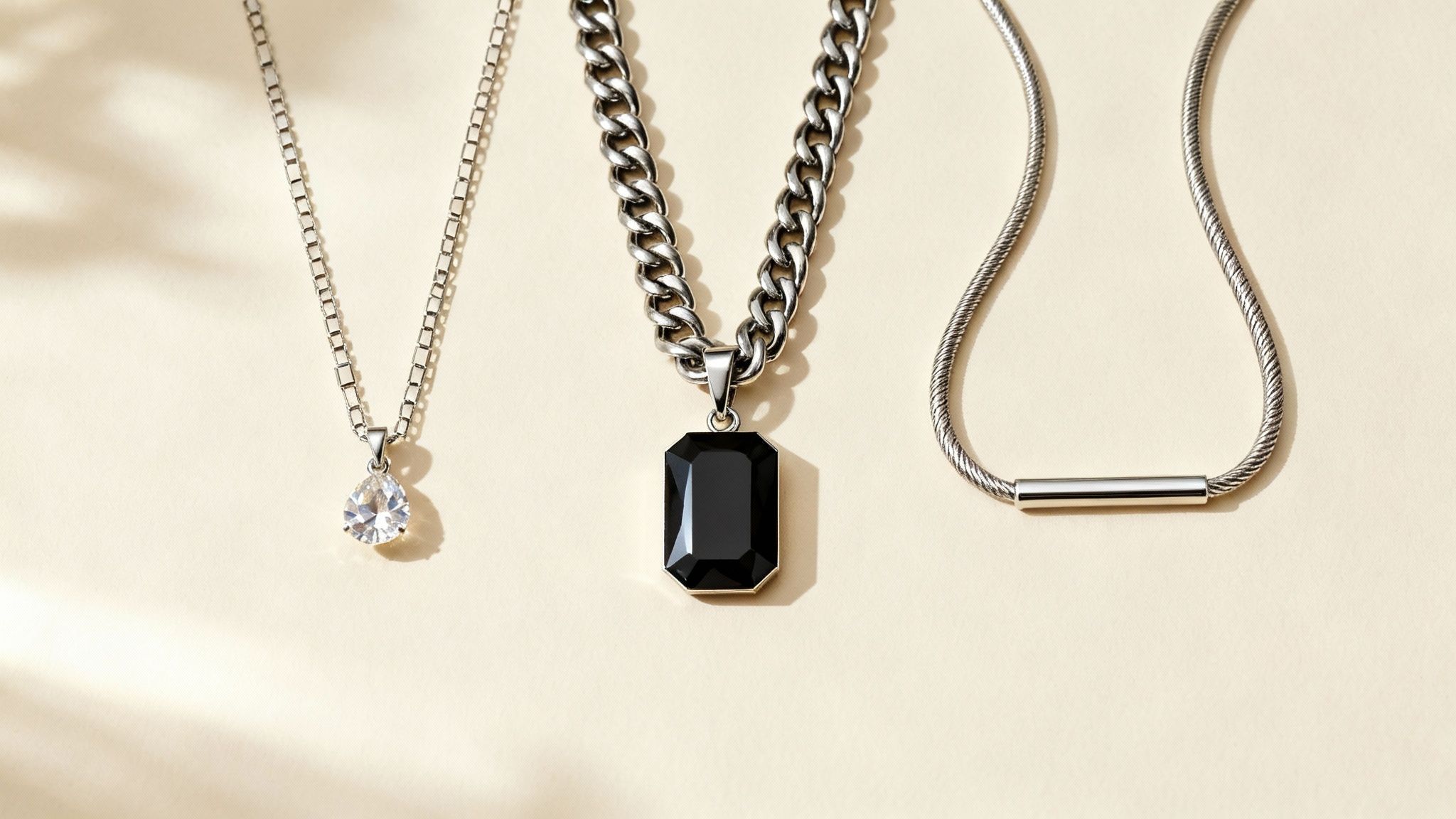
Picking a chain is just the start. The real magic happens when you pair it with the perfect pendant and weave it into your own personal style. A chain doesn't just hold a piece of jewelry—it frames it, supports it, and completes the entire vibe.
The goal is to create a partnership where both the chain and the pendant shine without competing for the spotlight.
This process is a mix of art and science. You need to think about weight, proportion, and even that tiny loop on the pendant called the bail. Getting this balance right is the difference between a necklace that hangs perfectly and one that just looks… off.
The Pendant Pairing Framework
Think of this as a quick mental checklist before you commit. It’s all about creating visual and physical harmony, because an imbalance can lead to a pendant that constantly flips over or a chain that looks like it's about to snap.
Let's break down the three key elements of a perfect match.
1. Weight and Durability
This one’s non-negotiable. A heavy, statement pendant needs a chain that can handle its weight day in and day out. Pairing a delicate, whisper-thin chain with a weighty medallion is just asking for heartbreak.
For Heavy Pendants: Go for strength. Sturdy necklace chains types like Wheat, Curb, Rope, or Box chains are your best friends here. Their interwoven links provide the muscle needed to support something substantial.
For Light Pendants: This is where the delicate chains get to play. A fine Cable, Singapore, or a thin Snake chain will add a touch of elegance without overpowering a small charm or gemstone.
As a gut check, the chain should always feel at least as substantial as the pendant it’s holding.
2. Proportions and Visual Balance
Beyond pure strength, you want the chain and pendant to look like they belong together. A thick, chunky chain will completely swallow a tiny, delicate charm, while a super-thin chain might look flimsy and lost underneath a large, artistic pendant.
You're aiming for a visual flow that naturally draws the eye to the pendant. If the chain is too loud, it becomes the main event, and your pendant gets demoted to a background dancer.
The perfect chain is like a supporting actor—it enhances the star of the show (your pendant) without stealing the scene. It creates a cohesive and polished look.
3. Bail Size and Chain Style
The bail—that little loop at the top of a pendant—is a small detail that makes a massive difference. Before you fall in love with a chain, you have to make sure its clasp and end caps can actually slide through the bail. It’s a rookie mistake we’ve all made.
Also, think about texture. A highly decorative chain like a Figaro or a thick Rope chain can easily clash with an equally intricate pendant. Simple, smooth chains like the Box, Snake, or Cable are often the MVPs because they provide a clean backdrop that lets the pendant do all the talking.
Matching Chains to Your Personal Style
Your jewelry is an extension of who you are. Different necklace chains types carry their own distinct energy, and choosing the right one helps your look feel authentic.
Here’s a quick guide to pairing popular chains with different aesthetics.
For the MinimalistYou live for clean lines and understated elegance. Your style is all about "less is more."
Go-To Chains: A Box chain or a Snake chain is perfect for you. Their sleek, modern lines look incredible with a single, tiny pendant or worn completely solo. A thin Cable chain is another classic, barely-there option.
For the Classic EnthusiastYou're drawn to timeless pieces that feel elegant, traditional, and will never go out of style.
Go-To Chains: The Curb chain and Figaro chain are right up your alley. Their polished, structured links have a classic feel that pairs beautifully with tailored outfits. For a touch of vintage glamour, you can't go wrong with a Rope chain.
For the Bold TrendsetterYou're here to make a statement. Your jewelry isn’t an afterthought—it’s often the centerpiece of your entire outfit.
Go-To Chains: You need something with presence. A thick Cuban link, a modern Paperclip chain, or an intricate Byzantine chain are all fantastic choices. These styles are designed to be seen and are powerful enough to be worn completely on their own.
Understanding Chain Materials, Metals, and Finishes
While the style of a chain sets its personality, the material it’s made from is its soul. The metal dictates just about everything—from the chain’s final color and weight to its durability and price tag. Getting to know the differences is the key to choosing a piece that will not only last a lifetime but also feels right on your skin.
The world of jewelry metals might seem complex, but it really boils down to a few key players. Each one brings a distinct set of benefits to the table, making them perfect for different needs, styles, and budgets.
The Classics: Precious Metals
When you think of fine jewelry, precious metals are probably the first thing that comes to mind. These materials have been cherished for centuries for a reason—they're rare, beautiful, and hold their value.
Sterling Silver: This isn't pure silver, which is too soft on its own. It's an alloy made of 92.5% pure silver and 7.5% other metals (usually copper), making it bright, versatile, and relatively affordable. Sterling silver is strong enough for daily wear but can tarnish over time, so it needs an occasional polish to keep its shine.
Gold (Yellow, White, and Rose): Gold’s purity is measured in karats. Since pure 24k gold is too soft for most jewelry, it’s mixed with alloys to add strength. 14k and 18k are the sweet spots, offering a great balance of purity and durability. The color depends on the alloys used—copper gives it a warm rose hue, while palladium or nickel creates that crisp white gold look.
Platinum: As the rarest and most durable of the precious metals, platinum is a premium choice. It has a naturally brilliant white luster that won’t fade or change color, and its density gives it a substantial, luxurious feel. Platinum is also hypoallergenic, making it the perfect option for sensitive skin.
To get a more complete picture, you can explore our detailed guide that covers the most popular types of jewelry metals and their unique characteristics.
Modern Alternative Metals
Beyond the traditional options, a new generation of metals has been gaining ground thanks to its practical advantages and modern aesthetic. These alternatives are often more budget-friendly and offer their own unique perks.
Stainless steel, for instance, is incredibly tough and stands up to scratches, rust, and tarnish like a champ. It has a cool, industrial-chic vibe and is hypoallergenic, making it a safe bet for just about everyone. Titanium is another superstar, celebrated for being both feather-light and exceptionally strong—a combo that offers serious comfort without sacrificing resilience.
A chain’s material is its fundamental promise. Precious metals promise timeless value and luxury, while modern alternatives promise everyday durability and worry-free wear.
How Finishes Change Everything
The finish is the final touch that gives a chain its distinct texture and shine. It's what makes the difference between a mirror-like gleam and a subtle, understated glow.
Polished: This is the most common finish, creating a bright, reflective surface that really sparkles.
Matte: A non-reflective, satin-like finish that delivers a soft, modern feel.
Oxidized: This is a special treatment that darkens parts of a chain to create contrast and make intricate details pop.
Diamond-Cut: Tiny, precise cuts are made into the links, creating faceted surfaces that catch and reflect light for maximum brilliance. It's all about the shimmer.
Finding Your Perfect Necklace Length and Thickness
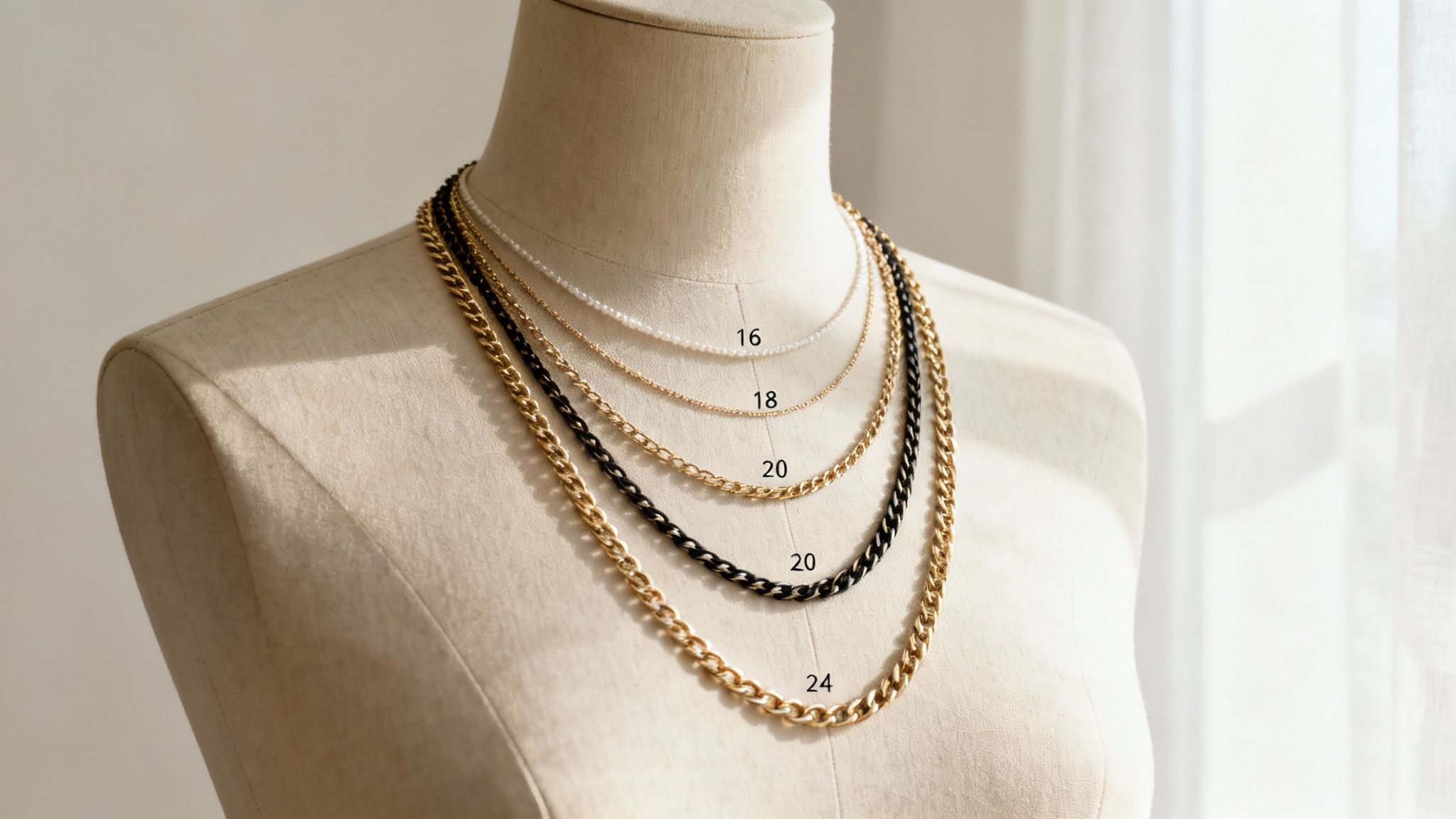
So you've found a chain style you love. Now for the two details that make or break the look: length and thickness. These two factors completely change how a necklace actually feels and sits on you.
A chain that’s too short can feel tight and awkward, while one that’s too long gets lost in your outfit or swings around annoyingly. Getting the fit right is what turns a piece of jewelry from just another accessory into a true extension of your personal style.
The right length can frame your face, draw attention to your collarbones, or perfectly complement your shirt’s neckline. Standard sizes run from short chokers at 14-16 inches all the way to dramatic, opera-length chains at 30 inches or more. Each one creates a totally different vibe.
Choosing the Right Necklace Length
Before you hit "buy," take a moment to think about your own build and how you actually plan to wear the chain.
The easiest way to find your perfect length at home? Grab a flexible measuring tape or even a piece of string. Just wrap it loosely around your neck and let it hang where you'd want the necklace to fall, then measure the string. Simple.
Here’s a quick rundown of where common lengths typically land:
Standard Necklace Length Guide
To make it even easier, we've put together a simple chart that breaks down the most common necklace lengths, where they fall, and what they're best for.
Length (Inches) | Common Name | Typical Placement | Best For |
|---|---|---|---|
14-16" | Choker | Sits snugly at the base of the neck | Drawing attention upward; pairing with V-necks or scoop necks. |
18" | Princess | Rests right on the collarbone | The most popular and versatile length, perfect for most pendants. |
20" | Matinee | Falls just below the collarbone | A great "in-between" length for both casual and professional looks. |
22-24" | Matinee | Hangs near the center of the bust | Ideal for wearing over turtlenecks or creating layered styles. |
28-36" | Opera | Drapes over the bust | Making a bold statement or wrapping for a layered choker effect. |
Ultimately, choosing a necklace length is all about creating balance. You want a length that works with your face shape, body type, and outfit—not against them.
Understanding Chain Thickness
Next up is thickness. Measured in millimeters (mm), this is what determines a chain’s visual weight, presence, and of course, its durability.
A chain’s width can be as delicate as 1mm or as bold and in-your-face as 10mm (or more). What's right for you comes down to how you want to wear it.
Are you adding a pendant? Stick to a chain between 1mm and 4mm. That’s the sweet spot where it’s strong enough to hold your charm without visually overpowering it.
But if you want the chain to be the main event—think a classic Curb or Rope chain worn solo—then go for something in the 5mm and up range. That's how you get that confident, substantial look.
If you really want to get into the weeds on this, our gold chain thickness guide has all the detailed advice you need to find that perfect fit right here at Panther De Luxe Shop.
Your Common Necklace Chain Questions Answered
Even with a solid grasp of the different chain types, a few practical questions always seem to come up. This is where we tackle those common curiosities, giving you the clear, straightforward advice you need to choose, wear, and care for your chains like a pro.
Think of this as your go-to guide for the real-world side of owning jewelry. We're answering the questions everyone thinks but might not know who to ask.
What Is the Strongest Type of Necklace Chain?
When you’re talking about pure, rugged strength, the Wheat chain (sometimes called a Spiga) is an absolute powerhouse. Its design is a small miracle of engineering, with four strands of twisted oval links braided together. This creates an incredibly dense, semi-rigid chain that’s highly resistant to kinking and breaking.
But it’s not the only champion in the durability ring. Both Curb chains and Mariner chains are also exceptionally strong. Their thick, interlocking links are often soldered shut, making them tough enough to handle pretty much anything you throw at them.
For everyday wear, especially with a pendant, don't overlook a well-made Cable or Box chain. They strike a fantastic balance between strength and elegance. Plus, their simple link structure makes them much easier and cheaper to repair if a link ever gives way.
How Do I Keep My Chains From Tangling?
There's nothing worse than pulling out your favorite chains only to find them in a knotted, tangled mess. The secret to avoiding this headache is all about one thing: proper storage. The golden rule is simple: give each necklace its own space.
Here are a few surprisingly effective ways to keep your collection tangle-free:
Hang Them Up: This is hands-down the best method. Hang your necklaces individually on a jewelry stand or even some simple wall hooks. Gravity is your best friend here, keeping each chain straight and separate.
Try the Straw Trick: For storing delicate chains in a drawer, just thread one through a plastic drinking straw and fasten the clasp. This simple hack prevents the chain from coiling up and knotting.
Travel Smart: When you’re on the move, lay a chain flat on a small piece of plastic wrap, fold the wrap over it, and press down. It immobilizes the chain and works like a charm.
Can I Layer Different Types of Necklace Chains?
Absolutely! Layering different chain types is one of the best ways to show off your personal style and create a look that’s completely your own. The real art to a great layered look is creating contrast and balance.
A foolproof layering formula usually involves mixing three key things:
Varied Lengths: This is the most important rule. Start with a shorter, delicate chain (like a 16-inch Box chain), add a medium-length one with more texture (maybe an 18-inch Figaro), and finish with a longer, bolder piece (like a 22-inch Curb chain). The different lengths give each necklace its moment to shine.
Mixed Textures: Combine smooth, sleek chains with more intricate, textured ones. Try pairing a liquid-like Snake chain with a twisted Rope chain. The textural contrast adds so much depth and makes the stack look intentional.
Different Weights: Don't be afraid to mix a dainty, fine chain with a more substantial, heavier one. This play on visual weight is what elevates a layered look from accidental to curated.
What Does Karat Mean for Gold Chains?
"Karat," often shortened to 'k' or 'kt,' is just the system used to measure the purity of gold. It’s a pretty simple concept based on a total of 24 parts.
Pure, unadulterated gold is called 24 karat (24k), meaning it’s 24 out of 24 parts gold. The catch? 24k gold is incredibly soft—way too soft for jewelry that has to stand up to daily life.
To make it stronger and more durable, pure gold is mixed with other metals like copper, silver, or zinc. These mixtures are called alloys.
18k Gold: This means it's 18 parts pure gold and 6 parts other metals, making it 75% pure gold.
14k Gold: This is 14 parts pure gold and 10 parts other metals, or 58.3% pure gold.
The higher the karat, the more pure gold is in the piece, which also means it will be softer, richer in color, and more expensive. For anyone interested in how jewelry is presented for sale, it’s fascinating to see how AI product photography for fashion accessories is changing the game for online shops.
At Panther De Luxe Shop, we believe that really understanding your jewelry is the first step to loving it for a lifetime. Explore our collection to find the perfect chain that tells your story. Visit us at https://www.pantherdeluxe.com to discover your next favorite piece.
Comments