
Discover Stylish Eco Friendly Jewelry Today
- seanmawhinney
- Jun 27, 2025
- 17 min read
Eco-friendly jewelry is so much more than a passing trend. It’s a real commitment to wearing beautiful things that also respect people and our planet. At its heart, it’s a conscious move away from the often-harmful practices of the past, focusing instead on sustainable materials, ethical labor, and responsible production.
The Philosophy Behind Eco-Friendly Jewelry
So, what really makes a piece of jewelry "eco-friendly"? I like to think of it as the 'farm-to-table' movement, but for your accessories. It’s a philosophy where every single step of the journey matters—from the moment a material is pulled from the earth to the final polish on a finished piece. It’s all about transparency and telling a story that’s as beautiful as the item itself.
This approach is a world away from a lot of conventional jewelry manufacturing, which can unfortunately involve destructive mining, hazardous chemicals, and deeply concerning labor conditions. Eco-friendly jewelry flips that script. It’s about creating a positive impact at every single stage of the process, ensuring the well-being of our planet and the skilled artisans who bring these beautiful pieces to life.
The Core Principles of Sustainability
Truly sustainable jewelry isn’t defined by just one thing. It's built on a foundation of several key principles all working in harmony. You can't just use one recycled part and call it a day; the entire lifecycle of the piece has to be considered.
Sustainable Materials: This is all about using materials with the smallest possible environmental footprint. Think recycled precious metals, which cut out the need for new mining, and ethically sourced gemstones that are carefully tracked from mine to market.
Ethical Labor Practices: This principle guarantees that everyone involved in creating the jewelry—from the miners to the metalsmiths—is treated with dignity. That means safe working conditions and fair wages for their incredible skill.
Responsible Production: This zeroes in on the workshop itself. It’s about minimizing waste, conserving water, and reducing energy use during manufacturing. A big part of this is also avoiding the toxic chemicals that are all too common in traditional jewelry making.
The whole idea is beautifully simple: jewelry should bring joy without causing harm. It’s about creating heirlooms you can feel genuinely good about wearing, knowing they were made with complete integrity.
This shift isn't just an industry secret; conscious consumers are the ones driving it forward. As awareness grows, people are demanding more transparency and sustainability from the brands they love. In fact, interest in this space has exploded, with online searches for sustainable jewelry growing by an incredible 1,400% between 2018 and 2022. That’s not just a small blip—it’s a clear signal of a global move away from disposable "fast fashion" accessories and toward pieces with lasting value and a positive story. If you're curious, you can find a detailed analysis of ethical jewelry trends that dives deeper into this consumer shift.
To help you grasp these core ideas at a glance, here’s a quick breakdown of what holds the concept of sustainable jewelry together.
The Pillars of Sustainable Jewelry
Pillar | Description | Example |
|---|---|---|
Sustainable Materials | Using resources that minimize environmental harm and don't deplete finite resources. | Using 100% recycled gold or lab-grown diamonds instead of newly mined ones. |
Ethical Sourcing & Labor | Ensuring a transparent supply chain where workers are treated fairly, paid living wages, and work in safe conditions. | |
Responsible Production | Minimizing waste, pollution, and energy consumption during the crafting process. | A jeweler using non-toxic pickling solutions and closed-loop water systems in their studio. |
When you understand these pillars, you gain the power to look beyond a simple marketing label. You can start to really see the journey of a piece, recognizing that its true value lies not just in its sparkle, but in the integrity of its creation.
Exploring Sustainable Jewelry Materials
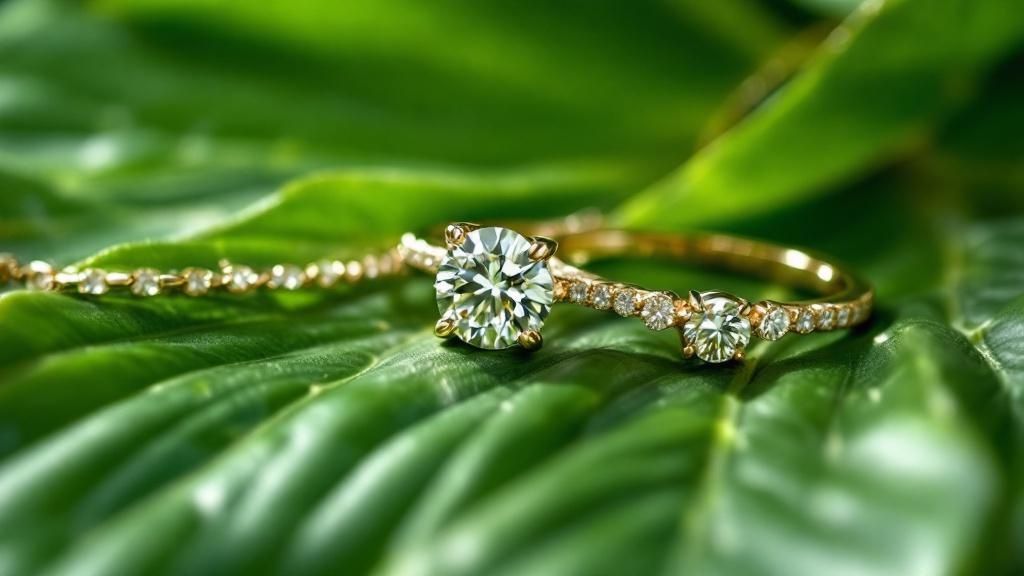
The real heart and soul of eco-friendly jewelry lies in what it's made of. When you get right down to it, the choice of material is the single biggest factor in shrinking a piece's environmental footprint. It's the line in the sand between supporting destructive mining practices and investing in a healthier, circular economy.
So, let's pull back the curtain on the beautiful, innovative materials that are shaping the future of adornment. From lustrous recycled metals to brilliant gems grown in a lab, the next generation of jewelry is both breathtaking and responsible.
The Power of Recycled Precious Metals
When you picture gold or silver, your mind probably jumps to massive mines carving up the landscape. But the truth is, a huge amount of these precious metals already exists above ground, waiting to be rediscovered in old jewelry, forgotten electronics, and industrial scrap. Using recycled gold and silver is really the ultimate form of upcycling.
This simple shift in sourcing completely sidesteps the need for new mining, an incredibly destructive and resource-hungry process. By choosing recycled, we prevent further habitat loss, stop toxic chemical runoff from polluting waterways, and slash the carbon emissions that come with digging up and processing new ore.
Think of it this way: there’s already a massive treasure trove of precious metal out there. Tapping into it is just common sense. We’re simply using what we already have, creating a closed-loop system that respects the planet’s finite resources.
Choosing a piece made from 100% recycled metal ensures your jewelry’s story doesn't begin with a scar on the earth. Instead, it starts with renewal.
The Brilliance of Lab-Grown Gemstones
For generations, the sparkle of a diamond was tied directly to a mine. Today, science offers an incredible alternative that is physically, chemically, and visually identical to its mined cousin: the lab-grown gemstone. And this isn't just for diamonds; it applies to other favorites like moissanite, emeralds, and sapphires, too.
Creating a gem in a lab is like fast-forwarding geology. Scientists take a tiny "seed" of a natural gem and recreate the intense heat and pressure found deep within the earth. This allows carbon atoms (in the case of diamonds) to crystallize around the seed, layer by layer, growing a perfect stone in a fraction of the time.
The result is a gem so perfect that even a trained expert can't tell it apart from a mined one without special equipment. You get all the fire and brilliance, but without the environmental and ethical baggage. This makes lab-grown gems a true cornerstone of modern eco-friendly jewelry.
Benefits of Lab-Grown Gems:
A Clear Conscience: Their origin is fully traceable from lab to jeweler, completely sidestepping any concerns about conflict minerals or unethical labor.
A Lighter Footprint: Creating a gem in a lab uses a tiny fraction of the land and water that a traditional mine requires, and it produces far less waste.
Smarter Value: By cutting out the long, complicated, and expensive mining supply chain, lab-grown gems often give you more sparkle for your money.
For anyone who wants both beauty and peace of mind, lab-grown stones are a game-changer. Many of the most exciting designers working with these materials are featured in our guide to the top sustainable jewelry brands to watch in 2025.
Beyond Metal and Gems: Creative Alternatives
A genuine commitment to sustainability always sparks creativity. It pushes designers to look beyond the obvious and explore a whole world of unconventional materials. These choices prove that eco-friendly jewelry can be wildly diverse and stylish, often telling a fascinating story through the very stuff it's made from.
It’s a mindset shift—seeing beauty and potential where others might just see waste.
Popular Alternative Materials:
Reclaimed Wood: Jewelers are using salvaged wood from old barns, discarded furniture, or naturally fallen trees. Each piece has a history and a unique grain, connecting the wearer directly to nature.
Recycled Sea Glass: These frosted, colorful gems are nature's own upcycling project. They start as broken glass bottles and jars, which are then tumbled smooth by the ocean waves for decades. Jewelers collect these from beaches, turning trash into treasure.
Upcycled Plastics: Forward-thinking designers are transforming plastic waste—like single-use bags and bottles—into vibrant, artistic jewelry. This not only helps clean up pollution but reimagines a disposable material as something beautiful and lasting.
Organic and Biodegradable Options: Some creators are even pushing the boundaries with materials like organic cotton, hemp, and even tagua nuts (often called "vegetable ivory") to craft unique, earthy pieces.
These materials are proof that luxury and sustainability go hand in hand. They give you a chance to wear something that isn't just beautiful, but a conversation starter—a small testament to a healthier planet and more conscious design.
How to Verify Ethical Sourcing Claims
With so many brands tossing around words like "sustainable" and "ethical," how do you separate genuine commitment from clever marketing? It's a valid question. Verifying the story behind your eco friendly jewelry means looking past the pretty labels and digging into the real-world practices that bring a piece from the earth to your hands.
Think of it like being a food enthusiast who wants to know exactly which farm their produce came from. It's not enough to be told it's "local." You want to know the story, the process, and the people involved. The same goes for jewelry. True ethical sourcing provides a clear chain of custody, giving you confidence that every person and ecosystem along the way was treated with respect.
Understanding Key Certifications and Standards
The most straightforward way to cut through the noise is by looking for third-party certifications. These organizations act as independent watchdogs, setting strict environmental and human rights standards that companies must prove they meet. They do the heavy lifting of auditing and verification, so you can feel good about your purchase.
You've probably heard of the Kimberley Process, which was created to stop "conflict diamonds" from entering the market. While it was a landmark step, it's not a silver bullet. Its definition is quite narrow, focusing only on diamonds sold by rebel groups to fund wars. This unfortunately leaves a lot of other critical issues, like child labor, unsafe working conditions, and environmental damage, off the table.
For gold and other precious metals, a couple of certifications carry much more weight today:
Fairmined: This is the gold standard (pun intended) for small-scale, artisanal mines. It ensures that miners earn fair wages, work in safe conditions, and follow strict environmental protocols. It's about empowering communities, not exploiting them.
Fairtrade: Much like the sticker you see on coffee or chocolate, Fairtrade certification for gold guarantees miners receive a fair price for their work, plus a premium to invest back into their community for things like schools, healthcare, or clean water projects.
When a brand proudly displays a Fairmined or Fairtrade logo, it's not just a feel-good symbol. It’s a verifiable signal that their sourcing actively benefits people and protects the planet.
This demand for transparency is making waves. The sustainable jewelry market is set to hit about $5 billion in 2025 and is projected to grow by nearly 15% each year through 2033. This incredible growth is being driven by informed consumers just like you. You can gain insights into the sustainable jewelry market and see how this trend is reshaping the entire industry.
The Role of Traceability in Modern Jewelry
At the heart of all this is traceability—the ability to follow a material's entire journey, from the moment it was pulled from the ground to the finished piece you wear. This is where modern technology is really changing the game, creating a clear, unchangeable record for every gem and gram of metal.
This infographic breaks down how different material choices lead to a more sustainable final product.
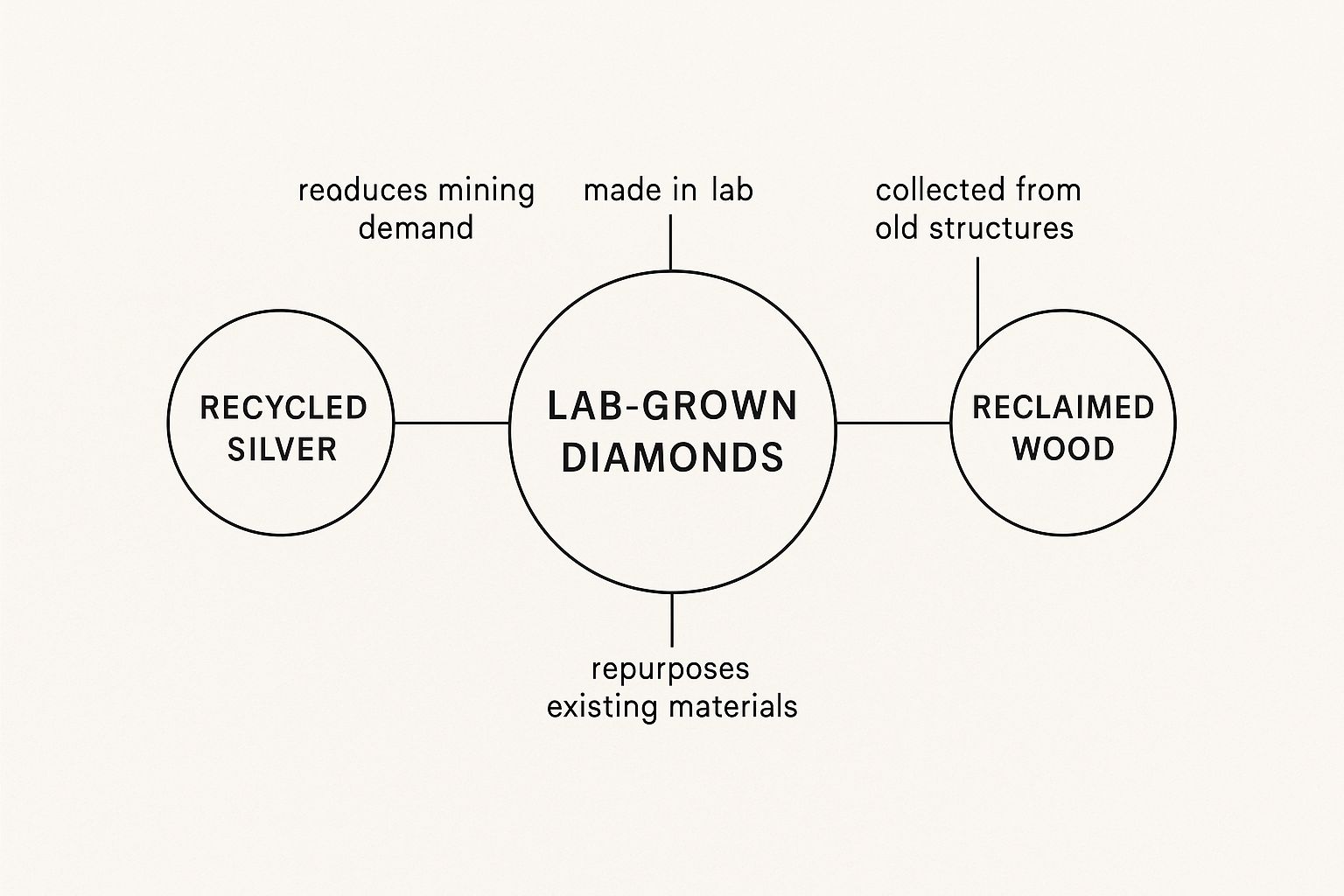
As you can see, the path from a material like recycled silver or a lab-grown diamond to its eco-benefit is direct and clear—one reduces the need for new mining, while the other guarantees a conflict-free origin.
Tech like blockchain is now being used to create a digital passport for high-value items like diamonds. Every time a stone is passed from the mine to the cutter, then to the jeweler, the transaction is logged on a permanent, tamper-proof ledger. This creates a transparent history that makes it nearly impossible for a stone with a shady past to be passed off as ethical.
For a closer look at jewelers who are leading the way with these practices, check out our guide to the top ethical jewelry brands for 2025.
The Real Impact of Choosing Sustainable Jewelry
So, why does choosing an eco-friendly jewelry piece really matter? It’s a fair question. The answer goes far beyond just your personal style—it’s about sending ripples of positive change across the globe. Each time you opt for sustainable jewelry, you’re casting a vote for a healthier planet, safer communities, and a much deeper connection to the things you own.
Think of it as linking your personal values to a global supply chain. A simple purchase becomes a powerful statement. Let's break down the real, tangible impacts your choice has on the environment, society, and even your own sense of ownership.
Protecting Our Planet One Piece at a Time
The most obvious win for sustainable jewelry is its dramatically smaller environmental footprint. Traditional mining is a brutal, invasive process that can leave permanent scars on the land. When you choose eco-friendly alternatives, you're actively helping to heal and protect our shared home.
The environmental benefits are incredibly direct:
Slashes Carbon Emissions: Using recycled metals and lab-grown gems demands a fraction of the energy needed for new mining and processing. That means a much lower carbon footprint for that beautiful piece you're wearing.
Keeps Water Clean: Conventional mining often relies on toxic chemicals like cyanide and mercury. These poisons can seep into local water tables, poisoning rivers and wildlife for decades. Sustainable practices simply don't use them.
Saves Vital Ecosystems: Choosing sustainable jewelry helps prevent the deforestation, soil erosion, and habitat destruction that come with clearing land for massive mining operations.
Think of it this way: every piece of eco-friendly jewelry represents a small patch of forest that wasn't bulldozed, a stream that wasn't polluted, and a community that can live without industrial contamination. It's a quiet but powerful act of conservation.
Championing Fair and Safe Communities
Beyond the planet, your choice has a profound human impact. The backstory of conventional jewelry is often dark, tangled up with dangerous working conditions, exploitative wages, and vulnerable communities. Ethical sourcing is the direct antidote, building a new system rooted in respect.
This creates a powerful new standard for the industry. Artisanal and small-scale miners, who form a huge part of the global mining workforce, are especially at risk. Certifications like Fairmined ensure these individuals not only get paid fairly but are empowered to build better futures for themselves and their families.
How Ethical Sourcing Makes a Real Difference:
Creates Safer Workplaces: It eliminates exposure to hazardous materials and demands safe operational standards, preventing the accidents and long-term health problems that plague traditional mining.
Guarantees Fair, Livable Wages: Workers finally receive proper compensation for their hard labor, giving them the power to support their families, invest in education, and break cycles of poverty.
Builds Stronger Local Economies: When communities get fair prices and investment premiums, they can fund local schools, healthcare, and infrastructure, creating a more stable and prosperous future for the next generation.
Creating a Deeper Personal Connection
Finally, the impact of choosing eco-friendly jewelry is deeply personal. In a world of fast fashion and disposable trends, these pieces offer something lasting. They aren't just accessories; they're wearable symbols of your values and a testament to a more conscious way of life.
This intentional choice builds a much stronger bond with your possessions. Knowing the story behind your ring—that it was made from recycled gold by an artisan who was paid a living wage—makes it infinitely more special. It's a piece you can wear with true pride.
This is what transforms jewelry from a mere product into a personal heirloom with a positive legacy. It’s a kind of "conscious luxury," where the true value isn't just in the material, but in the integrity of its journey to you. You're wearing more than just a beautiful object; you're wearing a story of positive change.
Finding Your Perfect Piece of Ethical Jewelry
Diving into the world of eco friendly jewelry can feel like a thrilling adventure. But with the right map, you can confidently find a piece you'll cherish forever, knowing its beauty is much more than skin-deep. It all comes down to asking the right questions, learning to spot genuine commitment, and connecting with brands whose values truly mirror your own.
A confident purchase always starts with a little homework. Think of yourself as a detective on the hunt for clues that prove a brand’s dedication to sustainability. Vague promises just don't cut it; you're looking for specific, verifiable details that tell the real story of how your jewelry came to be.
Your Research Checklist: Questions to Ask Brands
Before you fall head-over-heels for a design, take a moment to investigate the company behind it. A truly transparent brand will be proud to answer these questions and usually has the information right on its website. If getting clear answers feels like pulling teeth, consider that a major red flag.
Key Questions for Any Jewelry Brand:
Materials: "Can you trace your metals and gemstones back to their specific origin?"
Sourcing: "What concrete steps do you take to guarantee your materials are conflict-free and ethically sourced?"
Labor: "How do you ensure fair wages and safe working conditions for everyone involved, from miners to artisans?"
Certifications: "Do you hold any third-party certifications, like Fairmined, Fairtrade, or are you a certified B Corp?"
Production: "What do you do in your own workshop to minimize waste, reduce water usage, and shrink your carbon footprint?"
Armed with these questions, you can cut through the marketing fluff and get straight to the heart of a brand’s practices. This process empowers you to support companies that are genuinely walking the walk.
Remember, transparency is the cornerstone of trust. A brand that is genuinely committed to ethical practices will welcome your curiosity and be open about its entire supply chain.
How to Spot and Avoid Greenwashing
As conscious consumerism grows, so does greenwashing—the shady practice of making misleading claims to seem more eco-friendly than a company actually is. The secret to spotting it is to demand specifics over vague, feel-good language.
Be wary of generic terms like "eco-conscious," "green," or "earth-friendly" that aren't backed up by any proof. A brand might claim its diamonds are "ethically sourced" but provide zero details about certifications or traceability. That’s a classic greenwashing move.
To help you see the difference clearly, here's a quick comparison between truly sustainable jewelry and its conventional counterpart.
Eco Friendly vs. Traditional Jewelry At a Glance
The table below breaks down the fundamental differences in approach, sourcing, and overall impact, giving you a clear guide on what to look for and what to avoid.
Feature | Eco Friendly Jewelry | Traditional Jewelry |
|---|---|---|
Sourcing | Transparent, with clear origins (e.g., specific Fairmined community, certified recycled supplier). | Often opaque, with a long and untraceable supply chain. |
Materials | Uses recycled metals, lab-grown gems, or certified ethically sourced natural stones. | Primarily uses newly mined metals and gems with unknown origins. |
Impact | Focuses on minimizing environmental harm and ensuring positive social outcomes. | Can be linked to habitat destruction, pollution, and poor labor practices. |
The takeaway? To avoid being misled, always demand evidence. Look for detailed sustainability reports, official certification logos, and clear, honest explanations of their sourcing policies. The more a brand is willing to share, the more likely its claims are legitimate.
Why You Should Support Small, Independent Designers
While some big brands are making genuine strides, it’s the small, independent designers who are often the true pioneers of the sustainable jewelry movement. For these artisans, sustainability isn't just a marketing angle; it’s a core part of their identity and creative vision.
When you support a small business, you often get:
Unmatched Transparency: You can frequently talk directly to the person who made your jewelry. That offers a level of traceability that larger companies simply can't match.
Innovative Materials: Independent designers are famous for their creativity, often using unique, upcycled, or reclaimed materials that push the boundaries of modern design.
A Personal Connection: Your purchase directly supports an individual artist's livelihood and passion, which makes the piece itself feel infinitely more special and meaningful.
The Timeless Appeal of Vintage and Pre-Owned Jewelry
Perhaps the most sustainable choice of all is to give a beautiful, pre-existing piece a new home. Opting for vintage or pre-owned jewelry is the ultimate form of recycling. It requires zero new mining, zero new energy for production, and zero new resources.
Every vintage piece carries its own unique history and character, offering a style that simply can't be replicated. It’s a beautiful way to honor the craftsmanship of the past while protecting the future for generations to come. This approach is the very definition of a circular economy in action.
Caring for Your Jewelry to Ensure It Lasts
True sustainability doesn’t end when you click "buy." In fact, that’s where the real journey begins. A huge part of the eco-friendly philosophy is about longevity—choosing pieces designed to last a lifetime, not just a single season. When you care for your eco friendly jewelry, you're respecting the precious resources and skilled hands that brought it to life, fully embracing the spirit of "slow fashion."
A little bit of care goes a long way, ensuring your favorite pieces stay as stunning as the day you first wore them. By building a few simple habits for cleaning and storage, you protect your investment and sidestep the need for future replacements. This simple act of mindful ownership is what closes the loop on the sustainable jewelry experience.
Gentle Cleaning for Different Materials
Every material has its own personality, and that means each needs a slightly different touch when it comes to cleaning. It’s a bit pointless to own eco-conscious jewelry only to clean it with harsh, toxic chemicals, right? The best approach is always gentle, using non-toxic solutions that are kind to both your jewelry and the planet.
Recycled Metals (Gold & Silver): You don't need fancy cleaners here. A simple solution of warm water with a few drops of mild, phosphate-free dish soap is perfect. Use a super soft-bristled toothbrush to gently scrub away any grime, rinse it under clean water, and pat it completely dry with a lint-free cloth. If you're dealing with stubborn tarnish on silver, our complete guide has more expert tips on how to clean tarnished jewelry easily.
Lab-Grown Gems (Diamonds & Moissanite): These stones are tough cookies and can be cleaned just like recycled metals. The real secret to keeping their fire and brilliance is regular, gentle cleaning to remove the everyday buildup of oils and lotions that can make them look dull.
Alternative Materials (Wood & Sea Glass): Keep it simple. For wooden pieces, just wipe them with a soft, dry cloth. You'll want to avoid soaking wood in water, as it can cause it to swell or warp. For sea glass, a quick wash with mild soap and water is all it takes to bring back its signature glow.
And don't forget storage! It’s just as crucial as cleaning. Try to keep your pieces in a soft, lined jewelry box, ideally with separate compartments to stop them from tangling and scratching each other. A great tip for silver is to store it in an airtight bag—it dramatically slows down the natural tarnishing process.
By caring for your jewelry, you're not just maintaining an object; you're preserving its story and its value. This simple practice transforms a beautiful accessory into a true heirloom, meant to be passed down through generations.
Knowing When to Seek Professional Help
Even with the most diligent at-home care, some things are best left to the experts. If you notice a prong holding a stone has come loose, a clasp is broken, or a piece has taken a serious knock, it's time to visit a professional jeweler. Trying to DIY these kinds of complex repairs can often do more damage.
When you do need a repair, look for a local jeweler who shares your values and specializes in sustainable practices. These artisans will use the same mindful principles to restore your piece, from using non-toxic solders to sourcing perfectly matched recycled or lab-grown parts if needed. This ensures the integrity of your eco friendly jewelry is upheld for its entire, long life.
Your Top Questions About Eco-Friendly Jewelry Answered
When you start digging into the world of sustainable jewelry, you're bound to have some questions. That's a good thing! Asking the right questions is the first step toward making choices you can feel great about, ensuring the pieces you wear tell a story you're proud of.
Let's clear up some of the most common things people ask.
Is Eco-Friendly Jewelry Automatically More Expensive?
Not at all. This is probably the biggest misconception out there. While certain materials, like artisanally-mined Fairmined gold, do carry a well-deserved premium for their ethical practices, many sustainable choices are surprisingly budget-friendly.
Think about it this way: jewelry made from recycled silver often costs about the same as new, conventionally mined silver. And when it comes to sparkle, lab-grown gems like moissanite deliver jaw-dropping brilliance for a fraction of what a mined diamond of similar size and quality would cost. The price of eco-friendly jewelry reflects its true cost—one that includes fair wages and respect for the planet, rather than the hidden environmental and human toll of a murky supply chain.
How Can I Tell if a Brand Is Genuinely Ethical?
This is the most important question you can ask. In a world full of "green" marketing, you have to look past the buzzwords and seek out real proof. The key is to look for transparency and third-party certification.
A truly ethical brand isn’t afraid to pull back the curtain and show you how their jewelry is made. Vague promises are a red flag; genuine commitment comes with details.
Here’s what to look for on a brand’s website to see if they walk the walk:
Specifics, not fluff: Do they name their suppliers? Do they explain how their materials are sourced?
Proof from others: Look for official certifications like Fairmined, Fairtrade, or becoming a certified B Corp. These aren't easy to get and show a serious commitment.
Clear material policies: Do they explicitly state they use 100% recycled metals or offer full traceability for their gemstones?
When a brand openly shares this level of detail, you can trust that their beautiful designs are backed by a deep-seated commitment to doing things the right way.
Ready to find jewelry that’s as conscious as it is beautiful? See what it means to wear your values by exploring the collections at Panther De Luxe, where every piece is crafted with integrity. Shop our eco-friendly collections today!
Comments